Digital Marketing Agency Pricing: Models and Hidden Costs
Digital marketing agency pricing varies by scope and model. Compare retainers, projects, hidden costs, assumptions, and quote quality.
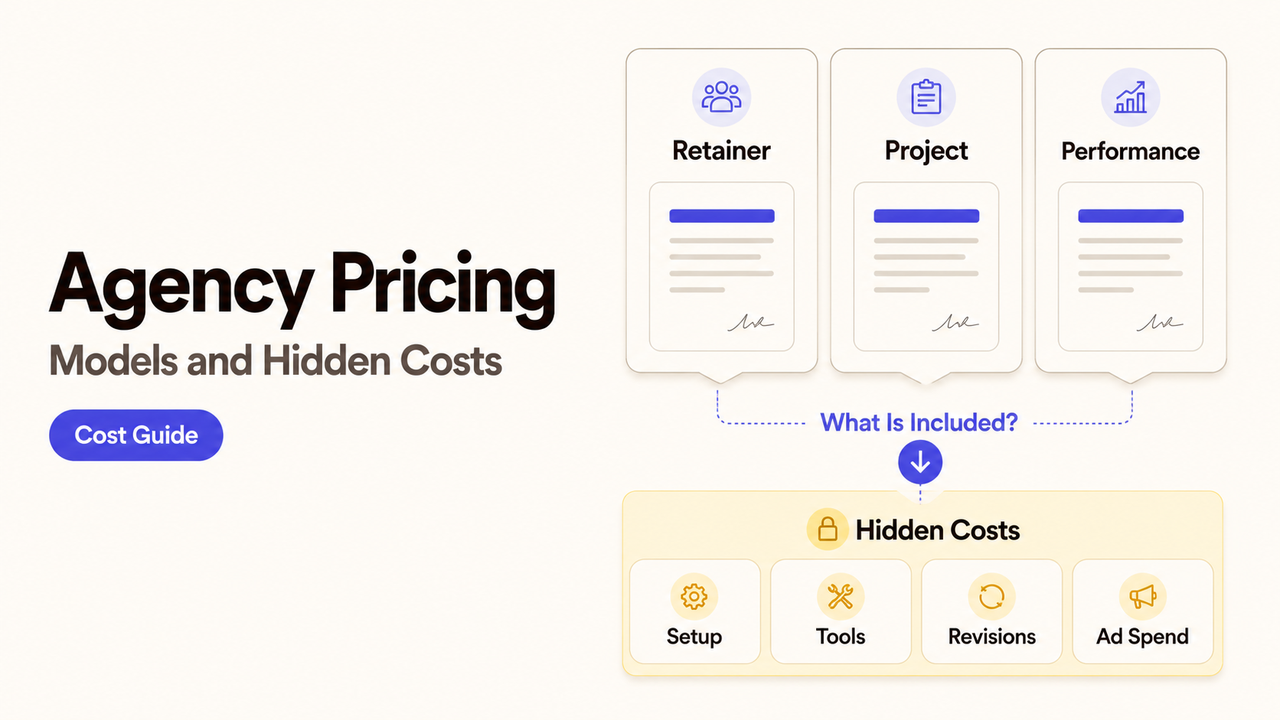
When two agencies quote the same growth goal, one may present a single monthly retainer while the other separates strategy, campaign management, creative, software, and media. The smaller total is not necessarily the lower cost; it may simply leave more work outside the fee. This guide will help you compare digital marketing agency pricing by tracing every line item back to a deliverable, assumption, or owner. I’m Alex. For this comparison, treat each quote as a commitment: the price is useful only when you can see what triggers it and what happens when the scope changes.
Common Pricing Models: Retainer, Project, Hourly, Performance
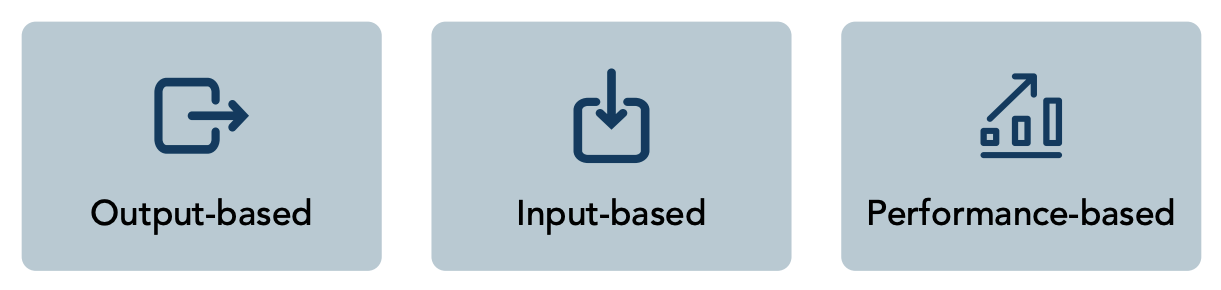
Agency pricing models explain how compensation is calculated. They do not tell you whether the scope is complete. The joint 4As and ANA agency compensation guide groups common approaches into output-based, input-based, and performance-based models, with hybrids used when different workstreams need different treatment.
Pricing model | Usually fits | Define before approving |
Retainer | Recurring strategy, management, reporting, and access to a team | Included capacity, recurring deliverables, response expectations, unused work, and overages |
Project or fixed fee | A campaign launch, website, audit, research brief, or defined production package | Deliverables, revision rounds, milestones, acceptance, and change requests |
Hourly or day rate | Advisory work, uncertain scope, troubleshooting, or changing workloads | Rate card, team seniority, time recording, estimate range, and approval cap |
Performance or incentive | Work with agreed metrics that the agency can materially influence | Base fee, eligible metric, attribution method, review period, exclusions, and payout rule |
Agency retainer pricing can make cash flow easier to plan, but it does not mean unlimited work. Define the reserved team or capacity, recurring deliverables, and what happens when work goes unused.
A project fee works when both sides can recognize the finished output. List every included discipline; otherwise, the price can stay fixed while necessary work remains outside it.
Hourly pricing provides flexibility, but the quote still needs a rate card, time-recording method, estimate cap, and overage approval. For performance pricing, agree on attribution and use metrics the agency can materially influence; product availability, sales follow-up, and website conditions can also affect the result.
What Drives an Agency Quote
Digital marketing pricing reflects both expected work and uncertainty. The same “paid search management” request changes when the account also needs tracking repair, landing pages, creative, or frequent approvals.
The main quote drivers are usually visible in the operating plan:
- the business outcome and how it will be measured;
- the number of channels, campaigns, markets, products, or locations;
- the amount and frequency of strategy, creative, optimization, and reporting;
- the seniority and specialist mix required;
- the condition of existing accounts, analytics, content, and brand assets;
- the client’s approval process and expected meeting load;
- deadlines, launch risk, dependencies, and access constraints.
Client responsibilities also affect cost. Delayed data, copy approvals, expert access, or website fixes can disrupt the staffing plan. The buyer should budget the internal work as well as the agency’s visible production.
Scope, Channels, Tools, Media, and Production Costs
Separate the proposed budget into cost buckets before comparing totals. A useful quote should make it possible to answer four different questions without asking the agency to reinterpret its own document.
Cost bucket | What may sit inside it | What to verify |
Agency service fee | Strategy, account management, SEO, campaign operations, reporting, meetings | Deliverables, cadence, team, capacity, and overage rule |
Advertising or media budget | Search, social, display, sponsorships, creators, or other placements | Who pays the platform, budget limits, commissions, and any markup |
Software and data | CRM, email platform, reporting, call tracking, research, stock assets, or AI tools | Account owner, usage tier, renewal, onboarding, and exit access |
Production and vendors | Copy, design, video, photography, development, printing, translation, or subcontractors | Quantity, revisions, rights, pass-through fees, and approval |
Advertising budget is separate from campaign-management fees. Google lets advertisers set budgets and inspect billed costs in the account, as described in its Google Ads spending and billing guidance. The proposal should name the payer and disclose any media commission or markup calculation.
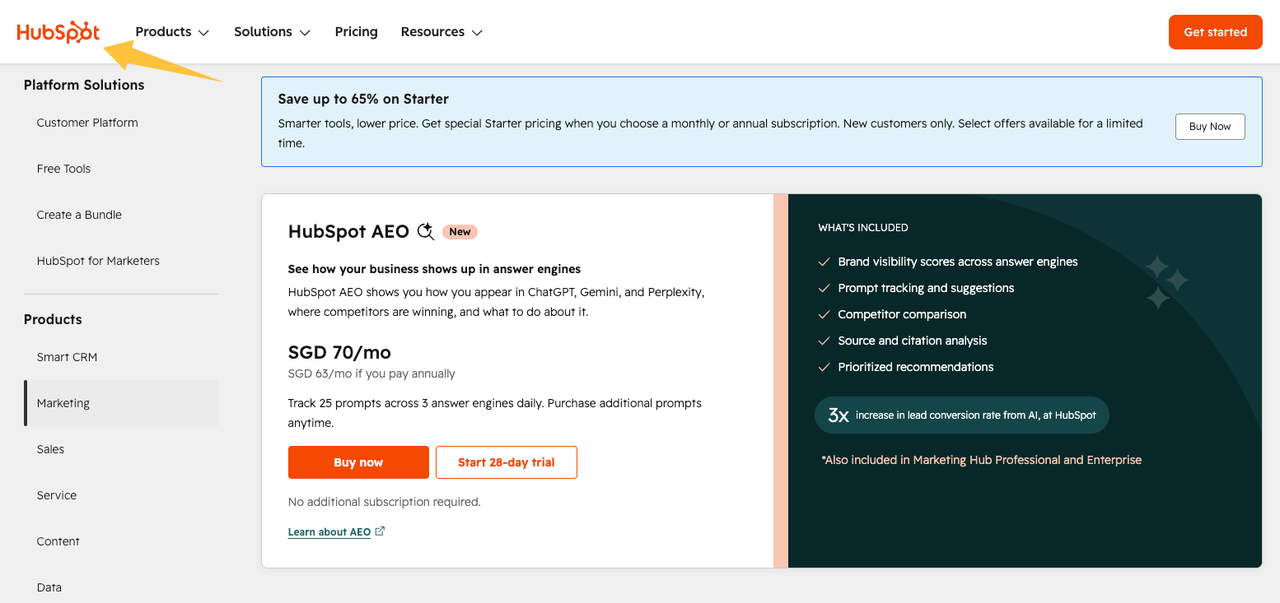
Software costs can change with seats, contacts, usage, data volume, or onboarding. HubSpot’s current Marketing Hub pricing structure, for example, separates several of those variables. A quote saying only “software included” still needs the product, tier, account owner, renewal path, and expected usage.
Production needs quantities. “Creative included” could mean resizing supplied files or producing original work. Define format, volume, revisions, licensing responsibility, and final-file delivery.
Hidden Fees and Common Exclusions
An excluded cost becomes a problem when its trigger is unclear. Read exclusions beside the deliverables, before choosing a provider.
Common items to surface include:
- discovery, onboarding, audits, account cleanup, migration, or tracking repair;
- extra meetings, rush work, weekend coverage, travel, or in-person production;
- additional concepts, revision rounds, formats, pages, campaigns, or markets;
- stock media, fonts, creator payments, printing, translations, and specialist vendors;
- data tools, dashboards, call tracking, CRM seats, email volume, and storage;
- media commissions, payment-processing charges, currency conversion, taxes, or local fees;
- cancellation, notice periods, early termination, export, archive, and transition support.
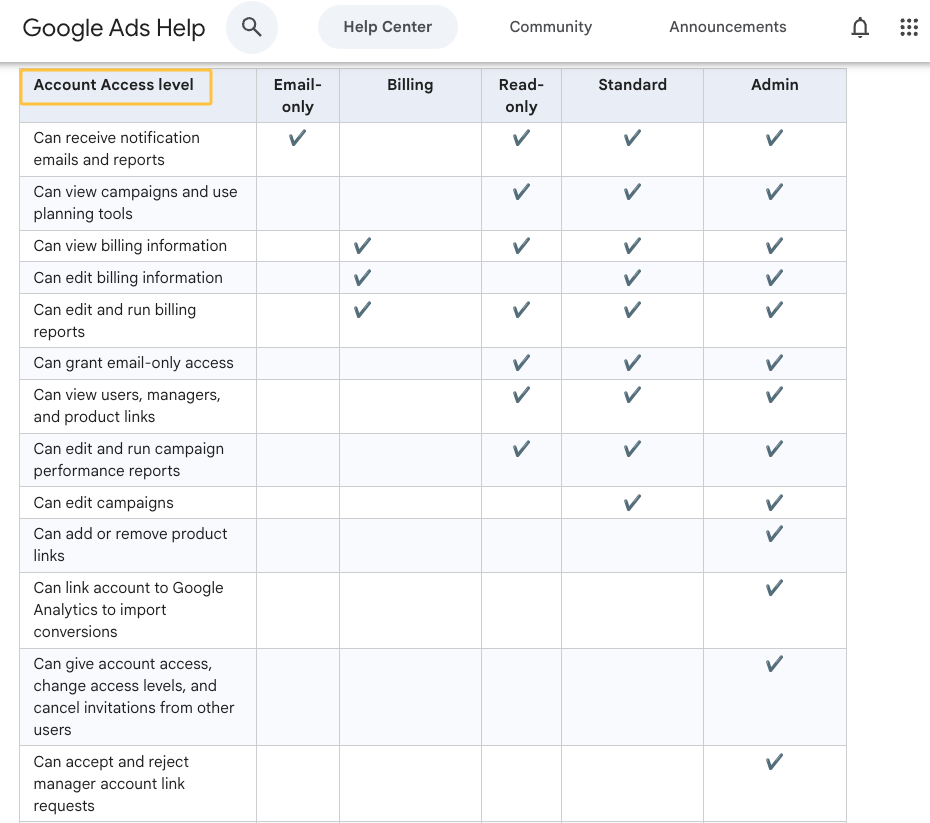
Account access can create an exit cost. Record who owns each advertising account, analytics property, dashboard, creative file, and software subscription. Google Ads documents distinct billing, standard, and admin permissions in its account access levels; the client should retain an administrator who can preserve access and account history.
Ask how subcontractors are billed: included, passed through, marked up, or contracted directly. The quote should identify the arrangement and the person who approves a vendor cost.
Compare Quotes on Outcomes and Deliverables
Put every proposal into the same comparison sheet. Do not force the agencies to use identical methods; normalize the commitments instead.
Comparison field | Question to answer |
Business outcome | What decision or customer action is the work meant to influence? |
Deliverables | What will be produced, managed, reviewed, or reported? |
Volume and cadence | How many items, campaigns, meetings, reports, or revisions occur, and how often? |
Team | Which roles are included, and can the staffing mix change? |
Base fee | What recurring or fixed amount covers the stated scope? |
Variable costs | What changes with hours, media, usage, volume, performance, or vendors? |
Client inputs | Which access, assets, data, approvals, or technical work must the buyer supply? |
Change control | What triggers a new estimate, overage, or change order, and who approves it? |
Ownership and exit | What does the client retain, receive, or lose when the engagement ends? |
A good quote lets finance trace the invoice and marketing trace the work. If one proposal includes creative while another assigns it to the client, put that difference in the comparison. A lower total is not comparable until the missing work has an owner and cost treatment.
Build a Budget Without Buying the Wrong Scope
Start with the outcome and the work required for a measurable handoff. Build the budget around committed cost, variable cost, and a reserve for approved changes.
Use a simple internal budget map:
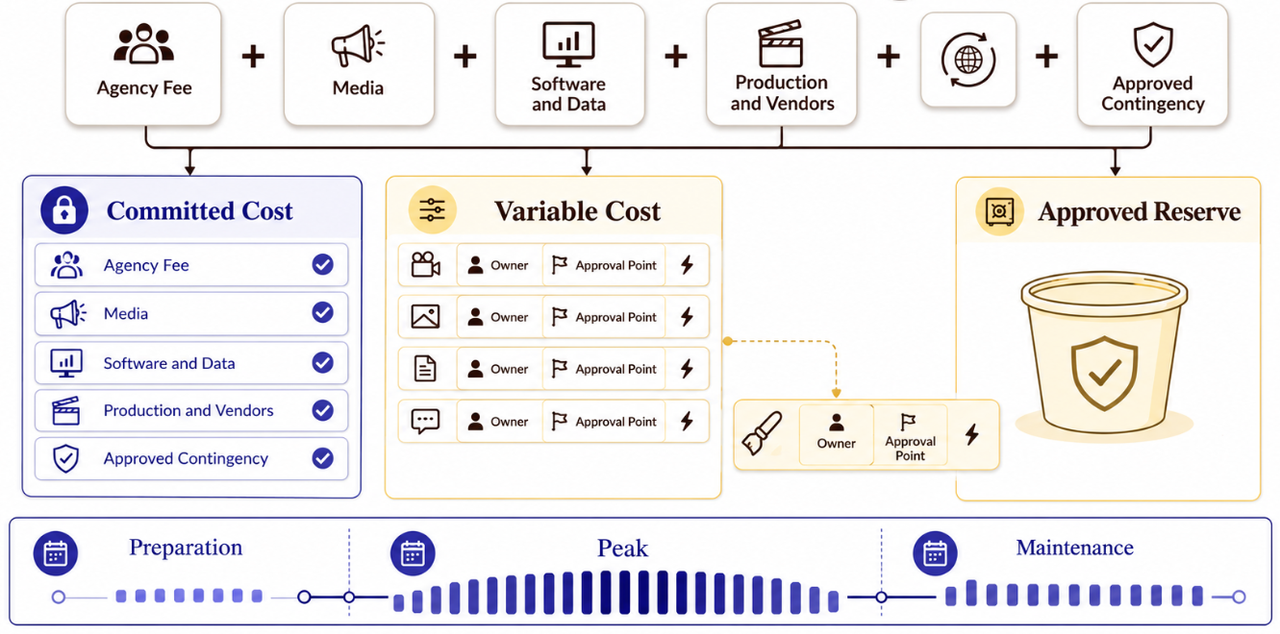
Planned cost = agency fee + media + software/data + production/vendors + applicable taxes or conversion costs + approved contingency
This is not a result forecast. It checks whether the service fee has been mistaken for the full operating cost. Assign every variable line an owner and an approval point.
When scope is uncertain, paid discovery can be reasonable if it produces a reusable assessment, measurement plan, risk register, or costed statement of work. Define the output first. A workshop followed by another vague quote has not reduced the buying risk.
For recurring work, map the service calendar instead of dividing effort equally across the year. Preparation, launch periods, and quieter months need different capacity. The pricing model should not force a seasonal business to buy unused activity merely to preserve a uniform retainer.
If the cost map is complete but provider scopes still resist comparison, turn the requirement into a comparable service brief with SpringBrand.
FAQ
How should taxes or currency conversion be handled?
The quote should name the invoice currency, payment method, conversion date or rate source, and which party bears bank or processor fees. Tax treatment depends on jurisdiction and business circumstances. For example, the IRS foreign-currency guidance explains U.S. reporting treatment, but it is not a rule for every buyer. Confirm the invoice and accounting treatment with a qualified local adviser.
What happens when monthly work is not fully used?
Follow the agreement. Unused work may expire, roll forward for a limited period, convert into another approved deliverable, or represent reserved capacity rather than a bank of hours. Do not assume a refund or rollover. Ask the agency to define the rule, any limits, and who approves reallocation before the first underused month occurs.
Should a business pay for a discovery phase?
Yes, when discovery has a defined output and reduces uncertainty that would otherwise inflate or weaken the quote. Useful outputs may include an account assessment, measurement plan, implementation dependencies, or a costed scope. Confirm ownership and reuse rights for the deliverables. If discovery ends only with a sales presentation, the buyer may still lack a decision-ready brief.
How should a seasonal business evaluate an annual retainer?
Compare the retainer with the operating calendar, not a monthly average. Identify preparation months, peak campaign periods, quiet maintenance work, and the lead time needed before demand rises. Then check whether capacity can shift between months, what minimum support remains active, and whether pauses or scope changes alter the fee.
Can two business units share one agency engagement?
They can when the proposal separates each unit’s outcome, budget, deliverables, data access, and approval owner. Shared strategy or tools may reduce duplicate work, but reporting and change requests still need a cost-allocation rule. Separate engagements may be clearer when the units have different audiences, account permissions, regulatory constraints, or competing launch priorities.
Conclusion
Approve digital marketing agency pricing only when the service fee, pass-through costs, variable triggers, client responsibilities, and exit conditions are visible in the same decision record. Until one owner can explain what changes the invoice and who approves that change, the quote is not ready to become a commitment.