Claude Code Market Research Recipe: A Practical Workflow
Claude Code market research recipe: organize sources, build a competitor matrix, review evidence, and turn findings into a decision-ready brief.
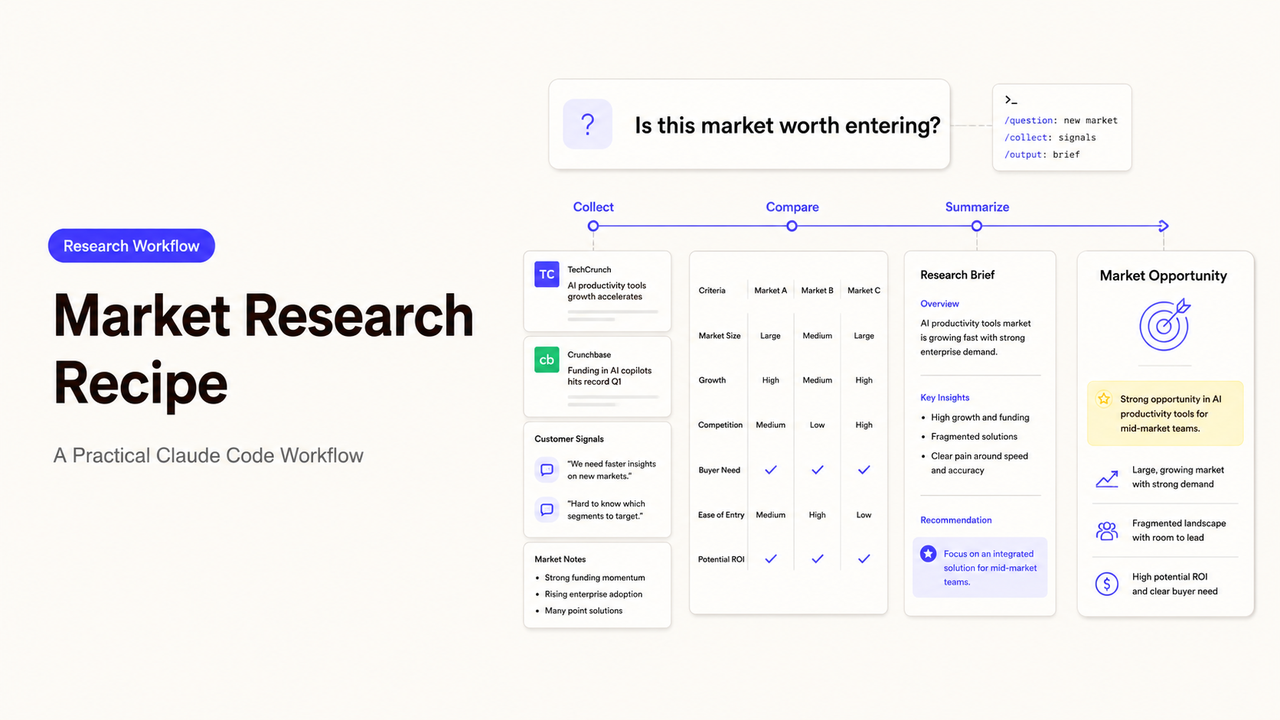
Suppose a founder opens a competitor matrix and sees every row filled, but one claim came from a current pricing page, another from an old PDF, and a third has no source at all. The operations lead is already using that sheet to discuss market entry. This Claude Code market research recipe shows how to move from a specific business decision to labeled evidence, a comparable matrix, and a brief someone can approve. I’m Alex; for this workflow, I would rather leave a cell open than let an unsupported comparison look complete.
What the Research Recipe Should Deliver
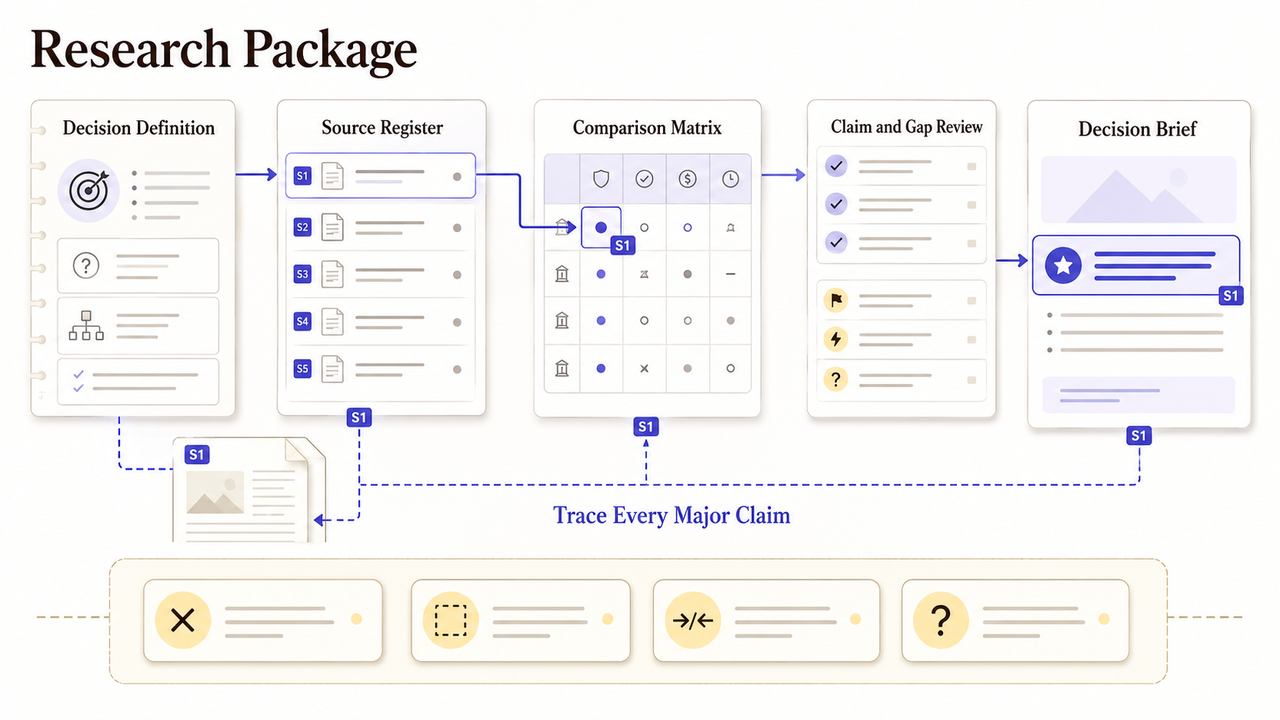
The finished work is not a folder of links or a polished summary. It is a research package that lets a decision owner trace an important statement back to its source, see where interpretation entered, and find what remains unknown.
In this guide, “recipe” is a practical label, not a confirmed Claude Code feature name. You might store the procedure in a project document or package it as one of the reusable Claude Code Skills built around a SKILL.md file and supporting templates. The format matters less than using the same evidence rules each time.
A complete delivery should contain five items:
- a one-page decision definition;
- an approved input folder and source register;
- a competitor comparison matrix;
- a claim-and-gap review;
- a decision brief with an evidence appendix.
The owner should be able to reject the brief without rebuilding the research. That means rejected claims, missing pages, conflicting evidence, and unresolved questions stay in the record rather than disappearing during editing.
Step 1: Define the Business Decision
Start with the choice the research must support. “Research the market” has no stopping point; “Decide whether to offer our bookkeeping service to independent medical practices in one state next quarter” gives the team a customer, geography, offer, and time horizon.
Write a short decision file before collecting sources:
Field | Example entry |
Decision owner | Founder |
Decision | Enter, postpone, narrow, or reject the target segment |
Target customer | Independent practices with fewer than five locations |
Geography | One named state |
Questions | Demand signals, existing offers, buying language, visible gaps |
Exclusions | Formal market sizing, legal advice, private competitor intelligence |
Review date | Date the evidence must be reconsidered |
This is where the market research workflow gets its boundary. The decision owner approves the questions and exclusions; Claude Code can then help organize material against those fields. If the target segment changes halfway through, stop and revise the decision file instead of quietly widening the evidence set.
Step 2: Gather and Label Source Material
Create an input folder that separates original material from working notes. A useful starting set is:
/research
  /sources
    competitor-pages/
    industry-reports/
    approved-interview-notes/
  decision.md
  criteria.md
  source-register.csv
  exclusions.md
Claude Code can read supplied files, and its current tools reference documents WebSearch and WebFetch behavior. Do not assume either is available or sufficient in your session. Check the active tools and permissions; when a page cannot be fetched, save an approved export or leave the source open for manual collection.
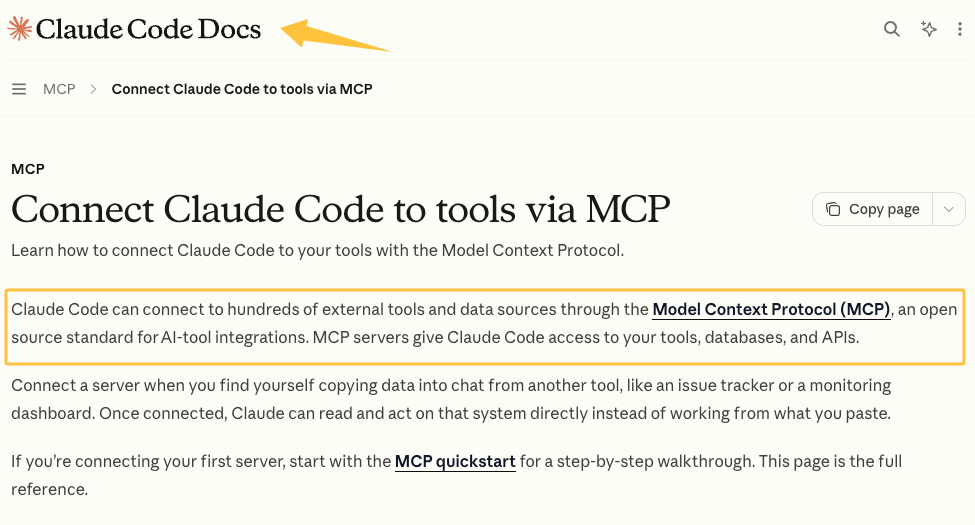
Database or third-party access is also configuration-dependent. Anthropic documents external integrations through Claude Code MCP connections, but a connected server, valid authentication, and appropriate permission are still required. Never tell the workflow to “check our CRM” unless the system, permitted fields, and read boundary have been named.
Record each source before extracting claims:
Field | What to capture |
Source ID | Stable label such as |
Organization | Publisher or competitor |
Page or file title | Exact visible title |
URL or file path | Location reviewed |
Source type | Pricing page, help page, report, interview note |
Captured on | Research date |
Relevant question | Decision question it may answer |
Access note | Public, licensed, internal-approved, or unavailable |
A competitor analysis AI can summarize text quickly, but the source register is what makes later review possible. Save only material the business is permitted to use, and remove irrelevant personal or confidential details before analysis.
Step 3: Build the Competitor Comparison Matrix
Set the comparison dimensions before asking for conclusions. For a service business, those dimensions might include target customer, stated problem, offer structure, pricing visibility, proof provided, conversion path, geography, and support model. A product comparison would need different fields.
Keep evidence beside each observation:
Dimension | Competitor A | Evidence | Competitor B | Evidence | Status |
Target customer | Stated segment | Source ID + excerpt | Not clearly stated | Source ID | Fact / Unknown |
Offer structure | Fixed package | Source ID + date | Consultation first | Source ID + date | Fact |
Positioning gap | Possible opening | Supporting source IDs | Similar opening | Supporting source IDs | Inference |
Use three labels consistently. Fact means the source directly supports the entry. Inference means the researcher connected evidence to a business interpretation. Unknown means the available material does not answer the question. Do not convert “not found” into “competitor does not offer it.”
The marketing or operations owner should review whether the dimensions actually affect the decision. A wide matrix with irrelevant columns creates the appearance of depth while making the final choice harder to explain.
Step 4: Check Claims, Gaps, and Contradictions
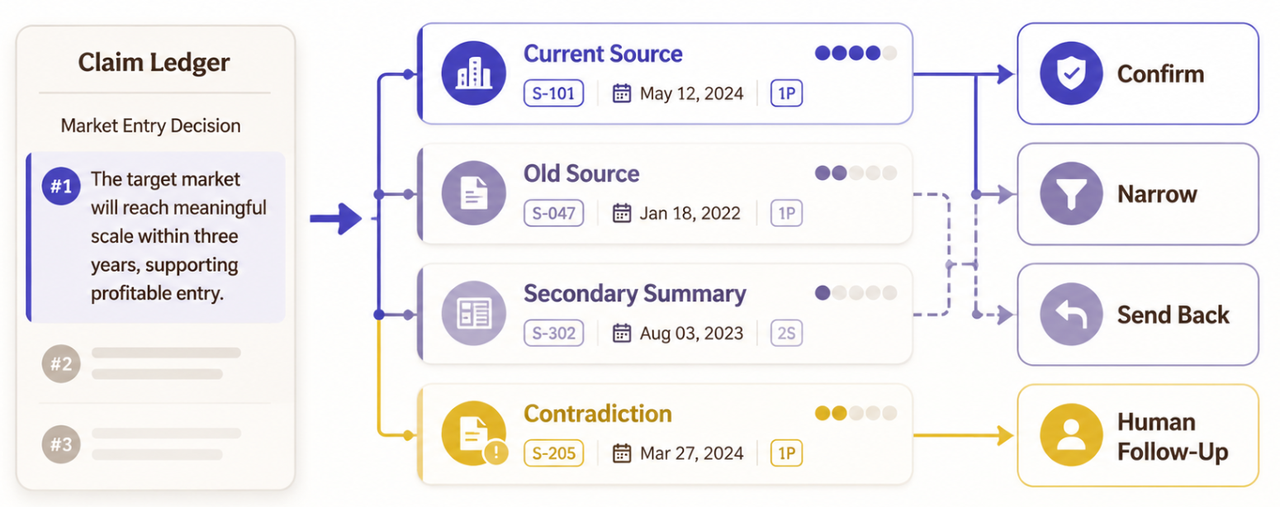
Now pressure-test the rows that could change the recommendation. Ask the workflow to produce a claim ledger with the statement, source IDs, date, evidence type, confidence note, contradiction, and required follow-up. This is Claude Code business analysis at its most useful: organizing the review queue rather than deciding which uncertainty the company should accept.
Check the strongest claim first. Open its source, confirm the wording and date, and then inspect whether another page narrows or contradicts it. WebFetch is designed to extract requested information rather than reproduce every page exactly, so important wording should be verified against the original page or an approved capture.
Send a claim back for research when:
- its only source is another summary;
- the source predates a material offer or pricing change;
- two pages describe different availability or scope;
- a missing page has been treated as negative evidence;
- an inference is written as an observed fact.
Contradictions do not need to be resolved by guesswork. Record both versions, name the decision affected, and assign a human follow-up such as checking a current page, contacting the company, or commissioning additional research.
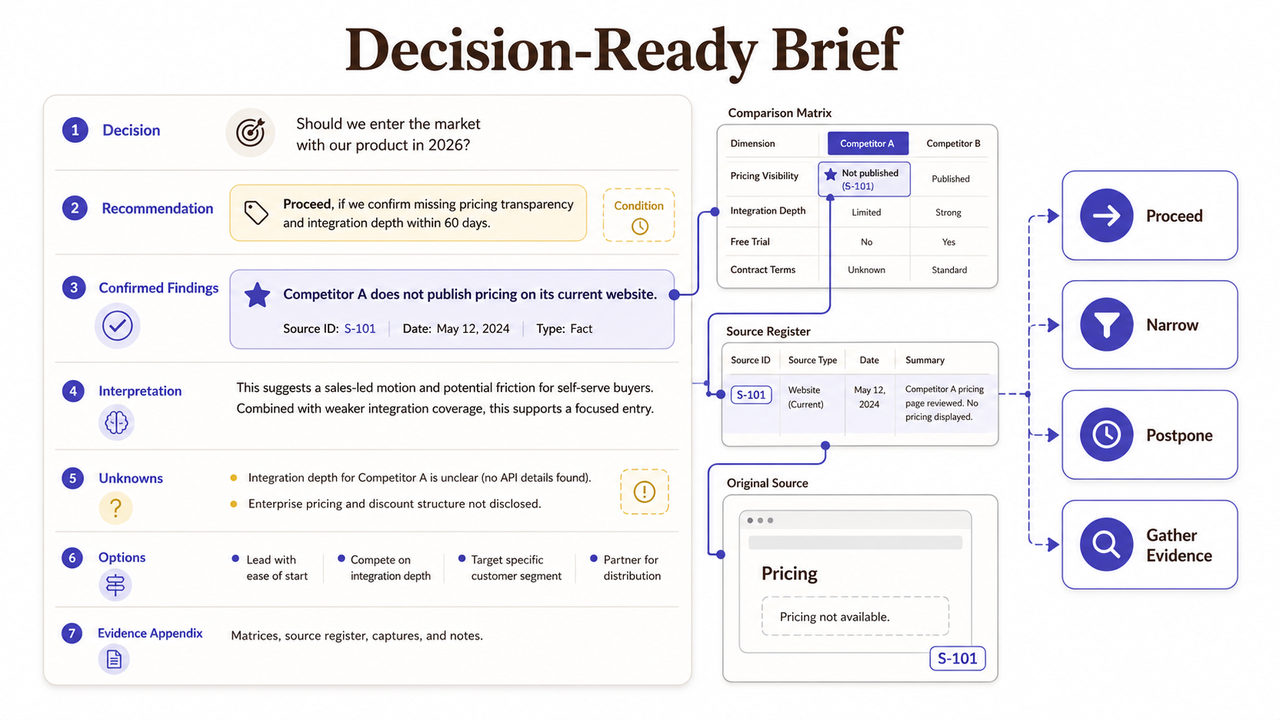
Step 5: Write a Decision-Ready Research Brief
The brief should help the owner make one decision, not display every note collected. Use this structure:
- Decision: the choice, owner, and deadline.
- Recommendation: a conditional answer, including when it would change.
- Confirmed findings: only material supported directly by cited sources.
- Interpretation: what those findings may mean for the business.
- Unknowns and contradictions: gaps that could alter the decision.
- Options: proceed, narrow, postpone, or gather specified evidence.
- Evidence appendix: source register IDs tied to claims and matrix cells.
Keep the recommendation proportionate to the material. Public competitor pages can support a positioning comparison, but they cannot reveal private sales performance, customer satisfaction, or total market demand. Customer interviews and paid data may change the brief; they should not be simulated from public copy.
Before approval, the decision owner should be able to point to one claim and travel from brief to matrix to source without asking the person who ran the workflow. The record has to become more precise than the conversation.
What Human Review Must Still Cover
Claude Code can organize, compare, and draft. A person still decides whether the research question is commercially useful, the comparison is fair, the sources are current enough, and the remaining uncertainty is acceptable. Customer interviews, positioning choices, and the final market decision stay with qualified people.
Review the access boundary as well as the prose. Claude Code’s permission controls can allow, ask, or deny tools and file paths, so the research owner should inspect the actual project configuration before approving web access or sensitive folders. Instructions are not a substitute for enforced permissions.
If interview notes, customer records, or licensed reports may enter the workspace, check the account and provider terms that apply. Anthropic’s current Claude Code data-usage guidance distinguishes policies by account and deployment type; the business should confirm its own setting rather than borrow an assumption from another team.
Human review should close four questions: Was the right decision researched? Can material claims be traced? Are privacy and usage rights respected? Does a named owner accept the unresolved risk? If one answer is no, the brief is not ready for a meeting just because the document looks finished.
FAQ
Can research notes be reused in sales materials?
Yes, after a separate review. Keep source IDs attached, remove internal speculation, and confirm that every customer-facing statement is current, relevant, and approved for that use. A research inference should not become a sales claim merely because it appeared in the final brief.
What if a cited competitor page later disappears?
Retain an approved dated capture or export with the source record when your policies permit it. Mark the live URL as unavailable and avoid implying the old page still describes the competitor today. If the claim materially affects the decision, look for a current first-party replacement or downgrade it to unresolved.
When is paid market data worth considering?
Consider it when a high-value decision depends on information public sources cannot support, such as reliable segment sizing or purchase behavior. Before buying, check methodology, coverage, update date, license terms, and whether the dataset answers the actual decision question. More rows do not repair a poor sample.
Conclusion
A Claude Code market research recipe is ready to support a business decision when its major claims can be traced, its inferences remain labeled, and its unknowns have named owners. Keep the final choice with the decision owner until the evidence gap is small enough to accept—and no sooner.