Turn Instagram Transcripts Into Marketing Content
Instagram transcript for business: turn Reels into blogs, FAQs, emails, product copy, and sales assets without starting over.
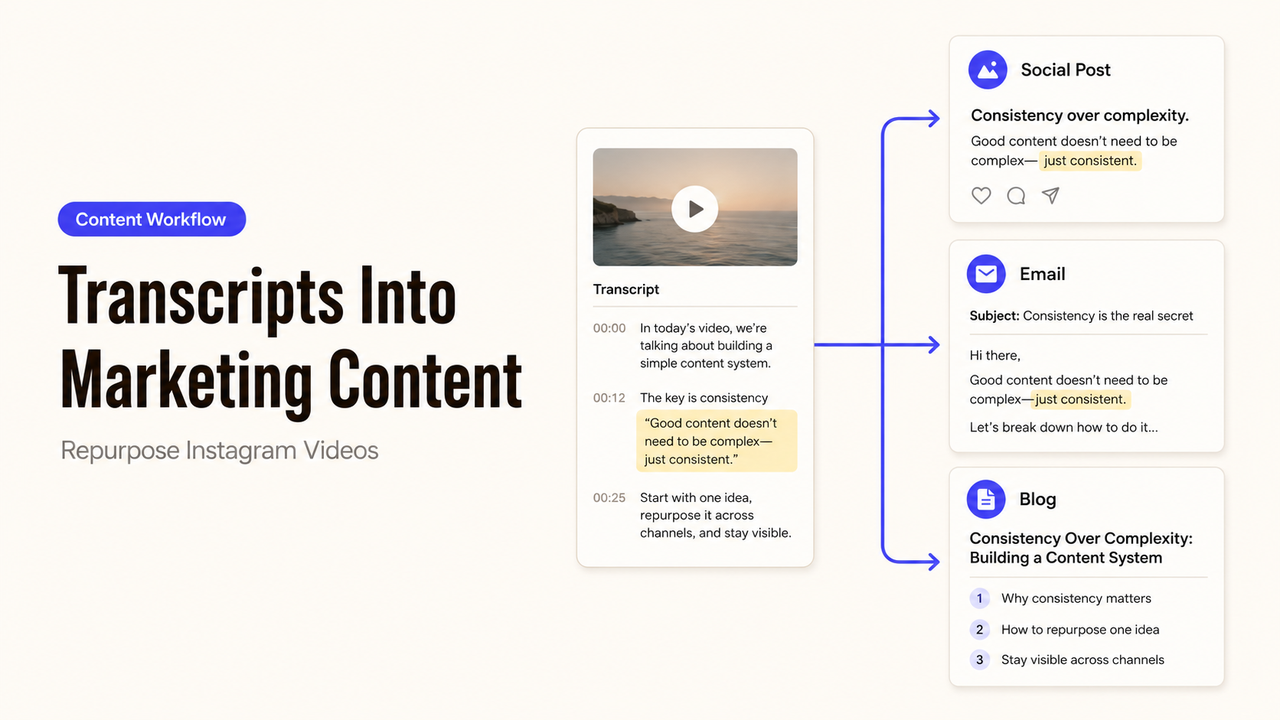
A thirty-second Reel about a delayed order may contain a customer question, a process lesson, and a useful promise. Its transcript, however, arrives as one block of speech with none of those parts labeled. This guide shows how to separate that raw material and give each part a job. I’m Alex. My rule for this workflow is simple: keep the original claim attached to every rewrite, so a convenient edit does not quietly become a new promise.
Why Transcripts Are a Business Asset
Video is difficult to scan when you are looking for one sentence you can reuse. A transcript makes the spoken material searchable, editable, and easier to review with someone who was not involved in filming. That alone can remove a lot of replaying, pausing, and note-taking from a small business content workflow.
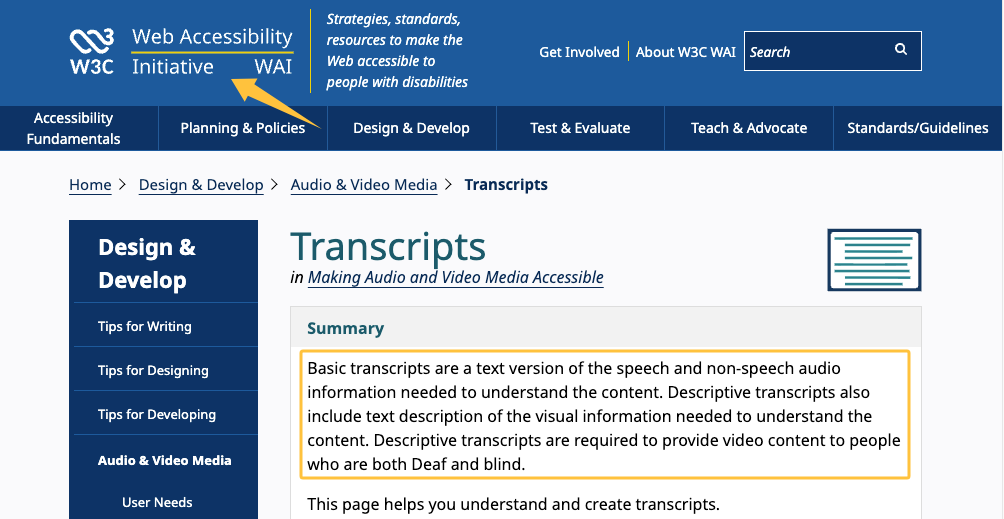
But an Instagram video transcript is not finished copy. Speech carries pauses, repetition, half-completed thoughts, and references such as “this one” that only make sense while watching the screen. The W3C’s transcript guidance also distinguishes a basic transcript from a descriptive one that includes important visual information. If the Reel shows a product detail or an on-screen correction, the spoken words may not tell the whole story.
Treat the transcript as source material with a useful advantage: it already contains the language the speaker chose when explaining the subject aloud. It may reveal a clear opinion, a customer objection, a practical example, or a phrase worth preserving. The editing work is to identify those parts, verify them, and reshape them for a reader with a different level of attention and intent.
In practical terms, Reel transcript marketing is a sorting job before it is a writing job. The value comes from deciding what each useful fragment should become, not from publishing the same speech in a new container.
What to Extract From an Instagram Video
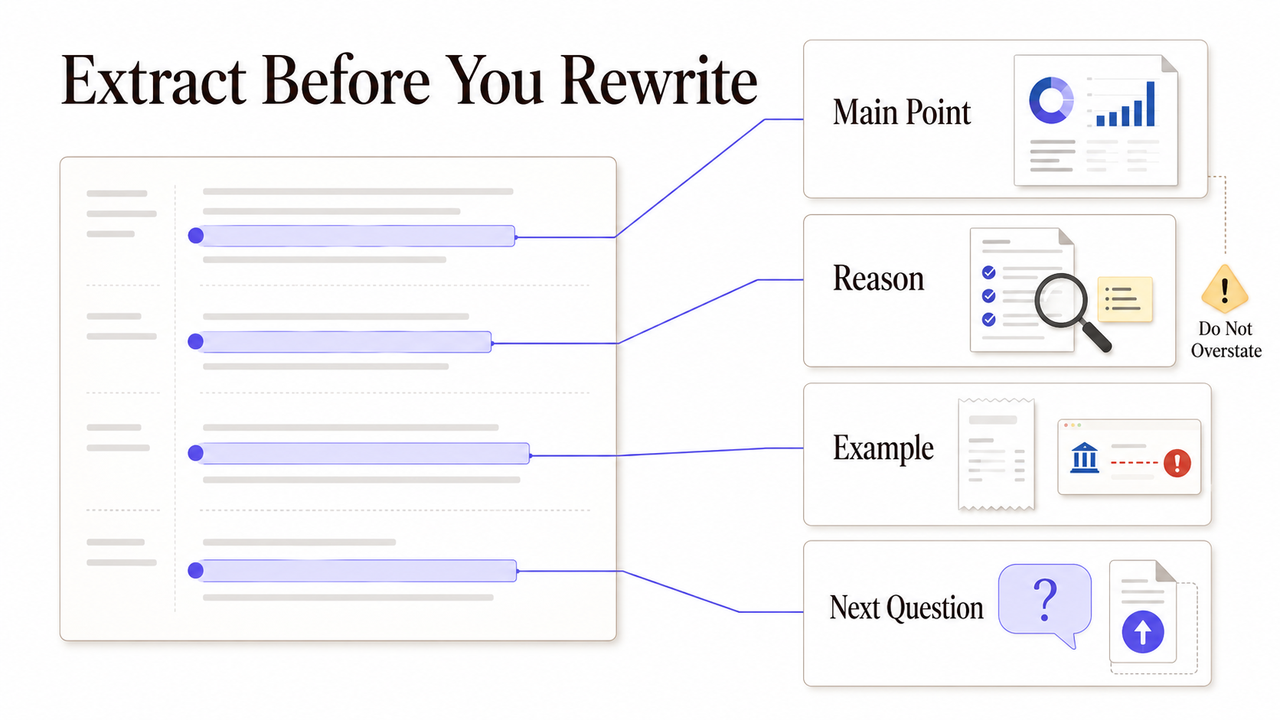
Start by marking the transcript rather than rewriting it. Look for four things: the main point, the reason behind it, the example that makes it credible, and the question a customer would ask next. A transcript without all four can still be useful; it simply should not be stretched into an asset it cannot support.
Consider a hypothetical Reel from a small bookkeeping firm:
Month-end reporting slows down when bank feeds are disconnected or receipts arrive after review starts. Clients who upload receipts weekly give us fewer unknown transactions to chase.
The useful material is larger than those two sentences. The viewpoint is that reporting speed depends partly on the client’s document routine, not only on the accountant. The examples are late receipts and disconnected feeds. The likely customer question is, “What do you need from me, and when?” The process detail—a weekly upload routine—can support a practical next step.
Keep those elements separate in your working notes. If you combine them too early, a specific example can turn into a universal claim. “Weekly uploads reduce the unknown transactions we need to chase” is not the same as “Weekly uploads guarantee faster reports.” That distinction matters when the sentence moves from an informal Reel to a service page or sales document.
Turn One Transcript Into Multi-Channel Assets
Instagram content repurposing works best when the destination is chosen before the rewrite. A blog reader may need context. An email subscriber may need one action. A prospect on a service page needs a clear description of what the business does, without a claim the team cannot consistently deliver.
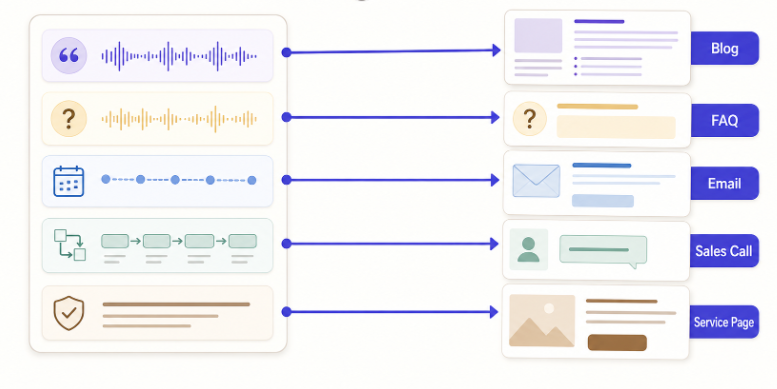
Using the bookkeeping example, the same source can support several assets without producing five near-identical copies:
Source element | New asset | Channel | Business goal |
Viewpoint about reporting delays | A section explaining what affects month-end work | Blog or resource page | Educate prospects and support search discovery |
Customer question about timing | “When should I upload receipts?” | FAQ or onboarding page | Remove uncertainty before the next step |
Weekly document routine | A short pre-close reminder | Prompt clients to complete a specific task | |
Disconnected-feed example | A diagnostic question for a call guide | Sales conversation | Find a process problem early |
Approved description of the routine | A concise service or onboarding statement | Product or service page | Set a clear expectation |
The blog section should explain the relationship between client inputs and review work; it should not merely pad the spoken lines into several paragraphs. Google’s guidance on helpful, people-first content asks whether content adds substantial value rather than simply copying or rewriting other sources. A social video to blog workflow therefore needs added context, useful distinctions, or supporting evidence.
The FAQ can stay close to the customer’s language. The email can be shorter and tied to a date or action. Product copy needs the strictest claim review because it sits close to a buying decision. Sales material may use the example as a question—“Are receipts arriving after review begins?”—instead of presenting an unverified diagnosis.
There is no prize for filling every channel. Choose the asset that closes the most important gap. If clients repeatedly miss a document deadline, the email may be more valuable than a blog post. If prospects do not understand the service, the FAQ or service-page line may come first.
Quality Checks Before Publishing
First, compare every draft with the video, not just the transcript. Correct names, figures, qualifications, and industry terms. Add any visual detail required to understand the point, and remove verbal filler without changing the speaker’s meaning.
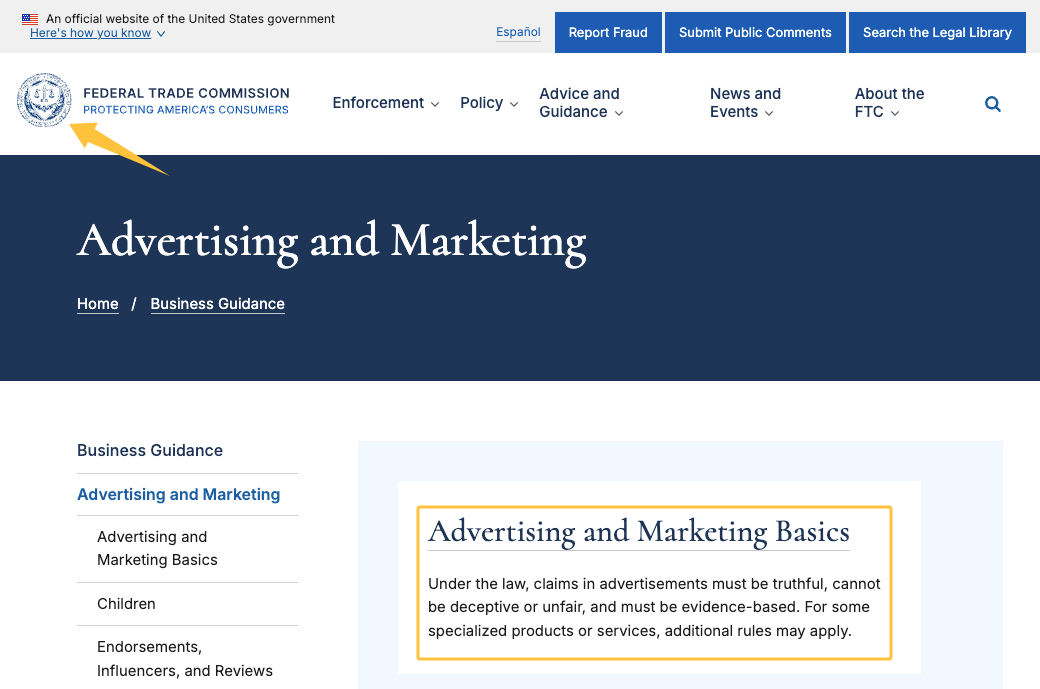
Next, check each claim in its new setting. The US Federal Trade Commission says advertising claims should be truthful, non-deceptive, and supported by evidence; its advertising and marketing guidance is a useful review point for US-facing copy. Other markets have their own requirements, so this is an editorial checkpoint, not a legal conclusion.
Customer stories need another pass. Confirm permission, remove details that are not necessary, and do not turn one person’s result into a typical outcome. For US campaigns, the FTC’s reviews and testimonials guidance can help identify questions to raise before publishing. When names, contact details, order information, or account data appear in the recording, follow the principle in the FTC’s personal information guide: know what information you hold, keep only what the business needs, and protect it appropriately.
Then read the draft as the brand, not as a transcript editor. Replace phrases the business would never use, preserve any wording that sounds recognizably like the speaker, and make the level of certainty consistent with approved offers. Finish with a named reviewer. “The team checked it” is not an approval record.
A compact publishing record should contain:
- the original video and date published;
- the transcript version used;
- the extracted claim, example, and customer question;
- the destination channel and intended action;
- fact, permission, and brand-voice decisions;
- the approving person and approval date.
That record makes later corrections possible. It also prevents a strong sentence from being copied again after the business has changed the underlying offer.
When to Use a Content Repurposing Service
An owner who publishes an occasional Reel and needs one follow-up email may be able to handle this alone. Outside help becomes more useful when videos are accumulating faster than the team can review them, several channels need different formats, or claims pass through product, legal, or client approval before publication.
Scope the service around outputs and controls, not a vague request to “repurpose our content.” Provide the source videos, priority audience, approved claims, prohibited or sensitive details, target channels, and existing brand guidance. Name the approval owner and define completion: for example, three channel-specific drafts, source references for every factual claim, and a revision log.
Package the source video, approved claims, and target channels, then compare content repurposing services through SpringBrand.
FAQ
Which channels should receive repurposed content first?
Start with the channel closest to the problem expressed in the Reel. A repeated customer question belongs in an FAQ or sales response. A task customers forget belongs in email. A useful explanation with clear search demand may support a resource page. Audience size matters less than whether the asset helps someone make or complete a decision.
When is a transcript too thin to reuse?
It is too thin for a planned asset when it offers a statement but no context, support, example, or useful next step. You can combine it with a subject-matter interview, internal data, or another approved source. Do not inflate one casual observation into a long article merely to meet a publishing schedule.
What should I archive with the original video?
Keep the source file, final caption, transcript, publication date, permissions, claim evidence, and links to every derived asset. Add the owner and review date for each version. If the offer or fact changes later, this trail shows exactly which pages, emails, and sales materials need attention.
Conclusion
An Instagram transcript for business becomes valuable after the team has separated the speaker’s point, supporting example, customer question, and next action—then assigned each one to a channel that needs it. Before any derivative asset goes live, its owner should be able to show the original source, the evidence behind its claims, the required permission, and the final approval. That is what turns a Reel from disposable output into a maintained business asset.