Technical SEO Audit Service: What Should Be Included?
Technical SEO audit service: learn what a useful audit should cover, how findings should be prioritized, and what to verify before hiring.
An audit report can flag a group of important pages as non-indexable. A developer may open the first example, fail to reproduce the problem, and return the recommendation because the report contains no crawl path, response evidence, or affected template. A useful technical SEO audit service closes that gap with findings the team can verify, prioritize, and turn into work. I’m Alex. My test for every recommendation is practical: can another person reproduce the issue, understand why it matters, and know what decision comes next?
Quick Answer: What Makes an Audit Useful
Finding an issue is only part of an audit. The report must also show where it appears, how it was found, and why it matters. That context lets the owner approve the work and the developer start without reconstructing the auditor’s reasoning.
That means every accepted finding needs a minimum record:
Audit field | What it should tell the team |
Affected scope | Example URLs, pattern, and page or component involved |
Observed behavior | What the crawler, server, browser, or search platform returned |
Expected behavior | What should happen instead |
Evidence | Crawl export, response header, rendered HTML, screenshot, report entry, or test result |
Significance | The page purpose, search demand, conversion role, or maintenance risk |
Proposed direction | A fix approach, not just the name of the error |
Owner and dependency | Who can act and what must happen first |
Acceptance check | How the team will confirm that the change worked |
State what the scope excludes. A standard website technical audit may include an online store without becoming an ecommerce audit. Product feeds, merchant listings, faceted navigation, variants, and checkout flows raise different questions and may need ecommerce expertise.
Crawlability, Indexation, Architecture, and Internal Links
Follow the path a search engine takes through the site: robots controls, response codes, redirects, canonicals, sitemaps, rendered pages, and internal links. Labels such as “blocked,” “duplicate,” and “orphaned” are only a starting point. The report must still show how each URL was found and whether the behavior matches the site’s intent.
Crawlability and indexation are related, but not interchangeable. A crawler may reach a URL that should not be indexed. A page may also be available while Google chooses another canonical. Google’s URL Inspection documentation explains that the tool can show indexed information, test a live URL, and expose rendered resources, but a positive result does not guarantee search appearance.
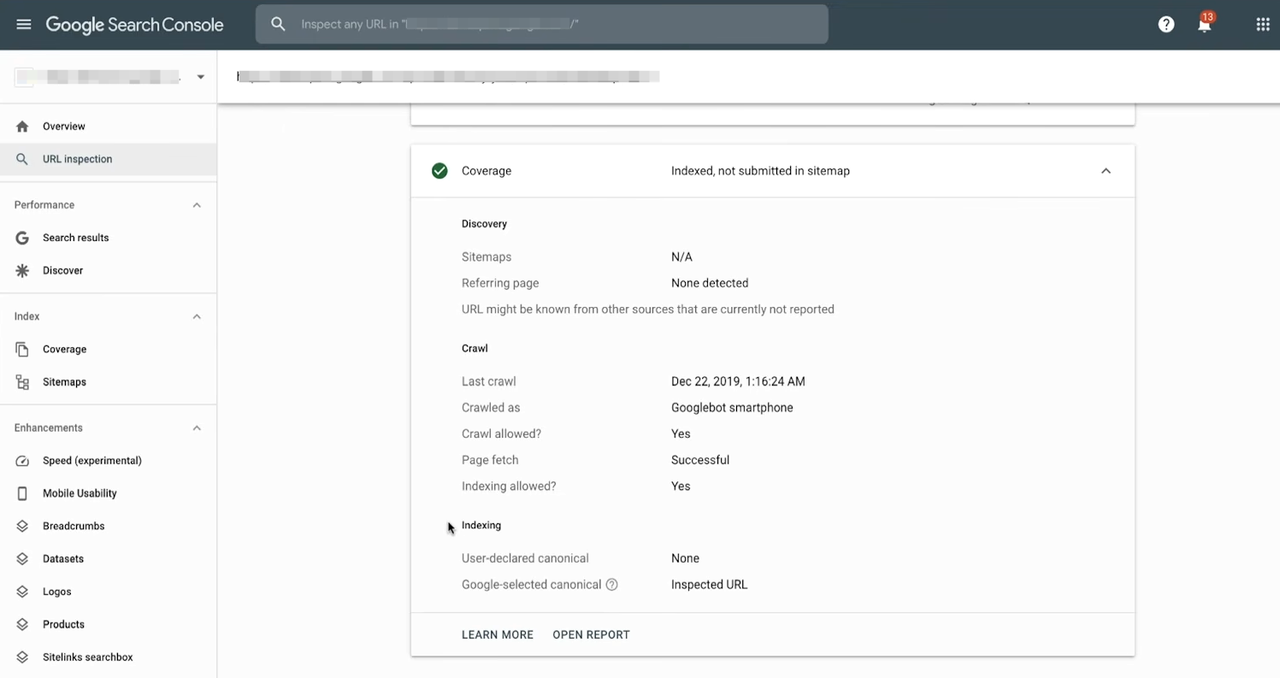
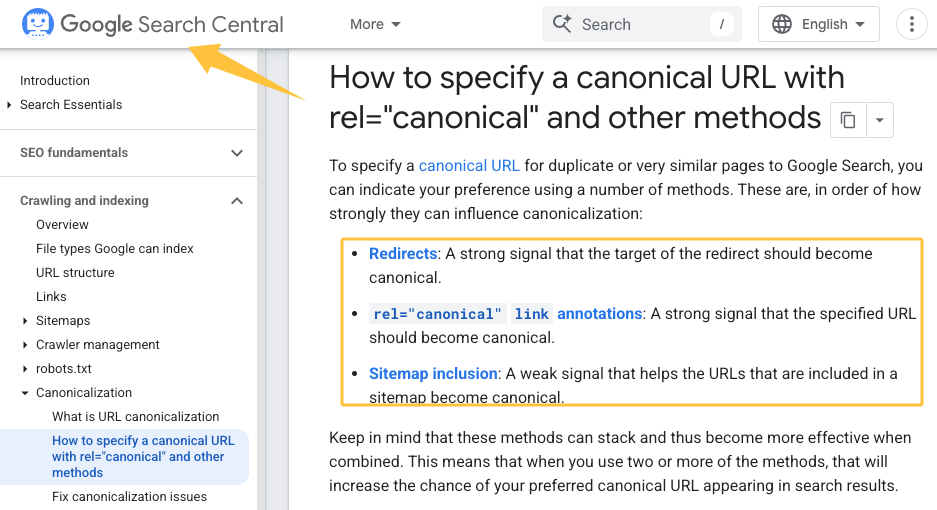
For a high-value page, compare the intended state, the response available to crawlers, and the state in Search Console. If they disagree, identify the signal that needs to change. Duplicate pages may require aligned internal links, sitemap entries, redirects, and canonical annotations. Google describes redirects and rel="canonical" as strong signals while treating sitemap inclusion as weaker in its canonicalization guidance.
Architecture findings need the same discipline. Show whether important pages sit too far from navigation, depend on internal search, or receive links only from hard-to-find pages. Google says it generally discovers crawlable links through an <a> element with an href attribute, so a JavaScript navigation finding should include rendered HTML or an inspected example. The Google link guidance provides the test standard.
Performance, Mobile, Structured Data, and Templates
One performance score is easy to misread. Note the device, test environment, page type, date, and source before interpreting it. PageSpeed Insights may include field data from the Chrome User Experience Report and lab data from Lighthouse. Field data reflects real-user experience when enough data exists; lab data provides a controlled view for diagnosis. The report should identify its source.
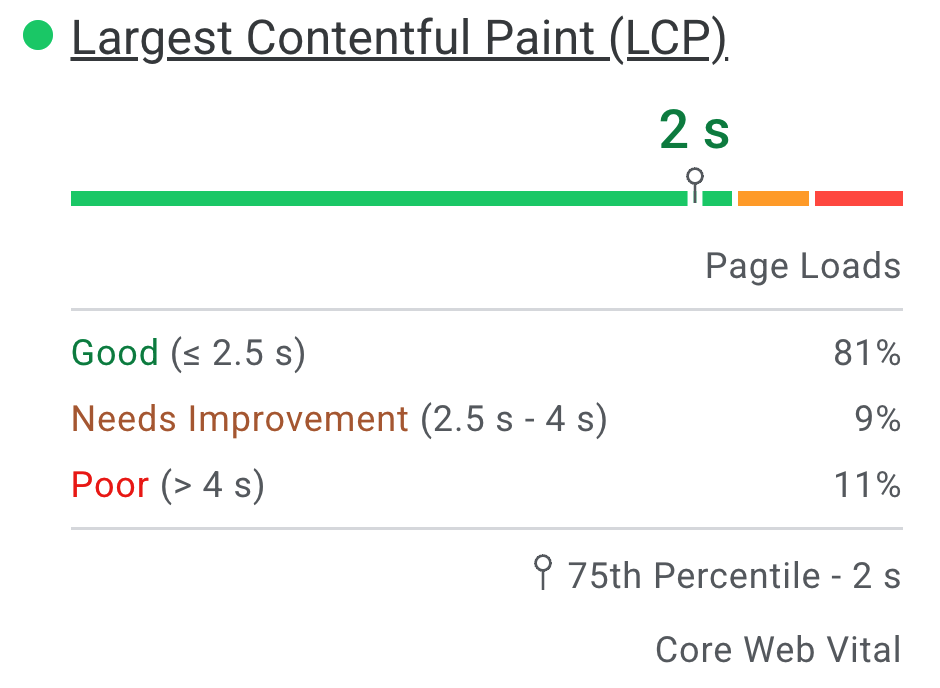
Core Web Vitals currently covers Largest Contentful Paint, Interaction to Next Paint, and Cumulative Layout Shift. The web.dev reference uses the 75th percentile and explains why a lab run cannot replace field measurement. The audit must then connect a weak metric to something a developer can inspect. “Improve LCP” offers no starting point; “check how the shared hero loads across service-page templates” does.
Mobile review should cover more than a narrow screenshot. Test navigation, primary content, forms, overlays, and controls on representative devices. For JavaScript content, capture both rendered HTML and what a visitor can use.
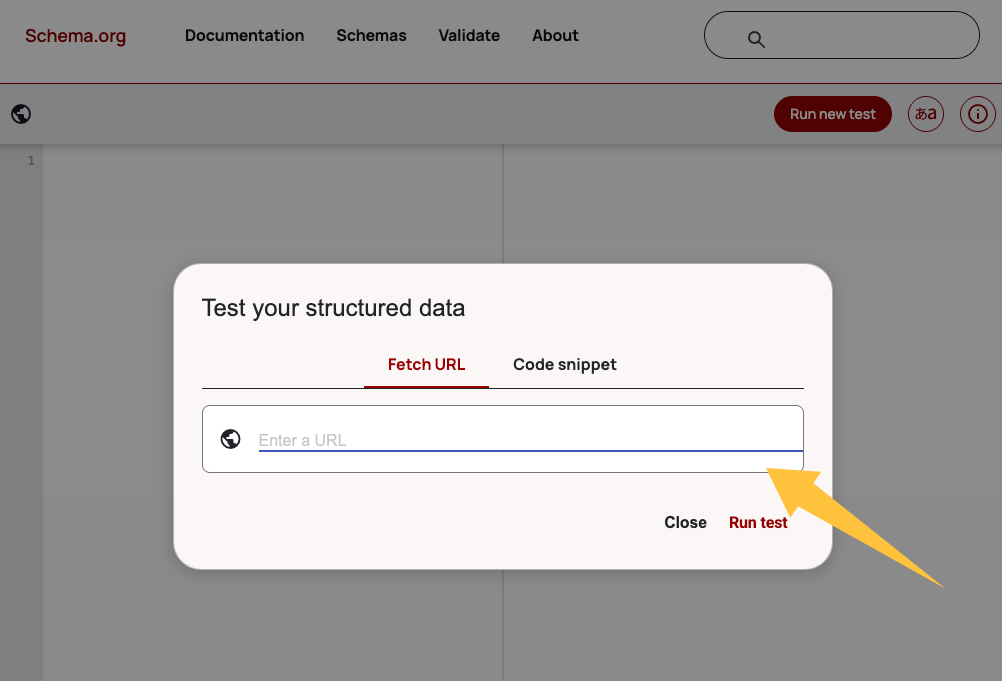
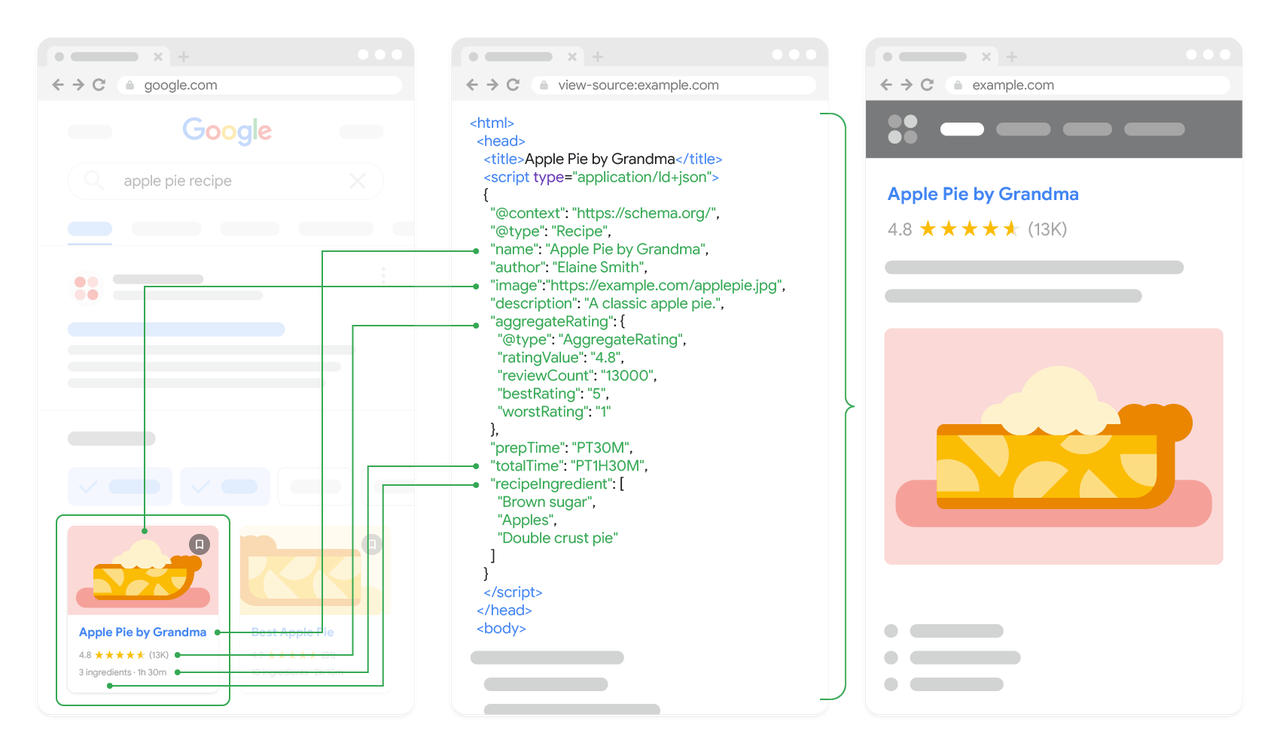
Structured data calls for two checks. Use the Schema.org validator to review the vocabulary and whether the markup describes visible content. Then use Google’s Rich Results Test and post-deployment reports to check the requirements for the expected search feature. Passing either test does not promise a rich result.
Identify whether a fault belongs to one URL, a reusable template, a CMS setting, or a third-party component. That distinction determines whether developers edit a page, repair the shared source, or open a vendor case.
Prioritize Findings by Impact, Effort, and Dependency
A tool export sorted by severity is not a business priority list. The provider should weigh likely impact, confidence, effort, and dependencies. That does not forecast ranking gains; it explains why one issue should move before another.
Priority question | What a useful answer looks like |
Does the issue block a critical page or journey? | Names the affected page purpose and the current failure |
How confident is the diagnosis? | Separates reproduced evidence from a suspected pattern |
How broad is the scope? | Distinguishes a single URL from a shared template or sitewide rule |
What does the change depend on? | Identifies a release, migration, vendor, or approval that must happen first |
What could the fix disturb? | Notes redirect, rendering, tracking, accessibility, or conversion risks |
How will the result be checked? | Defines a technical retest and any longer-term monitoring |
Dependencies explain why the most serious item may not be scheduled first. A canonical issue tied to a redesign may belong in the redesign specification. A third-party script problem may need vendor evidence before the team can estimate a fix.
Evidence, Tickets, and Implementation Handoff
SEO audit deliverables must remain clear after they leave the auditor’s hands. A slide deck can explain a pattern, but implementation usually needs a ticket or structured sheet. It should cover the scope, reproduction steps, current and expected behavior, evidence, proposed change, dependencies, owner, and acceptance criteria.
The fix direction must be specific enough to estimate while leaving developers room to choose a safe implementation. The auditor defines the required outcome; engineering decides how it fits the codebase and release process.
Before accepting the audit, agree on the handoff itself:
- Will the provider create tickets in the client’s system or supply an importable file?
- Is a walkthrough with developers included?
- How long can the team ask clarification questions?
- Does the scope include reviewing proposed fixes before release?
- Is post-release validation included, optional, or excluded?
That last point matters. An audit and a remediation engagement are different services. Some technical SEO audit services stop after findings and handoff; others include developer support or retesting. Neither model is automatically better, but the proposal should say where the provider’s responsibility ends.
Compare Audit Providers and Proposals
Compare providers against the same brief. The label—agency, specialist, or technical SEO consultant—does not tell you how much access, evidence, ticket writing, or implementation support is included.
Proposal area | Strong scope language | Warning sign |
Site coverage | Names properties, environments, page types, and exclusions | “Full audit” without defining the site boundary |
Access | Lists required Search Console, analytics, CMS, log, or staging access | Assumes every system will be available |
Method | Explains crawls, platform data, sampling, and manual review | Treats one tool export as the finished audit |
Evidence | Commits to examples and reproducible records | Provides scores without affected URLs or context |
Priority | Uses impact, confidence, effort, and dependency | Copies the tool’s default severity |
Handoff | Defines ticket format, walkthrough, questions, and retest | Ends at report delivery |
Ownership | States who implements and who approves | Leaves remediation responsibility implied |
Ask how the provider handles disagreements as well. If a developer cannot reproduce a finding, who revisits the evidence? If a proposed change carries substantial cost or release risk, can the client request alternatives? The right review rights prevent a technical recommendation from becoming an automatic commitment.
Once the site boundary, evidence standard, and handoff owner are clear, you can review relevant SEO service packages on SpringBrand against the same brief. Keep final approval with the person who owns the website and implementation risk.
FAQ
Can an audit work without analytics access?
Yes, but the limitations should be stated. A provider can still inspect crawl behavior, rendering, status codes, templates, internal links, and public performance signals. Without analytics or Search Console, it may be harder to connect findings to actual landing-page demand, conversions, indexed states, or historical changes. Ask the provider to mark any priority based on incomplete performance evidence.
How should recommendations be handled during a redesign?
Map each recommendation to the current site, the future design, or both. Problems caused by a retiring template may not justify a standalone fix, while redirect mapping, canonical rules, navigation, and tracking requirements often belong in the redesign specification. Give every accepted item an owner and a release milestone so it does not disappear between the audit and launch.
What if a third-party app causes the issue?
Record the app, affected templates, reproduction steps, and business impact first. Then identify who controls the code or configuration: the internal team, implementation partner, or vendor. The ticket may need a vendor case number and a temporary mitigation. Do not close the finding merely because the client cannot edit the component directly; track the dependency and review date.
Should a second provider review a high-cost technical recommendation?
Often, yes—particularly when the recommendation is difficult to reverse, affects many URLs, or commits the business to a major platform decision. Send the second reviewer the original evidence and the assumptions behind it, not just the proposed fix. The review should test the diagnosis, alternatives, side effects, and acceptance criteria without turning into an open-ended repeat of the entire audit.
What happens when developers cannot reproduce an issue found in the audit?
Return the finding to investigation rather than arguing from the report. Start by matching the conditions of the original test: the exact URL, user agent, environment, timestamp, response, rendered output, and test configuration. A deployment may have changed the page, the failure may come and go, or the original evidence may simply be too thin. Leave the item unapproved until both sides agree on what they observed and can repeat the test.
Conclusion
Do not close a technical SEO audit service while the team still has to reopen the original report for basic context. The accepted findings are ready only when they can be reproduced, assigned, implemented, and verified from the handoff itself. If the evidence, implementation owner, or acceptance check is still missing, the audit has identified a concern but has not finished the handoff.