ChatGPT Sites vs a Web Designer: Business Fit
ChatGPT Sites vs web designer: decide when DIY is enough and when your business needs design, SEO, CRM, or growth services.
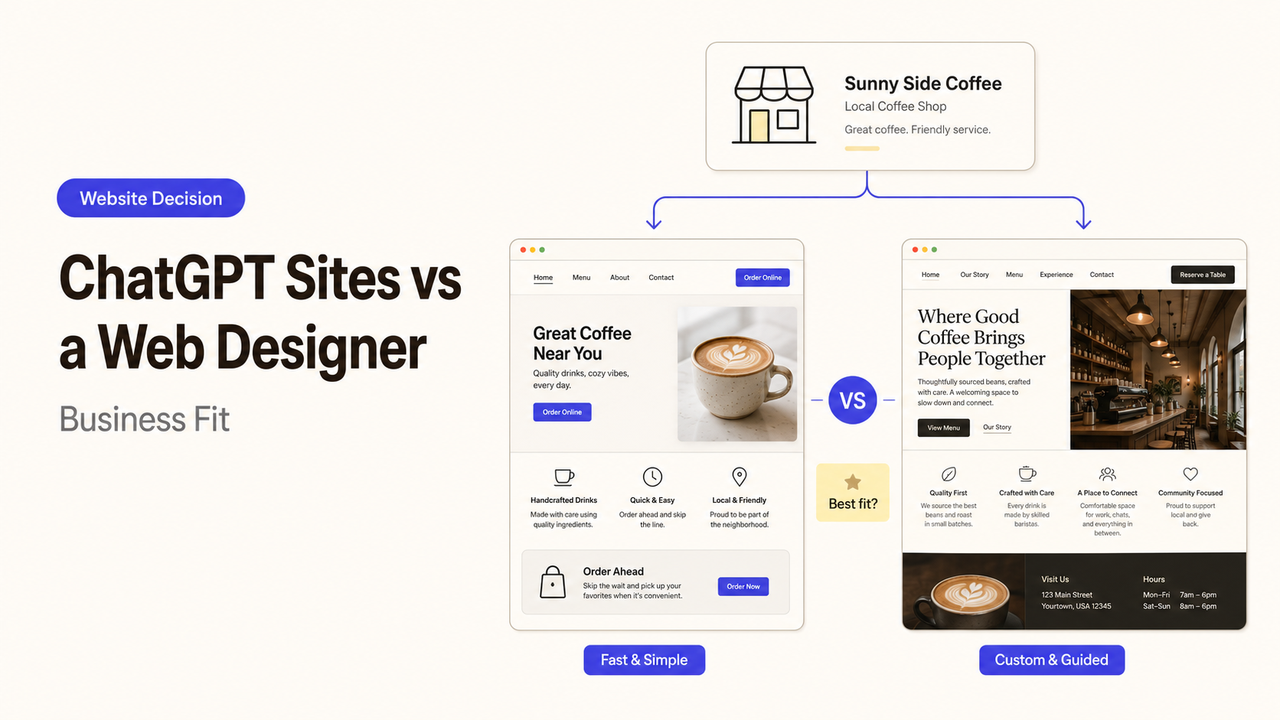
A bakery owner comparing ChatGPT Sites vs a web designer needs a weekend catering page live before Friday. The copy is ready and the inquiry button works—but no one has decided whether this campaign page will later become the front door for search, CRM, and ads. This guide draws the line between a sensible DIY launch and a professional build. Alex here: I would choose based on the cost of a bad handoff, not on who produces the first draft faster.
Quick Decision Framework
Use ChatGPT Sites when the page has one audience, one short-lived goal, and a simple conversion path that the owner can test personally. Hire help when the website must carry a distinctive brand, attract search traffic across several pages, process transactions, pass leads into a CRM, or support paid campaigns with reliable tracking.
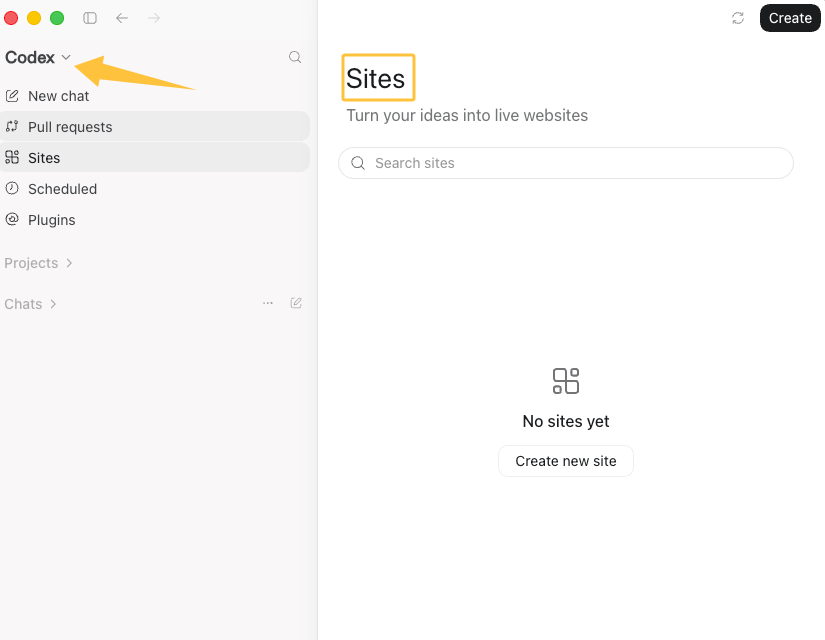
That recommendation comes with a product-status check. OpenAI still describes ChatGPT Sites as a public beta. Its setup and management guide, checked July 20, 2026, covers building, previewing, revising, publishing, and sharing websites and lightweight interactive apps. Features may vary by plan, region, and workspace, especially limits, public publishing, and custom domains. Check those settings before adding them to the project scope.
Business situation | Better starting point | Why | Evidence required before launch |
Test one offer or event | ChatGPT Sites | The owner can revise quickly and retire the page later | Mobile test, working inquiry path, removal date |
Establish a recognizable company site | Designer, with copy or development support as needed | Brand and page relationships need deliberate choices | Design system, page inventory, ownership record |
Build an organic-search channel | SEO specialist plus design/development as needed | Search needs structure, content, crawlability, and maintenance | Page map, technical checks, Search Console access |
Sell products or take payments | Ecommerce specialist or experienced team | Checkout and support exceed page design | Tested transaction, platform access, support owner |
Connect CRM or paid acquisition | Developer, CRM, analytics, or campaign specialist | Routing and tracking failures affect revenue operations | Test record, conversion event, fallback owner |
Use DIY for Simple Validation Pages
A DIY business website is enough when the business question is narrow: Will people request a quote for this service? Will existing customers register for this event? Does a new offer deserve a larger launch? A short page with a clear promise, proof you already own, and one contact action can answer those questions without a full redesign.
ChatGPT Sites is useful here because the owner can describe the page, review a private preview, request changes in plain language, and publish a version. The same owner should still open the live page on a phone, submit the form with a real test address, check the notification, and read every generated claim. A successful deployment event only proves that a URL exists.
Keep the validation page deliberately small:
- one offer and one primary action;
- content and images the business has the right to publish;
- a named person who receives inquiries;
- a review date and a decision about reusing the URL.
OpenAI places the review and operation of a published Site with its owner. Its responsibilities guidance for ChatGPT Sites specifically calls for checking visitor-submitted information and says Sites must not process payment-card data or enable financial transactions. That makes a public information page or lead-capture experiment a different proposition from an ecommerce checkout.
The failure path is easy to miss. A form can display a thank-you message while sending nothing to the business. Put the exception next to the happy path: if a submission does not create the expected email, CRM record, or callback task, who notices and what backup contact method remains visible?
Hire Help for Brand, SEO, Ecommerce, CRM, or Ads
Before you hire a website designer, identify the missing capability. Once a site becomes business infrastructure, the word “designer” can hide several different jobs.
The U.S. Bureau of Labor Statistics description of web roles separates interface design from technical development and maintenance. In practical terms, a web designer may own visual direction, layout, navigation, and usability. A developer may own code, performance, integrations, and technical behavior. “Agency” and “freelancer” describe how the work is staffed, not what the scope includes. An agency may combine disciplines; a freelancer may cover one role or several. Check the proposal to see whether SEO, copy, analytics, or CRM setup is included.
Brand and customer trust
Bring in a designer when the site must feel recognizably yours across more than one page. That means choosing type, photography, hierarchy, accessibility, and reusable page elements. An AI draft gives you a layout to review; it cannot decide which visual rules the business should own or how future pages should use them.
Ask for reusable rules, not just polished screenshots. Type styles, components, spacing, image treatment, and mobile behavior give the next editor something usable after the engagement ends.
SEO and content growth
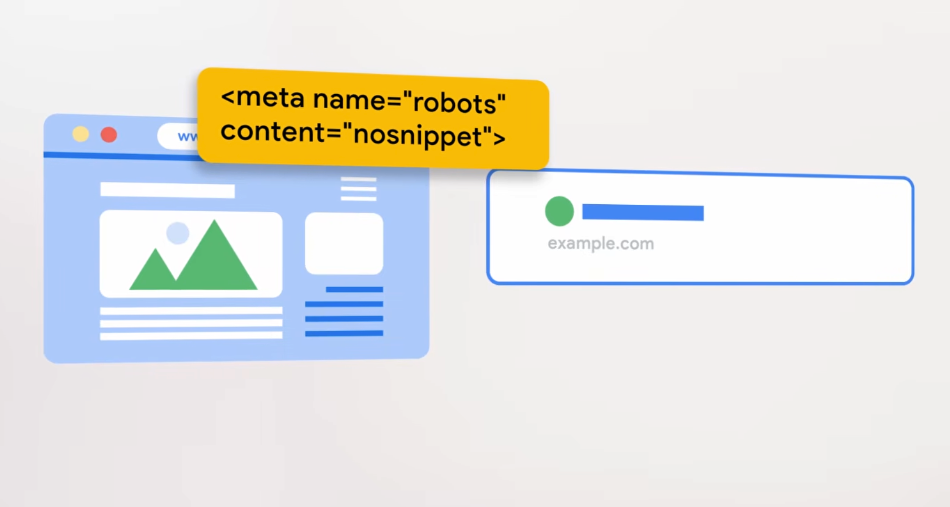
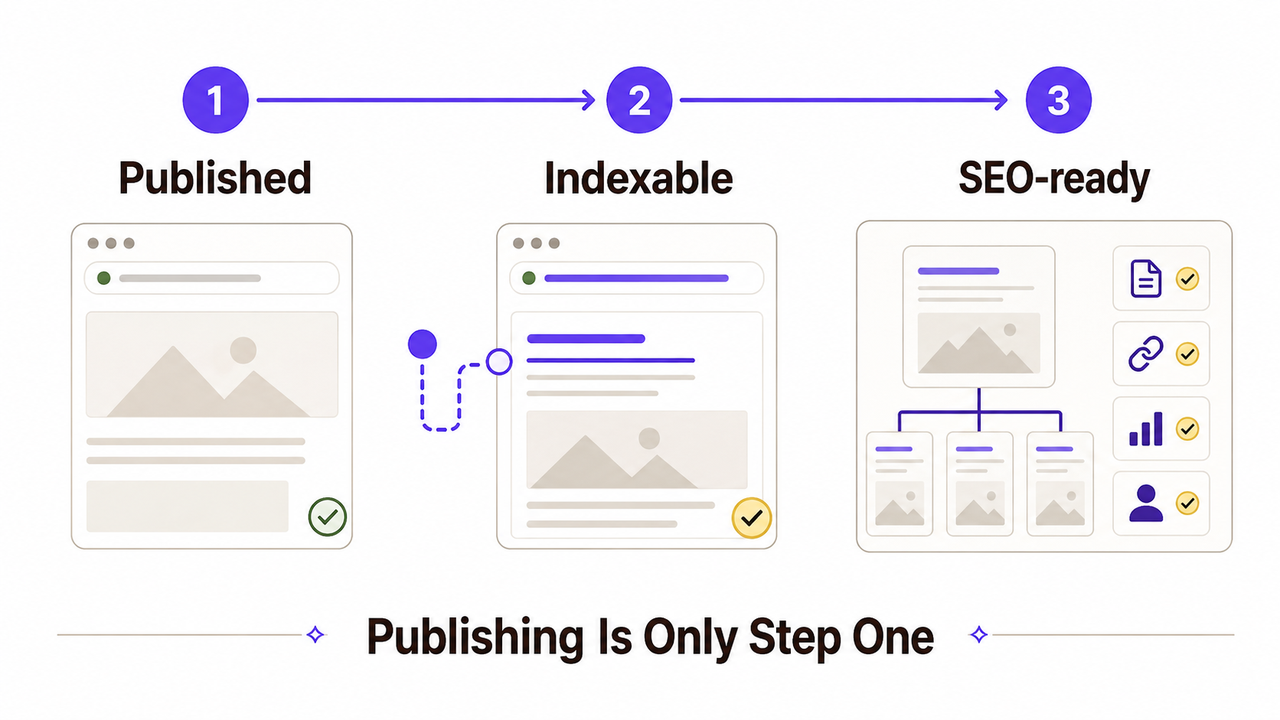
SEO requires more than publishing a homepage. Google’s SEO Starter Guide covers descriptive URLs, title links, crawl access, site organization, useful content, and ongoing Search Console work. If organic search is a real acquisition channel, the scope may need an SEO specialist, a writer, and a developer as well as a designer.
Name target pages, internal links, technical checks, measurement access, and the update owner. Do not accept “SEO-ready” as a substitute or expect guaranteed rankings.
Ecommerce and CRM
Ecommerce adds catalog structure, checkout, payments, confirmations, returns, and support. A designer can shape the storefront, but a platform specialist may be needed to make transactions dependable. Because ChatGPT Sites currently prohibits payment-card processing and financial transactions, use an appropriate commerce platform rather than improvising checkout inside a Site.
For CRM work, decide which fields are collected, where consent is recorded, who receives alerts, and what happens when the connection fails. The useful proof is the resulting record in the correct pipeline with the expected owner.
Advertising landing pages
Paid traffic makes small mistakes expensive. Google Ads describes landing-page experience in terms that include relevance, usefulness, and ease of navigation. The scope should also cover message match, mobile behavior, conversion events, and revisions that do not break measurement.
Bring in the specialist who owns the adjacent risk. That may be a conversion designer, analytics implementer, developer, or performance marketer—not automatically a general web designer.
Compare Cost, Speed, Control, and Long-Term Maintenance
Comparing only a subscription with a design quote gives a poor picture of AI site builder cost. DIY also uses the owner’s time for the brief, copy and image checks, domain and analytics setup, lead testing, revisions, and repairs. A professional fee may cover research, judgment, QA, documentation, and handoff. Its value depends on what the scope actually includes.
Factor | ChatGPT Sites DIY | Designer, freelancer, or agency | What to record |
Speed | Fast when goal and content are clear | Reviews add coordination but can prevent wrong turns | Launch dependency and approver |
Total cost | Plan, domain, tools, owner time, and later repairs | Project or ongoing fees; inclusions vary | Itemized scope and exclusions |
Control | Immediate edits within product limits | Depends on handoff terms | Files, accounts, assets, licenses |
Maintenance | Owner monitors and repairs | Included only if contracted | Response and change process |
Migration | Verify before a temporary site becomes permanent | Depends on platform and agreement | Export, redirects, content inventory |
At this point, ownership matters more than automation. A fast site becomes expensive if the domain sits in a contractor’s account, the source cannot be handed over, analytics access disappears, or the owner must rebuild every campaign page from scratch.
OpenAI’s public management guide explains versions, publishing, and deletion, but it does not state a general promise that every Site can be exported and migrated into another hosting stack. Keep that question open until you verify the workflow available in your account. For professional work, put the equivalent answer in the contract rather than relying on a verbal assurance.
How to Scope the Right Website Service
The request sounds clear until someone has to price it. “Build a professional website” could mean a five-page visual refresh, custom lead routing, an ecommerce catalog, a search program, or all four. Clear scope before commitment.
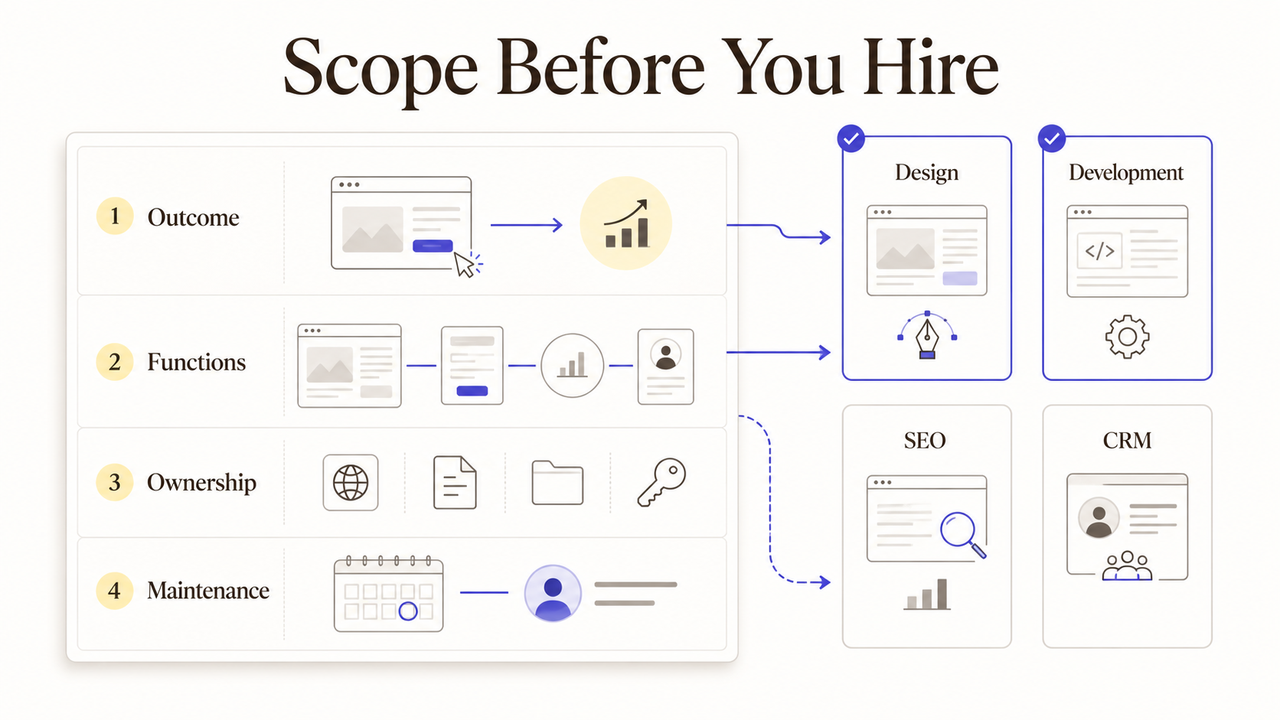
Use this brief before requesting a proposal:
- Business outcome: State what the visitor should do and what the business wants to learn or improve.
- Audience and pages: Name the customer segment, required pages, variants, and existing content.
- Functions: List forms, scheduling, ecommerce, CRM, email, analytics, and advertising connections.
- Brand inputs: Identify existing logos, fonts, photography, voice guidance, and missing assets.
- SEO: Name target topics, migration needs, URL constraints, internal links, Search Console, and the update owner.
- Ownership: Assign the domain, hosting, source, design files, analytics, integrations, and licensed assets.
- Review: Name the approver, stages, acceptance checks, and authorization for out-of-scope work.
- Maintenance: Record who fixes defects, updates content, monitors forms, and handles future changes.
The brief also shows whether you need one specialist or a team. Hire design for a visual gap, development or CRM expertise for data movement, and SEO or paid media support for acquisition. An agency helps when those dependencies need coordination; a focused freelancer may suit one bounded gap.
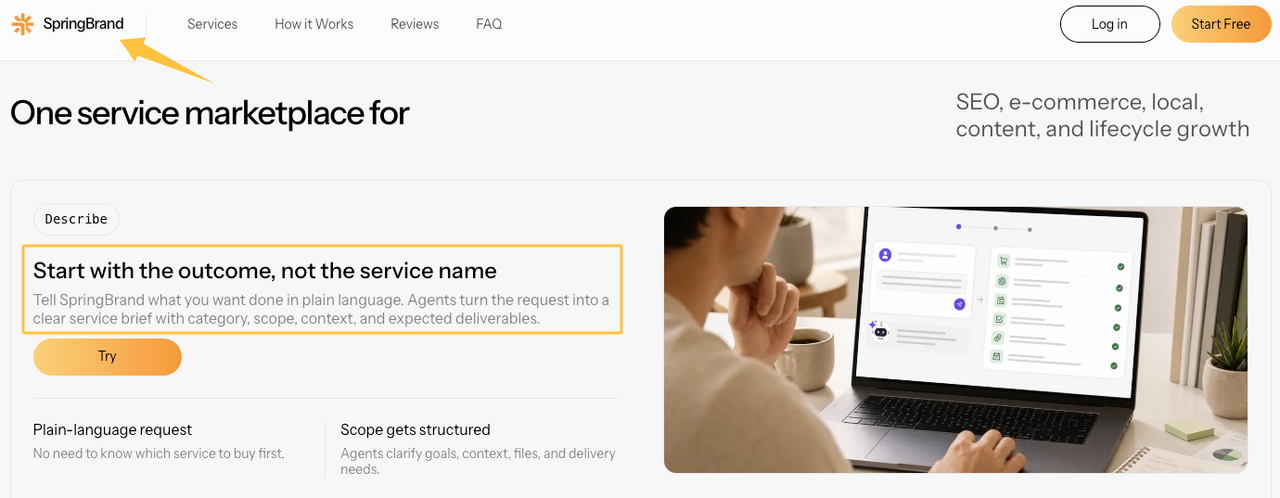
If the deliverables still blur together, turn the website request into a service brief with SpringBrand before comparing providers.
FAQ
Who owns design files and website access after delivery?
Write ownership down before work starts. List the domain, hosting, source, CMS, design files, licensed assets, analytics, Search Console, CRM, and form destinations. Record what transfers to the business, then test the handoff by having the owner sign in without the provider’s personal account.
What review rights should be agreed before work starts?
Define the review stages, approver, feedback method, and acceptance test. Separate a missed requirement from a new request, and include mobile, content, forms, analytics, and browser checks where relevant. A clear review method is more useful than a vague promise of unlimited revisions.
How should changes be handled after the first draft?
Log the request, reason, affected page, owner, and approval. The provider should say whether it fixes an agreed requirement or expands scope, then explain the effect on dependencies. Preserve the approved version as the baseline.
Conclusion
The ChatGPT Sites vs web designer decision depends on what the site must carry. DIY fits when one owner can inspect the visitor path, the page does one limited job, and a later rebuild would cause little disruption. Once the site holds customer data, supports revenue, carries the brand across channels, or must keep attracting traffic, the risk changes. Hire a designer for the visual system, then add development, SEO, CRM, ecommerce, or advertising support where the scope requires it.
A DIY launch still makes sense while the owner can name its dependencies and test every handoff. Once that stops being practical, write the scope before bringing in the appropriate specialist.
Recommended Reads
- ChatGPT Sites SEO: What Small Businesses Should Check
- ChatGPT Sites vs Google Sites for Small Business
- ChatGPT Sites for Small Business: What to Check
- Best LinkedIn Post Generators for Better Professional Content