Claude Code vs Marketing Agency: Which Fits Your Business?
Claude Code vs marketing agency: compare task risk, strategy needs, execution scope, and oversight before choosing DIY automation or expert help.
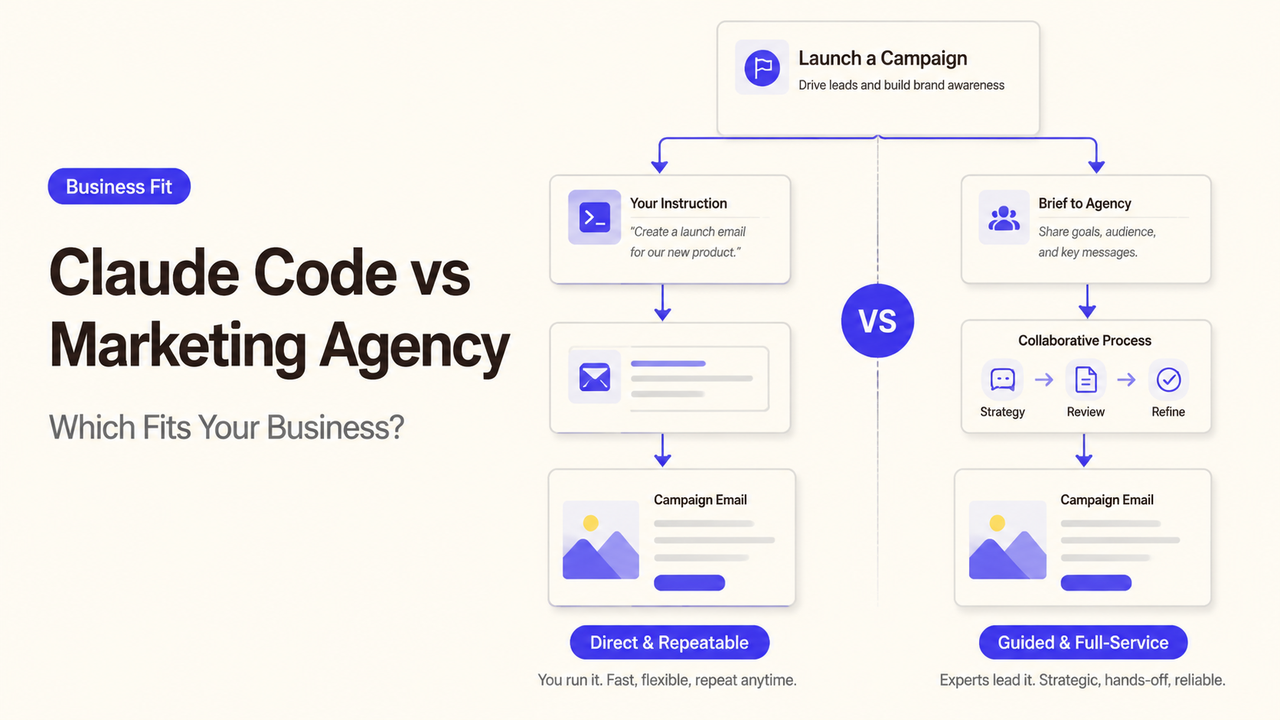
Consider a small-business owner with a repeatable content brief, a CRM export, and a campaign that needs a new direction. The brief may fit a rules-based workflow; the campaign decision still spans positioning, channel tradeoffs, budget, and account access. For Claude Code vs marketing agency, the useful question is which work can be specified and reviewed internally, and which work needs specialist judgment with ongoing responsibility. I’m Alex. Keep the next approval with the business owner whenever either option could publish, spend, or change a customer record.
Quick Verdict by Task Risk and Business Goal
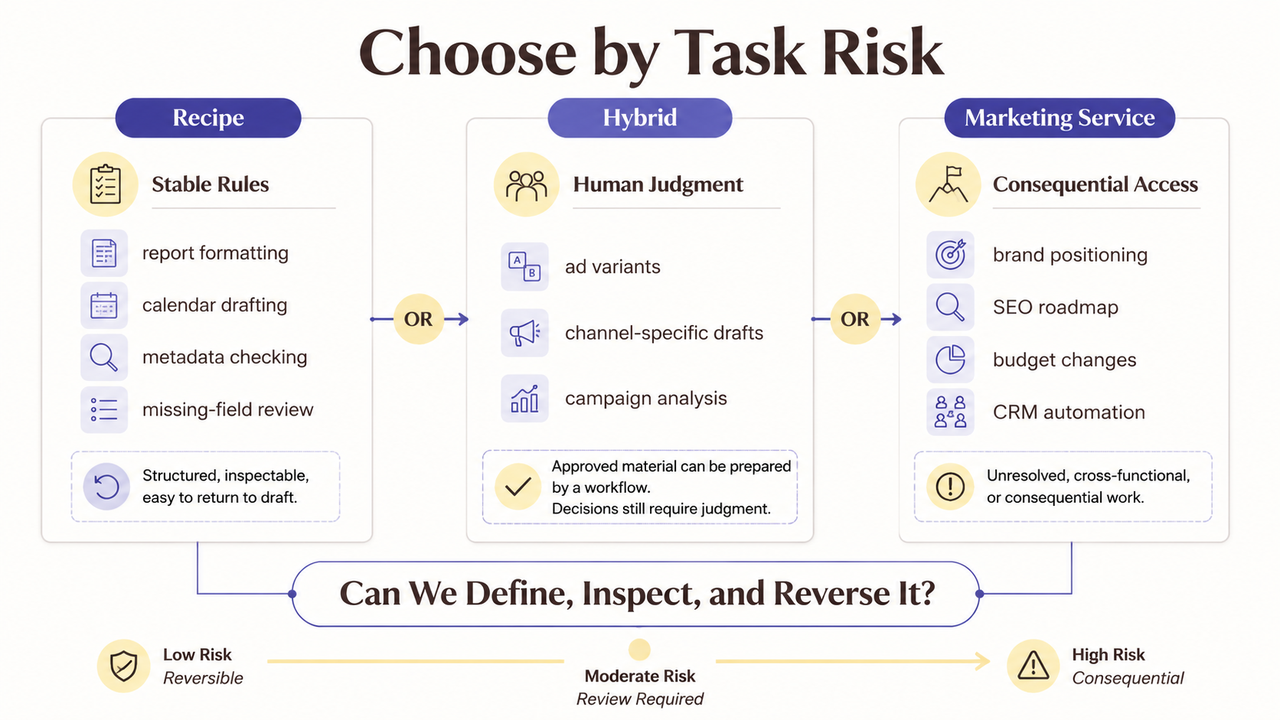
Use a Claude Code recipe when the inputs are approved, the rules are stable, the output is easy to inspect, and a mistake is reversible. Use a marketing service when the business still needs to decide what to do, several channels must move together, or an error could affect brand trust, customer data, ad spend, or revenue operations.
Here, “recipe” means a reusable workflow built from instructions, templates, a Skill, or a compatible command. It is not a separate agency replacement, and it does not turn marketing judgment into a fixed procedure merely because the output looks polished.
Task | Main risk | Better starting point | Approval owner |
Reformat approved campaign results into a weekly report | Low; source and format are stable | Recipe | Marketing owner |
Turn approved topics into a calendar draft | Low to moderate; priorities may shift | Recipe with human review | Marketing lead |
Choose a new brand position | High; evidence and tradeoffs are unsettled | Marketing service | Founder or brand owner |
Set an SEO roadmap across content, technical issues, and authority | High; dependencies cross disciplines | Marketing service | Business and marketing lead |
Produce variants from approved ad copy | Moderate; claims and platform rules matter | Hybrid | Campaign owner |
Change live campaign budgets or CRM automation | High; money or customer records can move | Service or tightly controlled hybrid | Named account owner |
The dividing line is not whether AI can draft the artifact. It is whether the business can define the decision, inspect the output, contain the failure, and assign someone to approve the next state.
Use a Recipe for Rules-Based, Low-Risk Tasks
A strong recipe begins after the business has settled the rule. Good candidates include turning an approved brief into channel-specific drafts, checking pages against a metadata checklist, organizing a content calendar, standardizing campaign reports, or flagging missing fields in a lead export. These tasks have recognizable inputs and a visible definition of done.
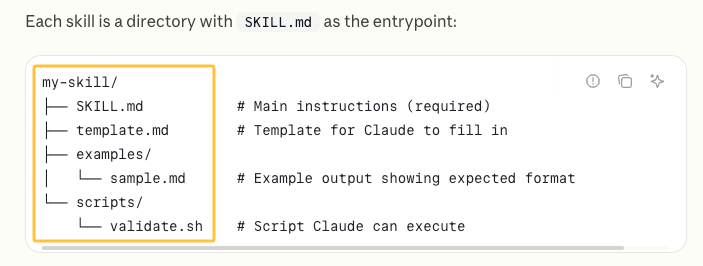
Anthropic describes Claude Code Skills as reusable instructions stored in SKILL.md, with optional templates, examples, scripts, and reference files. That makes a Skill useful for recurring procedures, but the business still has to define the procedure, choose its inputs, and review what comes out.
Before using DIY marketing automation, record:
- the approved source files and date range;
- the allowed actions and output destination;
- the acceptance checklist;
- the person who reviews the result;
- the condition that stops the run.
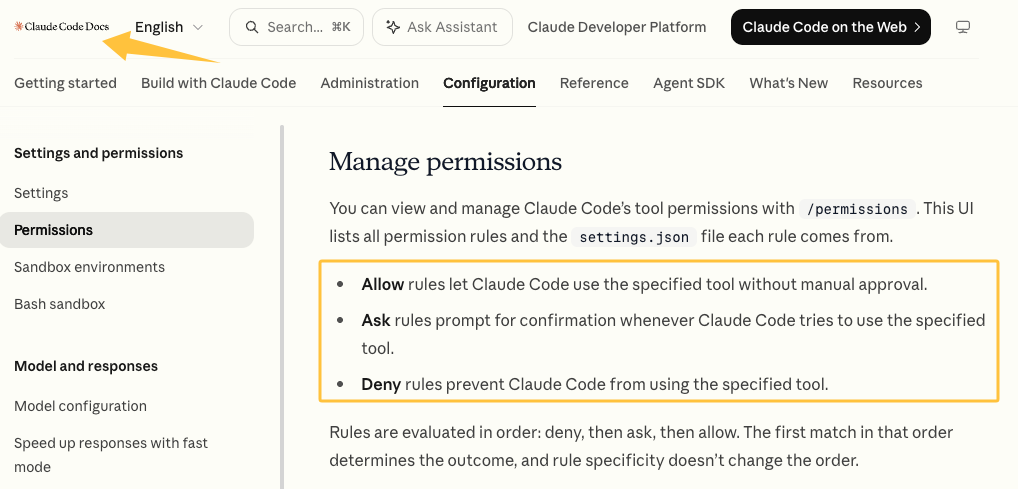
Keep the workflow away from ambiguous approvals. Claude Code’s current permission controls can allow, ask, or deny tools and paths, but the effective boundary depends on the project and organization configuration. Check what the session can actually reach before assuming it may read a CRM export, fetch a site, edit files, or call another service.
A recipe is a poor fit when the owner cannot explain why one output should be accepted over another. If the rule changes every week, the team is maintaining a strategy conversation disguised as automation.
Use a Marketing Service for Strategy and Cross-Channel Execution
Bring in a marketing service when the assignment starts with unresolved choices. Brand positioning, SEO strategy, paid acquisition, lifecycle design, campaign architecture, and cross-channel launches require someone to weigh incomplete evidence and accept responsibility for recommendations.
“Agency” is only a commercial label. One provider may combine strategy, copy, design, media buying, analytics, and account management; another may deliver a narrower specialty. Ask what is included instead of treating the label as proof that every discipline is covered.
The service scope should name both decisions and deliverables. A positioning engagement may include customer research, category analysis, message options, and a recommendation. An SEO engagement may involve technical findings, content priorities, implementation guidance, and measurement. Neither should be described only as “growth help.”
Across business growth services, professional help also matters when the work crosses several owners. An ad concept can change landing-page copy, tracking, CRM routing, sales follow-up, and reporting. Someone must manage those handoffs, resolve conflicts, and tell the business when a requested tactic does not support the stated goal.
Do not assume a marketing service guarantees results. The provider can be accountable for agreed research, recommendations, execution, reporting, and quality checks; market response remains uncertain.
Compare Cost, Time, Expertise, Accountability, and Risk
An AI workflow vs agency comparison becomes misleading when it places a software cost beside a service fee and stops there. The owner’s time, internal coordination, delayed decisions, access management, rework, and future maintenance all belong in the comparison.
Dimension | Claude Code recipe | Marketing service | Question to settle |
Cost | Tool access plus internal setup, review, and maintenance | Professional fee plus internal briefing and review | Which hidden work remains with the owner? |
Time | Fast after inputs and rules stabilize; slower while the workflow is being corrected | More setup through discovery and briefing; execution may cover several roles | When must a usable decision or deliverable exist? |
Expertise | Applies the instructions and sources supplied | Adds specialist interpretation and execution experience | Is the missing piece production or judgment? |
Accountability | Usually remains with the internal workflow owner | Can be assigned through scope, deliverables, reviews, and change terms | Who corrects a failed or incomplete result? |
Control | High internal control if permissions and files are well bounded | Shared control through approvals, platform access, and provider processes | Which decisions must stay inside the business? |
Risk | Low for reversible drafts; rises sharply around publishing, spend, data, and integrations | Can reduce capability gaps but introduces vendor, access, and handoff risk | Which failure would be hardest to reverse? |
Compare the full operating model, not the first invoice or first successful run. A cheap workflow that consumes an owner’s attention every week may not be cheap; a broad service with an unclear scope may not remove any work at all.
Where a Hybrid Approach Works Best
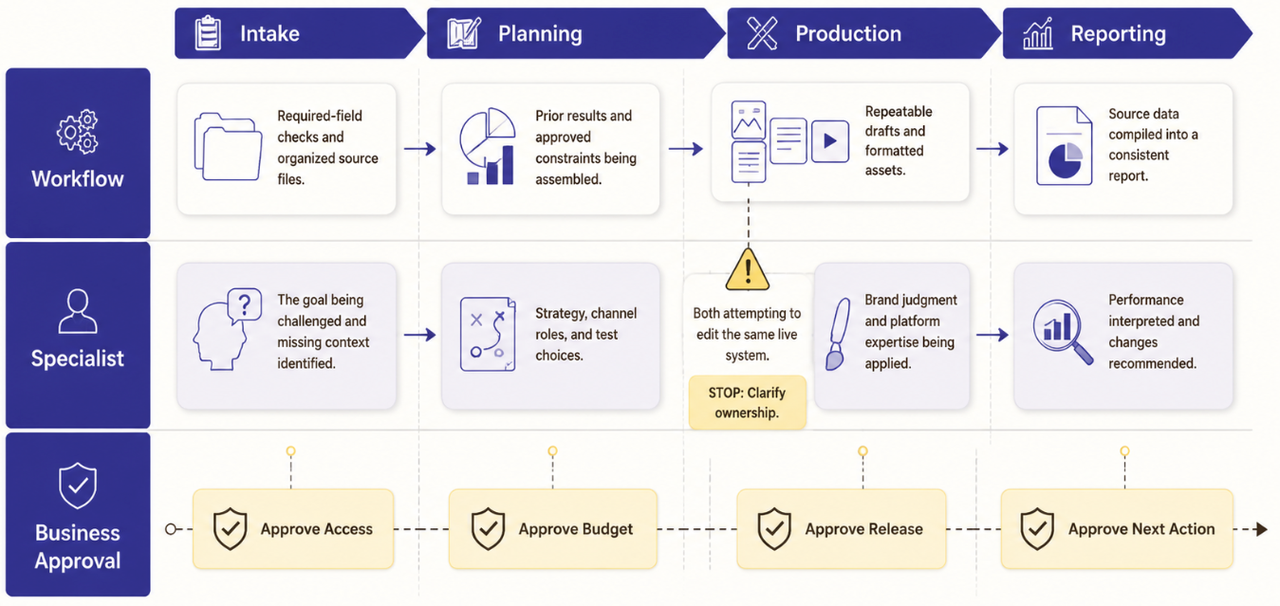
The hybrid model separates repeatable preparation from professional judgment. Claude Code can organize approved inputs, apply templates, assemble reporting drafts, flag missing fields, and preserve a structured record. A specialist can interpret the market, set priorities, shape creative direction, manage channels, and respond when performance or business conditions change.
One workable handoff looks like this:
Stage | Workflow contribution | Specialist contribution | Business approval |
Intake | Check required fields and organize files | Challenge the goal and identify missing context | Approve objective and access |
Planning | Assemble prior results and approved constraints | Choose strategy, channel roles, and tests | Approve plan and budget boundary |
Production | Draft or format repeatable assets | Apply judgment, brand standards, and platform expertise | Approve customer-facing work |
Reporting | Compile source data into a consistent view | Explain performance and recommend changes | Approve the next action |
Hybrid work fails when both sides can change the same system without a clear handoff. The workflow should not edit a live campaign while the provider is restructuring it, and the provider should not silently change a template the internal team expects to reuse.
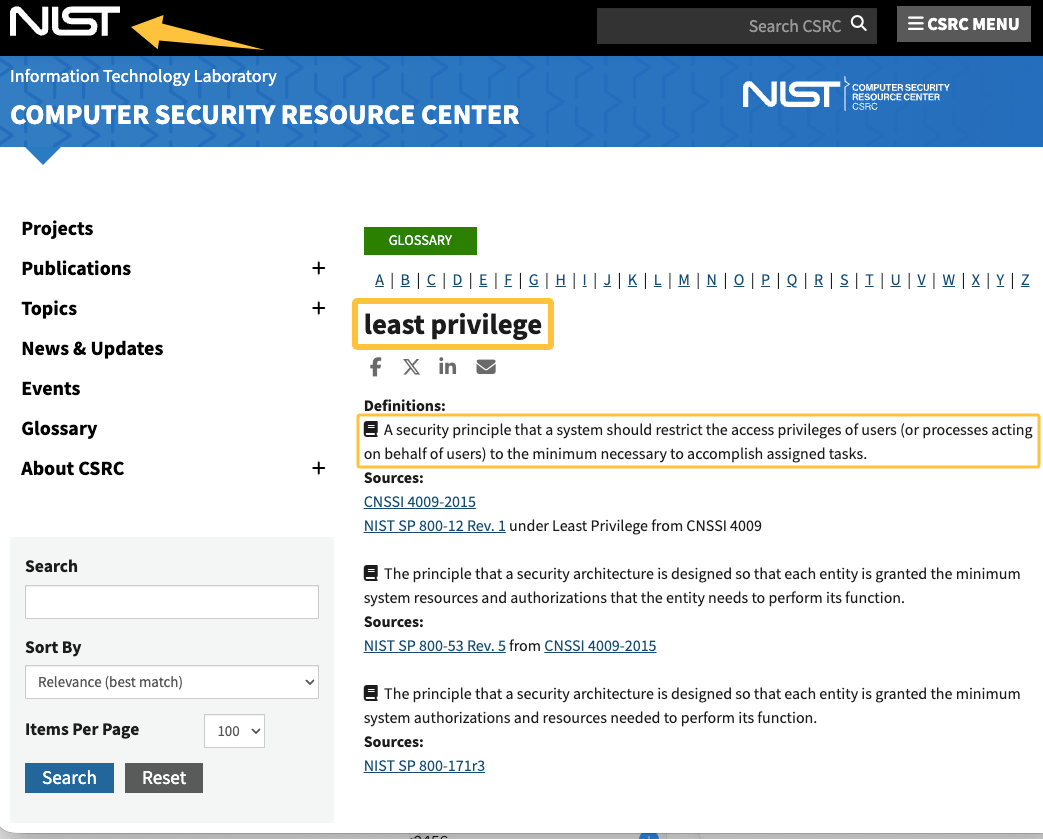
Use the principle of least privilege for both people and processes: grant only the access needed for the assigned task. Agents coordinate. People retain control, especially at publishing, spending, data export, and account-administration steps.
Define the Scope Before Requesting a Service
A service request should let a provider estimate the work and let the buyer recognize completion. Write the scope before comparing proposals:
Scope field | What to state |
Business outcome | The decision or change the work should support |
Current state | Existing channels, assets, constraints, and known problems |
Included work | Research, strategy, production, implementation, reporting, or training |
Deliverables | Named files, configurations, meetings, or completed actions |
Exclusions | Channels, systems, markets, or decisions outside the engagement |
Inputs and access | Files, accounts, data, and internal contacts required |
Review rights | Who reviews each stage and how feedback is consolidated |
Acceptance | Evidence that shows a deliverable meets the agreed scope |
Change process | How new requests affect scope, approval, and responsibility |
Ownership | Who retains accounts, source files, templates, and documentation |
Ask the provider to identify its lead, specialist roles, and any subcontractors before access is granted. Define whether the engagement ends with advice, completed implementation, a handoff, or ongoing management. A strategy deck and an operating channel are different commitments.
This brief also exposes whether the business needs an agency, a specialist freelancer, or a narrower packaged service. The request sounds clear until someone has to price and accept it.
FAQ
How should confidential data be shared with a provider?
Share only the information required for the agreed task, through channels approved by the business. Remove unnecessary personal data, credentials, and unrelated records. Check the provider’s handling, retention, deletion, and incident process, plus the agreement that applies. For Claude Code inputs, review the current data-usage policy for the account and deployment in use.
What should be checked when providers use subcontractors?
Ask who the subcontractors are, what they will access, which work they perform, and who remains accountable for quality and deadlines. Review confidentiality, data handling, ownership, approval, replacement, and incident obligations with the appropriate legal or security adviser. The buyer should not discover a new data recipient after work begins.
Who should approve access to advertising or CRM accounts?
An internal account owner should approve access, choose the minimum workable role, record who received it, and set a review or removal date. Avoid shared credentials. Google’s current Ads account security guidance likewise recommends individual access, removing inactive users, and granting the minimum access needed. Apply the equivalent controls to the platform in scope.
Conclusion
In Claude Code vs marketing agency, keep rules-based, reversible work internal when the team can define and review it; bring in professional help when strategy, channel coordination, specialist execution, or consequential access remains unresolved.
When the scope points beyond DIY, turn the business outcome into a service request through SpringBrand before comparing providers.
Keep final approval with the business owner until the scope, account access, acceptance evidence, and exception owner are explicit.