Turn an Instagram Reel Into an SEO Blog Post
Instagram Reel to blog: restructure a video transcript into search intent, headings, examples, and an SEO-ready article.
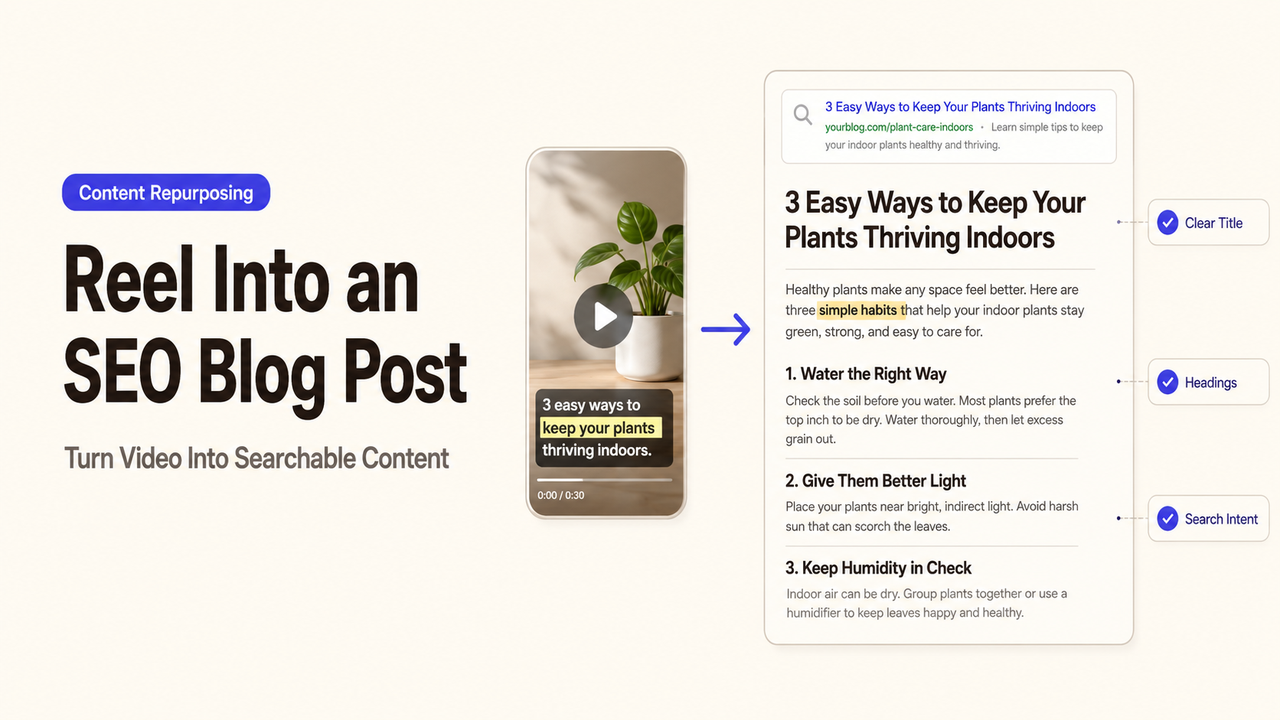
The Reel has already done one job: it held someone’s attention long enough to make a point. When its transcript lands in the content queue, however, no one has yet agreed on the search question, the missing evidence, or who approves the final page. This guide turns that loose handoff into a practical Instagram Reel to blog process. I’m Alex, so I’ll give you one boundary up front: if a section cannot answer the searcher’s next question, it does not belong in the article yet.
Why a Transcript Alone Is Not a Blog Post
Tone, timing, text on screen, and the cut between scenes may carry much of a Reel’s meaning. A blog post has to work when the reader arrives from search and never watches the video.
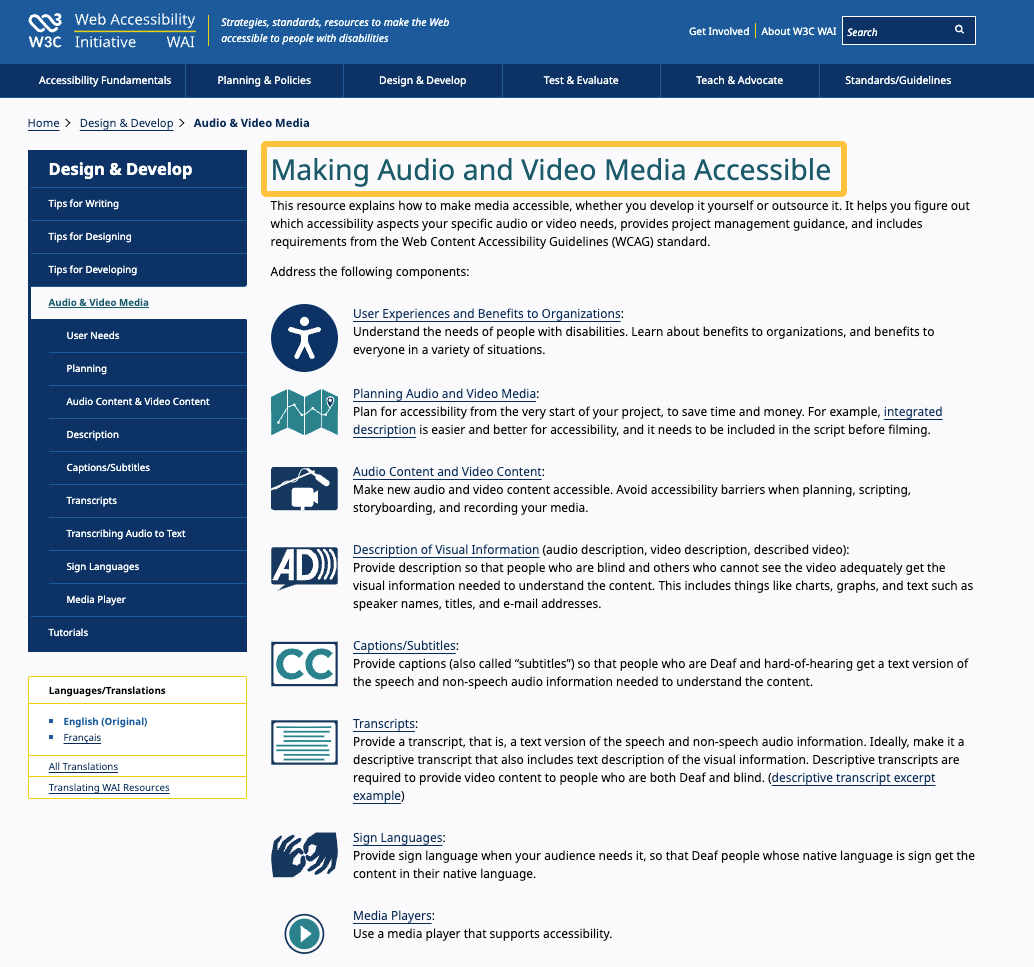
That makes an Instagram Reel transcript a useful source, not a publishable draft. The W3C’s guidance for audio and video notes that a descriptive transcript can include visual information as well as speech and non-speech audio. Before editing, add any on-screen steps, labels, demonstrations, or qualifications that the raw transcript missed.
Remove false starts, filler, and repeated setup, but keep the speaker’s actual point and level of certainty. A casual “this usually helps” should not become “this will fix the problem” because it looks cleaner on a page.
The page also needs information the Reel never covered: who the advice is for, when it does not apply, and what evidence supports it. Moving from video transcript to article means making those editorial decisions; that is what it takes to repurpose video for SEO.
Find the Search Intent Behind the Reel
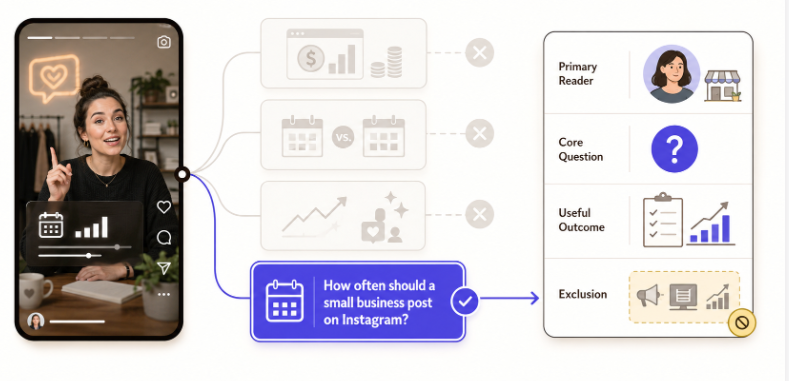
Start with the question the video actually answers, not the highest-volume phrase that sounds loosely related. A Reel about posting frequency should not be stretched into an article about Instagram ad costs.
Test the likely intent against customer questions, queries visible in Search Console, and current search results. Note whether readers appear to need a definition, steps, a comparison, or a buying decision; do not copy the leading pages’ headings.
Google describes SEO as helping search engines understand content and people decide whether to visit it. Its SEO Starter Guide rejects any secret that automatically ranks a page first. Ask instead: “Which specific question can this source answer better after we add context and evidence?”
Write that decision at the top of the brief:
Brief field | Working answer for the example Reel |
Primary reader | Owner or marketer on a small team |
Core question | How often should a small business post on Instagram? |
Intent | Practical guidance, not a scheduling-tool comparison |
Useful outcome | Choose a sustainable starting cadence and review it |
Exclusion | Paid advertising frequency and platform-specific reach claims |
This boundary prevents the draft from drifting toward every related phrase. It also tells the fact-checker which claims need support and gives the approving editor a visible standard for relevance.
Build the Blog Structure From the Core Question
Consider this hypothetical Reel transcript:
So, a lot of people ask if they should post every day. Honestly, for a small team, I’d rather see three useful posts you can keep up with than seven rushed ones. Look at what customers ask before buying, answer one question at a time, and check which posts lead to site visits.
Do not stretch those sentences to reach a target length. Break them into claims and questions first:
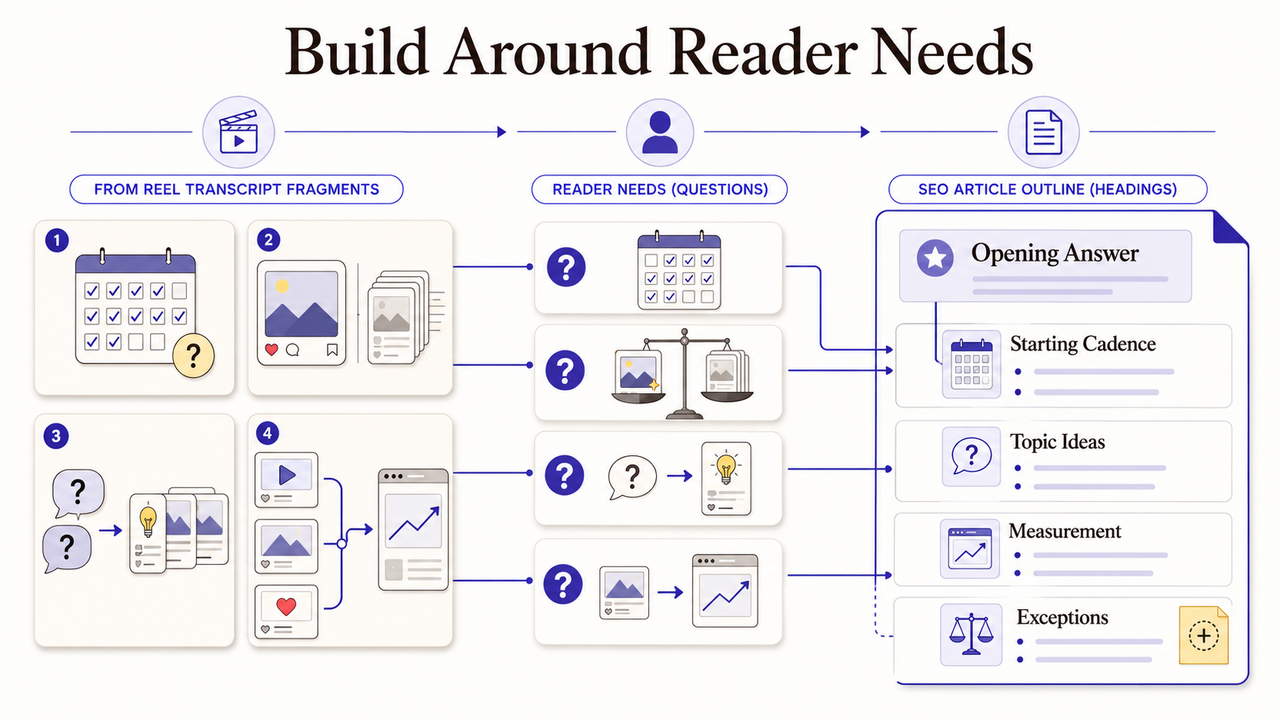
Transcript fragment | Reader need | Possible section |
“Should [we] post every day?” | A direct answer with conditions | Opening answer |
“Three useful posts…than seven rushed ones” | A way to judge sustainable frequency | Choosing a starting cadence |
“What customers ask before buying” | A repeatable topic source | Building the topic list |
“Check which posts lead to site visits” | A review method | Measuring and adjusting |
Not covered in the Reel | Exceptions and evidence | When frequency should change |
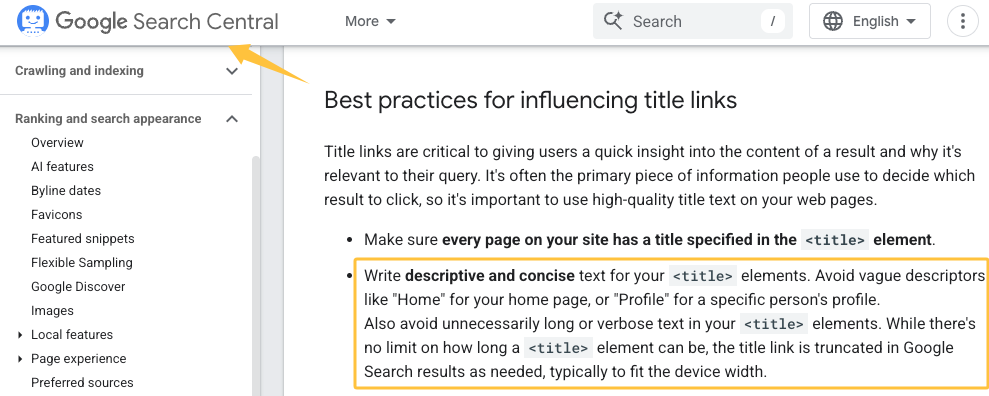
The H1 should state the subject clearly, while each H2 resolves one part of the core question. Google recommends descriptive and concise title text and may use the visible title and headings when producing a title link, so labels such as “More Thoughts” waste useful context.
Here is the difference between cleaning a transcript and writing the resulting paragraph.
Transcript: “Honestly, for a small team, I’d rather see three useful posts you can keep up with than seven rushed ones.”
Article paragraph: “A small team needs a posting schedule it can maintain without lowering the research and review behind each post. Choose a starting cadence the named owner can sustain, then compare site visits and qualified inquiries by topic. Increase frequency only when the team can preserve the same review standard.”
The article version preserves the judgment while adding its condition, owner, and review evidence. It does not claim that three posts are universally correct. Clear scope before commitment: promise only what the source and research support.
Add Facts, Examples, Internal Links, and CTA
Once the outline is stable, mark every factual claim. Verify product behavior, dates, research, and numbers with primary sources where possible. If evidence is unavailable, narrow the sentence, attribute it as opinion, or remove it.
Add examples where the reader must apply a distinction. A solo owner who approves every post has different capacity from a three-person team working in parallel; the contrast explains the decision without inventing a result.
Internal links should help the reader complete the current task. Link “build a monthly topic list” to an existing content-planning guide, for example, rather than pointing every phrase to a service page. Google’s link best practices recommend descriptive, concise anchor text and say that contextual internal links help people and Google understand related pages.
Place the CTA after the article has earned it. Start with the outcome. Structure the commitment. Ask for one action without introducing a promise the article never established.
When the source needs research, structure, and editorial approval, turn the Reel into a scoped content brief through SpringBrand.
Editing Checklist Before Publishing
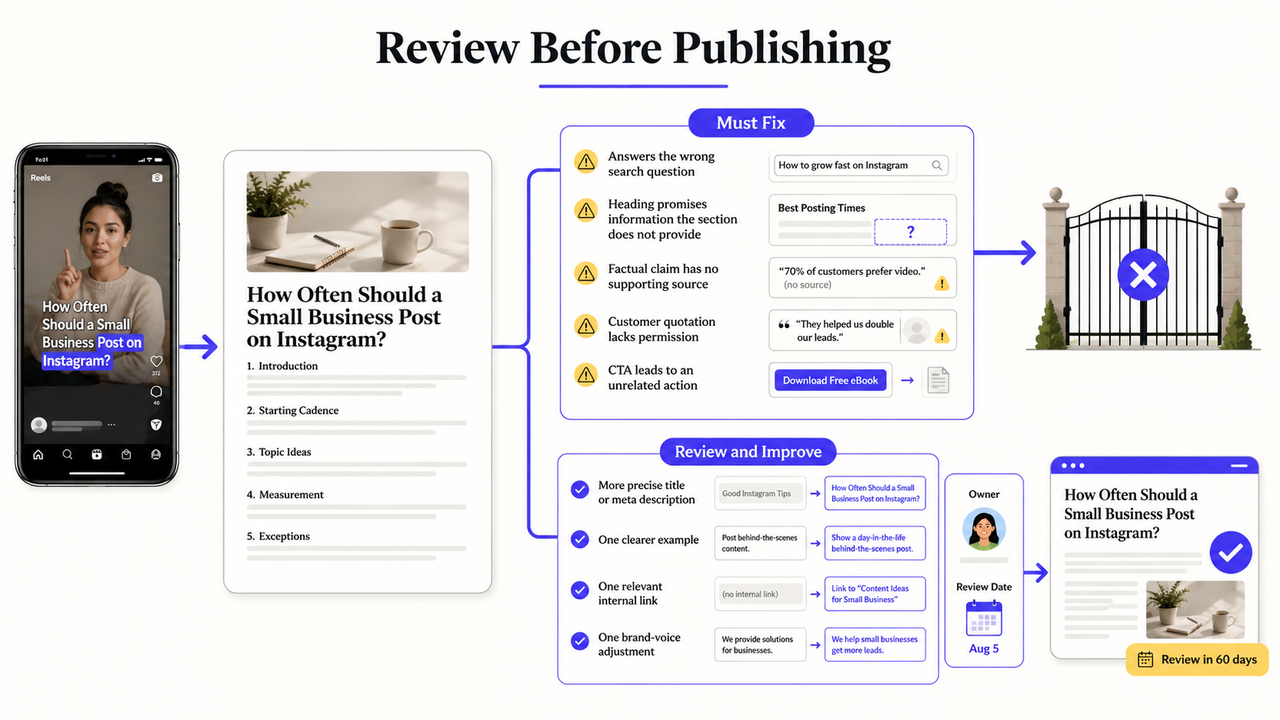
Run the finished SEO blog from video through a two-level review. Fix the first group before launch; record the second group with an owner and review date if publication can safely proceed without it.
Must fix before publishing
- The article answers a different question from the chosen search intent.
- A heading promises information the section does not provide.
- A factual statement has no reliable source or is stronger than its evidence.
- The draft copies verbal repetition or depends on visuals that were never explained.
- A customer name, quotation, or private detail lacks the required permission.
- The CTA leads to an unrelated action or makes an unsupported result claim.
Review and improve
- The title and meta description could describe the page more precisely.
- An example needs one more step before a new reader can follow it.
- A relevant internal page exists but has not been linked.
- The article still contains phrases the business would not normally use.
Google’s questions for helpful, people-first content ask whether a page adds original information or analysis and avoids merely copying or rewriting its sources. Use that as an editorial test, not a ranking promise. If the rewritten article adds no context, evidence, example, or decision support beyond the Reel, keep it in draft.
Assign one person to close the review. A subject-matter owner confirms claims; a publishing owner checks links, page fields, and rendering. If one person fills both roles, record the decisions anyway.
FAQ
How long should the final blog post be?
Use the length required to answer the search question with enough context, evidence, and examples. A narrow question may need less than a broad guide. Do not pad an Instagram Reel to blog draft to meet a supposed Google preference; Google explicitly says it has no preferred word count. Follow the publication brief while protecting usefulness.
Should I keep the video tone in the article?
Keep recognizable vocabulary and the speaker’s level of certainty, but adapt the delivery. Remove filler and references that require the video, then add transitions and definitions a search visitor needs. The article can sound like the same brand without pretending that spoken and written formats work the same way.
Can short Reels become full articles?
Yes, when the Reel contains a useful core question and the business can add verified facts, examples, boundaries, and practical decisions. A thin opinion with no support should remain a short post or become one section inside a broader article. Length alone does not turn a fragment into useful Reel to SEO content.
Conclusion
Moving an Instagram Reel to blog publication is complete only when the page answers one defined search question, preserves the source meaning, and shows where its added claims came from. The publishing owner should be able to inspect the original Reel, the approved outline, the source record, the internal links, and the final CTA before changing the page state from draft to live.