Pre-Launch Marketing Agency: When to Hire One
A pre-launch marketing agency can coordinate positioning, channels, assets, and measurement. Learn when to hire and how to define the engagement.
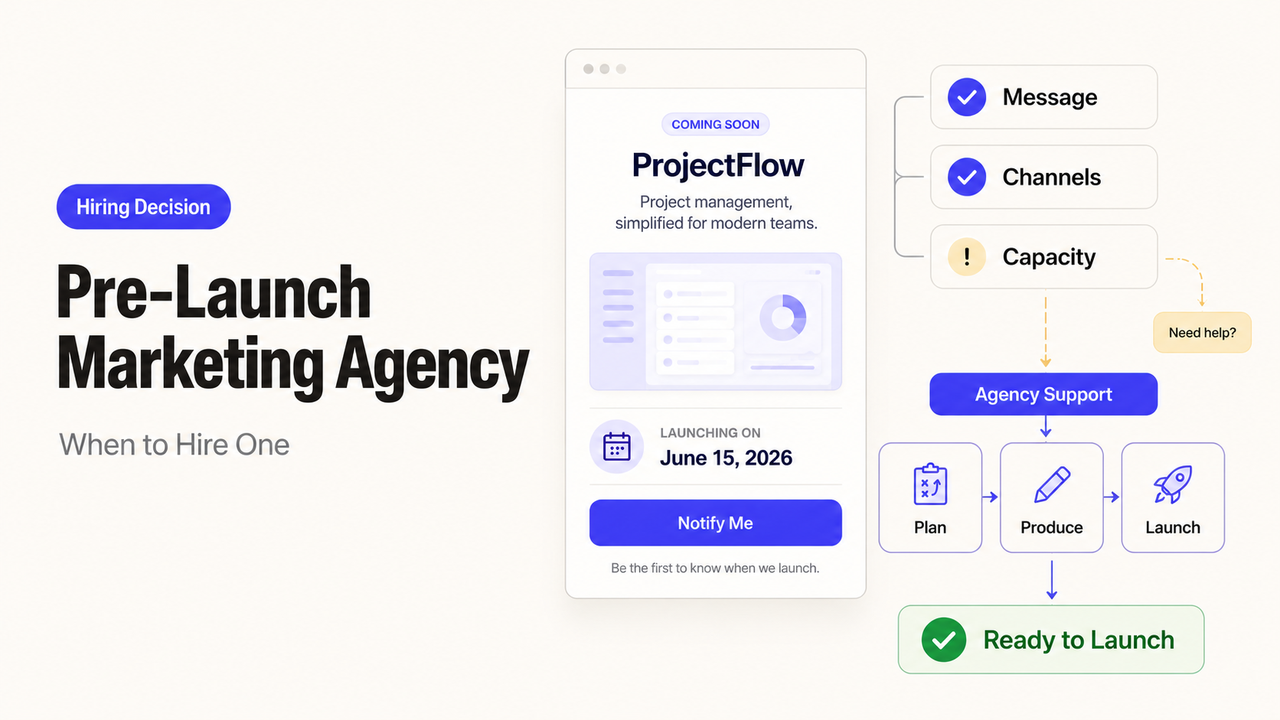
The product team calls the launch ready because the build can ship. Sales is still waiting for final pricing, support has no escalation script, and nobody has tested whether campaign leads reach the right person. A pre launch marketing agency can coordinate those moving parts, but it cannot approve the product, offer, or risk on the company’s behalf. I’m Alex; by the end of this guide, you should know whether outside support would close a real delivery gap—and what must be written into the engagement before work begins.
Quick Fit: When Pre-Launch Support Adds Value
The first warning is usually missed work, not overspending. When product decisions, sales preparation, and campaign delivery all sit with the same small group, adding one more channel can leave an important page, test, or follow-up unfinished. Outside help becomes useful when the team can point to that gap and explain why nobody currently has the time or expertise to close it.
A short engagement can also work. For example, an agency might build the campaign plan and measurement framework while the internal team produces the content. Another might create launch assets but leave media buying, email delivery, and sales follow-up with the client.
The useful question is not simply, “Should we hire an agency?” Ask: Which launch dependency currently has no capable owner, and what would the business be unable to complete without outside help?
Check Product, Audience, and Offer Readiness

Marketing activity should not disguise an unresolved product decision. Before requesting launch marketing services, establish what is sufficiently stable to promote.
Start with five readiness questions:
- What exactly will be available at launch?
- Who has the clearest reason to care?
- What action should that person take?
- What evidence supports the claims being made?
- Who can approve changes when the product, price, or date moves?
The answers do not need to be perfect, but they must be usable. “Small businesses” is rarely a workable launch audience by itself. “Operations managers at regional service companies replacing manual booking spreadsheets” gives the agency something it can research, challenge, and translate into campaign decisions.
Finalize the offer only when someone can answer the questions a customer is likely to ask. How will the price be set? When is the offer available, and does everyone qualify? What does the trial cover? What happens during onboarding, and where does the service stop? If an answer is still changing, keep it in the readiness log rather than placing it in final campaign copy.
Before campaign copy moves into design, place every factual or performance claim beside the evidence that supports it. The FTC’s advertising guidance for small businesses says ads must be truthful and advertisers need a reasonable basis for objective claims.
An agency can identify a questionable claim, but it should not be asked to approve language outside its expertise. Product and technical teams need to verify how the product works; regulated, legal, and safety-sensitive statements may require review from an appropriately qualified professional. The company should decide who receives each type of claim before the creative reaches final approval.
Use a readiness log instead of relying on meeting memory. For each open product, offer, or claim decision, record its current state, owner, required evidence, deadline, and effect on campaign production. This gives the agency a reliable source without allowing it to make the decision by default.
If the product cannot yet be demonstrated, the offer changes every week, and nobody can approve public claims, the immediate need is not a large product launch marketing campaign. It is a smaller readiness engagement with explicit exit criteria.
Define Research, Positioning, and Campaign Scope

“Help us launch” is not a workable scope. If the engagement remains that vague, the agency has to decide for itself where its authority begins and ends. Meanwhile, the client may assume that an unfinished task is already included.
Organize the engagement around the way the work actually moves:
- Research comes first. Interview potential customers, review competitors, study search demand, collect category language, and test promising messages.
- Positioning turns that evidence into a choice. Select the audience, define the problem, explain what makes the offer different, and identify the proof and objections the campaign must address.
- Campaign planning gives every channel a purpose. Set the launch phases, working budget, content requirements, channel responsibilities, and measurement approach.
- Production creates the material customers will see. This may include landing pages, emails, ads, videos, social content, sales collateral, and partner kits.
- Launch operations keep the work running. Someone still needs to publish assets, manage media, check tracking, route leads, prepare reports, and escalate problems.
For each stage, identify whether the agency will recommend, produce, approve, publish, or monitor. Those are different responsibilities.
A provider may draft the positioning while the founder approves it. The same provider may design a landing page but rely on the client’s developer to publish it. It may recommend a paid channel without managing the media account.
Set exclusions with the same care as deliverables. If PR outreach, customer-research recruitment, website development, translation, compliance review, photography, or sales enablement is not included, record that before the calendar is built.
Acceptance criteria should describe evidence, not taste alone. “Create the launch landing page” is open-ended. A more useful requirement might be:
Deliver approved desktop and mobile pages containing the final offer, reviewed claims, working form, agreed tracking events, confirmation message, and documented handoff destination.
That statement gives the client and agency a shared finishing point without pretending the page will guarantee registrations or sales.
Build the Launch Channel and Content Calendar
A launch calendar should show dependencies, not merely publication dates. If a product screenshot depends on the final interface, or an email links to a page that has not passed testing, the calendar needs to make that relationship visible.
For every item, record:
- Audience
- Channel and format
- Message purpose
- Source material
- Draft owner
- Subject-matter reviewer
- Final approver
- Destination URL
- Tracking requirement
- Scheduled date
- Fallback action
Channels should earn their place through a specific job. Search content might capture an existing problem. Email can prepare known contacts or beta users. Paid media can test a message or reach a defined audience. Partners may lend distribution or credibility. Sales materials can help representatives continue the same conversation after an inquiry.
Do not put every channel into the launch because the agency can operate it. A small team may be better served by one strong destination page, a segmented email sequence, sales follow-up material, and a limited paid test than by six channels that nobody can maintain after release.
The calendar also needs a change rule. Decide what happens if:
- The release moves by two weeks
- A promised feature is removed
- Pricing changes after creative approval
- A partner misses its publication date
- A critical landing-page test fails
- Demand exceeds the team’s response capacity
This turns the calendar into an operating document rather than a decorative schedule.
Prepare Assets, Measurement, and Sales Handoff

A campaign is not ready because its files have been exported. Each asset needs a final source, an approver, a destination, and an acceptance check.
Depending on the scope, the asset register may include:
- Message framework and approved claims
- Landing pages and confirmation states
- Email copy and audience segments
- Ad copy, images, and video
- Social posts and partner materials
- Sales deck, product sheet, or demo script
- FAQs and support responses
- Brand, photography, and usage guidance
- Tracking plan and reporting view
Test assets in the conditions customers will actually encounter. Open the page on a phone. Submit the form. Use an invalid field. Check the confirmation message. Follow the email link. Verify the download. Confirm that a salesperson can see the inquiry and knows what to do with it.
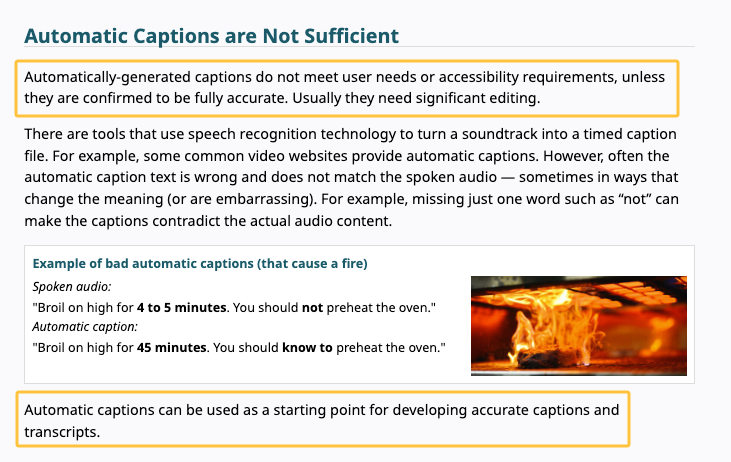
Review the video under the same conditions a customer may encounter. Play it on a phone, try it without sound, and check whether the captions still make the message understandable. The W3C’s caption guidance says meaningful audio in prerecorded video needs accurate captions and that automatically generated captions generally require editing. Record who will review them, which file is approved, and where that version will be published.
Choose tracking events only after the team knows what it will do with the information. Marketing may want evidence that a visitor showed interest, while sales needs to know whether someone qualified for follow-up and whether that follow-up occurred. Google Analytics suggests names such as sign_up and generate_lead, but the name records an action, not its value to the business. Define that value in the measurement plan.
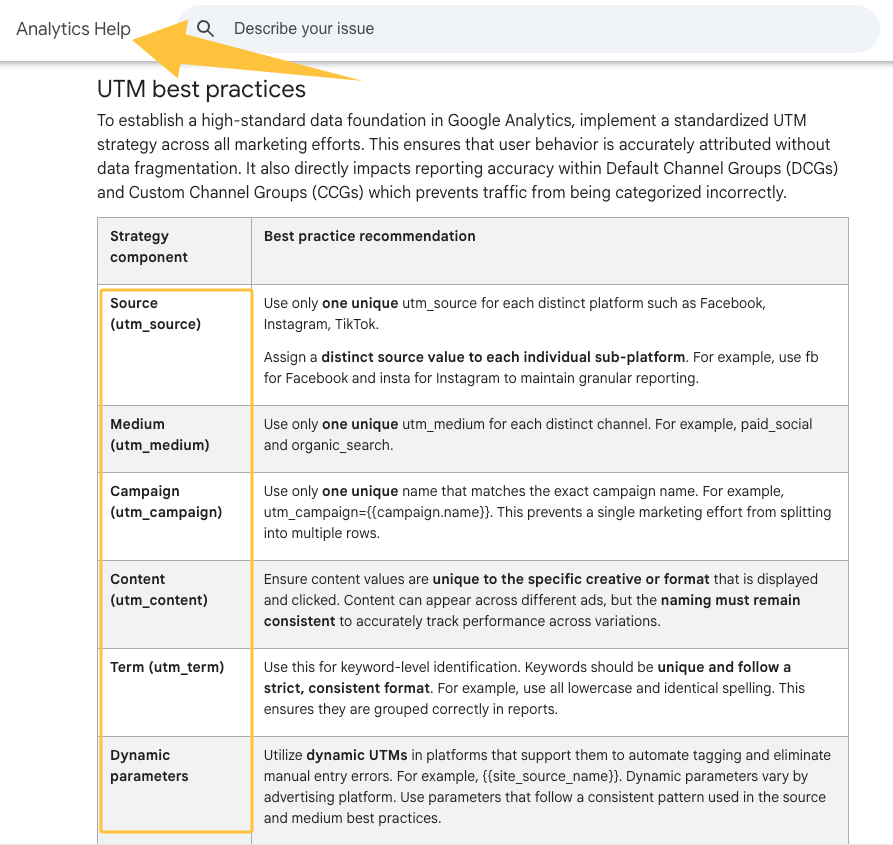
Campaign naming must also be consistent before links circulate. Google’s campaign URL guidance recommends using source, medium, and campaign parameters and notes that their values are case-sensitive. Maintain one naming sheet so email, partner, social, and paid links do not split the same campaign into several labels.
The final test is the sales handoff. Submit a real test lead, confirm which system receives it, identify who is notified, and check how quickly ownership becomes visible. Then repeat the test with the primary owner unavailable. If no one can explain what happens next, the campaign is not ready to buy more attention.
Without that loop, a campaign can appear active while valuable inquiries sit untouched.
Compare Agencies and Assign Clear Owners
A polished pitch does not prove that a provider can manage the launch’s dependencies. Ask each agency to respond to the same problem statement and delivery requirements.

Compare:
- Which readiness gaps the agency identified
- Which assumptions its proposal depends on
- Who performs research, strategy, production, and channel work
- Whether subcontractors will be involved
- What the client must provide and by when
- How approvals and revisions work
- How scope changes affect the calendar
- Which accounts and files the client controls
- What evidence appears in reports
- What remains after the engagement ends
Ask to see the shape of prior deliverables where confidentiality permits. A redacted calendar, measurement plan, responsibility matrix, or handoff document may reveal more about operating discipline than a list of campaign results without context.
Responsibility should be assigned by name or role. The company might name a product approver, claims reviewer, budget owner, sales-handoff owner, and executive escalation contact. The agency should name its engagement lead, strategy owner, production owner, media operator, and reporting contact. Shared responsibility is not a substitute for knowing who acts first.
A shared login makes it difficult to tell who changed an asset or still has access after the project ends. Give every agency team member a named account, limit it to the work they are responsible for, and update the permissions when that responsibility changes. Remove the account on the agreed final day. CISA recommends MFA for email, file storage, and remote access, particularly for administrators and users who handle sensitive information.
The company should retain approval over product truth, release timing, budget, customer-data use, and public risk. An agency can organize those decisions. It should not silently inherit them.
FAQ
Can an agency help when the launch date may move?
Yes. If the launch date may move, divide the plan by dependency. Research, positioning, reusable copy, and measurement design can usually continue without a final release date. Product screenshots, release emails, paid placements, and other date-sensitive assets may need to wait. The engagement should state when production freezes, how a new date is approved, and whether rescheduling changes the fee.
What if the product name is not final yet?
A moving product name does not stop every part of the launch. Audience research, campaign structure, and message themes can continue as long as the work does not depend on a final public identity. Domains, logos, screenshots, press materials, and finished creative are harder to revise, so delay those assets until the name is settled. Questions about name clearance or trademark rights belong with an appropriately qualified professional.
Should beta users receive different launch messages from prospects?
Usually. Prospects arrive without the product history that beta users already have. They need enough context to understand why the offer matters before they are asked to act. Keep the central promise consistent, but change the explanation, supporting detail, and next step to match what each audience already knows.
Can a pre-launch engagement end immediately after release?
It can, but the handoff should be designed before launch. Specify who receives source files, account access, campaign records, audience definitions, test results, issue logs, and reporting responsibility. A short post-launch review window is often useful for resolving failed links, routing problems, inaccurate assets, or measurement gaps discovered after release.
How should confidential announcements be shared with external partners?
Share only what each partner needs through an approved system with named users and appropriate access controls. Record who received the material, which version they received, when publication is allowed, and who can authorize changes. Remove obsolete access and avoid placing confidential details in open links or broadly forwarded email threads.
Conclusion
Bring in a pre launch marketing agency once the product and offer are settled enough to promote, but the team cannot complete the campaign reliably with the capacity it has. The engagement should close a specific research, production, measurement, or coordination gap—not take ownership of product decisions the company has not finished making.
Define the audience, offer, dependencies, approvals, deliverables, access rules, handoff, and acceptance evidence before work starts. If the provider can close the remaining capability gap while the company retains the final decisions, the engagement has a sound reason to exist.