AI Agents in Finance: Controls for Automated Reporting
AI agents in finance can assist reporting preparation when source traceability, permissions, review, exceptions, and posting authority stay controlled.
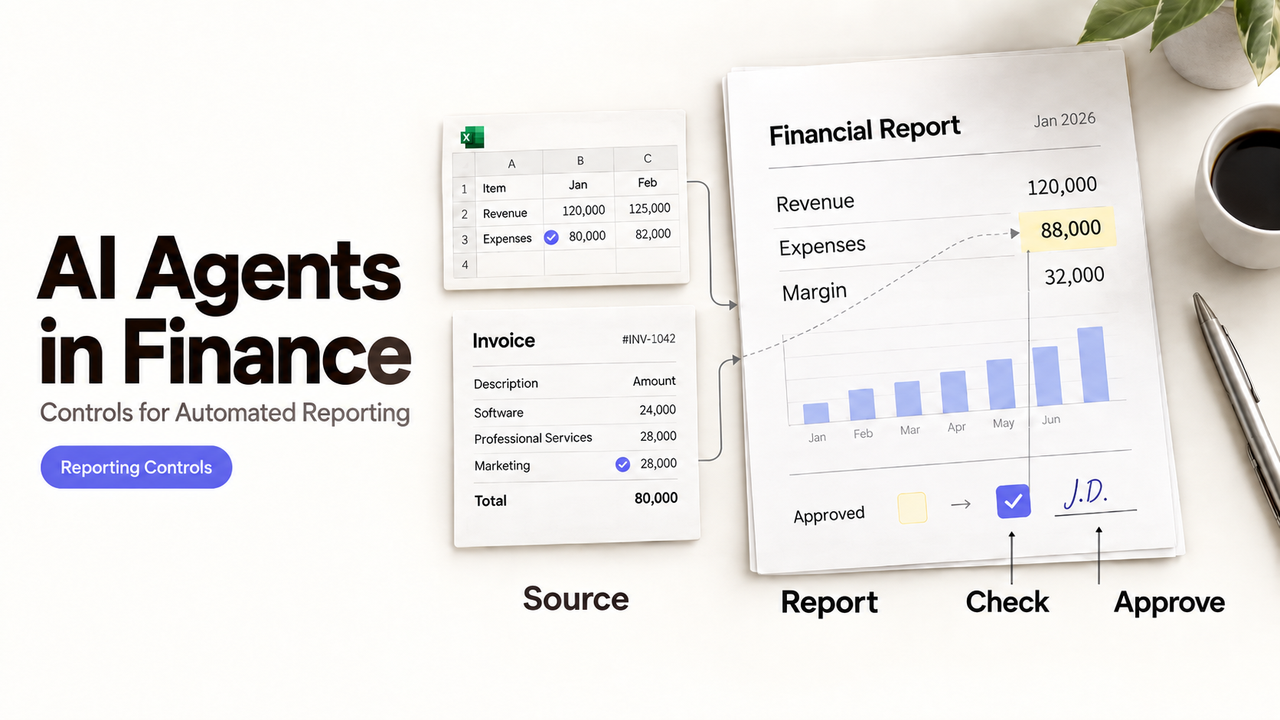
On reporting day, a polished variance note can be more dangerous than an empty one. The empty cell asks for attention. A smooth explanation may conceal the wrong entity, exchange-rate date, or accounting period.
That is the useful boundary for AI agents in finance. Let them collect, organize, and draft material that a finance owner can inspect. Do not give the draft authority to approve itself or change the books.
This guide covers an internal management-reporting workflow. It does not offer accounting, tax, investment, legal, or compliance advice.
Where AI Agents Fit in Finance Reporting
Here, automated financial reporting means automating preparation, not approval. An agent can find approved files, move named fields into a working table, and flag missing inputs. Those tasks end in material for review, not a final accounting conclusion.
The safest starting point is a report the team already understands. A monthly budget-to-actual report is easier to supervise than a request to “explain the company’s finances.”
Gather Source Documents and Normalize Fields
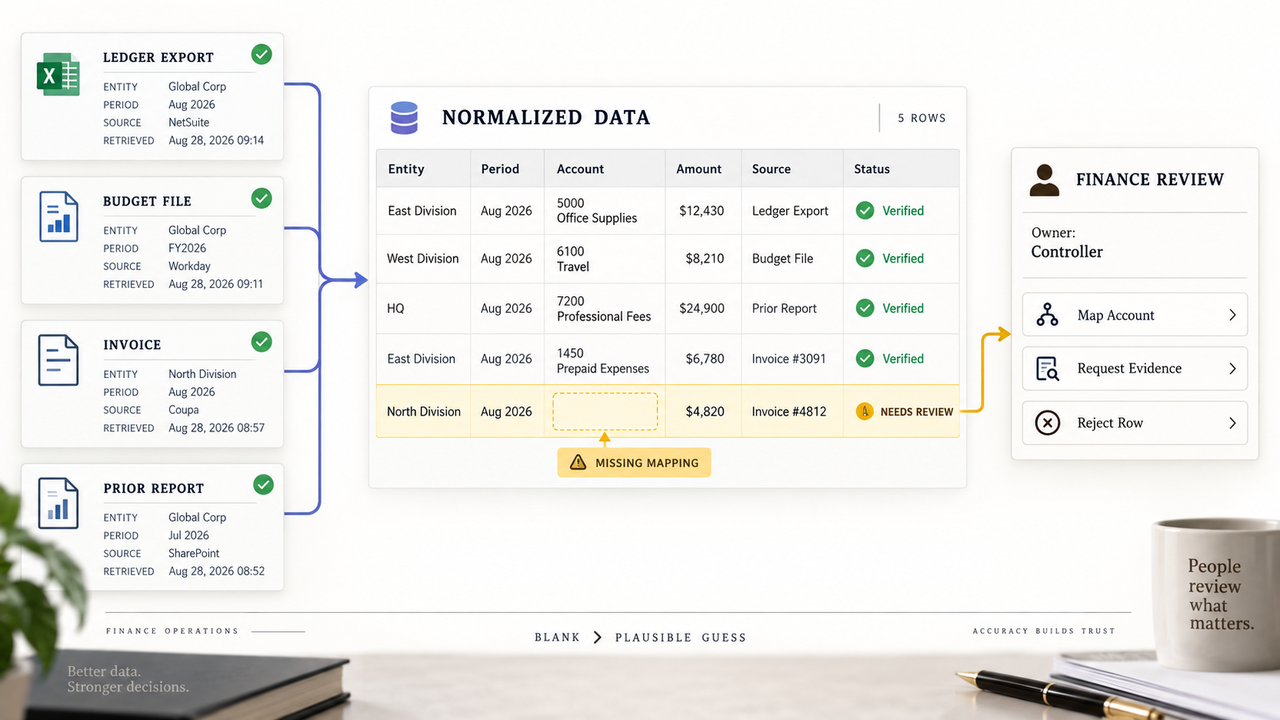
Give the agent a closed source list. It might read a ledger export, approved budget file, invoice folder, and prior-period report. Each file needs an entity, period, system, retrieval time, and stable link.
Normalization should follow a schema the finance team already uses. The agent may convert date formats or align approved field names. It should not invent a vendor, account code, tax treatment, or missing amount.
Send unreadable documents, duplicate invoices, incomplete rows, and unmatched accounts to a review queue. A blank value is safer than a plausible guess.
Draft Variance Explanations and Review Queues
An agent can draft a short explanation after the calculations are complete. Require it to identify the current amount, comparison amount, formula, source rows, and any unresolved cause.
“Travel expense increased” is only a description. A useful draft shows which approved records created the difference and marks business context that still needs a person.
The agent can also group exceptions by owner. Treasury can review rate questions, accounts payable can inspect invoice issues, and the controller can handle period or policy judgments.
Map a Controlled Reporting Workflow
Draw the process from source arrival to an approved report. Mark where the agent reads, transforms, calculates, drafts, and stops. Then name the person who accepts each output.
This report-preparation boundary is an editorial operating model, not an accounting standard.
Reporting step | Agent may prepare | Finance owner must decide |
Source collection | Find approved files and record their locations | Whether the source is complete and appropriate |
Field normalization | Apply a documented schema and flag mismatches | How an unmapped item should be classified |
Calculation support | Run approved formulas and show inputs | Whether the method fits the report and policy |
Variance draft | Describe the numerical change and cite its rows | The business meaning and final explanation |
Report package | Assemble a review copy and exception list | Approval, release, correction, or posting |
Preserve Links to Sources and Calculation Logic
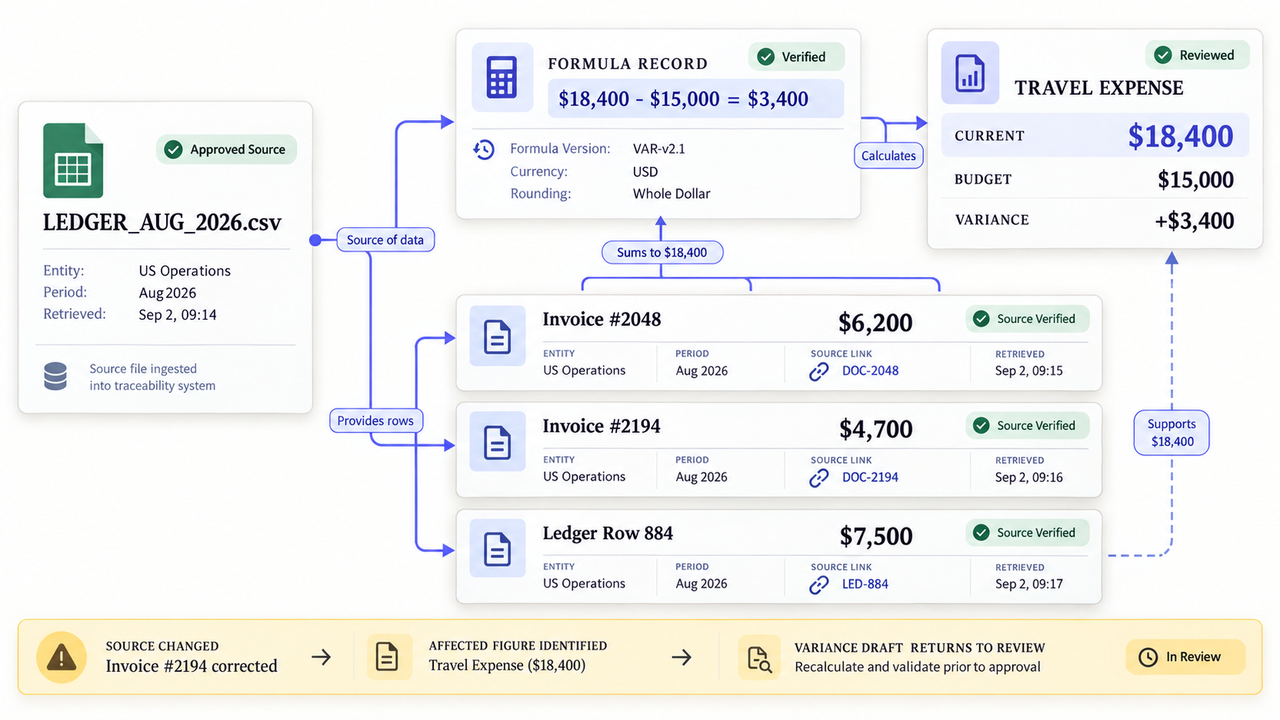
Every figure should lead back to a source record. Store the file link, row or document ID, reporting period, entity, and retrieval time beside the working value.
Keep formulas outside free-form prose. If the agent calculates a variance, save the operands, formula version, currency, rounding rule, and result. A reviewer should not need to reconstruct the math from the explanation.
Source traceability also makes corrections manageable. When a file changes, the team can identify the figures and commentary that depended on it.
Separate Preparation, Approval, and Posting
Preparation creates a reviewable package. Approval accepts a named version for a stated purpose. Posting changes a system of record. Treat them as separate permissions.
The person who approves the report should see unresolved exceptions and source changes. Final posting should use an established accounting process, even when the agent prepared the journal support.
No approval should be inferred from silence or from a message such as “looks fine.” Capture the approved version, approver, time, and any conditions.
Add Controls Before Expanding Access
Controls should reflect the report’s consequence and the agent’s reach. The NIST AI Risk Management Framework offers a voluntary structure for governing, mapping, measuring, and managing AI risk.
Use that framework to ask practical questions. Who owns the system? Which failures matter? How is human review tested? What happens when a connected source changes?
Restrict Data and System Permissions
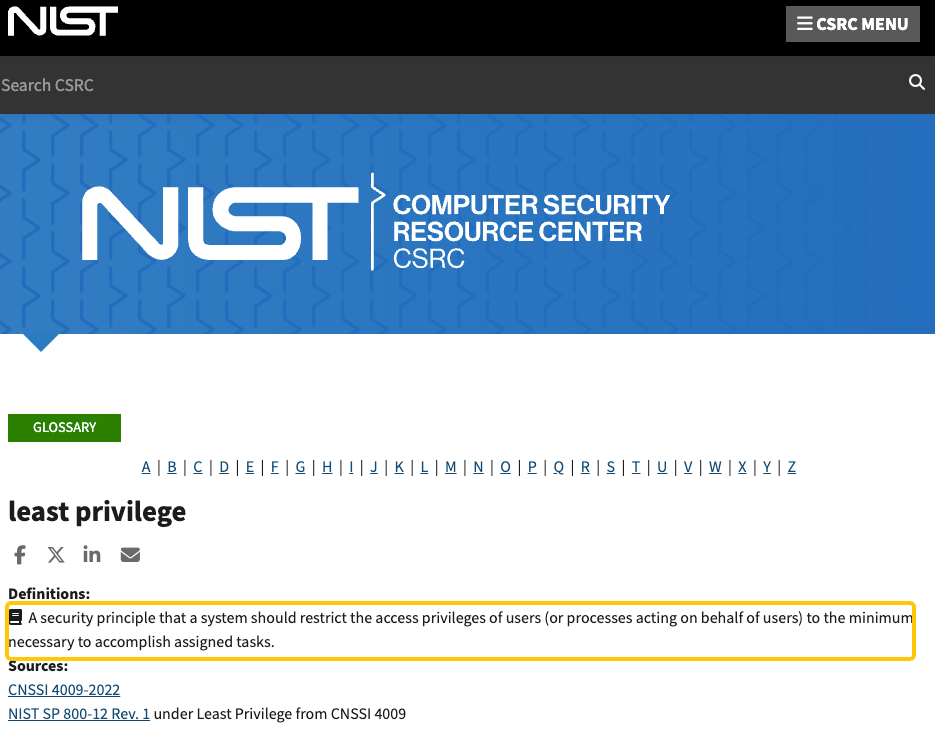
Start with read access to the smallest useful data set. NIST defines least privilege as limiting a user or process to the minimum resources and authorizations needed for its task.
A reporting agent rarely needs the same access as a controller. Separate test and production credentials. Keep bank changes, vendor creation, journal posting, payment release, and report publication outside the preparation role.
Review service accounts, shared folders, exports, and temporary files together. Narrow access in the source system means little if the agent copies the same data into an open workspace.
Route Exceptions to a Finance Owner
Write the exception routes before the first run. Missing periods, conflicting totals, new account codes, corrected documents, and unsupported currencies need named destinations.
Assign a backup for close week. A queue with no available reviewer becomes a hidden delay, even if the agent identifies every problem correctly.
Do not let an agent resolve uncertainty by choosing the most common treatment from earlier records. Similar transactions can require different treatment because their terms, entity, or period differ.
Pilot a Low-Risk Recurring Report
Start with one internal report that does not post entries or leave the finance team. Run the agent-produced package beside the existing process for several normal cycles and at least one messy case.
Use the same source cutoff and calculation rules for both routes. Differences then reveal workflow problems instead of changes in the underlying data.
Measure Time, Error, and Human Intervention
Measure preparation time, late sources, mismatched totals, corrected fields, and unresolved exceptions. Record how long a reviewer spends tracing each figure.
Count interventions by type. Correcting a file location is different from reversing an accounting conclusion. The second is a stronger reason to narrow the agent’s role.
Check whether errors moved downstream. Faster assembly is not an improvement if the controller spends more time reopening source files or rebuilding calculations.
Where Finance Expertise Remains Essential
Finance professionals still decide accounting periods, recognition, classification, materiality, estimates, consolidation treatment, tax positions, and disclosures. They also approve the report and control any final posting.
Software can apply a mapping after the policy is settled. It cannot make the underlying judgment valid. The same boundary applies to audit responses, regulatory filings, investment decisions, and advice to management.
SpringBrand publishes this guide, but its public catalog showed no finance-specific capability on September 15, 2026. Nothing here confirms a SpringBrand integration for invoices, finance systems, approval, or posting.
FAQ
How should an agent handle invoices dated in one period but received in another?
It should not choose the accounting period from the invoice date alone. Route the invoice with its issue date, receipt date, service or delivery evidence, purchase order, entity, and current close status.
A finance owner should apply the organization’s accounting policy and obtain professional advice when needed. The agent can record that decision for similar routing, but it should not turn one decision into a new policy.
Can finance agents work across entities that use different charts of accounts?
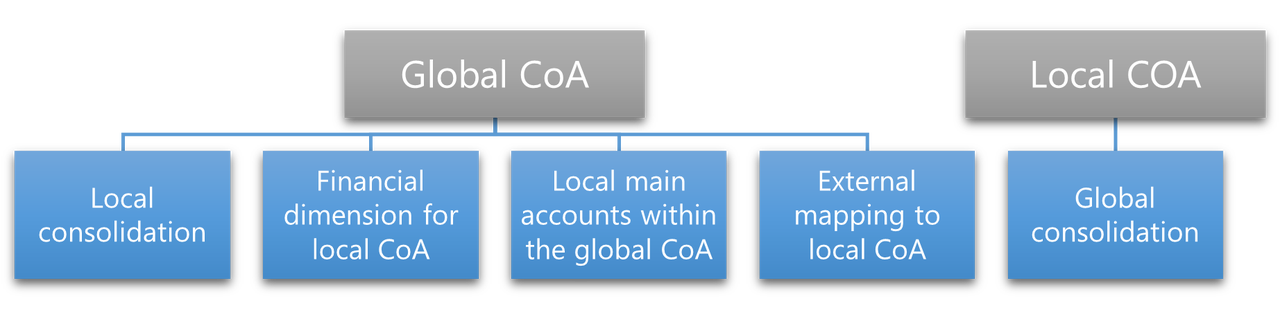
Yes, but only through approved entity-specific mappings. Preserve the original entity and account code beside the mapped reporting account.
Microsoft’s current guidance shows that local charts may require maintained mappings to a global chart. That is a Dynamics 365 example, not a universal accounting method. Unmapped or conflicting accounts should stop for finance review.
How are currency-conversion rates timestamped in agent-generated workpapers?
Record the rate source, base and quote currencies, rate type, effective date, publication time, retrieval time, and calculation direction. The workpaper should also retain the original currency amount.
The European Central Bank publishes reference rates around 16:00 CET on working days and says they are for information purposes. A finance owner must choose the rate source and date required by the report.
What happens when a source document is corrected after a report is approved?
Do not silently replace the approved source or explanation. Save the correction as a linked version, identify every affected figure, and notify the report owner.
The finance owner decides whether to reopen the report, issue a revised version, or handle the change in a later period. Keep the original approval and the correction decision together.
Can agent-generated workpapers follow an organization's retention schedule?
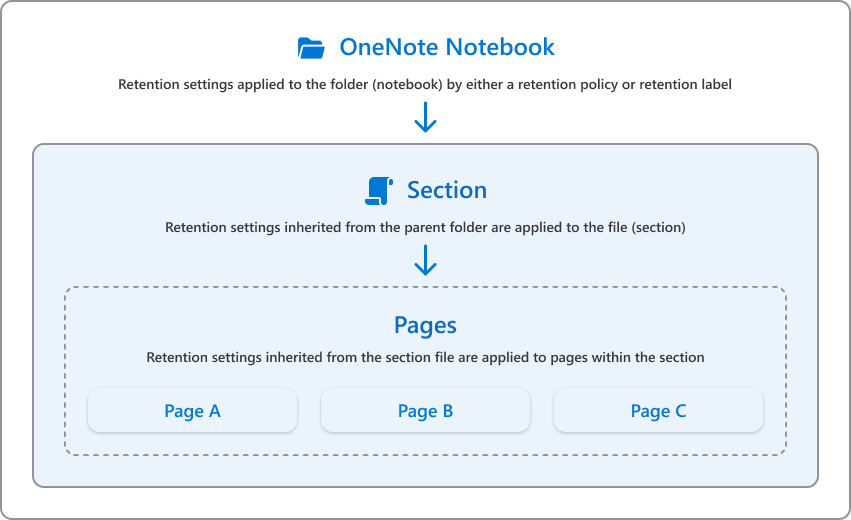
Yes, if the storage system can apply the organization’s approved record class and retention rule. The agent should assign supplied metadata, not decide how long finance records must be kept.
The IRS notes that retention depends on what a record documents. Microsoft also documents retention policies and labels for SharePoint and OneDrive files. Confirm the applicable policy, system behavior, and professional requirements before relying on automation.
Conclusion
AI agents in finance are most useful before the moment of judgment. They can gather approved sources, normalize known fields, show calculations, draft explanations, and deliver exceptions to the right person.
Keep accounting decisions, approval, and posting with qualified owners. A successful pilot makes the report easier to trace and review; it does not make the agent the accountant.
Recommended Reads
- Enterprise AI Adoption: Lessons for Small Businesses
- Workflow Automation for Small Business Teams
- AI Agent Employees: What Brands Need to Know
- Document Automation Software Buyer’s Guide 2026
- Document Workflow Automation for Small Teams