What Is Pangram AI Detector? A Creator's Guide
Learn what Pangram AI Detector is, who uses it, and how creators should think about AI writing detection without relying on one score.
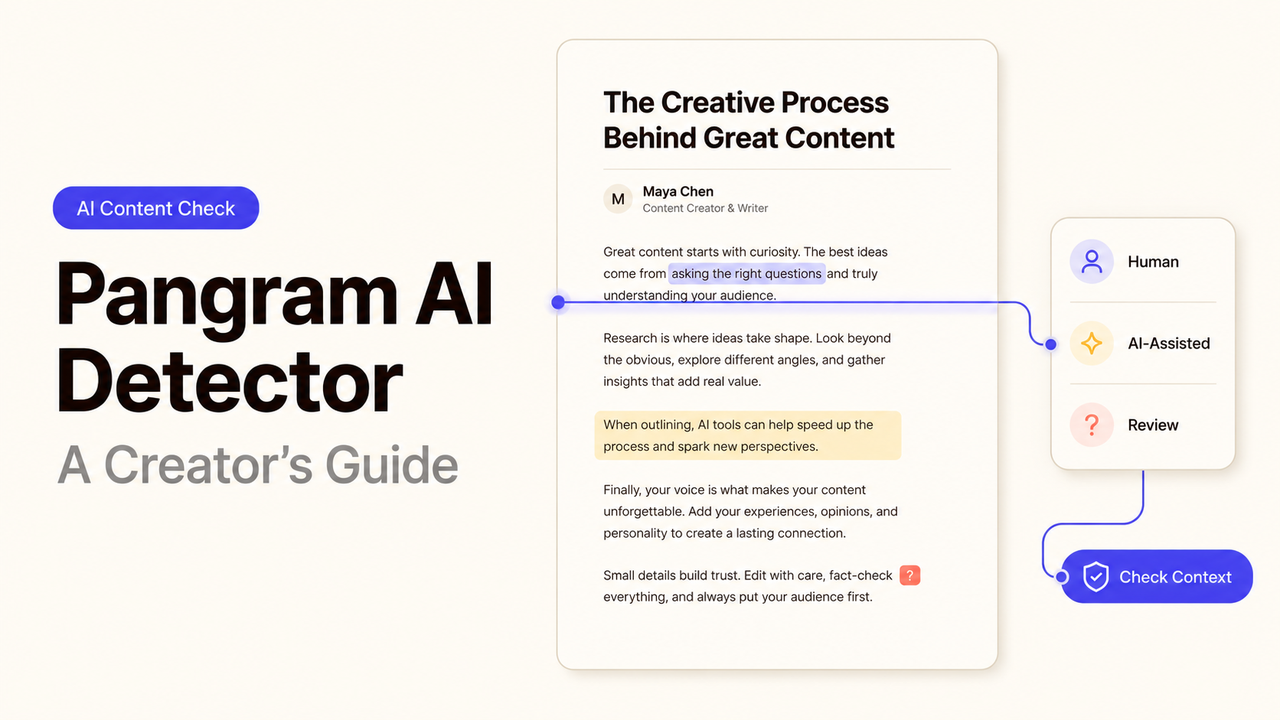
A newsletter editor rejects a contributor’s draft after one passage receives a high AI score. The writer has dated notes, a version history, and source annotations, but none of that evidence enters the decision. The result has replaced the review it was supposed to inform. I’m Alex—my rule is to let the flag open an inquiry, never close one. This guide explains where Pangram AI Detector can fit into a creator’s workflow and what should carry more weight than its score.
What Pangram AI Detector Is
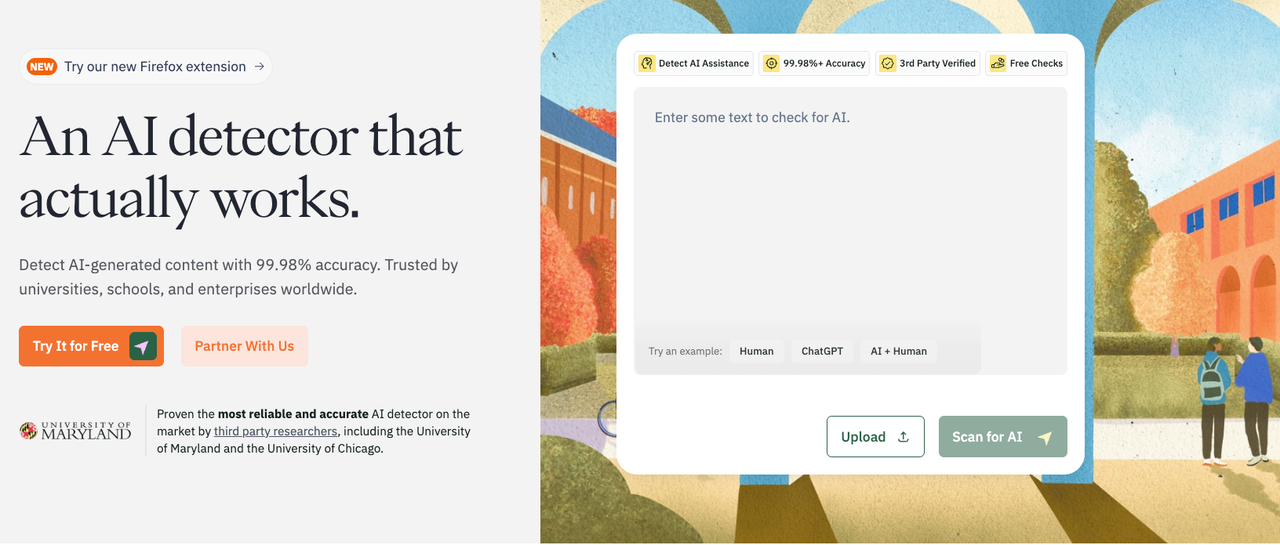
Pangram is a text-classification service designed to estimate whether writing appears human-written, AI-assisted, AI-generated, or mixed. It is used through a web interface and is also offered through browser, document, platform, and developer integrations.
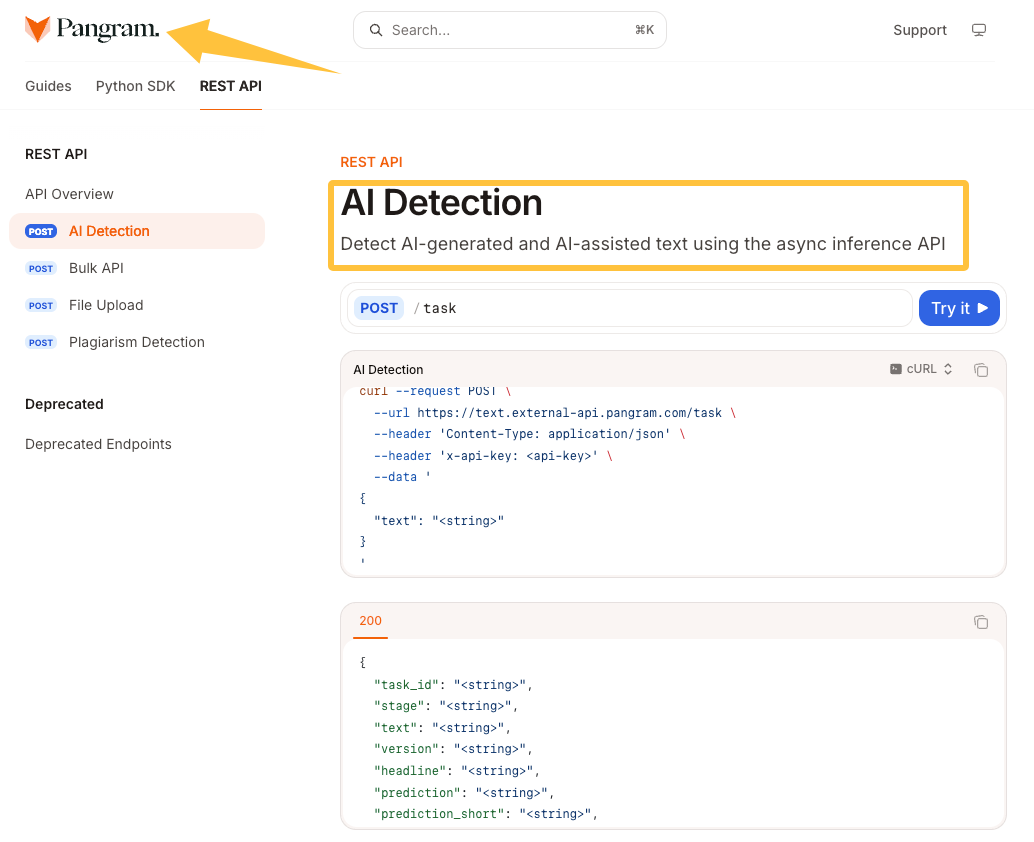
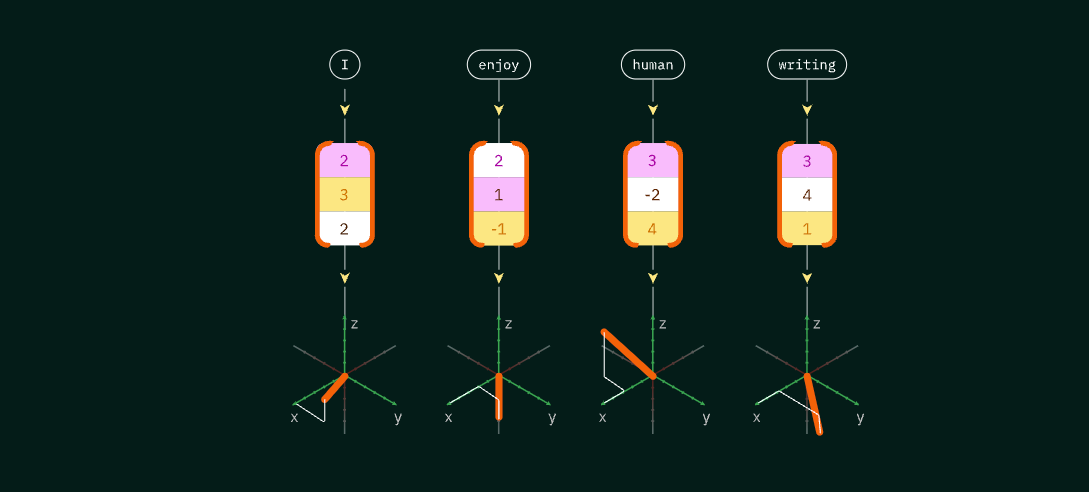
Behind the interface is a classifier trained to distinguish patterns in human and model-generated writing. Pangram’s current AI detection API can return document-level classifications, estimated fractions for human, AI-assisted, and AI-written text, confidence labels, and results for individual text segments.
That distinction between document and segment matters. A result may indicate that most of a draft appears human-written while one section shows a different pattern. It does not automatically explain why that section differs. A pasted product description, translated passage, heavily edited paragraph, quotation, or contributor insert may all require separate investigation.
Pangram publishes its own accuracy claims and describes training methods intended to reduce false positives. Its explanation of the classifier’s training process is useful background, but creators should still read stated performance in context: dataset, text type, length, language, model version, threshold, and error definition all affect what a benchmark means.
Why Creators and Publishers Are Paying Attention
Publishers now receive work produced under very different writing processes. One contributor may draft every sentence manually. Another may use AI for grammar corrections. A third may submit largely generated copy after a brief edit. Those workflows can look similar in a finished document.
For a newsletter editor reviewing five submissions, a detector may add little. For a publisher receiving hundreds of guest posts, syndicated articles, or contributor pitches, an initial signal can help decide which drafts need closer inspection.
The business concern is not always whether AI appeared somewhere in the process. It may be whether the submission complies with an editorial policy, contains reliable reporting, represents original analysis, or matches the service the writer agreed to provide.
Independent research also shows why the operating policy matters. A 2025 NBER working paper on automated AI detection argues that decision-makers must consider false positives and false negatives separately rather than relying on a single overall accuracy figure. The acceptable balance depends on the consequence of getting the decision wrong.
What AI Writing Detection Can and Cannot Prove
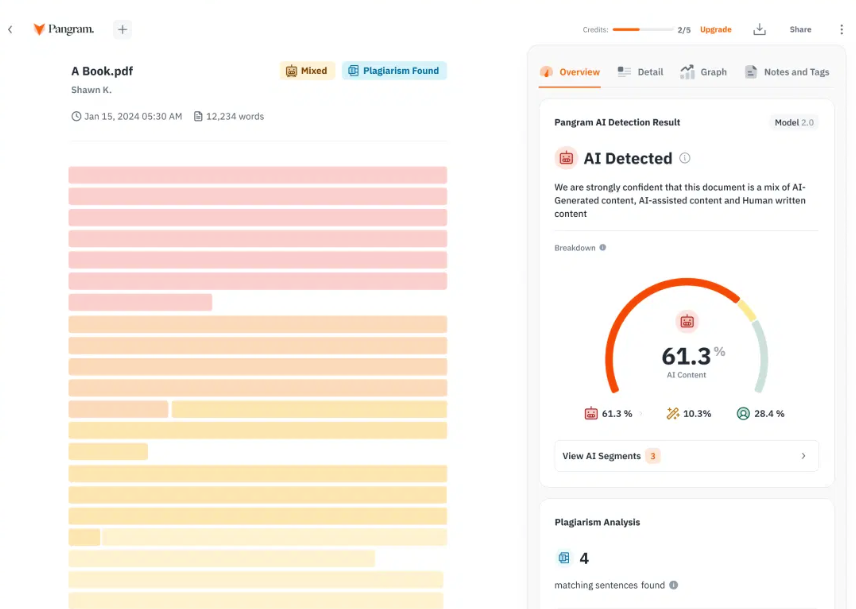
An AI writing detection result can identify linguistic patterns that a classifier associates with human or model-generated text. It may also show whether those patterns are concentrated in particular passages.
The output remains a statistical classification. It does not record who opened the document, who typed each sentence, which tools were used, whether an editor rewrote the work, or how the ideas were developed. It also cannot establish plagiarism, factual accuracy, copyright ownership, contractual compliance, or intent.
That leaves several distinctions for the editor:
- AI-generated text is not automatically plagiarized.
- Human-written text is not automatically original or accurate.
- AI assistance may range from spelling correction to substantial rewriting.
- A detection percentage does not reconstruct the complete drafting process.
Fairness also needs attention. Research published in Patterns found that several detectors tested at the time misclassified writing by non-native English writers more often than comparison samples from native English writers. That study did not evaluate every current detector or prove that Pangram produces the same result. It does show why an editor should examine the relevant language, population, and test conditions before applying any detector across contributors.
When a Creator Might Use Pangram in an Editorial Workflow
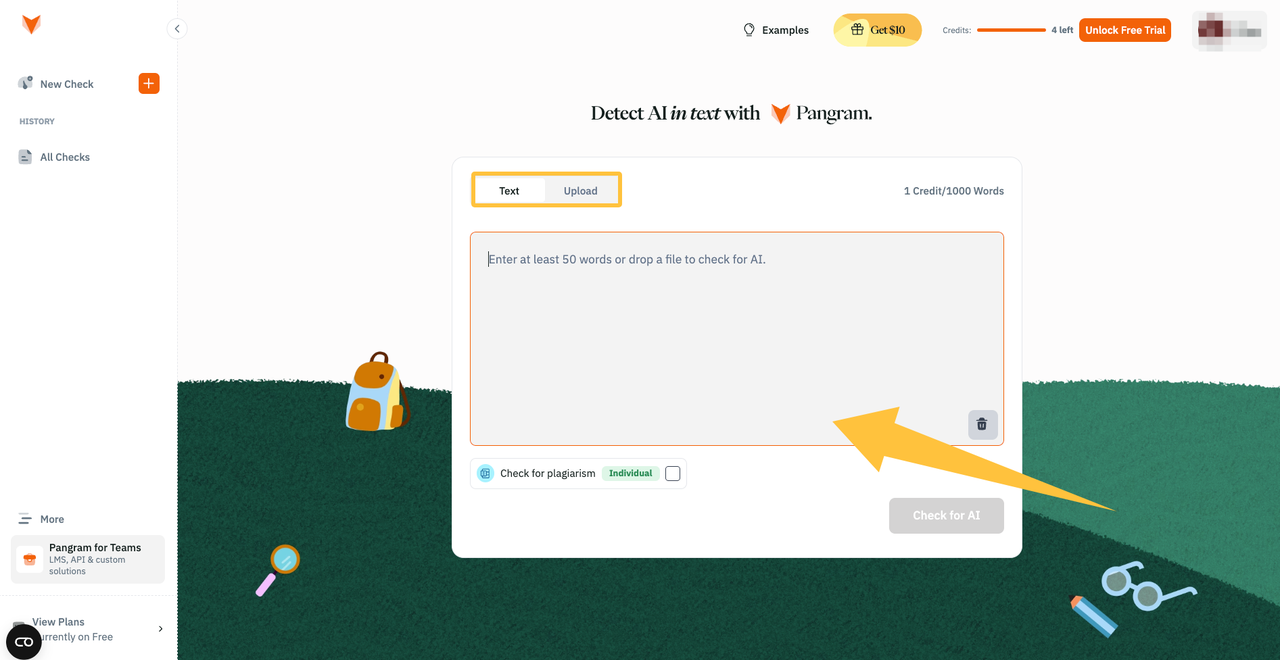
A creator can use Pangram AI Detector as a review aid when the workflow already has a written policy and an escalation path. Useful situations may include:
- screening unsolicited guest posts before assigning an editor;
- reviewing work delivered under a no-generative-drafting agreement;
- checking whether an abrupt change in style deserves clarification;
- sampling a large contributor feed for quality-control review;
- examining a mixed draft assembled by several writers;
- documenting a result before discussing the writing process with a contributor.
The person running the scan should not automatically own the final decision. A content coordinator might collect the result, while the managing editor compares it with the assignment brief, source record, revision history, and contributor explanation.
Confidentiality should be checked before uploading anything. Pangram’s current privacy policy says submitted content is not used to train its models and describes how account information and submissions are processed and deleted. A creator handling unreleased reporting, client material, personal information, or contract-restricted drafts should still confirm that the applicable plan and agreement meet the project’s requirements.
How to Review a Detection Result Responsibly
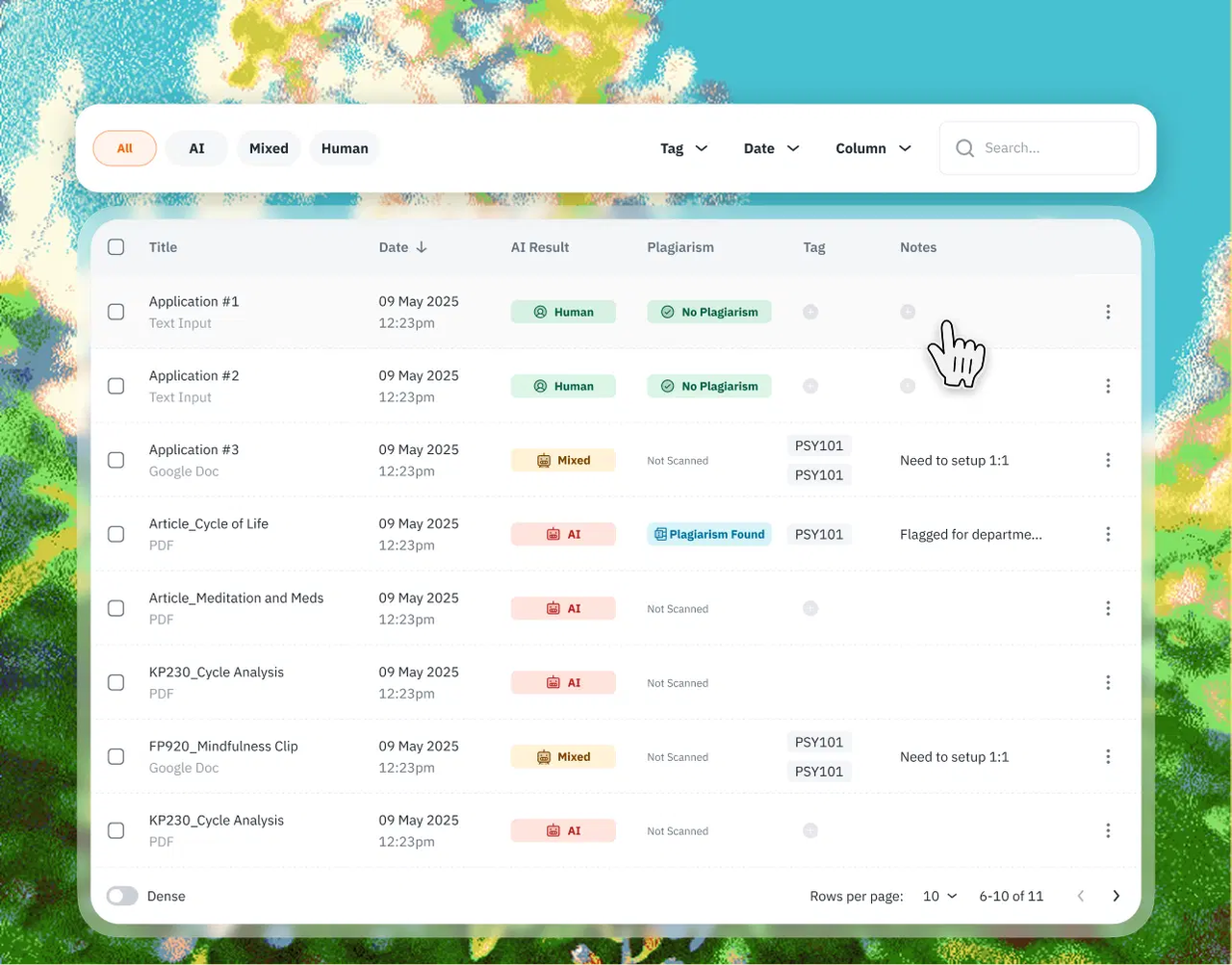
Start with the passage, not the headline score. Open the highlighted section and compare it with the surrounding draft.
Then follow a review sequence:
- Confirm the input. Check that the complete, correct version was scanned and that quotations, references, captions, or boilerplate were not mistaken for original prose.
- Read the segment in context. Look for changes in topic, source material, contributor, language, or editing history.
- Check the assignment policy. Determine what kind of AI assistance was allowed, prohibited, or subject to disclosure.
- Request process evidence. Ask for outlines, notes, drafts, revision history, sources, interview records, or editorial comments where appropriate.
- Let the writer respond. Share the passage and concern without presenting the classifier as a confirmed authorship record.
- Record the decision. Note who reviewed the evidence, what policy applied, and why the draft was accepted, revised, or declined.
If the writer supplies a document history showing the passage developing across several revisions, that evidence deserves direct consideration. If the explanation conflicts with the files, the editor can investigate further. Either way, the decision becomes traceable instead of resting on a screenshot.
What to Check Before Choosing an AI Detector
Begin with the decisions the detector will influence. A tool used for informal self-review does not need the same controls as one used to reject paid submissions.
Use this selection checklist:
| Check | What to verify |
|---|---|
Supported content | Languages, document types, minimum text length, and typical editorial formats |
Result detail | Document score, passage highlighting, assistance categories, and confidence information |
Error reporting | Separate false-positive and false-negative results for relevant content types |
Benchmark scope | Dataset source, publication date, model versions, domains, and independent testing |
Privacy | Training use, retention, deletion, subprocessors, and confidential-content handling |
Workflow | Shared reports, reviewer access, history, API, browser, or document integrations |
Governance | Who may scan, who may view results, and who can make a final decision |
Cost | Scan limits, word-based credits, seats, API usage, and renewal terms |
As of July 28, 2026, Pangram’s official pricing page lists free, individual, professional, team, developer, institutional, and enterprise options with different scan, credit, integration, and management allowances. Those terms can change, so compare the live plan with the volume and controls your workflow actually needs.

Avoid choosing solely from a homepage accuracy percentage. Ask what was tested, which mistakes were counted, and whether the evaluation resembles your contributors’ languages, article lengths, and editing practices.
When Human Editing Matters More Than Detection
Detection becomes secondary once the real editorial problem is visible.
A draft with fabricated sources needs fact-checking regardless of whether a human or model wrote it. A generic article that ignores the brief needs substantive editing even if its detector result is fully human. An original draft with strong reporting may deserve a conversation when it is flagged, not an automatic rejection.
Human editors can evaluate matters a text classifier does not observe: whether the argument follows from the evidence, whether quotations match their sources, whether the article contributes original judgment, and whether the writer completed the agreed assignment.
The detector can direct attention. The editor remains responsible for deciding what the publication can defend.
FAQ
Can Pangram prove that a draft was written by AI?
No. Pangram can classify patterns in the submitted text and report its level of confidence, but it does not observe the drafting process. Treat the result as evidence to investigate alongside version history, notes, source files, contributor explanations, and the publication’s AI policy.
Should creators check their own drafts before publishing?
They can, especially when a client or publication uses AI writing detection. The purpose should be to understand how the draft may be reviewed and identify passages that deserve an editorial check—not to manipulate the text until it passes. Factual accuracy, originality, voice, and compliance with the brief remain more important.
What should a writer do if a detector flags original work?
Keep the original result and collect evidence of the writing process: outlines, research notes, document history, saved drafts, sources, and editor comments. Ask which passage triggered the concern and request human review. Do not damage an otherwise sound draft by introducing errors or arbitrary wording changes to chase a lower score.
Is AI detection useful for guest posts or submissions?
It can support triage when a publisher receives more submissions than editors can inspect immediately. The policy should specify what is being screened, what AI use is allowed, who reviews a flag, and what evidence a contributor may provide. A detector should not become an unpublished rejection rule.
Should detection results be shared with clients or editors?
Share them when they are relevant to an agreed editorial policy, but include the tool, date, scanned version, highlighted passages, and limitations. Avoid sending only a percentage or presenting it as proof. The recipient needs enough context to review the concern and respond to the underlying evidence.
Conclusion
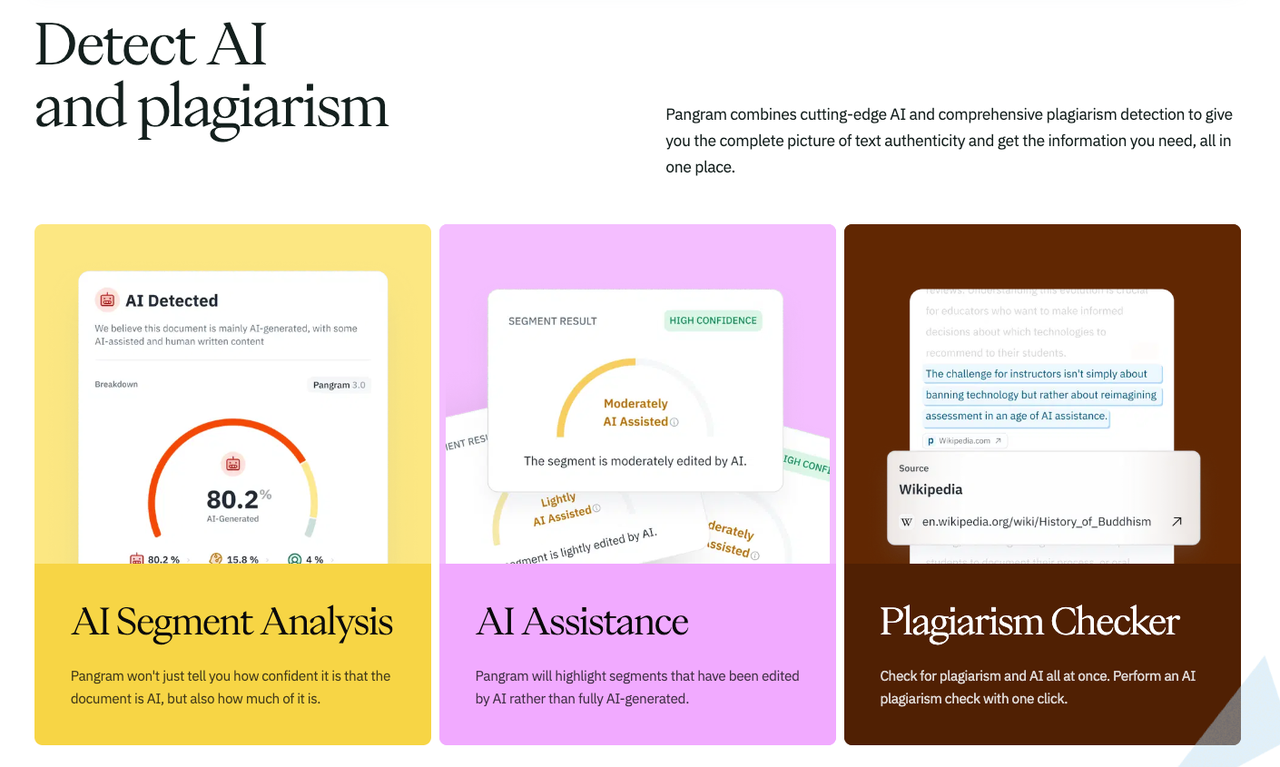
Pangram AI Detector can help creators and publishers locate passages that warrant attention, particularly when submission volume makes manual first-pass review difficult. Its result should enter a defined editorial process rather than replace one.
Keep the detection report attached to the scanned version, then test it against the brief, drafts, sources, revision history, and writer response. The score starts the review; the evidence from the writing process should close it.