WordPress SEO Agency: Services, Costs, and Vetting
Learn what a WordPress SEO agency should handle, how to assess site access and change controls, and what to verify before hiring.
Marketing approves a new page title. The SEO agency installs a plugin, a developer edits the theme template, and the host clears an old cache. The search result remains unchanged, but the contact form stops working.
Several people touched the same WordPress page. Nobody owned its final state.
I’m Alex. When comparing a WordPress SEO agency, I would look beyond the audit and ask who can change the site, where those changes will be tested and what evidence closes the work. This guide covers that purchasing decision without offering universal prices or ranking guarantees.
Security, accessibility, privacy and contractual issues require review under the rules applying to the specific site and business.
What Makes WordPress SEO Work Different
Themes, plugins, page builders, hosting, and technical debt
WordPress separates content from much of the code that presents and extends it. A title may be stored in the editor, rewritten by an SEO plugin and displayed through a theme template. A page builder can add another layer, while the host or caching service may continue serving an older version.
That flexibility is useful until two tools begin controlling the same output. Removing a plugin may change metadata, redirects, structured data or forms. Updating a theme can overwrite custom work. Even a visually minor redesign may alter headings, links or page speed.
Ask the agency to map the active theme, child theme, page builder, plugins, hosting controls, caching layers and custom code before implementation. WordPress’s security hardening guidance recommends keeping WordPress, themes and plugins current, removing unused plugins and maintaining a recovery plan.
The agency does not need to replace every old tool. It does need to understand which components own the behavior it plans to change.
WordPress implementation after—not instead of—a general technical audit
A general technical SEO audit should establish what is happening: which URLs are affected, how the issue was reproduced and what search or user behavior may be involved.
The WordPress specialist then has to translate that finding into a safe implementation. A duplicate-title pattern might come from the theme, plugin settings, custom fields or a page-builder template. The correct fix depends on the site, not on the wording of the audit finding.
Keep the scopes separate. The auditor supplies evidence and priority. The WordPress SEO provider identifies the responsible component, proposes the change and explains how it will be tested and reversed.
Without that distinction, an agency may repeat the audit instead of fixing anything—or implement a broad change before proving which template caused the problem.
Assess the Site Before Choosing an Agency
Business goals, current performance, and known constraints
Start with the business reason for the work. A lead-generation site, publisher, membership business and ecommerce store may all run WordPress, but their important pages and conversion paths differ.
Record the baseline before the agency changes the site. Useful inputs may include priority landing pages, current search visibility, organic conversions, crawling or indexing concerns, recent releases and any known seasonal pattern. Mark gaps rather than filling them with assumptions.
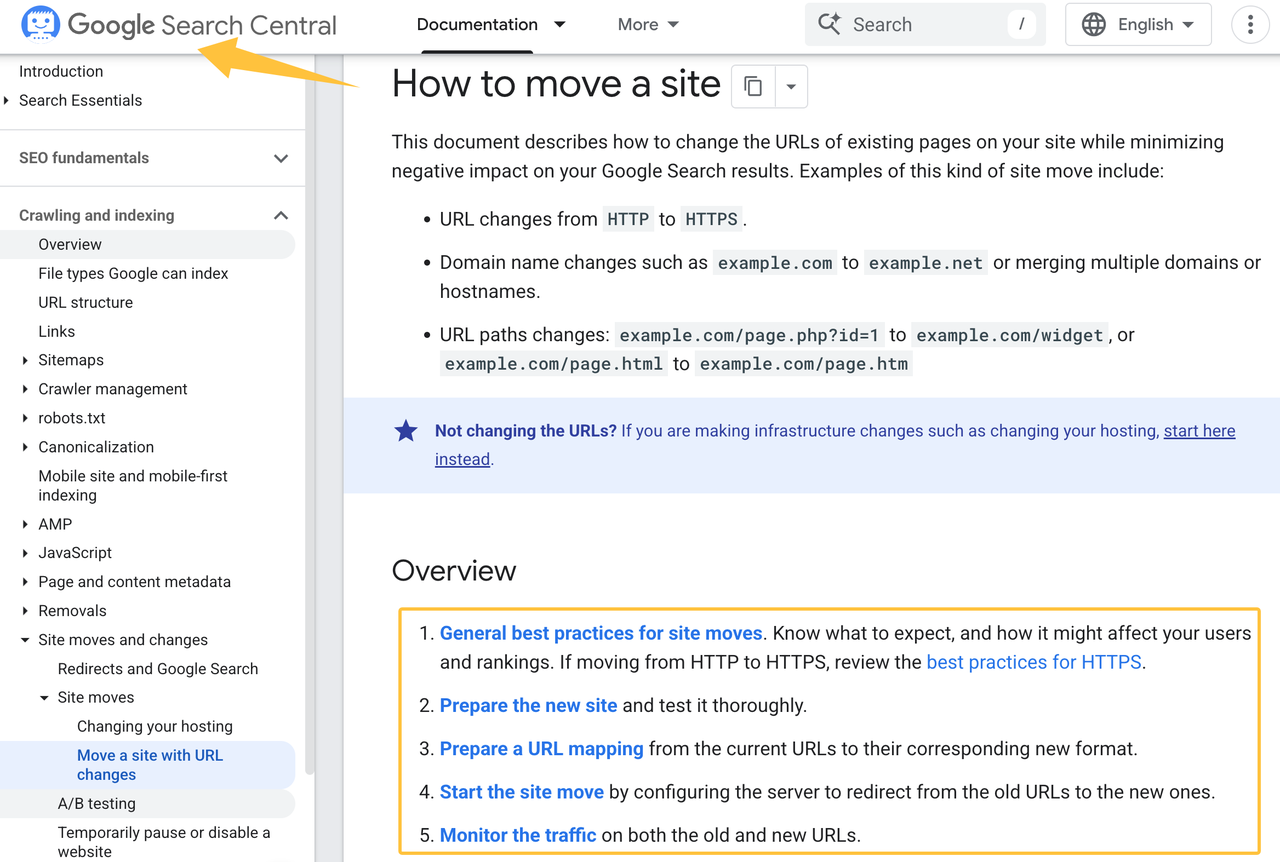
Tell providers about planned redesigns, hosting changes, domain moves or URL restructuring. Google’s site-migration guidance recommends preparing and testing the new site, mapping old URLs to new ones and configuring redirects when URLs change.
A business expecting a redesign next month may not need a large repair to the outgoing theme. It may need a migration plan, a protected baseline and a smaller set of fixes that cannot wait.
Access, backups, staging, and change ownership
List every system the work may touch: WordPress, hosting, DNS, CDN, analytics, Search Console, tag management, repositories and third-party services connected through plugins.
Do not provide full administrator access by default. Match each permission to the assigned task, create individual accounts and record who approved them. The business should keep at least one working recovery route that does not depend on the agency.
Confirm what “backup” means. A database backup may not include themes, plugins, uploads or configuration files. A file copy alone may not restore content stored in the database. The provider should state what is captured, where it is stored and how restoration has been tested.
Staging should resemble production closely enough to expose conflicts, but it must not become an unprotected copy of sensitive data. Name the person who approves deployment, the person who performs it and the person who decides whether to roll back.
Define the WordPress SEO Service Scope
Technical fixes, on-page work, content, and monitoring
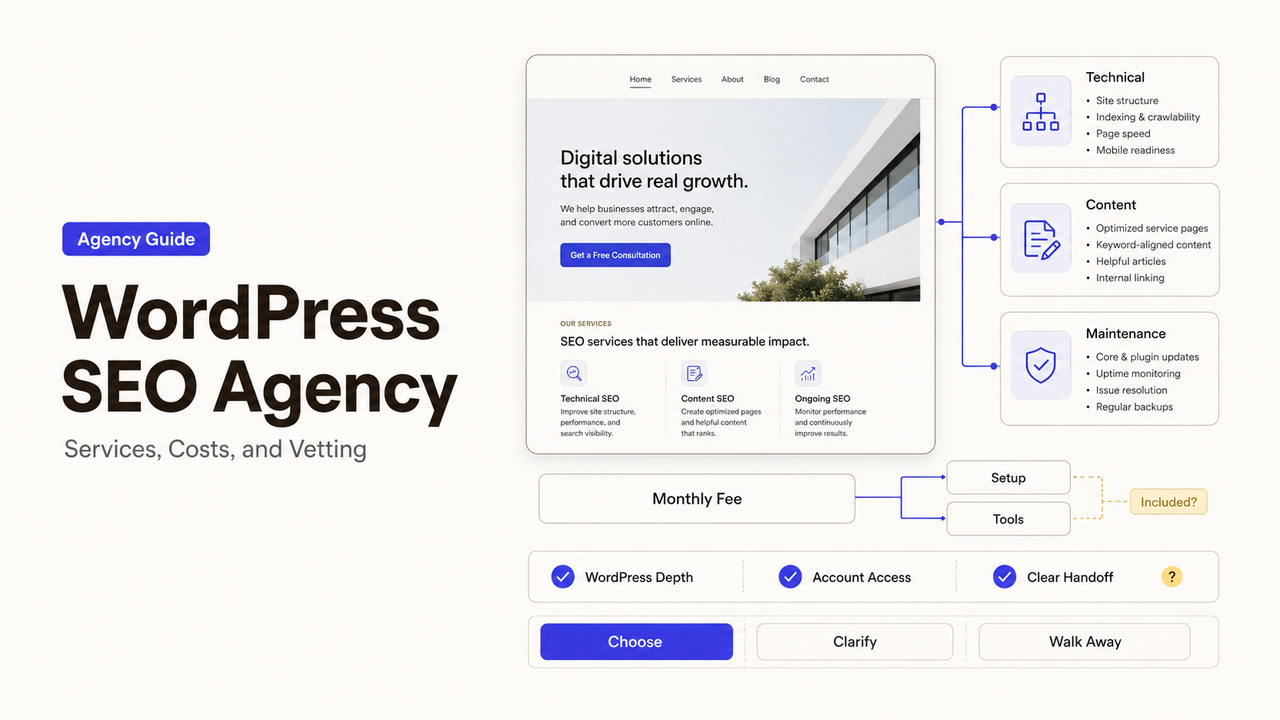
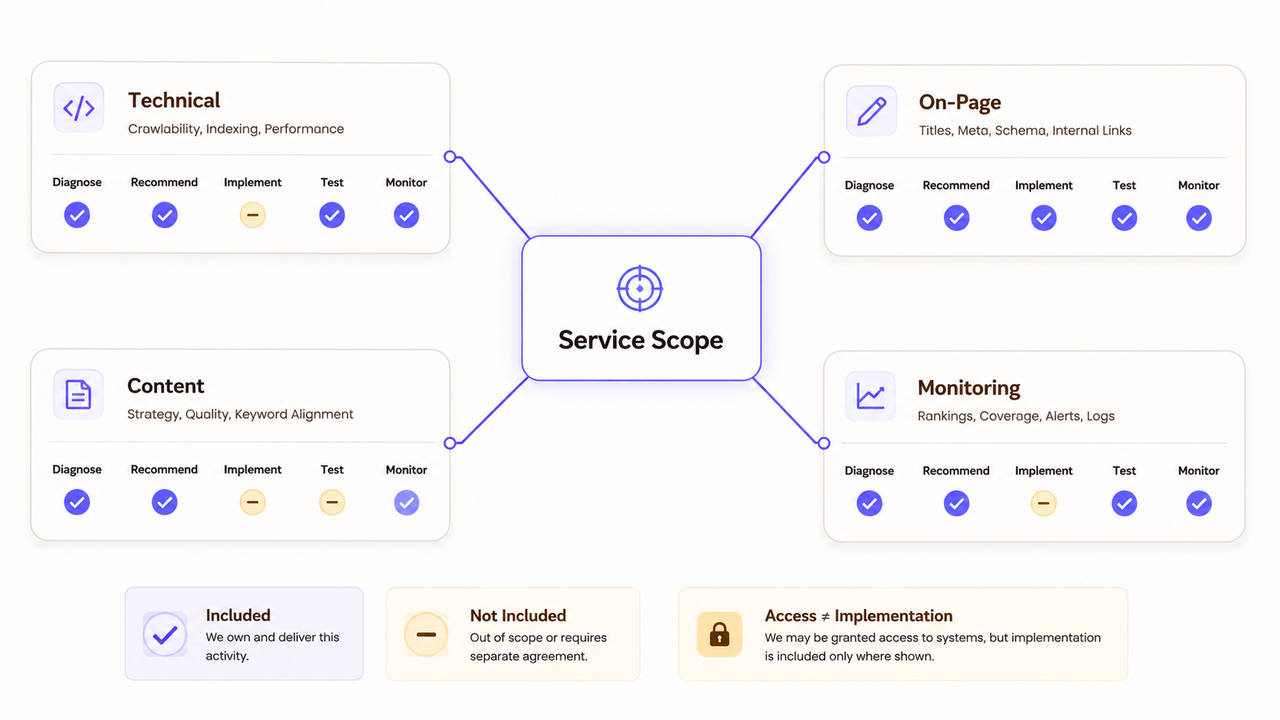
WordPress SEO services can cover several kinds of work, and they should not be bundled into one vague promise.
Technical implementation might include template metadata, redirects, canonical signals, sitemaps, internal linking components, schema output or crawl controls. On-page work may cover titles, headings, page structure and internal links. Content work could involve refreshing existing pages or briefing new ones.
Monitoring begins after publication. The agency may verify that the intended output appears in the rendered page, important URLs remain accessible and search tools do not show an unexpected change. Monitoring does not mean every traffic movement is caused by the latest edit.
For each workstream, identify whether the agency will diagnose, recommend, implement, test or monitor. “Fix technical SEO” does not reveal which of those responsibilities is included.
Also name the dependencies. If the agency supplies code recommendations but the client’s developer deploys them, the delivery schedule and acceptance test must account for that handoff.
Project versus ongoing support and their cost drivers
A defined project works when the site has a bounded problem: a migration, template correction, plugin cleanup or prioritized implementation backlog. Ongoing support is more suitable when the site publishes frequently, changes templates regularly or needs continuing monitoring.
Cost usually reflects the work required, not WordPress alone. Relevant drivers include:
- the number of templates and content types;
- custom theme or plugin code;
- multisite or multilingual architecture;
- page-builder complexity;
- staging and deployment requirements;
- access to developers and subject experts;
- volume of content changes;
- monitoring and reporting expectations;
- revision, documentation and handoff requirements.
A lower quote may assume that the client supplies development and testing. A higher quote may include implementation, release management and post-deployment checks. Compare those assumptions before comparing the totals.
Vet Agencies Using Process and Evidence
Relevant audits, implementation examples, and reporting
Ask for examples that resemble the work you are buying. An agency experienced with editorial sites may not have dealt with a multilingual membership platform or a heavily customized ecommerce installation.
A useful example should explain the original condition, evidence, proposed change, implementation owner and validation method. Reported ranking or traffic movement needs a date, baseline and enough context to separate the agency’s work from a redesign, promotion or broader market change.
Review deliverables where confidentiality permits. A redacted backlog, implementation ticket or QA record may reveal more about the agency’s discipline than a screenshot of a traffic graph.
Reporting should distinguish completed work from observations. “Reviewed sitemap settings” is activity. “Removed an unintended content type from the sitemap, tested the new output and recorded the affected URLs” is an auditable change.
Questions about developers, plugins, and rollback plans
Ask who writes code and who reviews it. Some agencies employ WordPress developers; others produce instructions for the client’s development team. Neither model is automatically better, but the proposal should state which one applies.
Discuss plugin decisions before work begins:
- Will the agency configure an existing plugin or install another one?
- What current function would the new plugin replace?
- Does it send data to an external service?
- Who owns its account and licence?
- What happens if the plugin is removed?
- How will updates and conflicts be monitored?
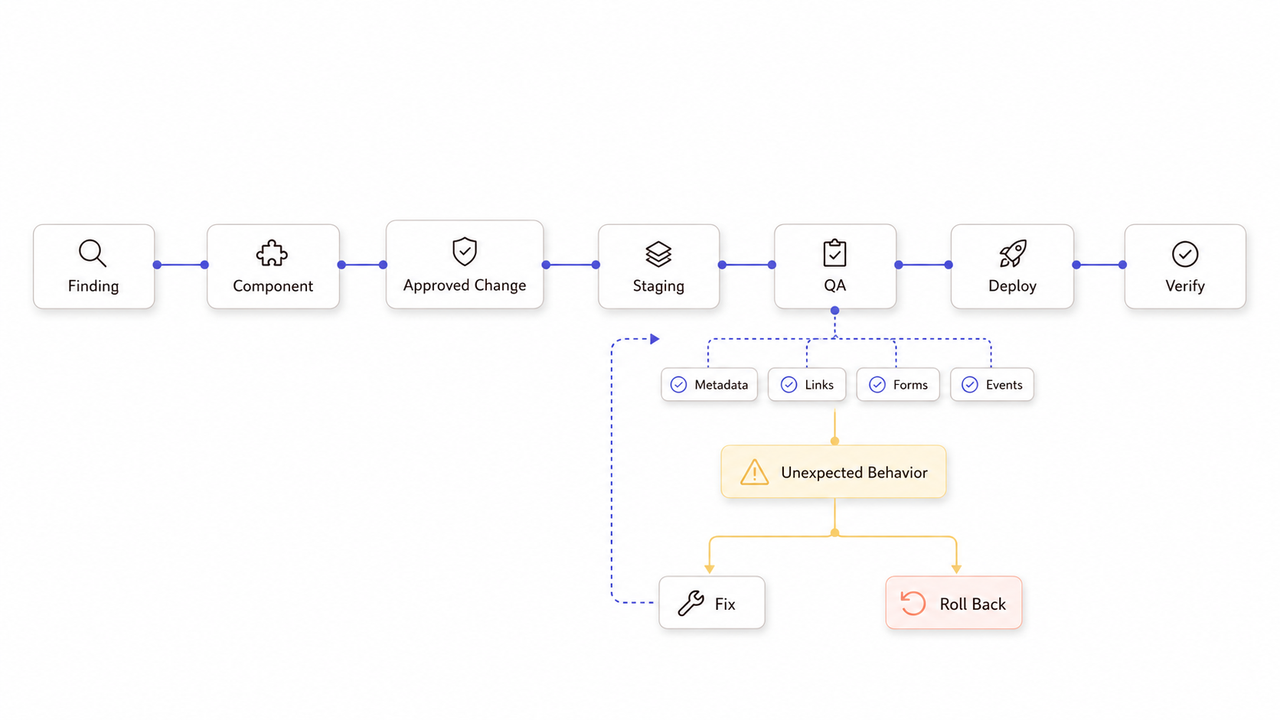
The rollback plan should match the risk. A copy change may only require version history. A template, database or plugin change may need a tested backup, deployment record and named rollback owner.
“Revert if something breaks” is not a plan. Define what will be checked, who can stop the release and how the previous state will be restored.
Set Deliverables and Acceptance Criteria
Prioritized backlog, completed changes, and documentation
The engagement should produce more than a presentation. Begin with a backlog that gives each item a location, evidence, expected effect, priority, dependency, owner and acceptance test.
Separate proposed work from approved work. A recommendation may still need developer review, budget approval or confirmation that another plugin does not depend on the current behavior.
For completed changes, record:
| Delivery record | What it should show |
|---|---|
Affected scope | URLs, templates, plugins or settings changed |
Previous state | Reproducible evidence captured before implementation |
Approved change | What was altered and who approved it |
Test result | Expected and actual behavior |
Release details | Deployment date and responsible person |
Exception | Anything unresolved or intentionally excluded |
Rollback reference | Backup, version or restoration instructions |
Documentation should allow another capable person to understand the current site without reopening the entire project. If only the agency knows why a plugin is configured a certain way, the handoff is incomplete.
QA, measurement, and final handoff
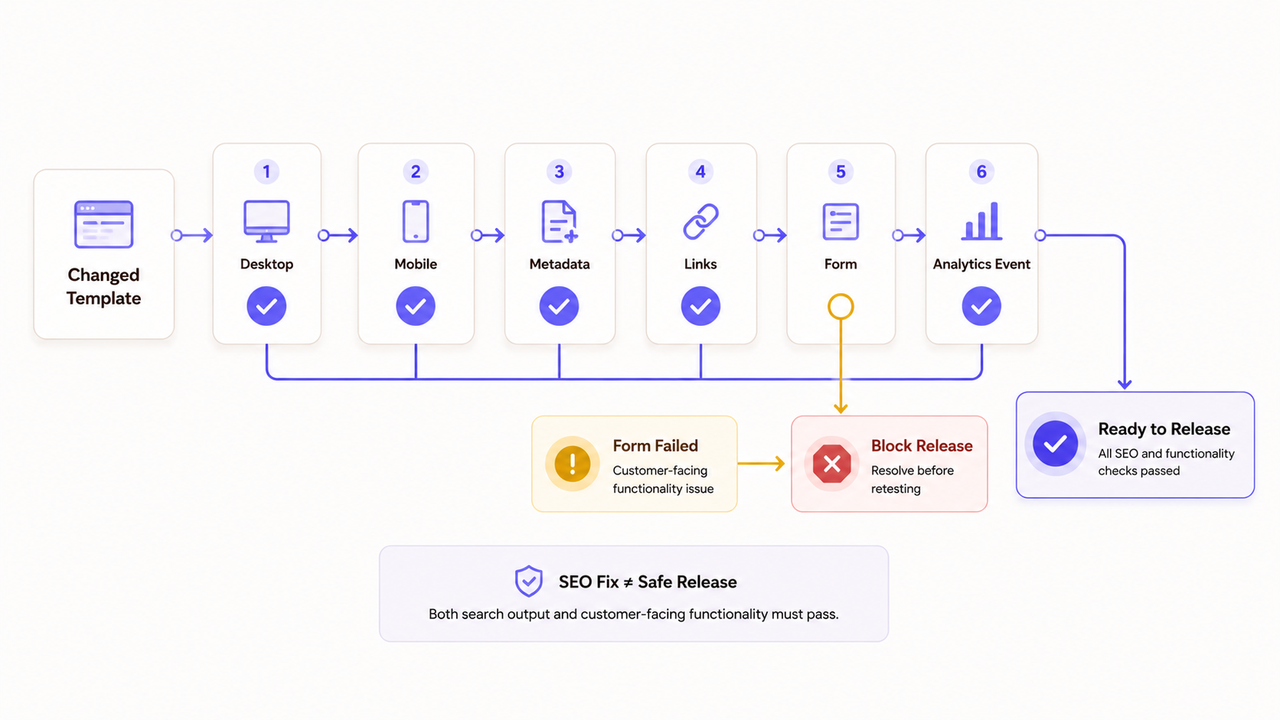
Test the behavior, not merely the setting. Open representative pages on desktop and mobile. Check rendered metadata, links, forms, redirects, analytics events and any template affected by the change.
When the project involves SEO for a website redesign, compare the new site with the approved URL map and baseline. Check whether important content, internal links and conversion routes survived the release.
Measurement continues after implementation, but acceptance should not depend on a promised ranking. A change can be correctly deployed even when search engines have not yet recrawled the affected pages.
The final handoff should include credentials returned or removed, current plugins and licences, changed files, configuration notes, known risks, test results, reporting access and the remaining backlog. Schedule a final access review rather than assuming unused accounts will be removed later.
How SpringBrand Fits This Workflow
SpringBrand can help businesses organize a WordPress SEO request and compare relevant services from independent providers. It does not perform the website changes, certify providers or guarantee search results.
Turn the approved WordPress backlog into a comparable SEO service request before selecting an independent provider.
FAQ
Can an SEO plugin send site data to a third party?
Yes. A plugin may connect to an external API, load remote scripts, collect telemetry or send information to a hosted service. The exact behavior depends on the plugin and its settings.
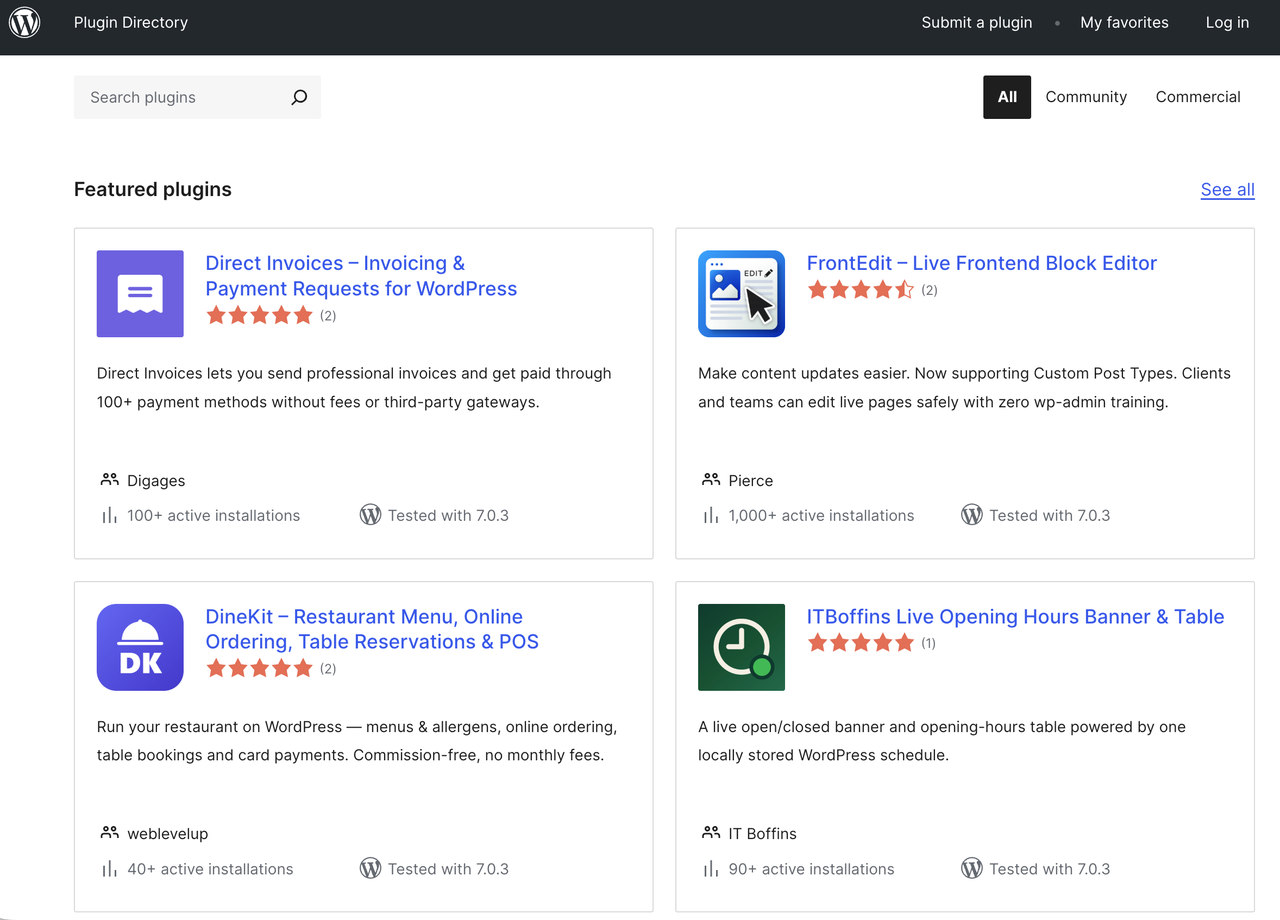
WordPress’s plugin privacy guidance recommends documenting what personal data a plugin collects, where it is stored and which third parties receive it. Review the plugin documentation, privacy policy, network activity and configuration before approving use.
Can an agency publish a client's plugin stack in a case study?
Only when the client has authorized that disclosure and the proposed use fits the agreement. A plugin list may expose security, licensing or infrastructure information even when the business name is removed.
Define which site details, screenshots and results may be published. Have contractual, security and confidentiality questions reviewed by the appropriate people before release.
May screenshots from a private WordPress dashboard be used in staff training?
Not automatically. A screenshot may expose usernames, customer details, unpublished content, analytics, plugin keys, licence information or internal URLs.
Confirm who may view the training, where it will be stored and whether the client authorized that use. Crop or replace sensitive material where possible, and use a staged or purpose-built example when the private dashboard is unnecessary.
What accessibility responsibility remains with the site owner?
The site owner still needs to define the applicable accessibility standard, assign internal responsibility and accept the delivered work. Hiring an agency does not transfer every organizational or legal obligation.
W3C’s accessibility planning guidance recommends assigning responsibilities across management, development, content, QA, purchasing and acceptance testing. Put the agency’s specific duties and tests into the scope.
How should a suspected plugin vulnerability be escalated?
Preserve the evidence, limit unnecessary access and notify the site’s security owner. Avoid publishing technical details before the issue can be assessed.
For plugins hosted on WordPress.org, the official plugin security reporting process recommends contacting the developer privately and provides a route to the plugin team. The host, insurer, counsel or other qualified specialists may also need to join the response.
Conclusion
A WordPress SEO agency should be judged by how it moves from evidence to a controlled site change. WordPress knowledge matters, but so do access discipline, staging, development ownership, QA and recovery.
Define what the agency will diagnose, implement and monitor. Keep business approval, account recovery and high-risk decisions inside the company.
The engagement is ready to close when another capable owner can reproduce the issue, understand the change, verify the result and restore the previous state without relying on undocumented agency knowledge.