Anthropic Claude Docs Launch: What Changed for Teams
The Anthropic Claude Docs launch adds a shared document surface to Claude. See what changed for team writing, where it fits, and what remains limited.
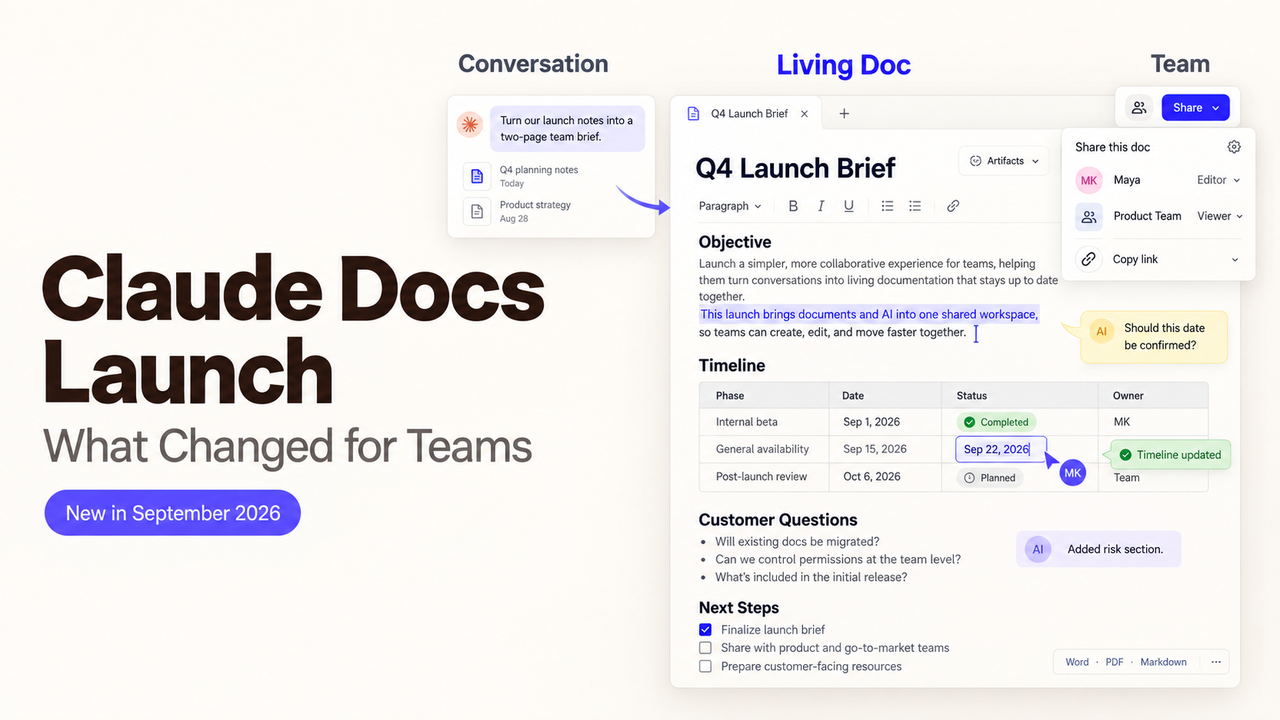
Anthropic launched Claude Docs on September 16, putting a shared, editable document beside the conversation that produced it. The anthropic claude docs launch could save a marketing team the copy-and-paste handoff between drafting and review. Before moving a live brief there, check what the beta records, recovers, and lets colleagues access.
What Anthropic Launched With Claude Docs
Anthropic introduced Claude Docs on September 16, 2026, alongside Claude Slides and a broader chat-and-Cowork update. Docs are rich-text artifacts saved to the Artifacts tab. People can start one from a conversation, edit it, and invite collaborators. This is a document workspace, distinct from Anthropic's developer documentation.
As of September 28, Anthropic's Claude Docs guide lists the beta for Pro, Max, Team, and Enterprise. It is on by default except on Enterprise, where an owner must enable it. Release notes also mention Free; teams should confirm availability in their own accounts.
What Changes in an AI-Assisted Writing Workflow
Draft, Revise, and Collaborate in One Document Surface
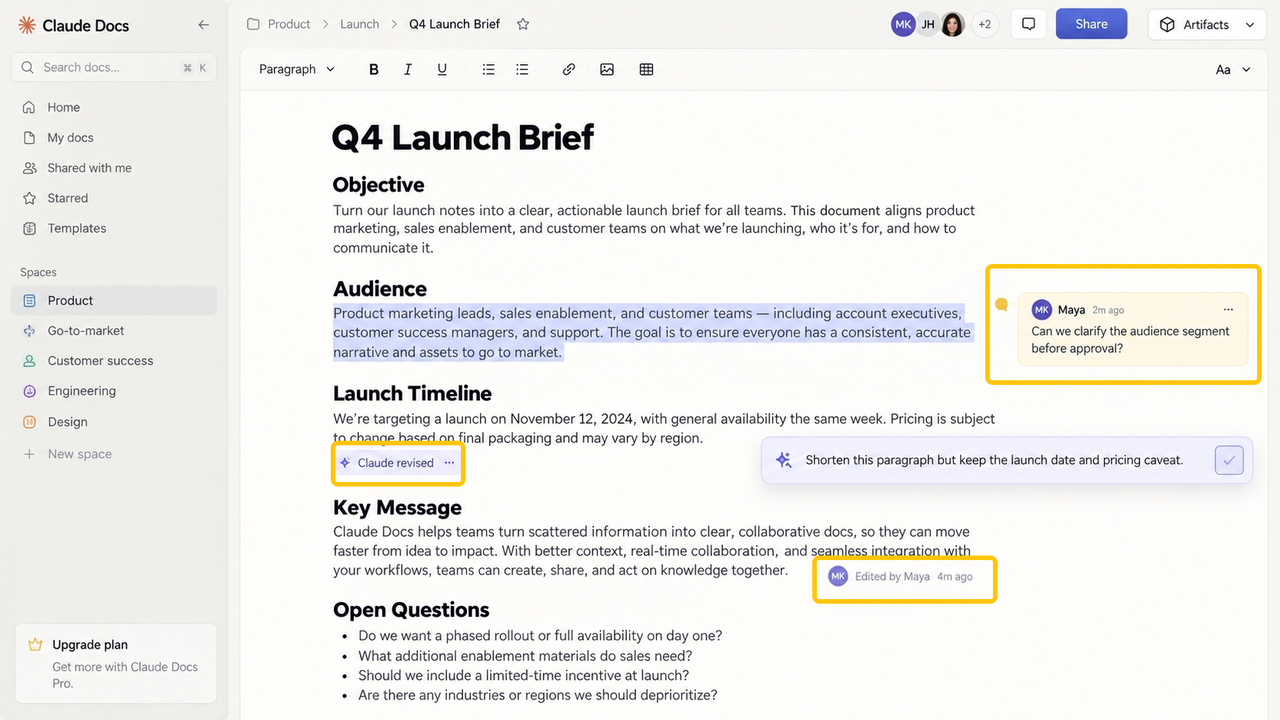
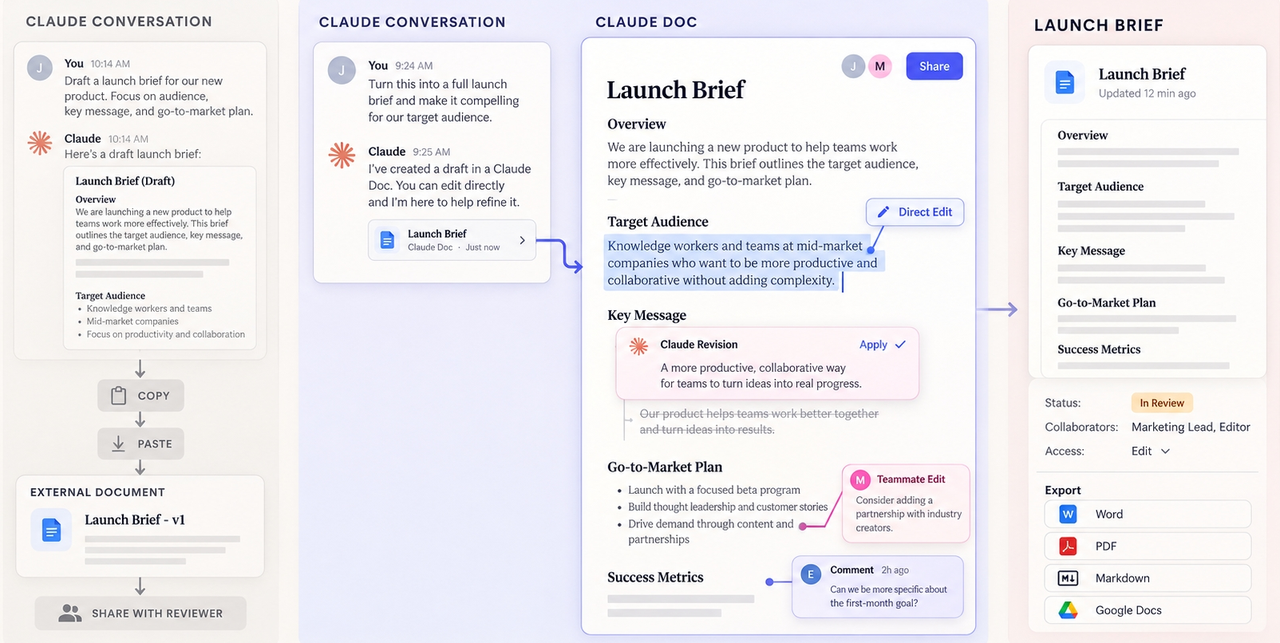
A marketing lead can turn meeting notes into a launch brief, then revise a paragraph while a colleague reviews the same page. Editors can comment or mention Claude to request a change. Anthropic says changes are attributed to their human or AI author.
Move From Conversation Output to a Shared Work Product
Earlier artifacts could already hold documents. Now collaborators can edit together, with view or edit access and export to Word, PDF, Markdown, or Google Docs. The next reviewer can work on the draft itself instead of copying text from a chat. That does not make it an approved company record.
Where the Beta Fits and Where It Does Not
Teams That Benefit From the New Workflow
Docs fit a small team preparing a brief, report, or proposal through several review rounds. The best fit is work whose collaborators already use Claude and agree who owns the final version. That is an editorial judgment based on Anthropic's documented controls, not a hands-on test.
Limits That Still Require Another Document System
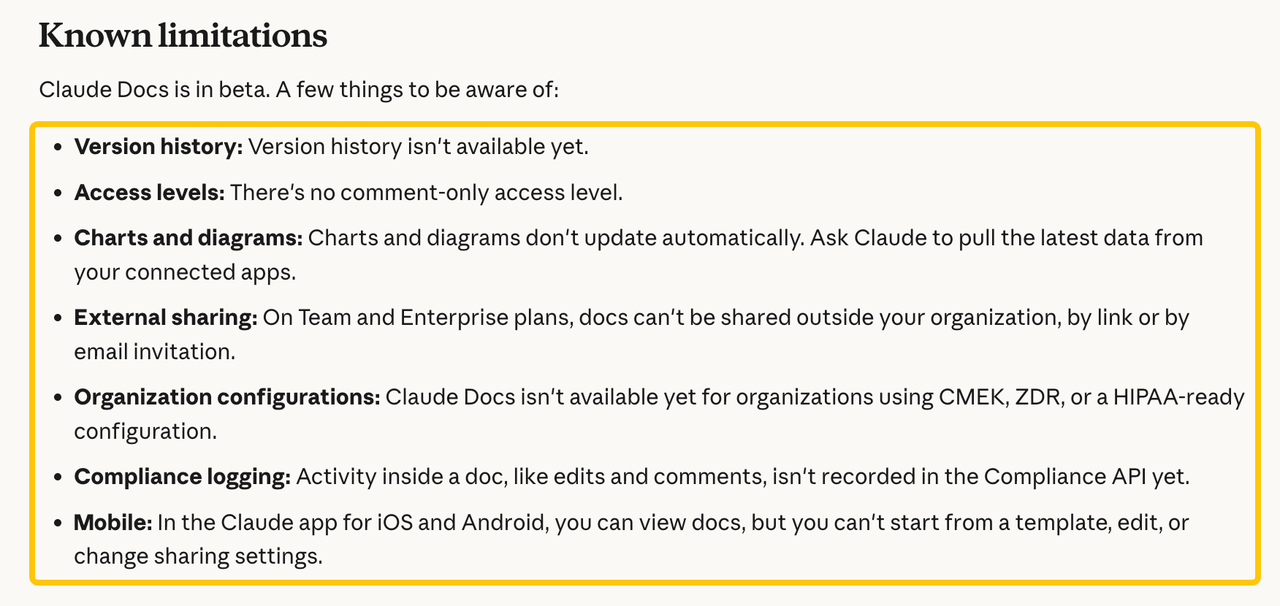
Docs lack version history and a comment-only role. Team and Enterprise docs cannot be shared outside the organization. Deletion is permanent. If approval requires a recoverable revision trail or outside reviewer, keep that process in another system. Charts and diagrams also need manual refresh requests.
What Teams Should Verify Before Rollout
Start with one ordinary, non-sensitive brief. Confirm that writers and reviewers can access the beta, that edit rights fit their roles, and that an export meets retention needs. The Artifacts admin guide explains organization controls, including the required cloud code execution setting. Compare the broader Enterprise security controls with Docs' specific exclusions: Claude Docs isn't available yet for organizations using CMEK, ZDR, or a HIPAA-ready configuration.
For regulated work, ask the compliance owner to check the logging gap. Anthropic records doc-level events in its Compliance API, but not edits or comments inside a doc. Review the applicable Claude for Work data terms and account controls before placing confidential material in a pilot. This is a product and policy summary, not legal advice.
Conclusion
The anthropic claude docs launch moves AI-assisted writing closer to a shared document that a team can revise together. For a routine internal brief, that may remove a copy-and-paste handoff. For a controlled record, the missing revision history, recovery path, and edit-level compliance log decide whether Docs can be the final home or only the drafting room.
FAQ
Do previously created document artifacts become Claude Docs automatically?
Anthropic says older artifacts still work, but it does not document automatic conversion into the new Docs format. Treat an existing artifact as an existing artifact. If its history or sharing matters, test a copy before moving a live team document.
Can administrators recover a deleted Claude Doc?
The Docs guide says deletion is permanent and there is no trash. The current Docs guide does not describe a separate administrator recovery route. Export any document your team must retain before its owner deletes it.
Are edits and comments inside a doc included in Compliance API logs?
No. Anthropic's admin guide says it records the doc at artifact level. Edits and comments inside it are not recorded yet. Check that gap against your audit requirements before using Docs for controlled approvals.
Does Claude Docs expose a public API for automated document creation?
Anthropic's Docs guide describes creation through Claude conversations, Claude Code, and the Artifacts tab. The current Claude Docs guide does not document a public Docs creation API. Do not design an automated publishing process around one without current endpoint documentation.
Does the Claude Docs beta have a separate usage allowance?
The current Docs guide does not document a separate allowance. Docs draws from the user's existing plan limit. A long draft assembled from several sources can use more than a typical message. Include usage in a pilot budget.
Recommended Reads
- Content Creation Workflow: Brief to Approved Draft
- Content Strategy Services: What They Should Deliver
- Document Workflow Automation for Small Teams
- Best Claude Code Recipes for Small Business