Social Media Marketing Agency for Small Business
A social media marketing agency for small business should be compared by scope, evidence, account safeguards, workflow, and provider fit.
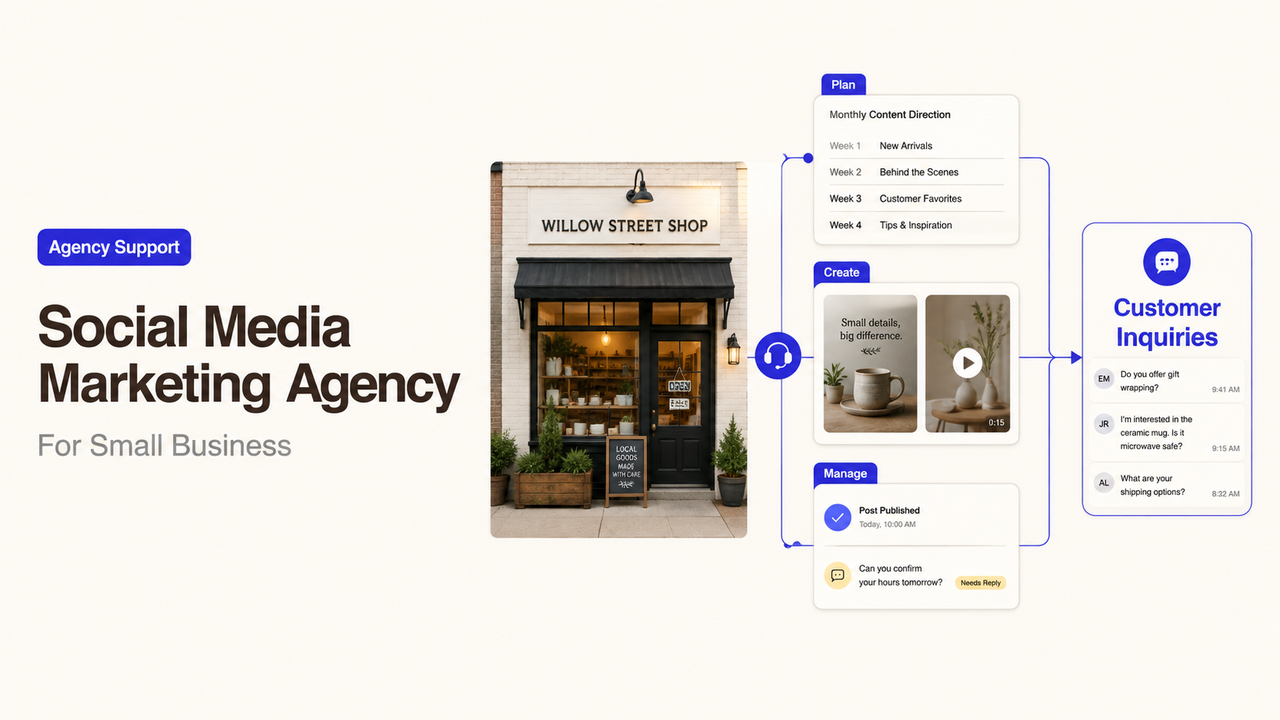
Monday’s calendar contains twelve posts that look almost ready. The owner thinks the agency will answer comments, the agency is waiting for product photos, and the only person with full account access left the company last month.
That is an ownership problem disguised as a content problem. Before hiring a social media marketing agency for small business, decide which work is missing, who can approve it and what the provider will be allowed to control. I’m Alex. My test is whether the arrangement can still function when a post is late, a claim is challenged or the usual approver is unavailable.
This guide covers that operating decision. It does not provide universal price ranges, platform guarantees or legal advice.
Decide Whether a Small Business Needs an Agency
Capacity gaps, channel complexity, and business goals
Start with the work that is not getting done. A small business may have plenty of ideas but no one available to turn them into usable assets. Another team may publish regularly yet struggle with comments, reporting or campaign coordination.
Write down the gap before choosing a provider:
- Posts are irregular because production has no owner.
- One employee is covering too many channels.
- Video, design or paid media requires skills the team lacks.
- Customer questions remain unanswered.
- Approvals arrive after the useful publication window.
- Reports show activity without explaining what the business learned.
Next, name the business goal. Awareness, lead generation, recruitment, customer education and retention call for different content and measurements. “Post more often” describes an activity, not the outcome the company wants.
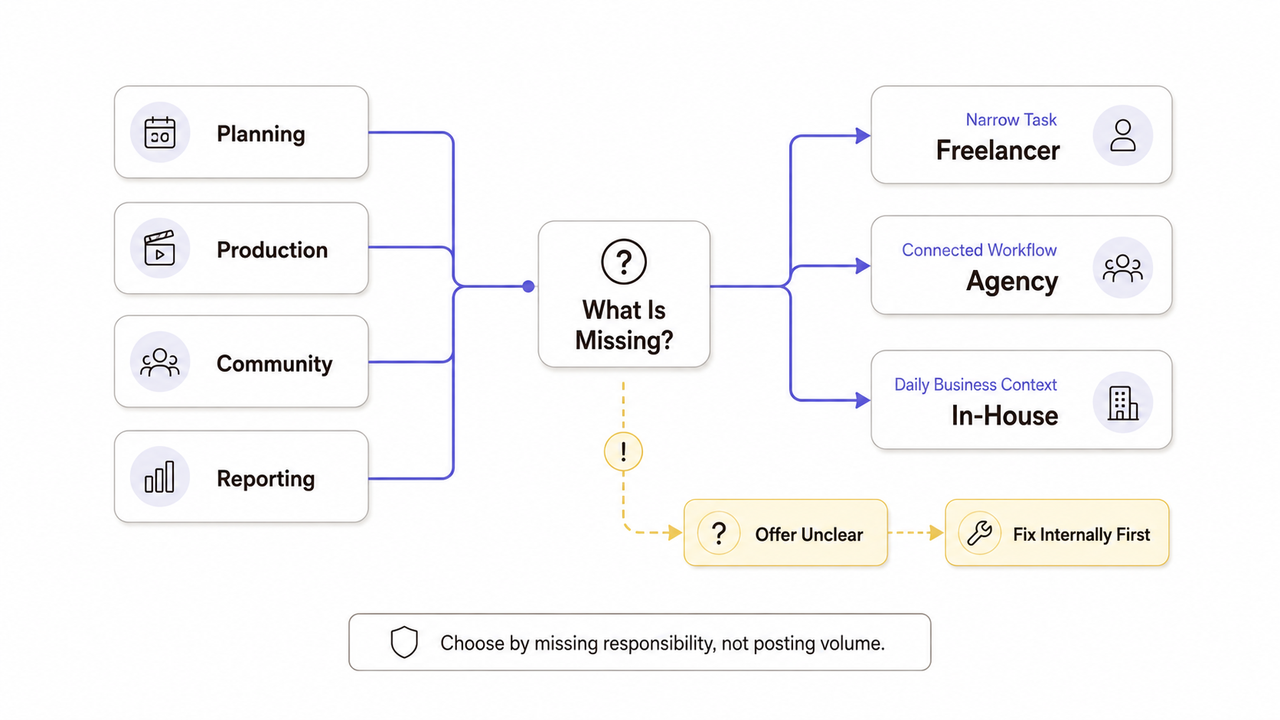
An agency may add value when several roles must work together and the internal team cannot coordinate them consistently. It is less likely to solve the problem when the offer is unclear, the company cannot supply basic information or nobody is willing to approve public claims.
Agency versus freelancer versus in-house ownership
A freelancer can work well when the assignment is narrow: editing videos, designing posts, writing copy or managing one channel. The business usually carries more of the planning and coordination.
An agency is better suited to a broader workflow that may involve strategy, production, publishing, community work and reporting. That added capacity only helps when the agreement says which of those responsibilities are included.
An employee offers deeper day-to-day access to the business, but one person may not cover every specialist skill. Some small teams therefore keep strategy, expertise and approvals in-house while using outside support for production or channel operations.
Whichever model you choose, the business should retain account ownership, access recovery and final authority over its claims. Outsourcing the workload is reasonable. Outsourcing the ability to regain control of the brand’s accounts is not.
Define the Social Media Service Scope
Strategy, content, publishing, community, and reporting
“Manage our social media” leaves too much open to interpretation. Separate the work into decisions that can be priced, assigned and reviewed.
Strategy may cover audiences, channel roles, themes, campaign priorities and measurement. Content work can include interviews, writing, design, photography, video editing or adaptation of existing material. Publishing involves scheduling, platform setup, links, tags and final checks.
Community management is another responsibility. Define whether the agency will acknowledge comments, answer routine questions, hide abusive content or send issues to an internal owner. It should not improvise responses about refunds, safety, employment, legal disputes or regulated products.
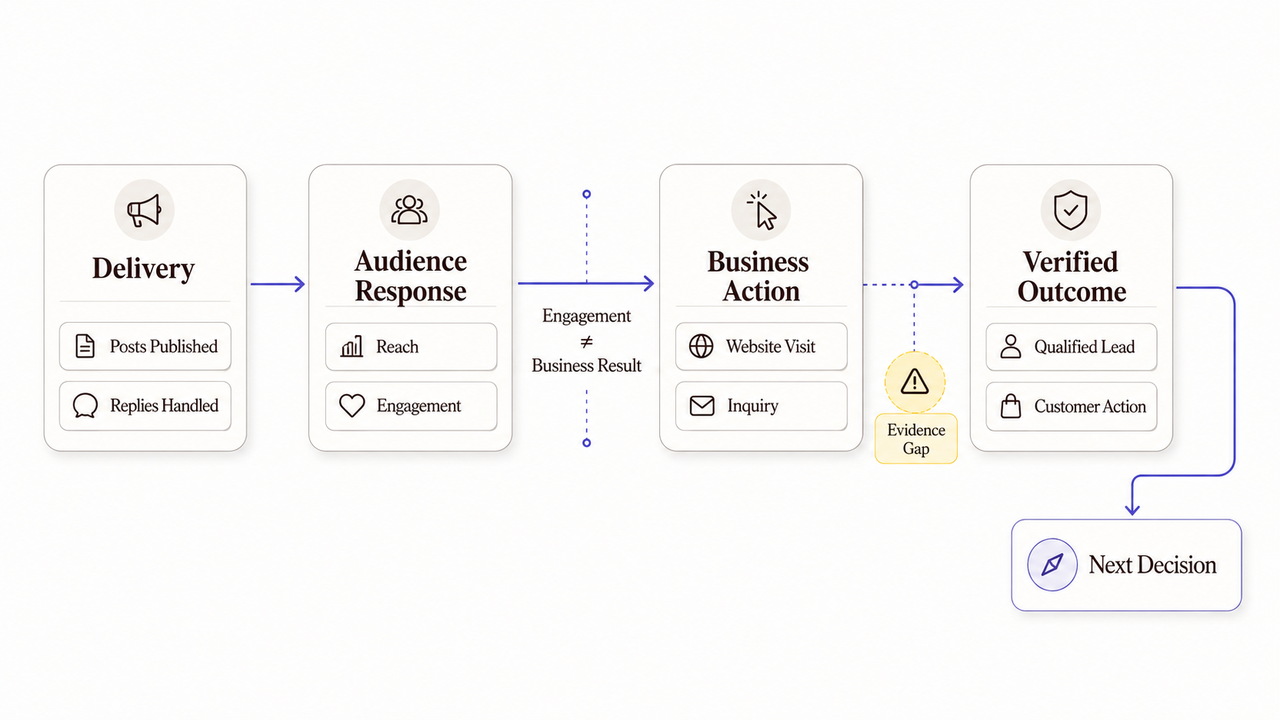
Reporting also needs a boundary. A dashboard may display reach, clicks and engagement, but the provider should explain which decisions those figures support. If the business wants social media conversion reporting, it must also define the conversion, tracking method and follow-up owner.
Paid media and crisis support as separate decisions
Organic publishing does not automatically include advertising. Confirm whether the agency will plan campaigns, create ads, manage audiences, monitor spend or only supply creative assets. Media spend, production work and management fees should remain distinguishable in the proposal.
Sponsored content brings another review layer. The FTC’s current endorsement and influencer guidance covers material connections, testimonials and disclosures. The agency can prepare the workflow, but the advertiser still needs an appropriate person to confirm the claim and disclosure requirements.
Crisis support should also have its own scope. Ask what the agency monitors, during which hours and how it escalates a problem. A provider that schedules posts during business hours may not be staffed to manage a reputational incident on a Sunday evening.
Set a pause rule. The team should know who can stop scheduled content when a serious event, product problem or public incident makes the planned post inappropriate.
Compare Agency Operating Models
Operating-model fit—not package-price comparison
Two agencies can promise the same number of posts while operating very differently. One may assign a named strategist and production team. Another may pass tasks through a shared pool, while a third expects the client to provide finished photos and subject-matter input every week.
Evaluate the operating model before comparing the monthly fee. Ask:
- Who plans the work?
- Who produces each format?
- Who communicates with the client?
- How often can priorities change?
- What happens when the assigned team member is absent?
- Which tasks are subcontracted?
- How are urgent corrections handled?
If you need to clarify deliverable and exclusion questions separately, the guide to social media management packages covers that adjacent purchasing decision. This article stays focused on how the provider works with the business.
The lowest quote may require more client labor. A higher quote may include planning and coordination that the business does not need. Neither conclusion can be drawn from price alone.
Team access, communication, and approval workflows
Do not hand an agency a shared password simply because it is quick. Use each platform’s business tools and assign the narrowest role that allows the person to complete the agreed task.
LinkedIn, for example, separates Page administrator permissions into roles with different levels of control. Other platforms use their own role names and access systems, so check the current documentation for every account involved.
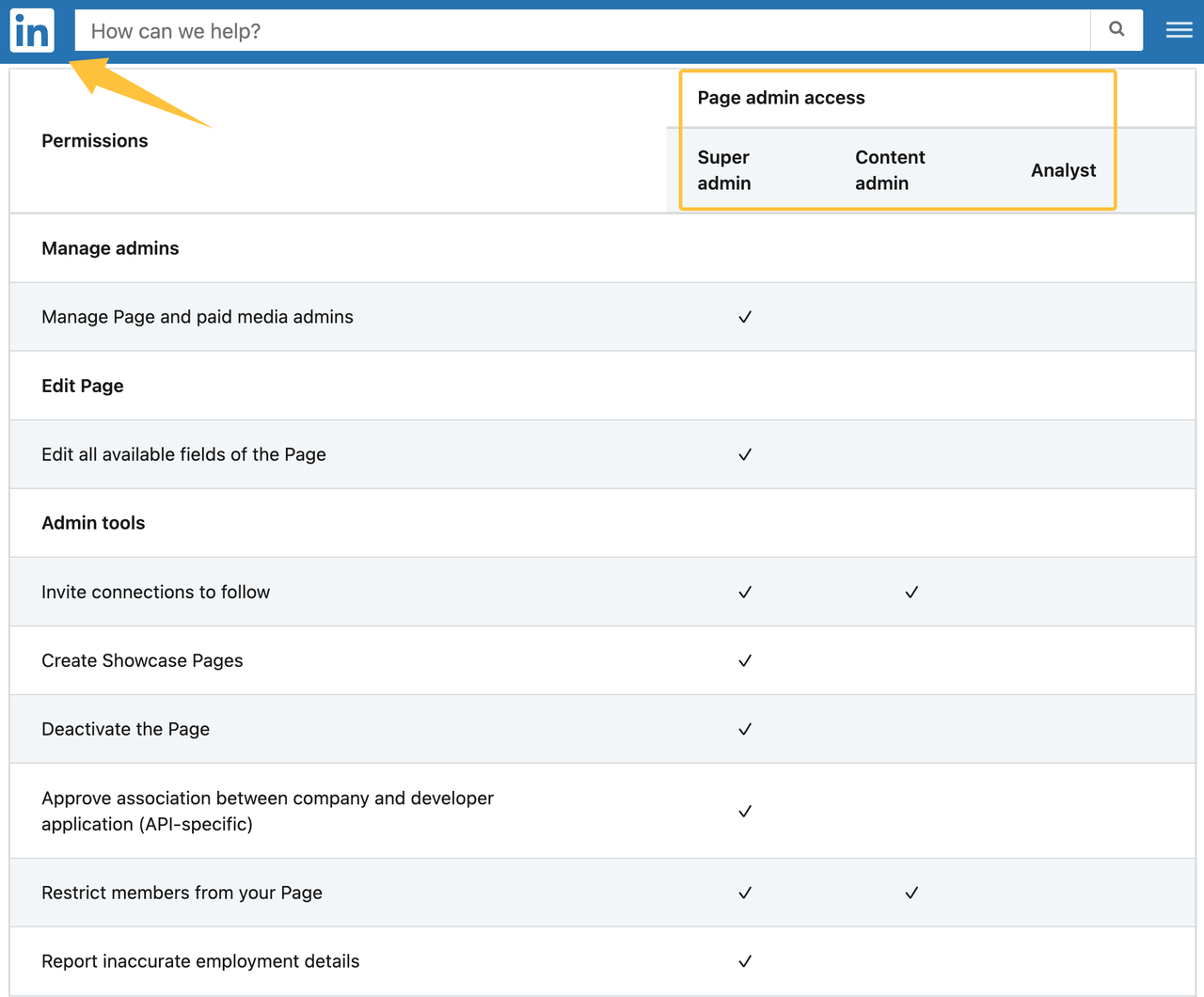
Keep an access register showing the person, role, platform, reason, approval date and removal date. Protect administrative accounts with multifactor authentication and include account recovery in the internal handoff. CISA’s social media account protection guidance recommends measures that include role-based access, credential management and MFA.
The approval workflow needs similar precision. Name the reviewer for brand voice, product facts, regulated claims and final publication. One internal owner should consolidate feedback so the agency is not asked to reconcile conflicting comments from four executives.
Vet Evidence and Investigate Red Flags
Relevant examples, measurement logic, and references
A portfolio shows what the agency can produce. It does not show whether the client supplied the concept, whether the agency managed the account or whether the campaign achieved the stated business goal.
Ask for examples that resemble the proposed scope and channel. Then ask what the team actually owned, what constraints affected the work and which evidence supported the conclusion.
For reported results, establish the baseline, period, source and definition. A percentage increase in engagement means little without knowing the original number, the type of content or whether paid distribution was involved.
References are most useful when the previous client can discuss the working relationship: missed deadlines, changing priorities, approval problems, account access and handoff. A polished campaign can hide a difficult operating process.
Ownership risks and unsupported growth guarantees
Treat guaranteed follower growth, virality or sales as a warning sign. Platforms, audiences and offers introduce variables that an agency does not control.
Be cautious when a provider:
- wants to create accounts under its own ownership;
- will not identify subcontractors;
- cannot explain how engagement was generated;
- proposes buying followers or automated interaction;
- reports only favorable metrics;
- refuses to provide working files named in the scope;
- makes broad performance claims without a baseline.
The agency should be able to separate observations from conclusions. “Video posts produced more profile visits during this test” is a bounded finding. “Video will grow your business” is not.
Build a Brief and First-90-Day Plan
Audience, channels, voice, safeguards, and goals
A useful brief gives the agency enough context to make decisions without asking it to invent the business.
Include:
- the priority audience and offer;
- the job assigned to each channel;
- customer questions worth addressing;
- examples of acceptable and unacceptable voice;
- existing brand and visual assets;
- claims requiring specialist approval;
- comment and escalation boundaries;
- account-access restrictions;
- the action the business wants a viewer to take.
Choose fewer channels than the team thinks it could maintain. A well-run presence on two relevant platforms may be more useful than five accounts publishing recycled material without an owner.
The brief should also describe what the agency needs from the business. If each post requires a product expert, customer image or founder approval, put that dependency into the calendar.
Baseline, deliverables, reporting, and exit handoff
Use the first 90 days to test the working system, not to promise that every commercial result will mature within one quarter.
Record the starting condition: publishing frequency, response time, available assets, audience size, relevant engagement, website actions and any known lead records. These numbers provide context; they are not universal benchmarks.
Set deliverables by month and name their acceptance checks. A video is not complete until the correct version, captions, destination and usage conditions have been reviewed. A report is not complete if it displays numbers without identifying what should change next.
Decide how the engagement can end before it begins. The exit handoff should cover accounts, scheduled posts, campaign records, source files, templates, audience notes, reporting exports, unresolved issues and removal of provider access.
How SpringBrand Fits This Workflow
SpringBrand can help a buyer turn the brief into a structured request and compare relevant services from independent providers. It is not a social media agency, does not certify those providers and does not guarantee their work.
Convert the 90-day brief into a comparable social media service request before choosing an independent provider.
FAQ
What consent is needed before reposting customer content?
A public tag or mention does not automatically provide every right a business may need. Identify the creator, asset, channels, edits, duration and any advertising use, then obtain permission appropriate to that scope.
Copyright can cover photographs, writing and audiovisual work, and owners hold rights that include reproduction and public display under the U.S. Copyright Office’s copyright basics. Likeness, privacy, trademark and local consumer rules may create separate questions.
Who verifies the rules for a social media sweepstakes?
The business should appoint an internal owner and obtain qualified legal review where needed. The agency may draft posts and coordinate the calendar, but it should not silently assume responsibility for eligibility, official rules, prize restrictions or required registrations.
Platform requirements must also be checked before launch. Instagram’s current promotion guidelines place responsibility for lawful operation, official rules and eligibility terms on the promotion organizer.
Can influencer content be reused in paid social ads?
Only when the agreement and platform process cover that use. Approval for an organic creator post may not include editing, paid distribution, new territories or an unlimited usage period.
Some platforms provide their own authorization tools. TikTok explains that tagging a brand partner can support paid-ad authorization for branded content, but the parties still need to confirm the contract, duration, disclosure and permitted edits.
What records should be retained for regulated promotions?
Keep the approved content, claim support, reviewer names, disclosures, audience settings, publication dates, edits, complaints and takedown decisions. Retention periods differ by industry, jurisdiction and record type.
The agency can maintain campaign records, but the regulated business should decide what must be preserved and where the authoritative copy is stored.
When must sponsored or affiliate relationships be disclosed?
A disclosure may be required when a payment, gift, discount, commission, employment relationship or another material connection could affect how an audience evaluates an endorsement.
Do not assume that tagging the brand or using a platform label resolves every requirement. Review the content, placement, applicable law and current platform policy before publication.
Conclusion
A social media marketing agency for small business is worth considering when the team has a defined goal and a genuine capacity or specialist gap. It is not a substitute for product knowledge, approvals, account ownership or responsibility for public claims.
Define the scope before reviewing portfolios. Test how the agency handles access, feedback, evidence, exceptions and exit handoff—not just how its best work looks.
The engagement is ready to continue when the provider can name what it owns, the business can name what remains internal, and both sides know what evidence will close the first 90 days.