Enterprise AI With Qwen: Lessons for Small Teams

Written by
Springbrand Editor Team
Editorial team
Springbrand Editor Team creates and maintains blog guides on AI tools, automation, marketing, and agent workflows.

Reviewed by
Springbrand Audit Team
Editorial review team
Springbrand Audit Team supports editorial quality through source checking, clarity, and consistency across the blog.
Updated
Published
Enterprise AI teams can learn from Qwen without copying enterprise overhead. Build a practical brief for open-model implementation and provider selection.
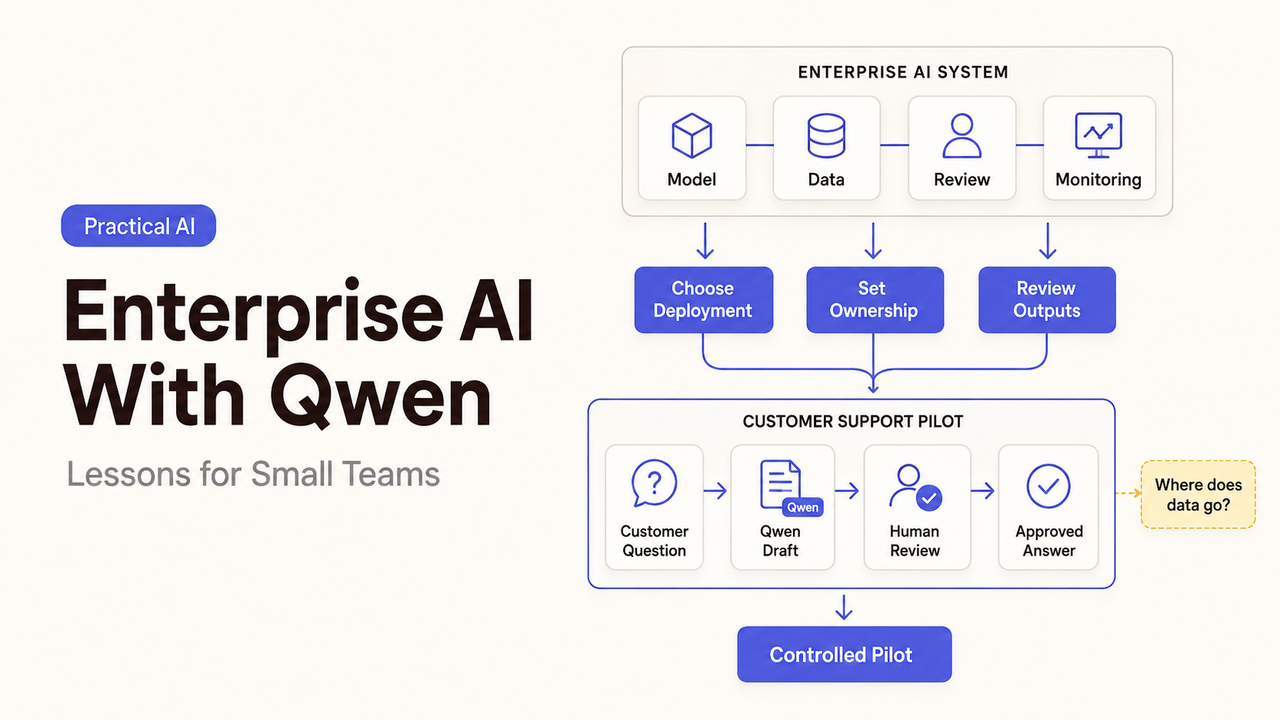
An operations lead says the vendor is ready to deploy Qwen. IT asks where the model will run, support asks who reviews unsafe answers, and the proposal answers neither question. That gap matters more than whether the model can produce a convincing demo. I’m Alex; this guide turns enterprise AI requirements into an implementation brief a small team can own, price, and hand to a provider without pretending it has an enterprise infrastructure department.
Where Qwen Fits in an Enterprise AI Project
Model access is only one part of a production system
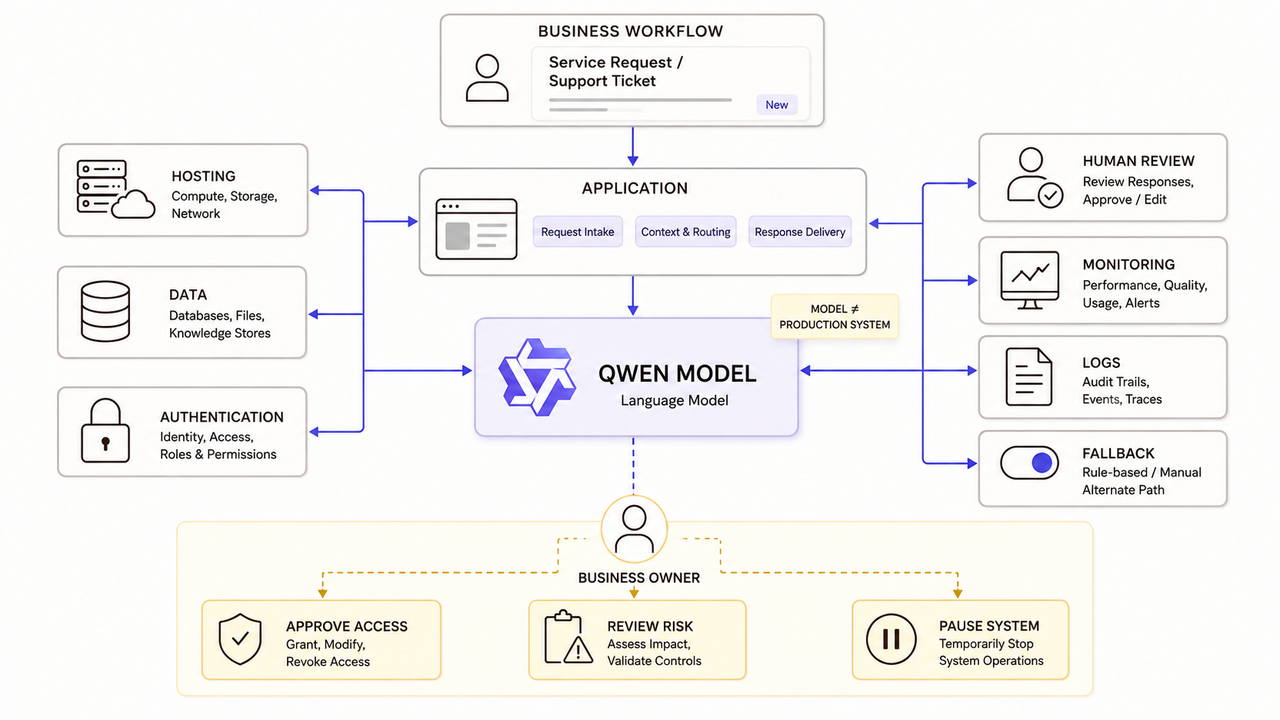
Qwen is a model family, not a complete business workflow. The system around it still needs hosting, application logic, user access, data controls, evaluation, monitoring, incident handling, and a named internal owner.
The current Qwen quickstart documentation illustrates model use and several deployment routes. Those technical options do not decide which route fits the company’s data, skills, budget, latency needs, or review process.
Small teams that still need to decide between a narrow pilot, hosted tool, open model, and outsourced implementation can begin with this enterprise AI adoption framework. This article starts after Qwen has entered the shortlist.
Open-model control must serve a specific business need
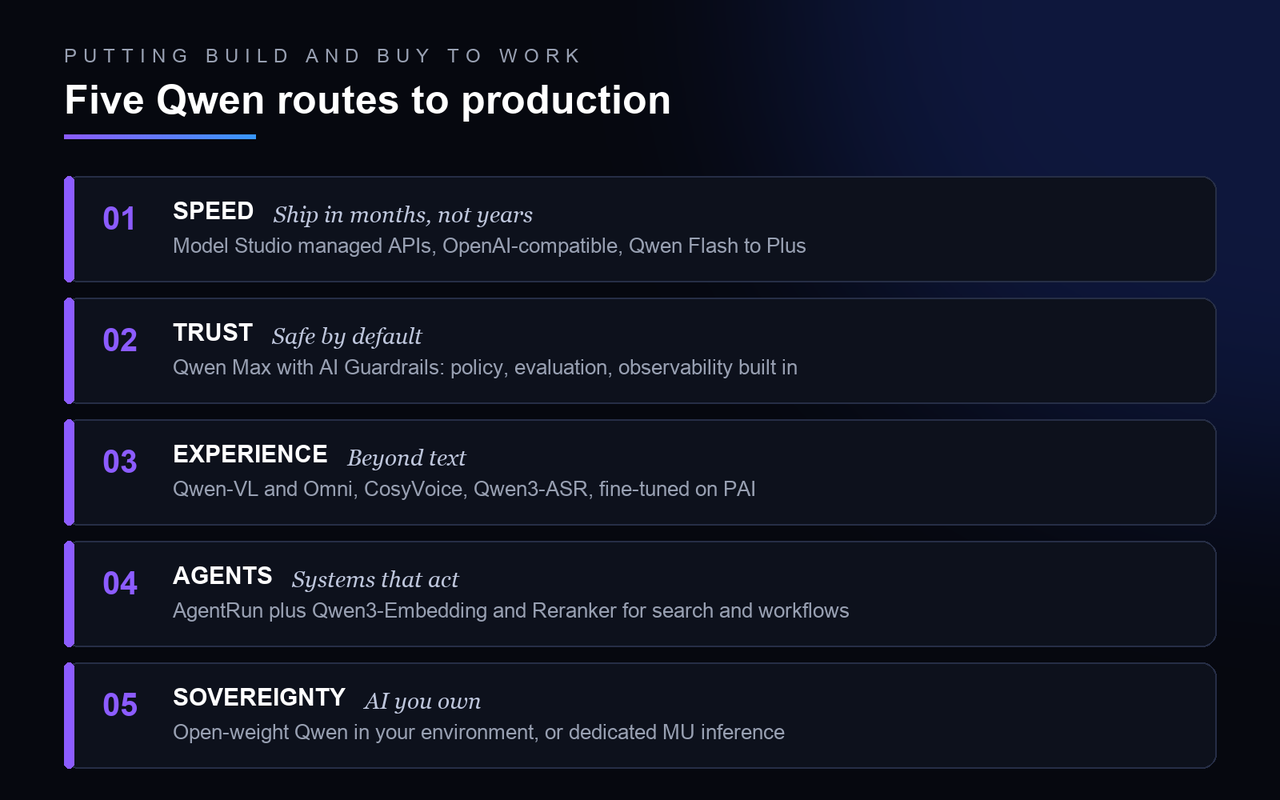
Control is useful only when the team can explain what it needs to control. Reasons might include deployment location, integration behavior, model configuration, update timing, or access to technical components.
“Open models” is broad procurement language. Before selecting open models like Qwen, inspect the exact release in the Qwen team’s official model collection, then read that model’s card, files, and license. Do not assume that access terms, commercial conditions, capabilities, or infrastructure needs are identical across the family.
Decide What Your Team Must Own
Hosting and infrastructure responsibilities
Name who provisions the environment, controls credentials, applies updates, manages capacity, and responds when the service becomes unavailable. If the provider performs these tasks, the client still needs an internal contact who can approve changes and assess business impact.
The proposal should distinguish initial setup from ongoing operation. A successful installation does not prove that the team can maintain the system after the engagement ends.
Data governance and human review responsibilities
List the inputs the workflow may receive, where they originate, how long they are retained, and whether they contain customer, employee, confidential, regulated, or third-party information.
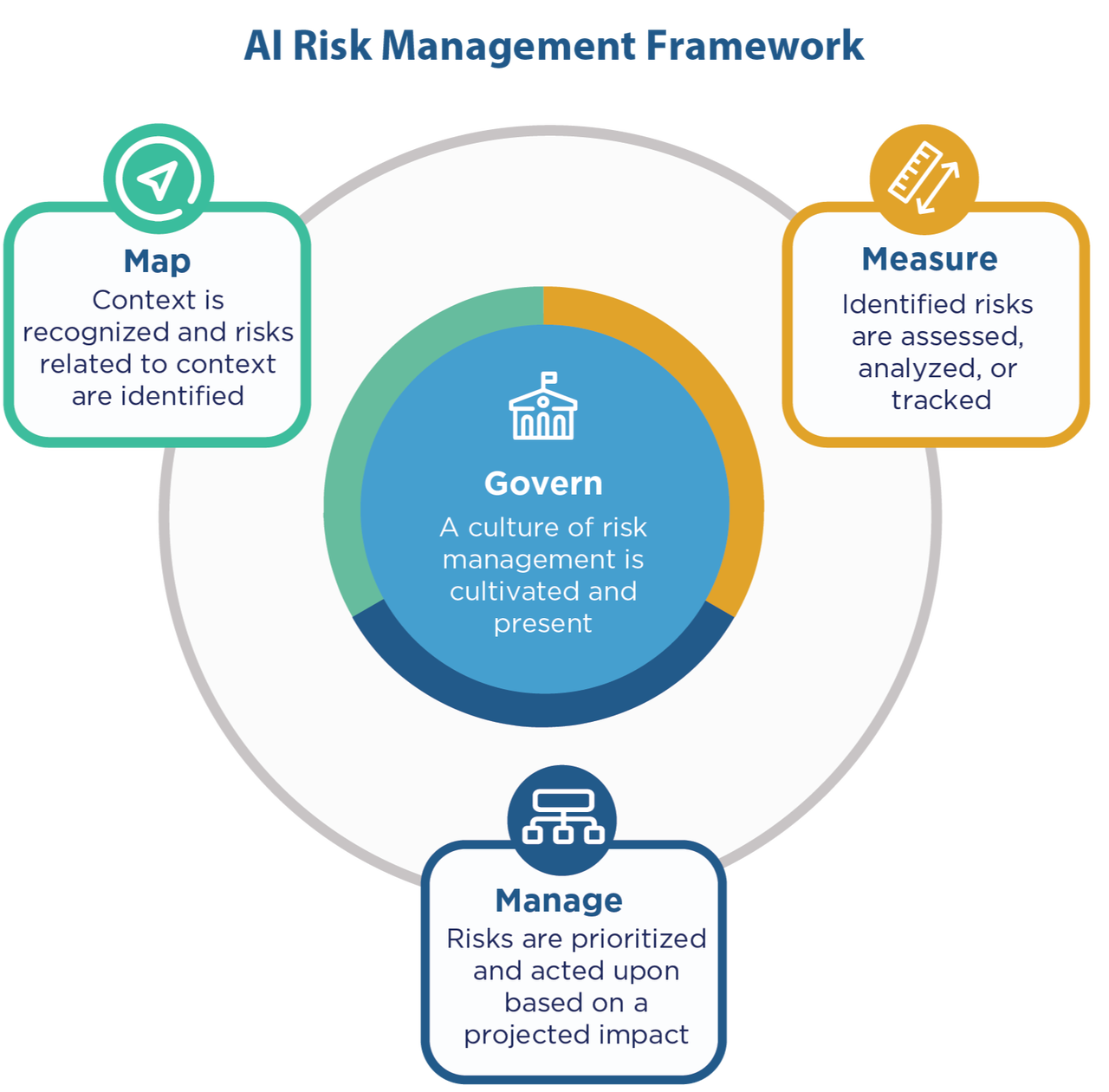
Define when a person must review an output. High-impact customer messages, account changes, professional advice, and sensitive decisions may require different controls from an internal draft. NIST’s AI Risk Management Framework Core emphasizes documented roles, targeted application scope, human oversight, evaluation, and monitoring.
Monitoring and maintenance responsibilities
Decide which failures matter: inaccurate answers, unsupported claims, prohibited content, data exposure, integration errors, slow responses, or unexpected operating costs.
For each failure, record the alert, first reviewer, escalation path, temporary fallback, and evidence retained. Someone must also track model, dependency, security, and provider changes. An implementation without a maintenance owner is still a pilot, regardless of how polished the interface appears.
Write a Qwen Implementation Brief
Describe the workflow, users, inputs, and unacceptable outputs
Write the brief around one business workflow rather than a general request to “deploy Qwen.”
| Brief field | Decision required |
|---|---|
Workflow | What task should the system support? |
Users | Who may access it, and with which permissions? |
Inputs | What data can and cannot enter? |
Output | What must the result help the user do? |
Human review | Which outputs require approval? |
Unacceptable output | What triggers rejection or escalation? |
Fallback | What happens when the system fails? |
Include realistic test cases and difficult examples. Do not use live sensitive data merely to make the pilot appear realistic.
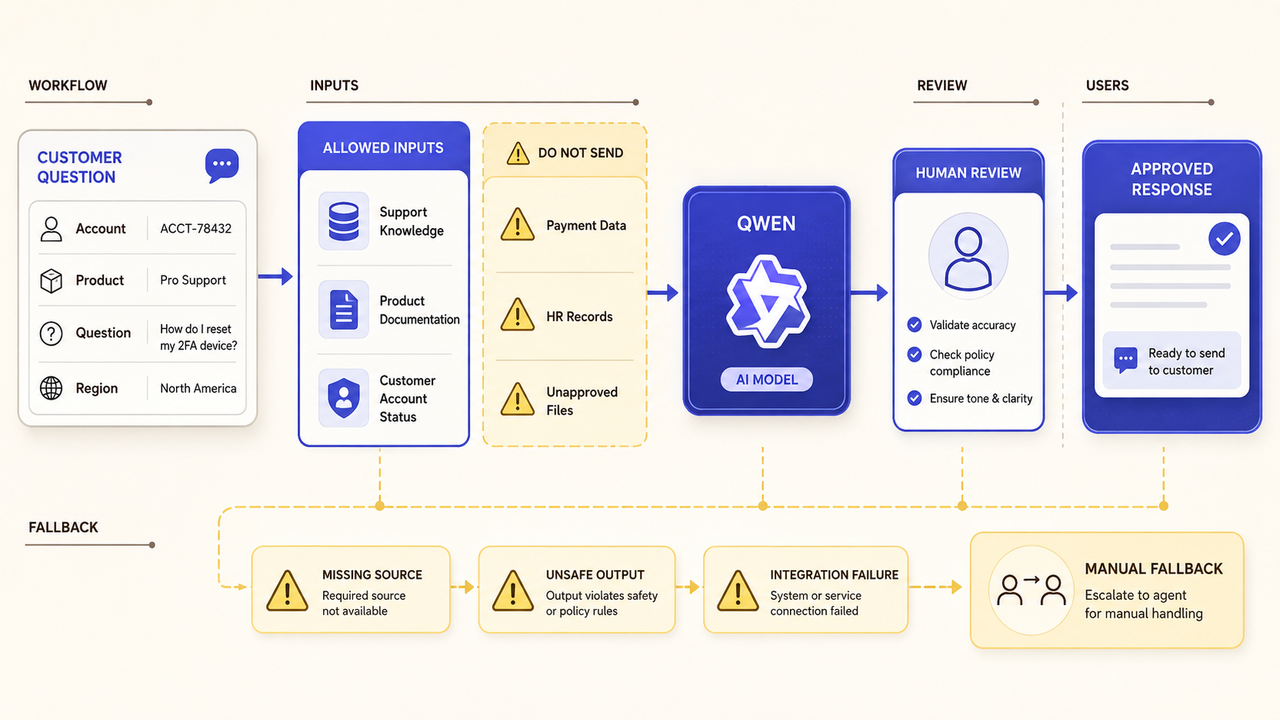
Specify deployment, integration, evaluation, and handoff needs
State whether the provider must recommend a deployment approach or implement one already selected. Identify required systems, authentication, logging, data movement, testing environments, and internal technical contacts.
Acceptance should be based on a documented test set and agreed failure thresholds, not a provider’s general accuracy claim. Require configuration records, evaluation results, operating instructions, access lists, unresolved risks, and a rollback or shutdown procedure at handoff.
Choose a Qwen Implementation Provider
Check relevant evidence and responsibility boundaries
Ask for evidence from work with a similar workflow, deployment condition, or integration burden. A general AI portfolio does not demonstrate that the provider can manage your data boundary or maintenance requirements.
For every performance or cost claim, request the source, date, model, configuration, hardware or hosted environment, test conditions, and sample. If those details are missing, mark the evidence sample insufficient rather than treating the claim as comparable.
Compare support, documentation, and change management
Confirm who answers operational questions, response hours, excluded support, update responsibilities, subcontractor involvement, and conditions that trigger new fees or scope.
Ask what happens when the chosen model, dependency, hosting option, or security requirement changes. Useful documentation should allow another qualified operator to understand the deployment without reconstructing it from chat messages.
Know When a Hosted AI Service Is the Better Fit
Limited internal expertise or infrastructure capacity
A hosted service may be more practical when the team cannot own infrastructure, security updates, capacity planning, or model maintenance. This reduces some operating work, although it creates a different dependency on the host’s terms, data practices, pricing, availability, and change process.
Compare the full responsibility transfer. “Hosted” does not mean the provider owns the accuracy of the company’s workflow or every data-governance decision.
Low need for model-level control or customization
If the workflow uses standard inputs, limited integrations, and ordinary review rules, model-level control may not justify its operating cost.
Choose the least complex approach that satisfies the business need and risk boundary. Preserve an exit path: data export, configuration records, integration documentation, account ownership, and a plan for pausing or replacing the service.
How SpringBrand Fits This Workflow
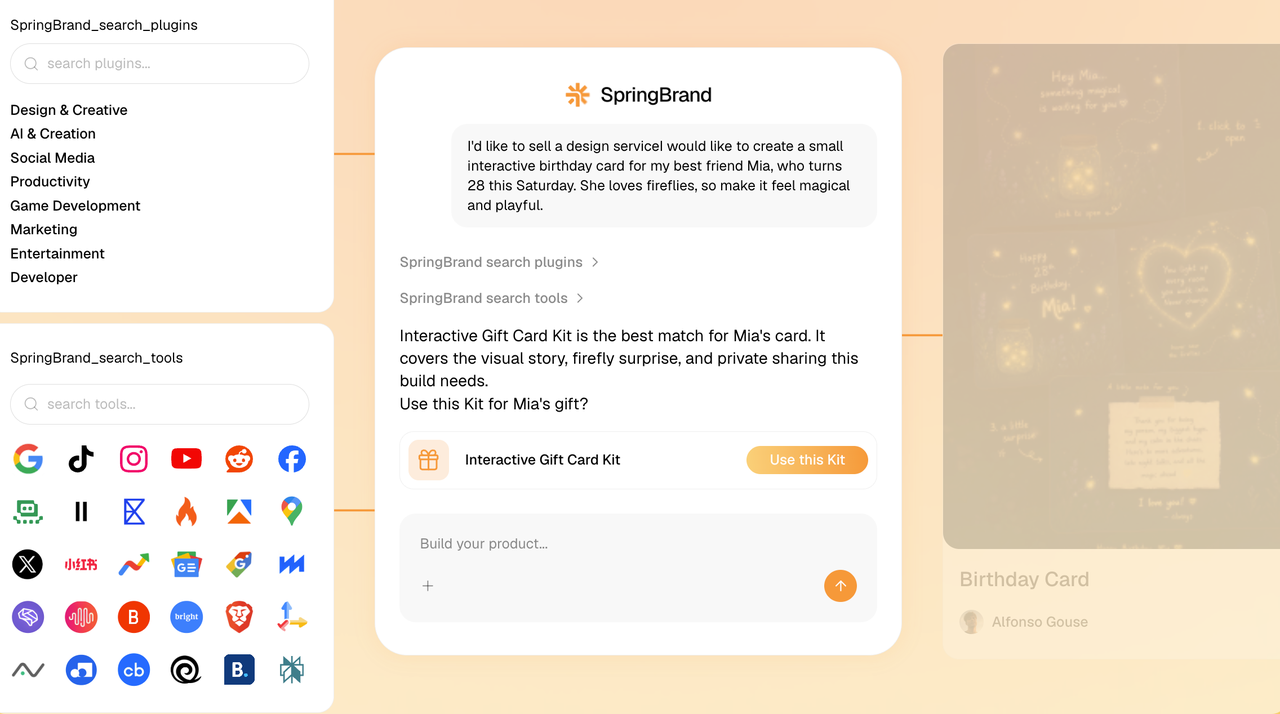
SpringBrand is an AI-assisted service marketplace that can help a buyer clarify an implementation request and match it with independent providers. It does not deploy Qwen, certify providers, or guarantee that a match or implementation will succeed.
Use SpringBrand to turn the approved Qwen brief into a comparable implementation-service request before selecting an independent provider for the pilot.
FAQ
The following answers are general information, not legal, insurance, financial, privacy, or security advice.
Can a provider publish your company name in a case study?
Only with the required authorization. The agreement should cover the company name, logo, screenshots, architecture, metrics, quotations, publication timing, and approval process. Anonymization may still reveal the business through distinctive details, so review the complete case study rather than approving reuse in general terms.
Can an existing cyber insurance policy cover an AI incident?
Possibly, but no general answer applies. Review the current policy wording, exclusions, endorsements, notification duties, and incident facts with the insurer or qualified adviser in the relevant jurisdiction. NAIC’s cyber insurance overview describes common coverage areas but does not determine whether a specific AI incident is covered.
Can grant funding be used for an open-model implementation?
Only if the current program’s eligibility rules and permitted costs allow it. Check the issuing agency, location, applicant type, project purpose, application date, and award conditions. Grants.gov explains that eligibility must be checked against the specific funding opportunity; inclusion on a funding portal does not establish that a business or Qwen project qualifies.
Should employees disclose AI assistance in customer communications?
Set a policy based on the communication, industry, audience expectation, applicable law, contract, and platform rules. Disclosure may matter when AI use changes how a reasonable recipient interprets authorship, expertise, personalization, or accountability. Employees should also know who reviews sensitive communications and how to report an incorrect or unsafe output.
Can the business pause a pilot during a seasonal slowdown?
Yes, if the pause process was designed in advance. Record how the environment will be secured, which services continue to incur costs, how data and logs are retained, who keeps access, and what must be retested before restart. Recheck the selected model, license, dependencies, provider terms, and security updates when the pilot resumes.
Conclusion
Using Qwen in enterprise AI does not require a small business to copy enterprise overhead. It does require the team to name the workflow, control boundary, reviewers, operating owner, evidence, and fallback before a provider begins implementation.
The pilot can move forward when the internal owner can explain who maintains the system and what evidence will stop it when the workflow leaves its approved boundary.
Recommended Reads
Explore SpringBrand
Turn ideas into working workflows
Connect agents, APIs and tools in one workspace. Start with a task you want to get done.
Get started free
One account. 10,000+ APIs & capabilities
Give your agent APIs and plugins without separate keys or integrations for every provider.
Explore APIs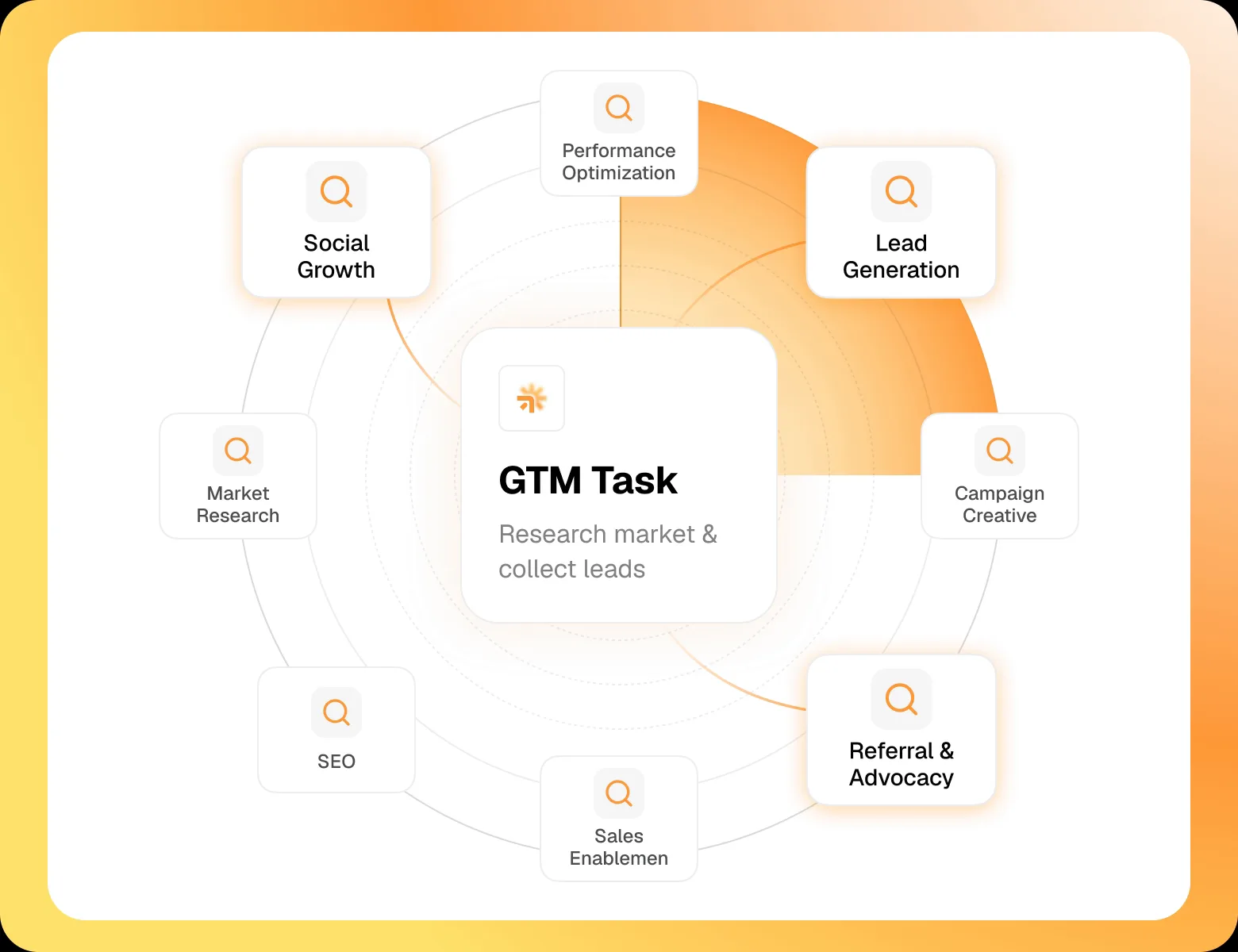
No tool expertise needed
Describe your GTM task. SpringBrand chooses the right APIs and plugins for your agent automatically.
Find tools for your task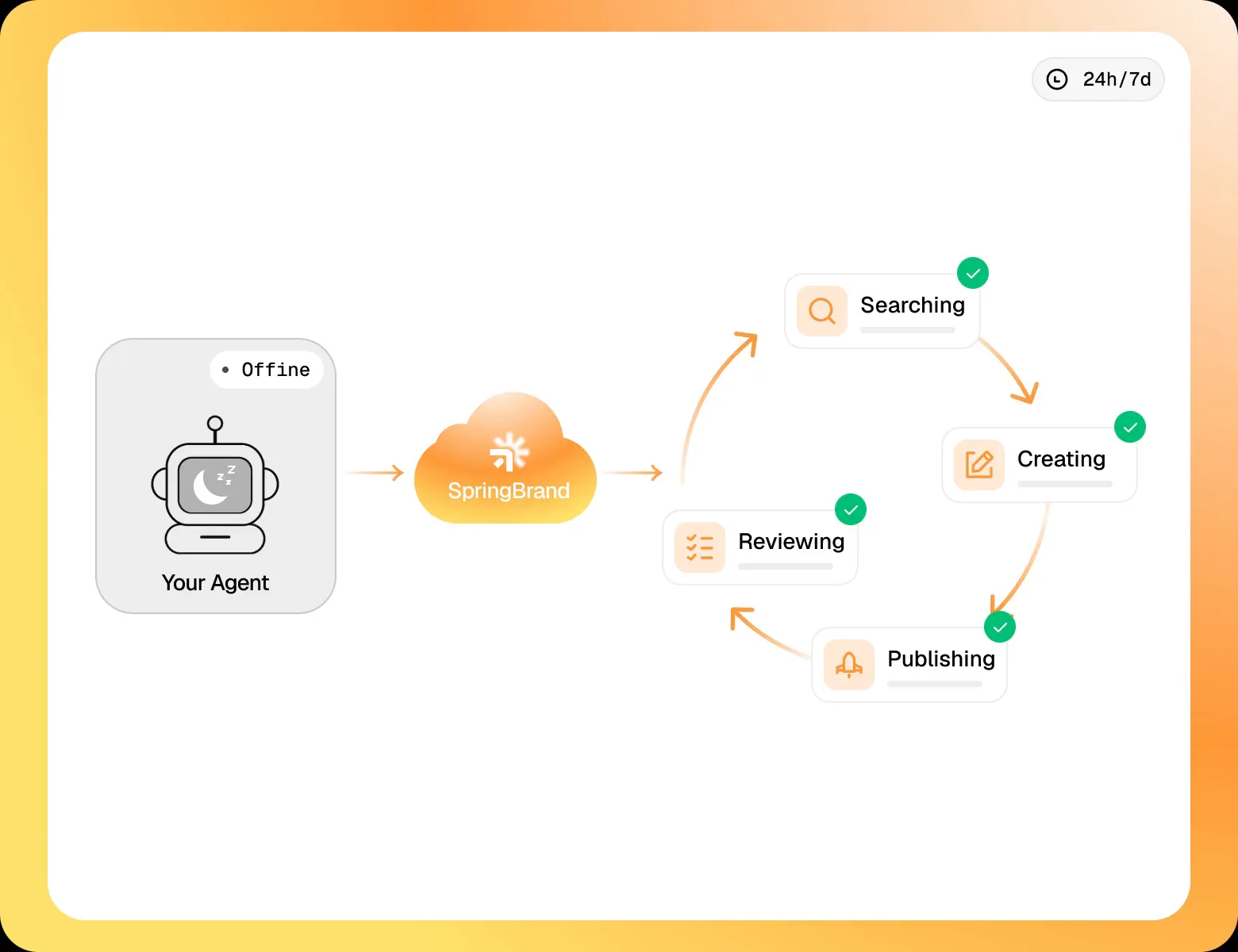
Run tasks 24/7
Connect your agent to SpringBrand to keep tasks running automatically, day and night.
Connect your agent