Cloudflare Agent Wallet? What Brands Should Verify
Cloudflare Agent Wallet searches point to agentic payments, identity, and spend controls that brands should verify first.
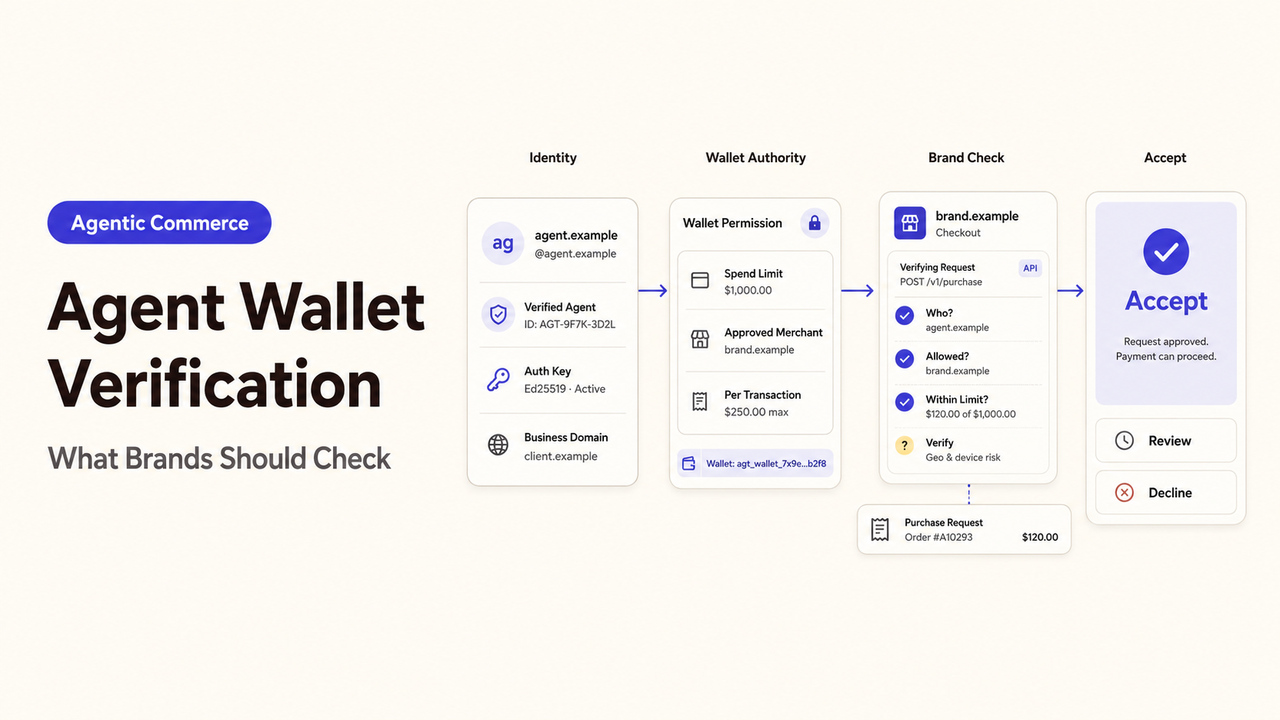
An AI agent can recommend a design service without controlling any money. Payment changes the job. The owner now needs a spending limit, an approved supplier list, and a receipt connected to the order. Searches for Cloudflare Agent Wallet point to a real Cloudflare initiative, but that is not its current official name.
Last verified: August 26, 2026. This review covers Cloudflare's current Wallets, Agents, Agentic Payments, and Web Bot Auth materials. It also checks the underlying HTTP signature standard. We did not test fund movement because Cloudflare says wallet handles cannot yet send, receive, or hold funds.
Why the Agent Wallet Search Term Needs Verification
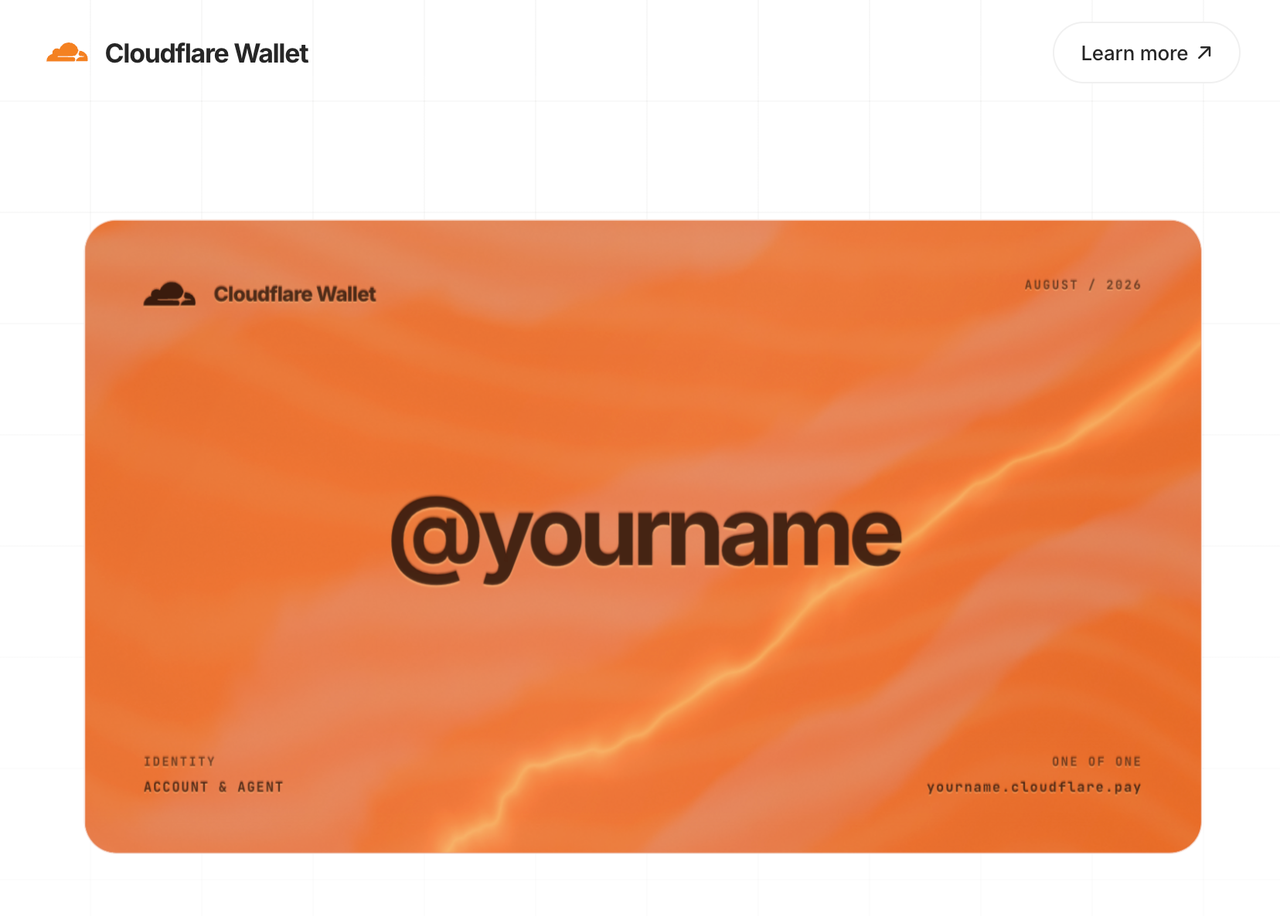
Cloudflare currently calls the product Cloudflare Wallets. Its Wallets documentation describes two planned wallet types. Account Wallets are designed for people who own or use Cloudflare accounts. Virtual Wallets are designed for agents and would follow permissions set by the account owner.
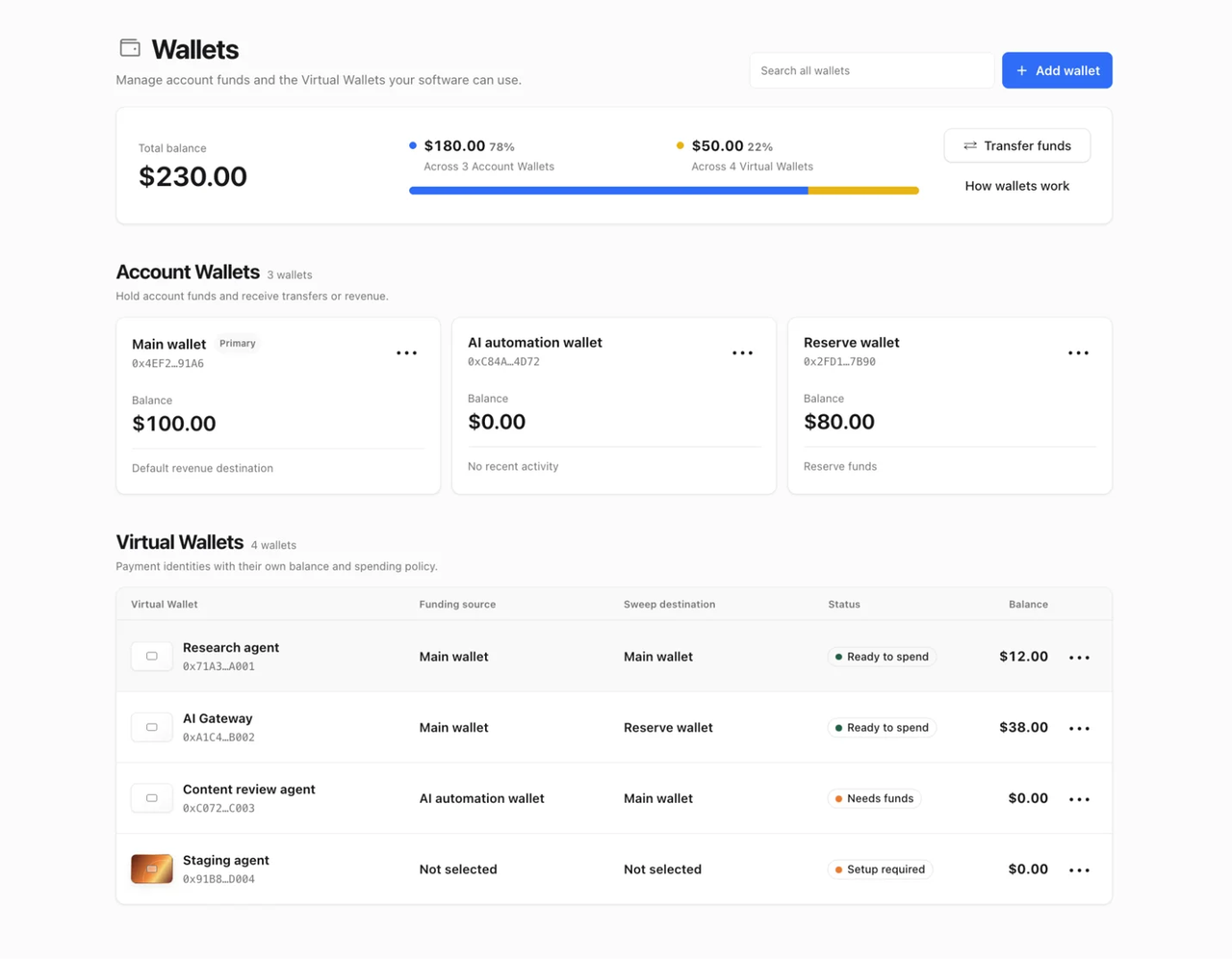
That name matters when a vendor describes its service. “Cloudflare Agent Wallet” may work as a search phrase. A proposal should use the verified product name and identify the exact feature involved.
Availability needs the same care. Eligible account holders can currently reserve a wallet handle. A reserved handle cannot yet send, receive, or hold funds. Cloudflare's August 4 announcement says full wallet access and Virtual Wallet issuance are planned for the coming months.
Separate every vendor statement into one of three states:
- Available now: reserving one
cloudflare.payhandle per eligible Cloudflare account. - Announced: Account Wallets, Virtual Wallets, stablecoin functions, merchant restrictions, and delegated spending limits.
- Vendor-specific: any claimed implementation, access date, integration, or managed service.
A supplier should show which source and product state support each claim. A roadmap announcement does not prove that a live customer workflow can use the feature today.
How Agentic Payments Could Change Service Buying
Agentic payments could shorten the path between finding a paid resource and receiving it. They also place payment authority inside software. That shift creates more control questions, not fewer.
Discovery and authorization
An agent might discover an API, dataset, creative tool, or packaged service. Discovery answers what is available. Authorization answers whether this agent may buy it from this supplier at this price.
The authorization record should name the buyer, agent, purpose, supplier boundary, spending cap, and expiration. It should also identify payments that need human approval. “Buy what the campaign needs” is too broad to enforce or investigate.
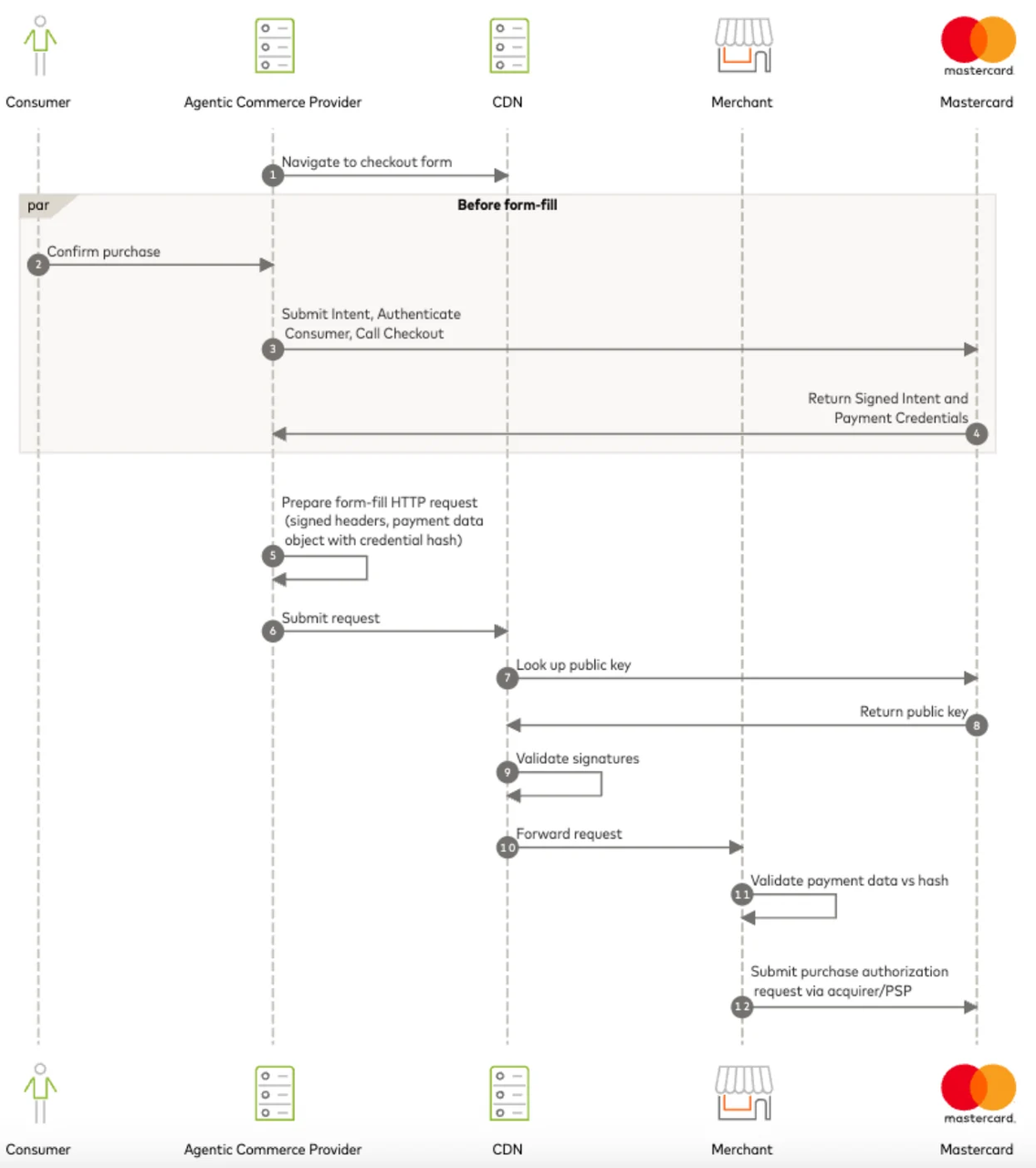
Identity is related, but it proves something different. Cloudflare's Web Bot Auth work uses HTTP Message Signatures to authenticate agent traffic. The underlying HTTP Message Signatures standard supports message integrity for covered components, but it does not provide confidentiality. A valid signature can help identify a request. It does not prove that the purchase followed the owner's policy.
Payment credentials and receipts
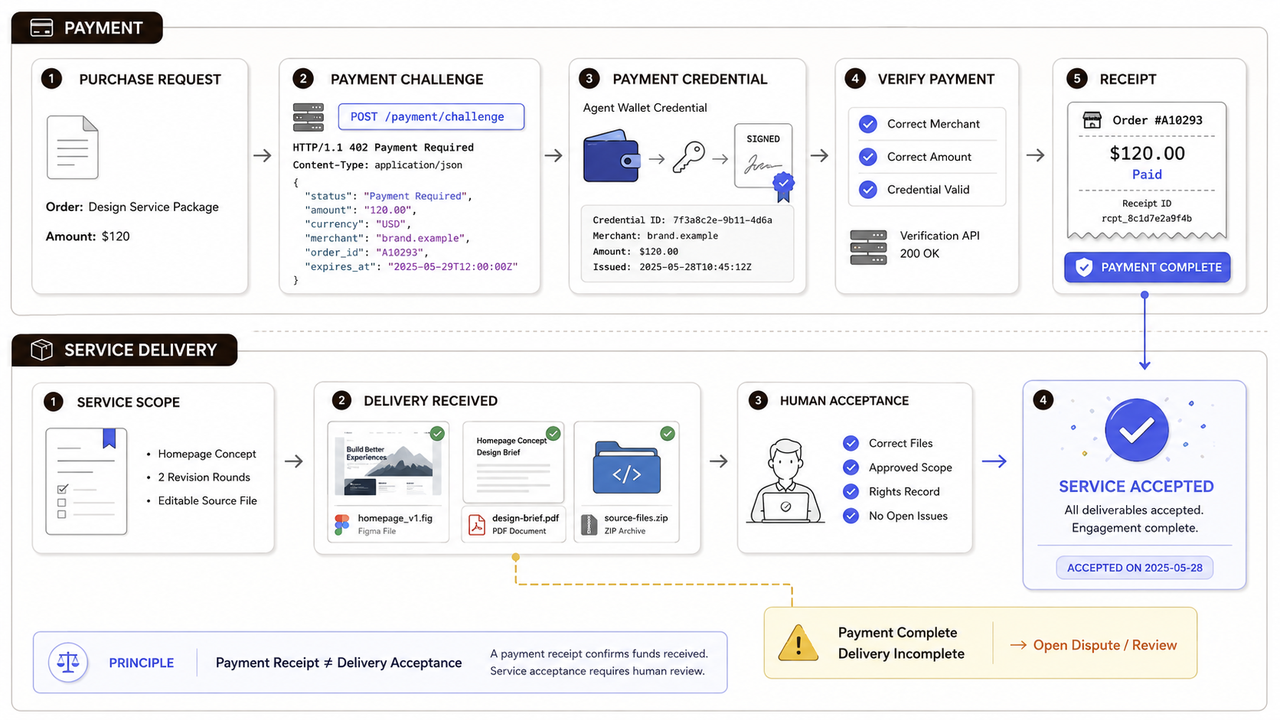
Cloudflare's Agentic Payments documentation describes a flow built on an HTTP payment challenge. The server states what to pay, how much, and where. The client returns a payment credential. After verification, the server provides the resource and a receipt.
For service buying, four records should remain separate. This is an editorial control model, not a Cloudflare product requirement.
Record | Question it answers | Useful evidence |
Identity | Which agent sent the request? | Signed request, agent ID, and timestamp |
Authority | What was the agent allowed to buy? | Supplier rule, spending cap, expiration, and approver |
Payment | What charge was accepted? | Challenge, credential result, transaction ID, and receipt |
Fulfillment | What did the supplier deliver? | Deliverable register, review comments, and acceptance record |
None of these records replaces the next one. A verified agent may still exceed its instructions. A valid receipt proves a payment event, not completion of a consulting engagement. Keep payment acceptance and service acceptance as separate milestones.
Where Agent Payments Fit in Enterprise AI Agent Infrastructure
Payments sit near the end of a longer chain. Enterprise AI agents still need a defined task, identity, access rules, tool permissions, monitoring, and an exception path. A wallet cannot supply those controls by itself.
Cloudflare's Agents documentation separates communication channels, the agent harness, runtime, tools, and observability. Payments are one tool in that structure. This distinction remains useful when a business chooses another provider.
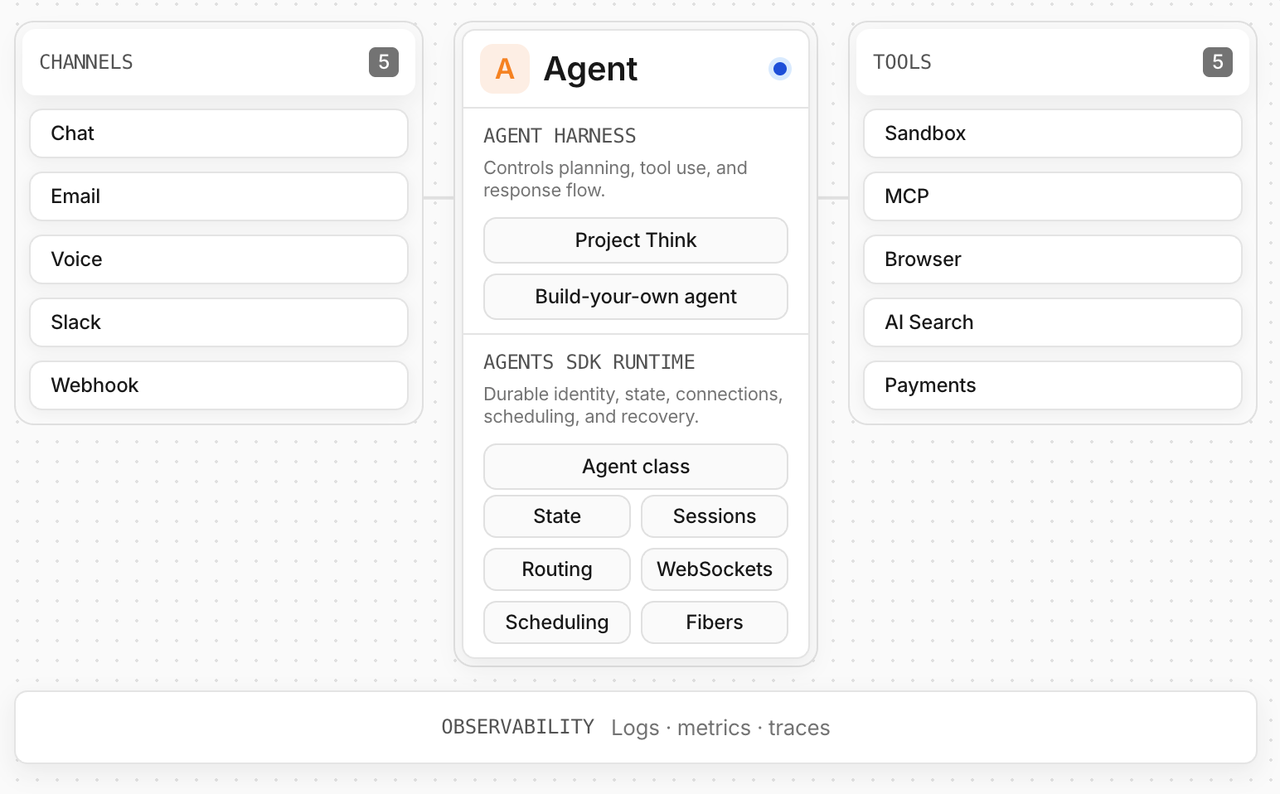
The business owner sets the commercial policy. An implementation partner may configure the agent and payment components. Finance decides how transactions enter the accounting system. Operations confirms whether the purchased service was delivered.
This division keeps one supplier from controlling the instruction, credential, payment, and acceptance record. It also tells the company who can pause the workflow when a layer fails.
What Small Teams Should Ask Before Buying Agent Services
A small team does not need a large procurement department. It does need written controls before an agent can spend.
Use the proposal to test important claims:
Provider claim | Evidence to request | What that evidence still does not prove |
“Uses Cloudflare Wallets” | Exact product name, access state, account screenshot, and verification date | That live fund movement is available |
“Agent spending is controlled” | Merchant rules, limits, approval logic, and denial logs | That every business exception is covered |
“Payments are auditable” | Export showing request, approval, transaction, receipt, and owner | That the purchased service met its scope |
“The client keeps control” | Account ownership, key recovery, revocation, and exit steps | That offboarding has been tested |
The brief should also name currencies, networks, fees, funding methods, key storage, and the backup approver. It should explain how the company exports records and continues without the original provider.
Begin with a capped pilot that uses a low-risk paid resource. A useful test includes failure cases, not just one successful purchase. Confirm that the workflow blocks an unapproved supplier, an expired instruction, and a charge over the cap. Repeating the same request should not create a second payment. Revoking a key should stop new purchases. A partial delivery should remain open even when the payment has a valid receipt.
Keep the pilot away from customer funds and live supplier commitments. The owner should be able to trace every result back to the request, rule, payment record, and final acceptance decision.
Naming and Adoption Limits
New infrastructure can change names and availability quickly. Every proposal should record the official page, product name, access state, and verification date. Recheck those details before launch instead of relying on an older sales deck.
“Uses Cloudflare Agent Wallet” is not complete evidence. The provider may mean Cloudflare Wallets, Agentic Payments, the Agents SDK, Web Bot Auth, or its own payment layer. Each component performs a different job.
Adoption also depends on suppliers. A payment protocol does not require every service provider to accept it. The buyer still needs a supported merchant, an agreed scope, and a workable refund or dispute process.
How SpringBrand Fits This Workflow
SpringBrand is not presented here as a Cloudflare Wallets integrator, wallet custodian, or payment manager. Its role is limited to helping buyers describe a need and compare third-party service options.
If the service goal is clear but the scope is not, turn the requirement into a provider-ready request before comparing outside support.
FAQ
Can agent-paid services be refunded after partial delivery?
That depends on the service agreement, payment method, protocol, and provider policy. Define partial delivery before payment begins. Record the evidence needed for a refund request and name the person who can approve it. A wallet receipt alone does not settle whether unfinished work qualifies for repayment.
Do agent payments create tax or invoicing questions?
Yes. The business may need to identify the supplier, transaction date, currency treatment, invoice requirements, and fees. Duties vary by location and transaction structure. A qualified tax or accounting professional should review the planned flow before live payments begin.
Can a supplier dispute a payment made by an agent?
Yes. A supplier may challenge authorization, payment status, price, or a later delivery claim. Keep the agent's instructions, supplier terms, receipt, messages, and acceptance record together. Seek qualified legal review when a contract or dispute requires it.
What happens if a payment protocol changes mid-project?
Pause affected payments and record the version change. Then retest approval, denial, and receipt handling. The contract should name who maintains the integration and pays for required changes. An update must not expand the agent's authority without renewed approval.
Should agent payment pilots be separated from live customers?
Usually, yes. Use a separate environment, limited balance, approved test suppliers, and restricted data. Define the move to production in advance. Customer-facing use should wait until access, recovery, record export, and escalation pass their checks.
Conclusion
The Cloudflare Agent Wallet search term points toward an official initiative, but the verified name is Cloudflare Wallets. Current access is narrower than the announced model.
An agent should not move from recommendation to payment until a named owner approves the supplier boundary, spending limit, credential control, and evidence path.