AI Agent Development Services: A Buyer’s Guide
AI agent development services should be evaluated by use-case fit, delivery scope, safeguards, ownership, and support.
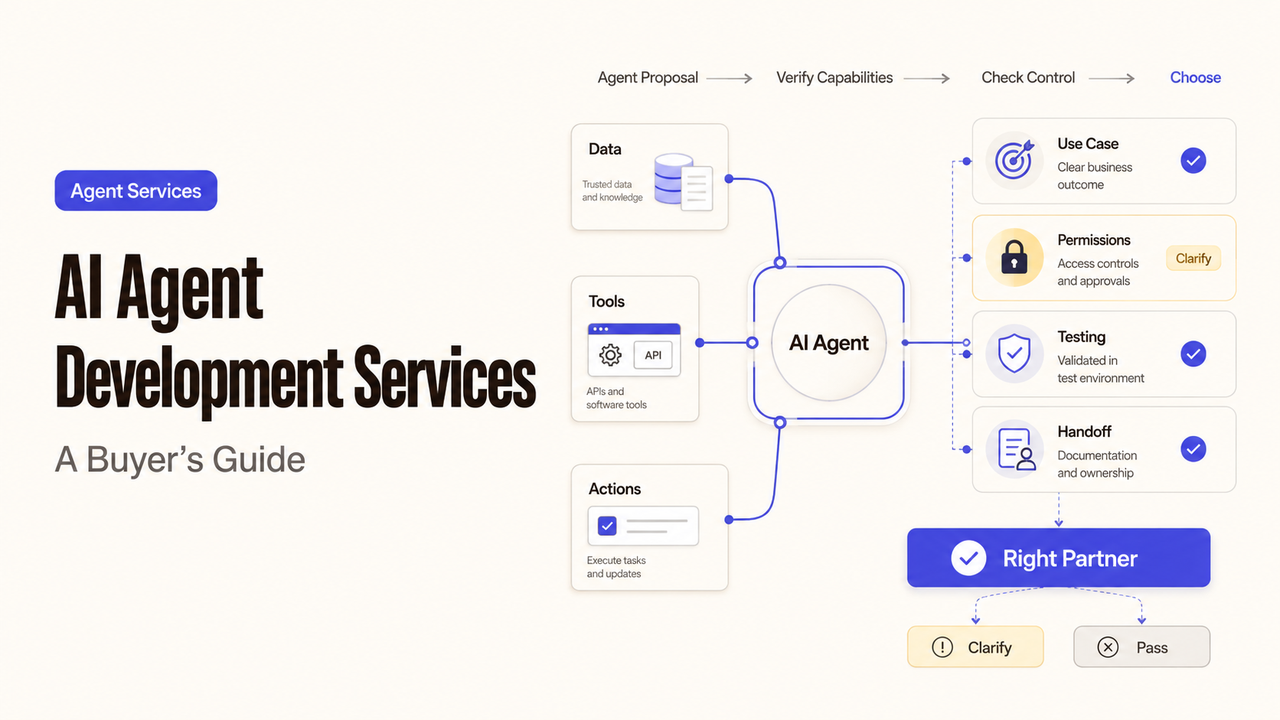
A customer message arrives after the sales team has gone home. The owner wants an agent to pull the account history, prepare a reply, and leave the final decision for the morning. That request is specific enough to discuss, yet it still leaves one costly question: what may the agent actually change? A buyer comparing AI agent development services needs that answer before choosing a provider. This guide explains how to define the work, evaluate a proposal, run a pilot, and accept the finished system.
Quick Fit: When Custom Agent Development Makes Sense
Custom work earns its cost when employees repeatedly move the same task between systems and built-in tools can't follow the company's rules.
The timing may be wrong if the process changes every few days or no one inside the company owns it. In that situation, development can turn an unsettled process into software that is expensive to revise. An existing CRM feature may also solve enough of the problem with less upkeep.
Before requesting proposals, look for three signs of a reasonable fit:
- The task happens often and follows a recognizable path.
- The team can explain what the agent may and may not do.
- One employee will review exceptions and own the workflow after launch.
A short discovery project can clarify the process without committing the company to a full build.
Define the Business Task Before the Agent
Begin with the employee who handles the work now. Follow one item to completion, noting the information checked and any approval points.
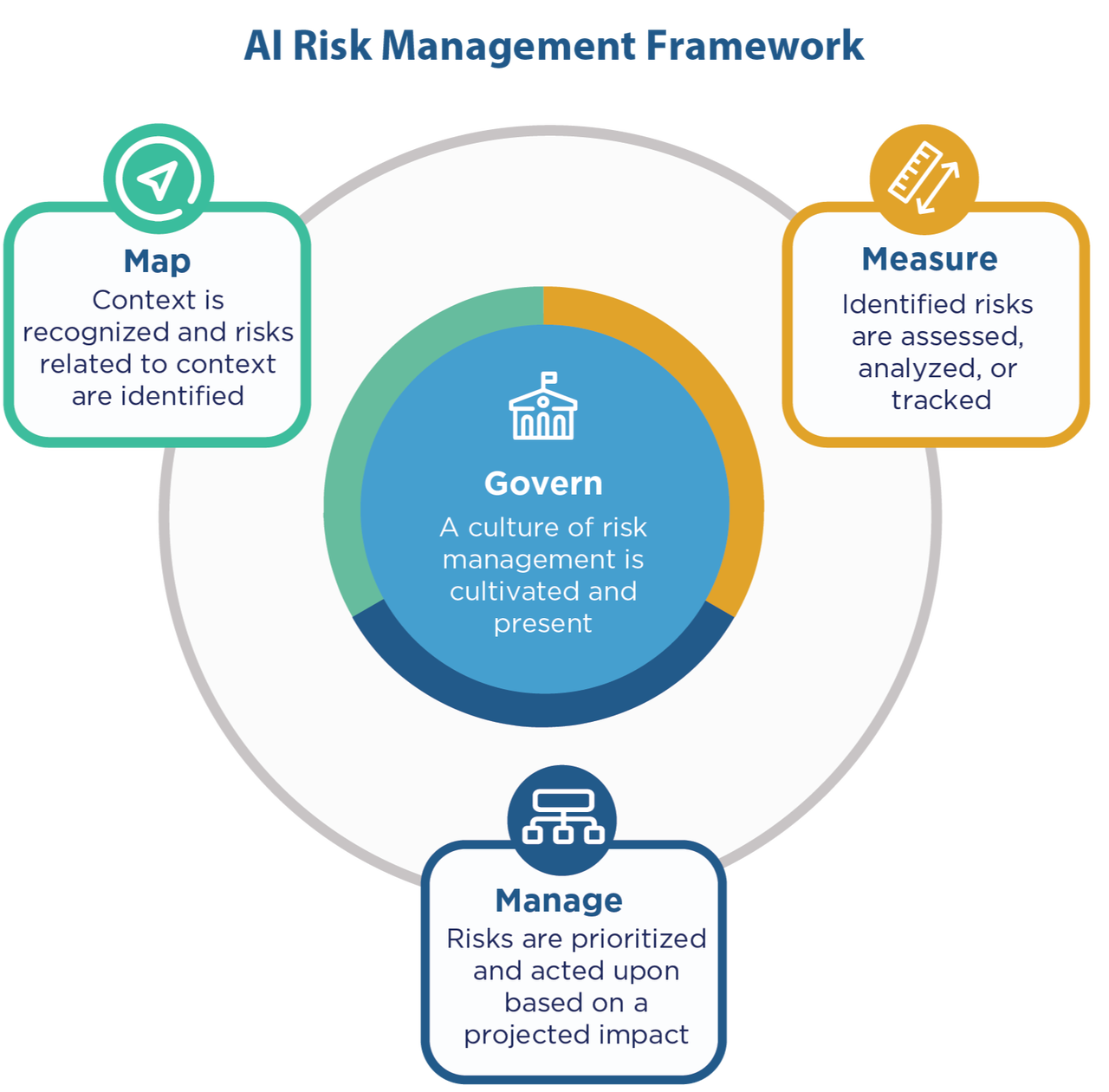
This task-level view follows the NIST AI Risk Management Framework Core, which calls for clear context, defined roles, human oversight, and attention to third-party risk. Small businesses still need a shared account of what the system should do.
Inputs, Actions, and Human Escalation
Show the provider what arrives at the start of the task, such as a form, customer email, or account status. Mark the required information and decide what happens when it is missing.
Use ordinary action words when describing the agent's job. “Help the sales team” leaves too much room for interpretation. “Prepare a follow-up email after a completed demo” describes a result that both sides can review.
The brief should say whether the agent displays the draft, saves it, or sends it. It should also route pricing questions and complaints to a named role.
Systems, Data, and Permission Boundaries
Map the systems involved and note the exact access required. Reading a CRM table or creating an email draft does not require broad administrative access.
OWASP uses the term excessive agency for systems given more functions, permissions, or independence than their job requires. Its guidance on limiting agent authority recommends narrow tools, limited permissions, and human approval before high-impact actions.
Use a separate test account where possible. Record who approves production access and who can remove it. A renewal reminder probably doesn't need permission to delete customer records.
Failure Conditions and Acceptance Criteria
A useful test plan begins with mistakes the business would care about. The agent might choose the wrong account, repeat an action, expose information, or stop without warning.
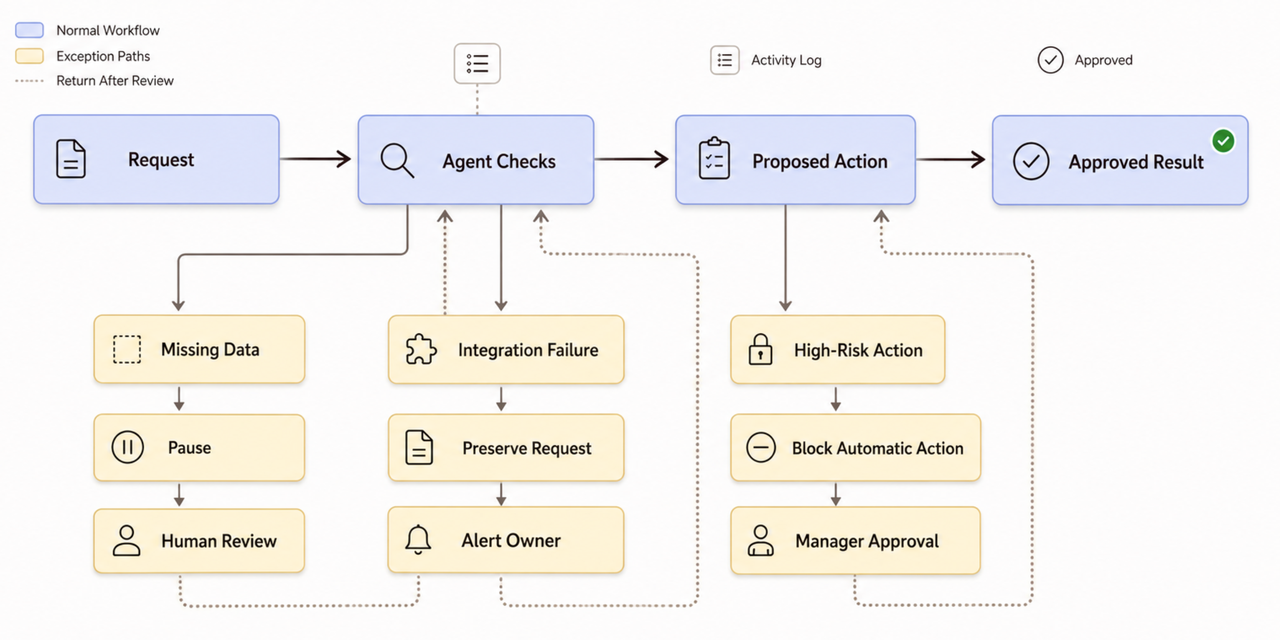
Describe the expected response to each failure. The agent might pause, alert an employee, and preserve the attempted action. “Be accurate” does not provide a usable test.
Acceptance checks should describe behavior that someone can observe:
- If a required account field is missing, the agent takes no external action.
- Refunds above the approved limit remain pending until a manager reviews them.
- An integration failure alerts the operations owner and keeps the original request.
Passing those checks doesn't guarantee every future answer. It shows that the agreed controls worked in the situations included in the pilot.
Compare Service Models and Delivery Scope
Providers use similar labels for work that ends at different points. Some AI agent consulting services stop after process mapping and architecture advice. Others include the prototype, integrations, testing, or ongoing monitoring.
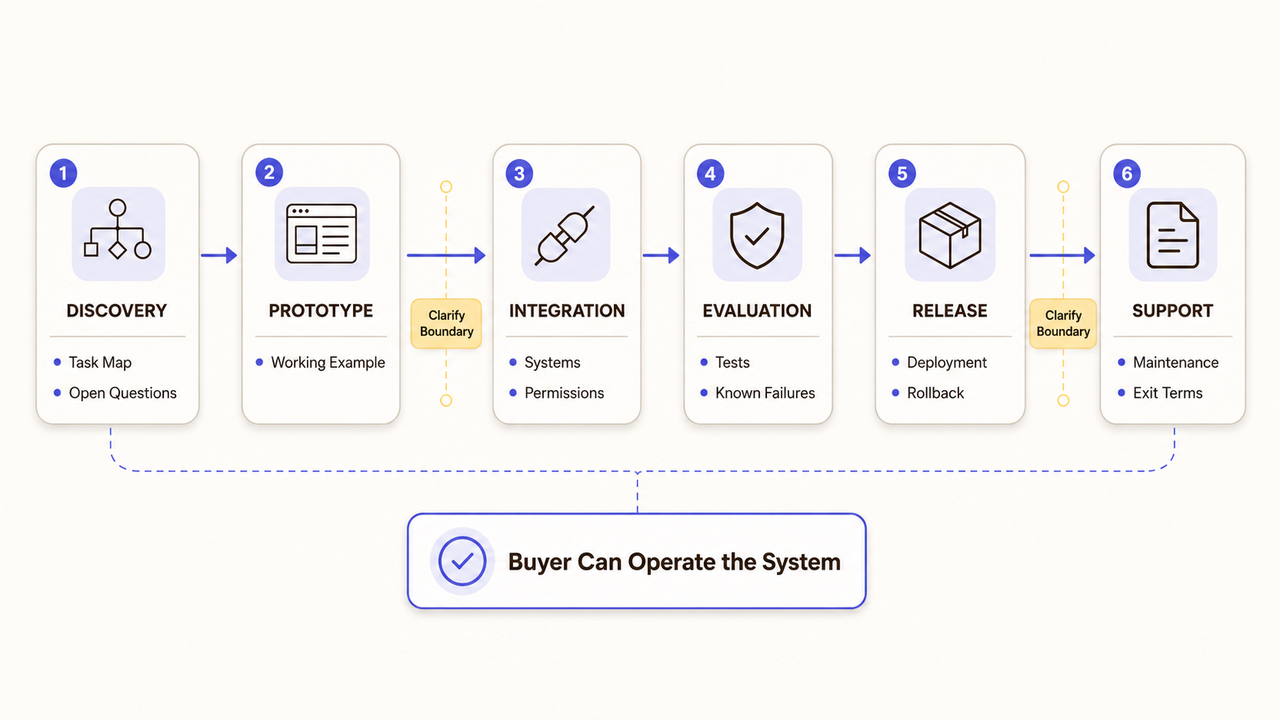
Ask each provider to show where its responsibility begins and ends:
| Stage | What the buyer should receive |
|---|---|
Discovery | A task map, key decisions, and open questions |
Prototype | A working demonstration using agreed examples |
Integration | A connection list, permission map, and test record |
Evaluation | Results, known failures, and reviewer decisions |
Release | Deployment notes, a rollback method, and approval record |
Support | Maintenance boundaries, response process, and exit terms |
The quote should identify who supplies model accounts, hosting, monitoring, and integration credentials. Usage charges may sit outside the fee. Compare proposals only after these responsibilities match.
Turn the Use Case Into a Vendor Brief
Send the same brief to each provider. One company may otherwise price a demonstration while another includes deployment and support.
A workable brief can fit on a few pages. It should cover:
- the business result and the employee who owns it;
- the current steps, systems, and common exceptions;
- actions the agent may take and actions it must never take;
- points where an employee reviews or approves the work;
- examples of normal, difficult, and unacceptable behavior;
- expected deliverables, documentation, training, and support;
- evidence required for pilot and final acceptance;
- timing, internal availability, and required security review.
If the company has not selected a model or hosting approach, ask the provider to recommend one. The response should explain any cost or maintenance tradeoff.
Give the project an internal sponsor for policy decisions and a daily contact for workflow questions.
Vet Evidence, Architecture, and Safeguards
A polished chatbot demo says little about CRM permissions or recovery after an integration fails. Look for prior work with similar actions and risk. Ask what the provider completed and whether subcontractors participated.
When client data is confidential, ask for a redacted test plan, architecture diagram, or handoff outline instead.
The NIST Generative AI Profile discusses due diligence for third-party systems and documented testing before deployment. For an agent project, that review extends beyond the model. Prompts, data sources, integrations, permissions, and approval screens can all change the result.
During vendor interviews, cover the practical questions that affect daily control:
- How does the system treat instructions found in customer messages or external files?
- Where are credentials kept, and who can replace them?
- Which activity records can the client inspect?
- How can an employee pause the agent without waiting for the provider?
- What is retested when a model, API, or business rule changes?
CISA's Secure by Demand guide offers additional questions for software procurement and ongoing review. Adapt them to the systems and data involved in this project.
A provider may not have an immediate answer to every edge case. That is manageable when the proposal names an owner and a test. Unowned gaps carry more risk.
Plan a Pilot, Handoff, and Ongoing Support
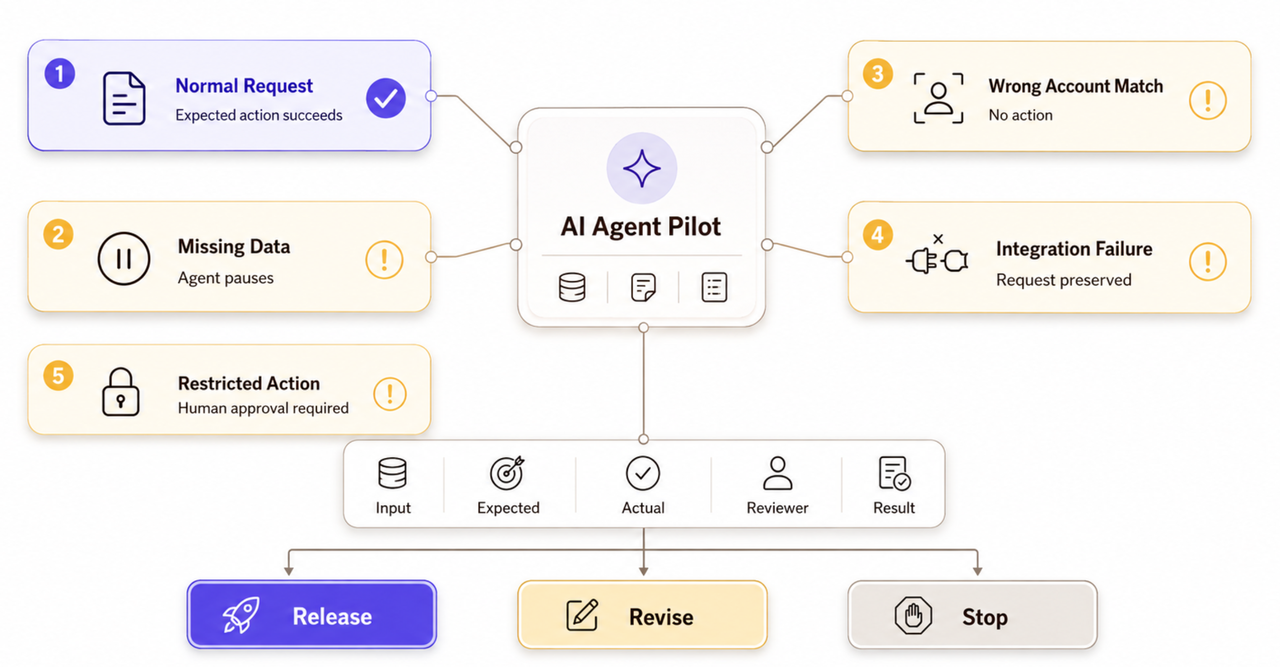
Keep the pilot narrow enough for employees to review every important outcome. Use approved representative data, synthetic records, or prepared samples according to the company's access rules.
Run the current process beside the agent-assisted version. Apply the same business rules and record errors, overrides, blocked actions, and integration failures.
Before testing, agree whether the result will lead to release, revision, a pause, or cancellation. A convincing demonstration may still be difficult to operate without its developer.
The final handoff should leave the business with:
- an up-to-date architecture and integration list;
- the source code, prompts, and tests included in the agreement;
- control of the required accounts, credentials, and permissions;
- instructions for deployment, rollback, and vendor offboarding;
- a record of known limits, unresolved issues, and support contacts.
Maintenance terms should separate defects from new work. The agreement should explain how API failures and new business rules enter the support queue.
Review Ownership, Data, and Contract Boundaries
Trace what the provider will create and receive. Source code, prompts, tests, workflow maps, and custom connectors may follow different ownership or reuse rules.
Check whether subcontractors may see company data and which outside models or open-source components enter the project. Record storage, deletion, and case-study permissions.
The FTC has told AI companies to keep their stated privacy and confidentiality commitments. Buyers should compare those promises with the proposed data flow and signed agreement. A privacy page cannot explain an undocumented project exception.
These are general purchasing considerations, not legal advice. Ask qualified professionals to review the contract, ownership terms, privacy duties, and security obligations that apply to the project.
How SpringBrand Fits This Decision
SpringBrand does not build the agent or guarantee a provider's qualifications or results. Buyers can use it to describe the need and compare the scope of relevant third-party services before choosing whom to contact.
FAQ
How should a business explain an unfinished agent pilot to employees who tested it?
Explain what the pilot tested, which functions remain unavailable, and whether work has stopped or paused. Share the project owner and next decision date so no one keeps using an outdated version.
What happens when the business owner pauses the project?
Record the pause date, system state, and person allowed to restart the work. Remove unneeded access and preserve the tests. Some charges may continue unless the agreement provides a pause process.
Can a departing sponsor transfer approval authority to another team?
That may be possible under company policy and the project agreement. Record the new approver, effective date, and any limits. An informal introduction should not authorize production changes.
Should a customer-facing AI agent use a separate name from the business brand?
Choose a name that doesn't confuse customers about who is responding. Explain the agent's role and provide a clear path to an employee. Review any applicable disclosure requirements.
How should multilingual agent behavior be reviewed after launch?
Use native or otherwise qualified reviewers for every supported language. Test local terminology, policy language, and escalation messages. Repeat the review after a meaningful model, prompt, or policy update.
Conclusion
Before buying AI agent development services, follow the proposed task through an ordinary workday. Its owner should be able to show where the agent receives information, acts, and hands work to a person.
The development team can choose an architecture and build the connections. The business still decides which policies apply, who receives access, and whether the pilot is ready to move forward. Final acceptance belongs on the record only after the buyer can inspect the tests, remaining limits, approval, and support owner.