Claude SEO for GEO: A Small-Business Workflow

Written by
Springbrand Editor Team
Editorial team
Springbrand Editor Team creates and maintains blog guides on AI tools, automation, marketing, and agent workflows.

Reviewed by
Springbrand Audit Team
Editorial review team
Springbrand Audit Team supports editorial quality through source checking, clarity, and consistency across the blog.
Updated
Published
Claude SEO GEO workflows can organize an AI-search readiness audit. Learn what to check, how to validate findings, and when specialist help is needed.
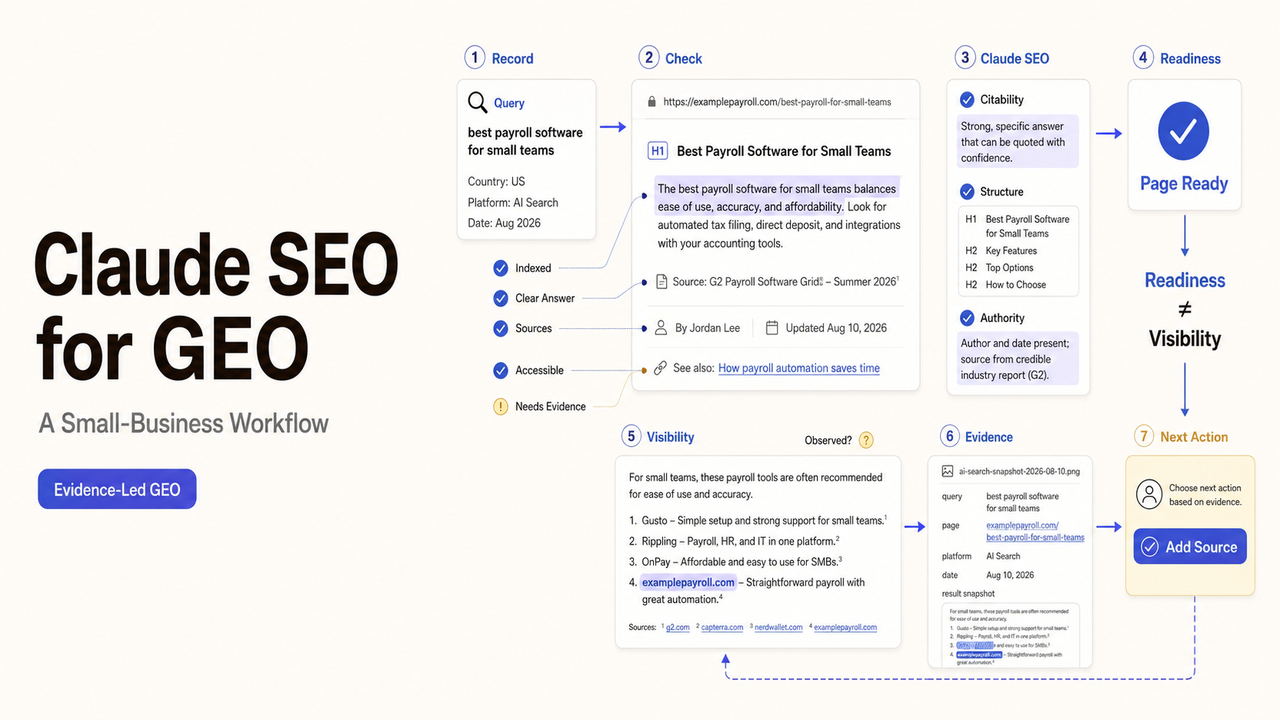
A GEO audit begins too late when its first saved artifact is a score. By then, the team may have lost the query, country, page version, and search surface that gave the result meaning.
A useful Claude SEO GEO workflow starts with that evidence. It then uses the community skill to inspect page conditions, not to declare that a brand is visible in AI answers.
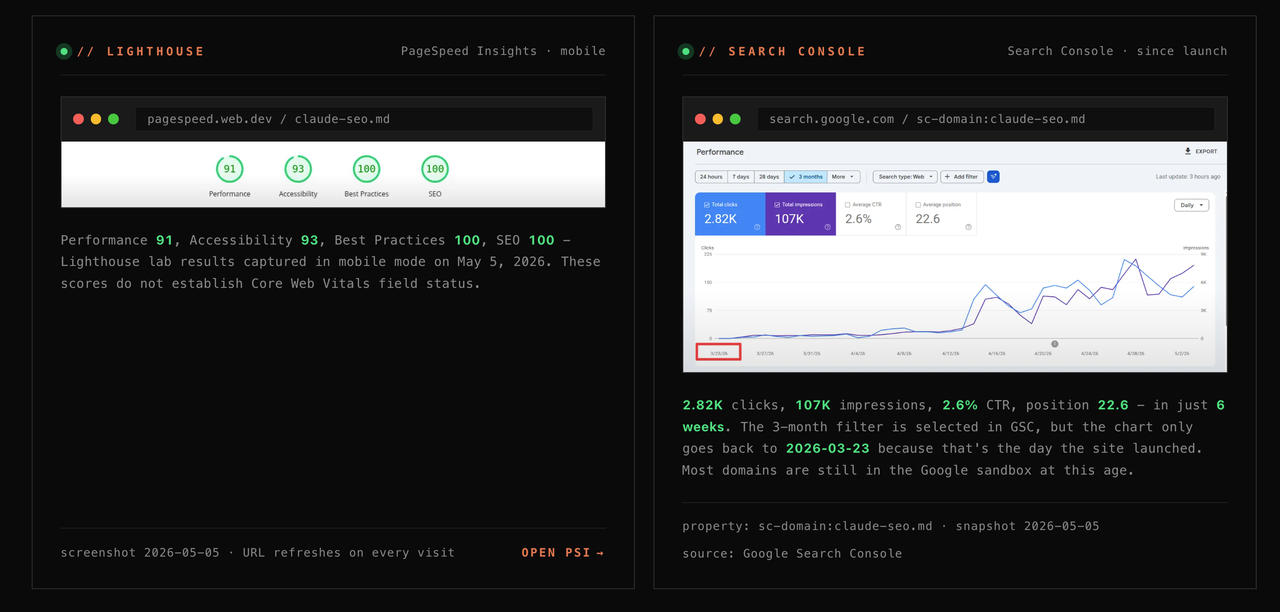
This workflow uses public v2.2.5 files at commit a1480c7, checked August 30, 2026. No live audit was run, so the capability assessment remains documentation-based. The community project is independent of Anthropic.
Define One GEO Audit Goal
Choose one decision the audit must support. The team might test a service page’s Google eligibility or inspect evidence on one guide.
Record the page, query, country, language, platform, date, and possible next action. “Improve AI visibility” names no page, surface, or decision.
Keep three outcomes separate:
- Readiness: the page exposes technical and content signals a system can evaluate.
- Observed visibility: the brand or URL appeared for a recorded query at a recorded time.
- Business result: the appearance contributed to a visit, inquiry, or other accepted outcome.
Claude SEO can help examine the first outcome. It cannot prove the other two from page analysis alone.
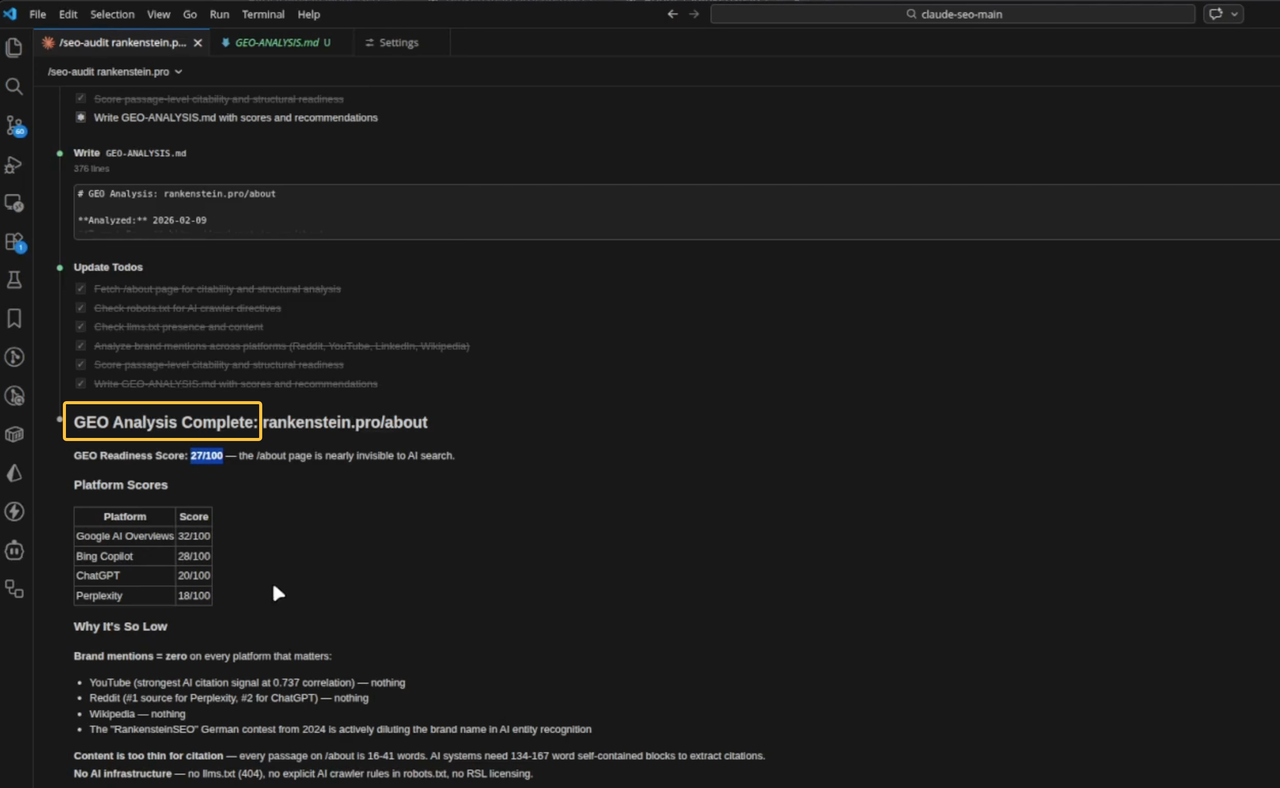
Collect Evidence Before Running the Skill
Save evidence another reviewer can inspect: page HTML or a rendered capture, directives, canonical, sources, author details, and relevant Search Console exports.
Use an evidence ledger to stop one signal from carrying a larger claim than it supports. This is SpringBrand’s editorial framework, not a standard supplied by Claude SEO or Google.
Claim under review | Best available evidence | What it supports | What it cannot prove |
Google eligibility | URL Inspection and page directives | Index and snippet status | Selection as an AI supporting link |
Page readiness | Page source and validated audit findings | Technical and content conditions | Actual AI visibility |
Google AI exposure | Generative AI performance report | Reported Google AI impressions | Visibility on other answer engines |
Other-platform appearance | Dated query observation or provider record | One observed result | Stable placement or future citation |
Crawlability and Indexability
Check the response, robots access, canonical, noindex, and snippet controls. Compare those signals with Search Console when available.
Google says supporting links must be indexed and eligible for snippets. Its AI features guidance lists no additional technical requirements. Eligibility still does not guarantee selection.
Leave conflicting evidence open. A self-referencing canonical does not settle the issue when URL Inspection reports another selected canonical.
Citability and Entity Signals
Collect the visible answer, supporting evidence, and named people or organizations. Check whether the page distinguishes original information from general claims.
The repository’s GEO module evaluates structure, authority, entities, accessibility, and passages. These project-defined criteria are not an answer engine’s internal citation metrics.
Run Claude SEO and Validate Every Finding
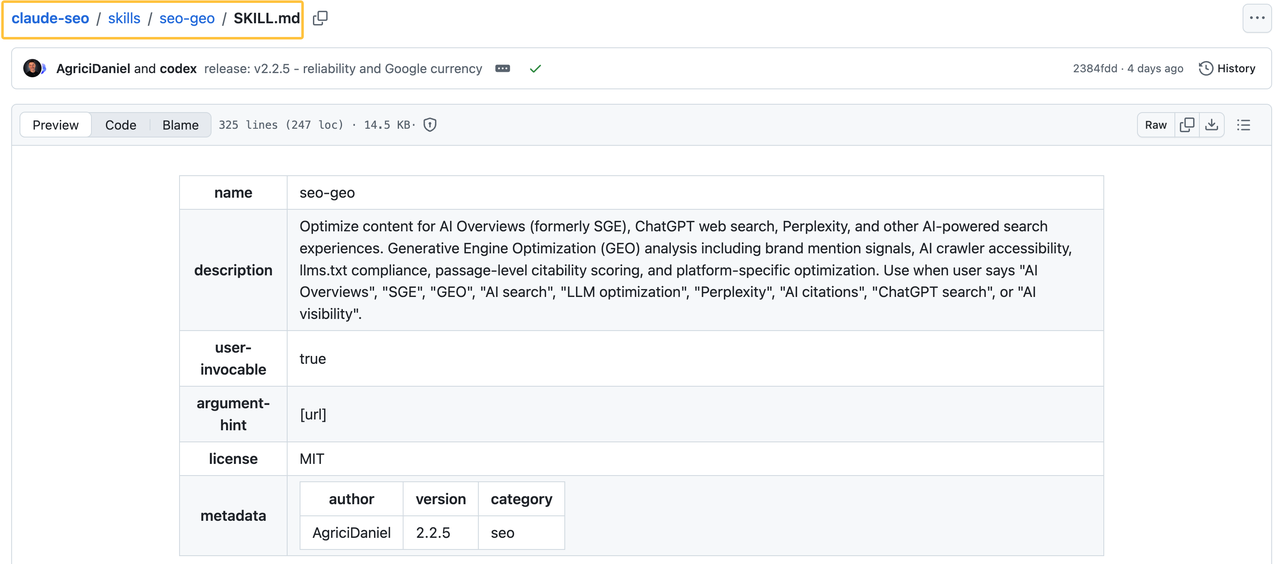
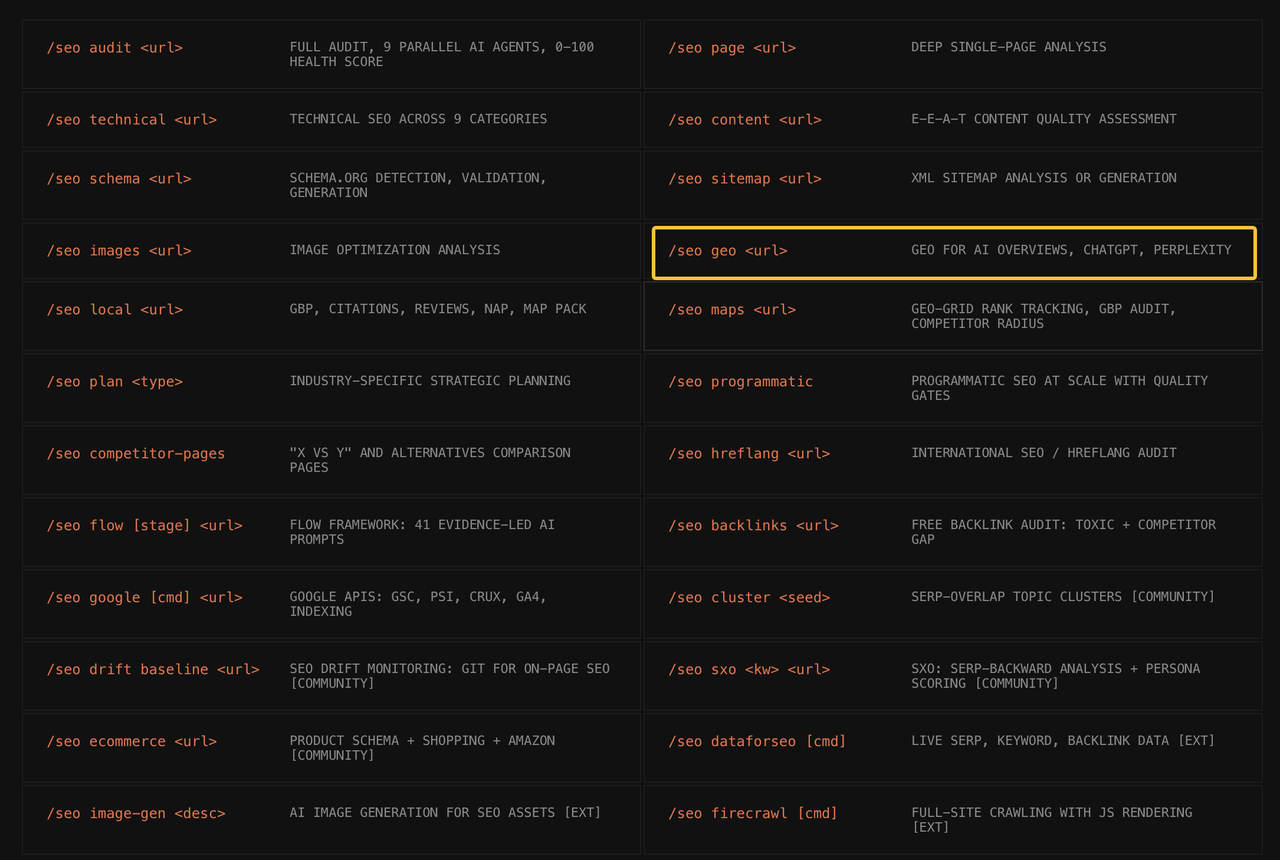
The project documents /seo geo <url> for GEO analysis. Record its commit, URL, model environment, extensions, and output directory.
Each material finding needs a URL, evidence, rule, and reviewer decision. Mark it confirmed, rejected, or unresolved. Polished wording cannot replace reproducible evidence.
Include one known defect and one false-positive trap in the pilot. Text loaded after interaction can reveal whether missing raw HTML becomes a false content finding.
A person should approve each production change after checking the live page, CMS constraints, and effect on ordinary search users.
Turn Findings Into a Prioritized Work Brief
Each accepted finding becomes a work item: page, question, evidence, status, impact, proposed change, owner, approver, acceptance check, and rollback.
Fix eligibility failures before editorial refinements. Address unsupported claims or unclear entities next. Keep actual-visibility experiments in a separate measurement lane.
Google’s Generative AI performance report can show impressions for properties with access. It does not explain selection or measure other answer engines.
Decide What Needs Specialist Support
Use a specialist when evidence conflicts, JavaScript changes crawler access, or one recommendation affects many templates. Multilingual sites and connected visibility services also merit review.
For audit-stack replacement questions, use the separate Claude SEO review. A GEO workflow should not inherit that decision.
SpringBrand publishes this article and operates the marketplace linked here. When implementation or cross-platform validation lacks an owner, describe the open work and compare relevant SEO services.
FAQ
Which Claude SEO versions include the current GEO module?
The current plugin and seo-geo metadata identify version 2.2.5. Pin its commit or verify a newer release. Older reports may use different criteria or outputs.
What third-party services does Claude SEO's GEO module require?
The baseline module needs no GEO-specific enrichment service, although Claude Code needs its model connection. DataForSEO and Profound are optional. Evaluate their accounts, coverage, and data handling separately.
Does Claude SEO keep GEO audit data locally?
The project’s privacy file says core reports remain local and the plugin adds no telemetry. Claude Code sends relevant context to its provider under its own data policy. Optional extensions may transmit URLs, queries, or account data.
Does Claude SEO's GEO module support scheduled recurring scans?
I found no scheduler documented for /seo geo in version 2.2.5. The repository has a separate drift-monitoring workflow, but that does not establish recurring GEO scans. Treat scheduling as an external workflow that needs its own credentials, logging, and failure alerts.
Does Claude SEO currently support multilingual GEO analysis workflows?
The GEO module does not document an end-to-end multilingual workflow. The repository contains separate international and hreflang functions. Audit each language and market separately, then use a qualified native reviewer to validate meaning, sources, entities, and local search intent.
Conclusion
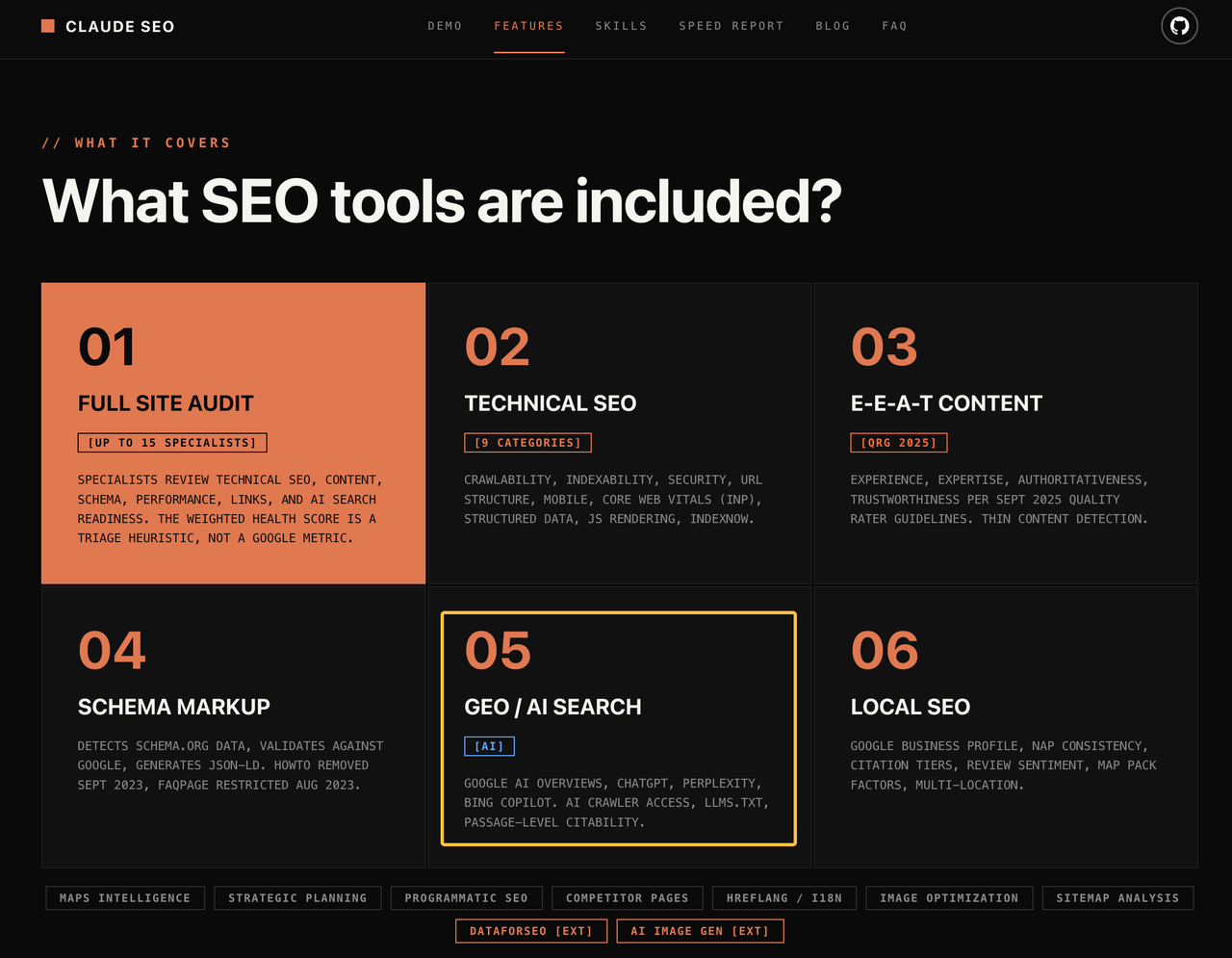
A responsible Claude SEO GEO audit moves from collected evidence to page checks, human validation, and an owned work brief. It never turns a readiness score into a citation claim.
Keep observed AI visibility in a separate record. The workflow is ready to expand only when another reviewer can reproduce the evidence and explain every accepted change.
Recommended Reads
Explore SpringBrand
Turn ideas into working workflows
Connect agents, APIs and tools in one workspace. Start with a task you want to get done.
Get started free
One account. 10,000+ APIs & capabilities
Give your agent APIs and plugins without separate keys or integrations for every provider.
Explore APIs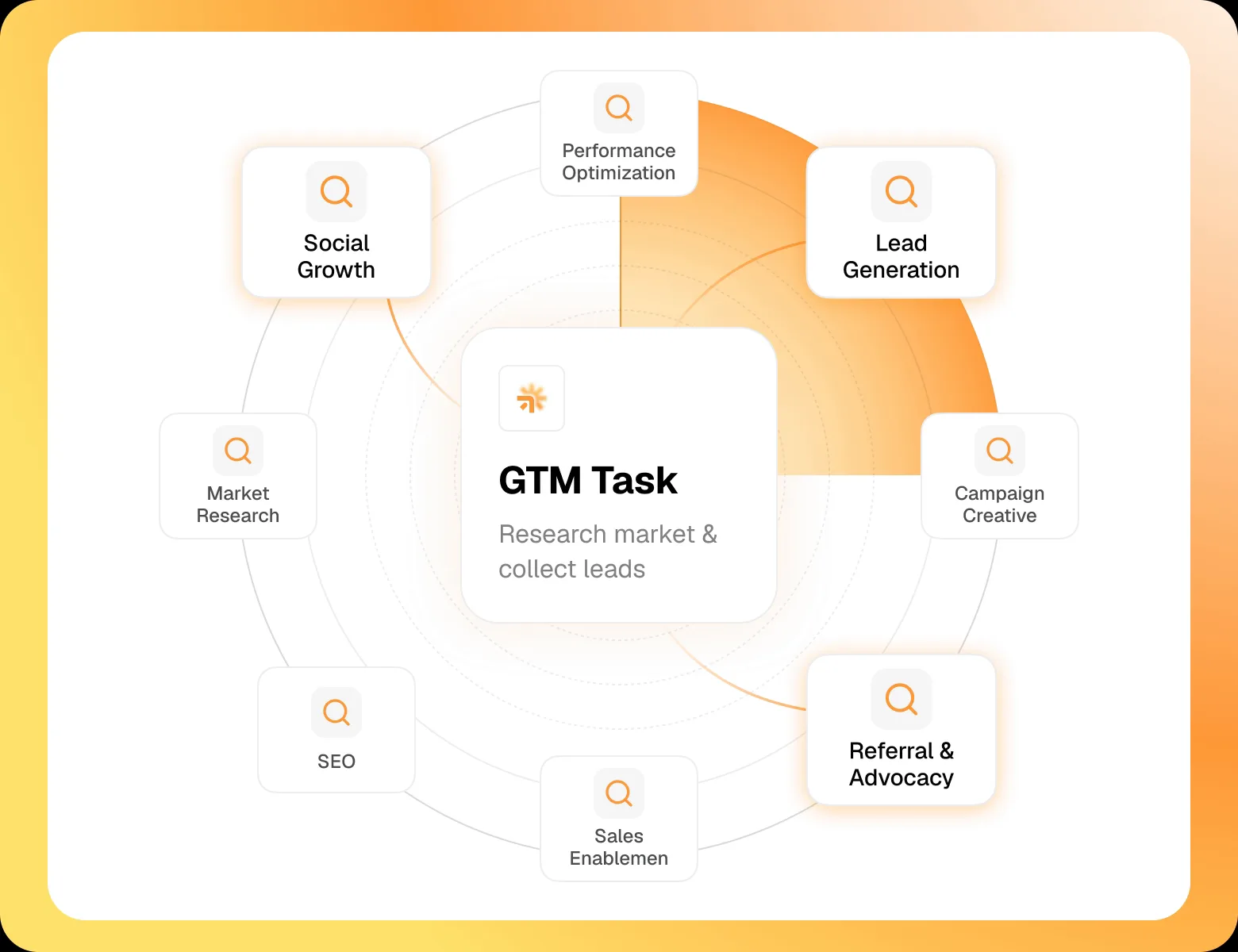
No tool expertise needed
Describe your GTM task. SpringBrand chooses the right APIs and plugins for your agent automatically.
Find tools for your task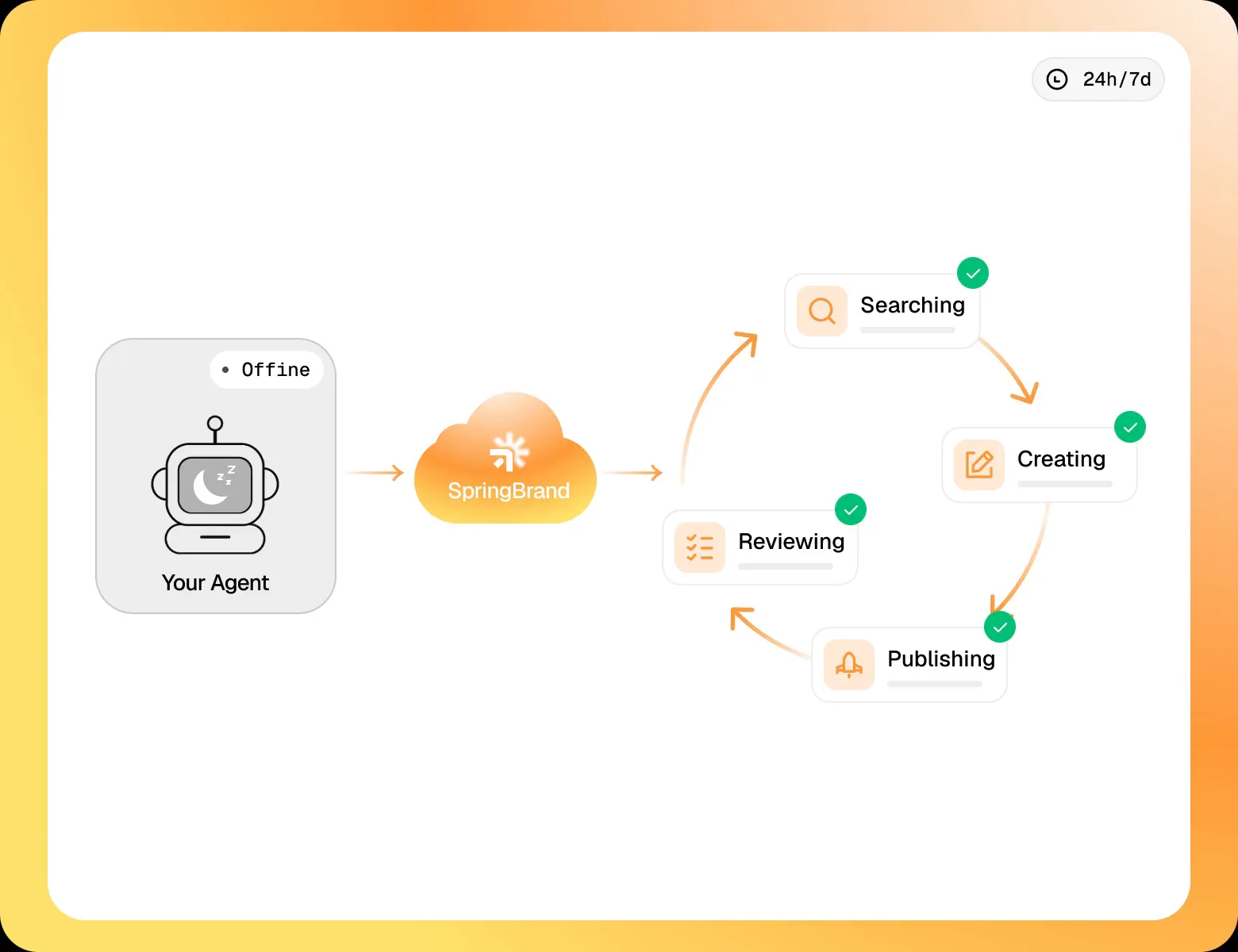
Run tasks 24/7
Connect your agent to SpringBrand to keep tasks running automatically, day and night.
Connect your agent