Claude SEO Review: Can It Replace an Audit Tool?
Claude SEO review for one small-business site audit: compare evidence coverage, issue validation, reporting, and gaps that still need specialist judgment.
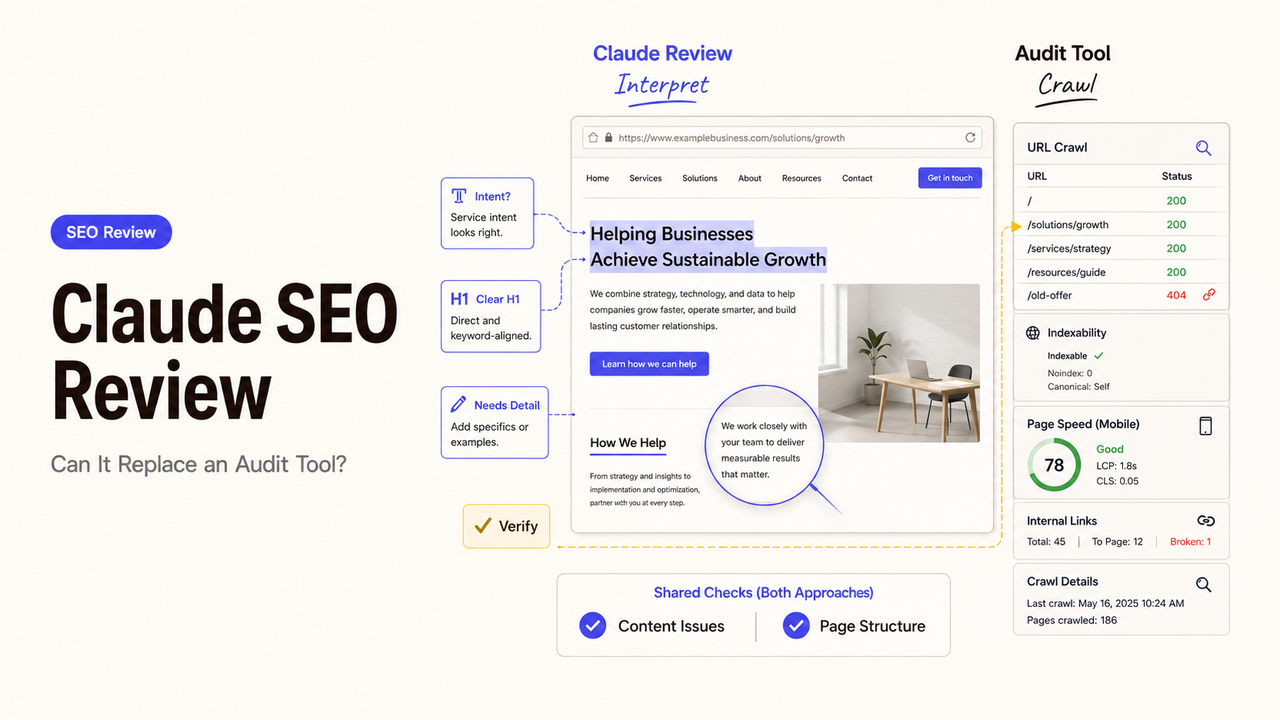
A tool-replacement decision should leave three things on the table: a dependable URL inventory, findings tied to evidence, and a report another reviewer can reproduce. The current Claude SEO repository appears stronger at explaining findings than proving it found every relevant page. It may support an audit, but it is not a safe one-for-one replacement for a dedicated crawler.
This Claude SEO review covers the community project at AgriciDaniel/claude-seo, not every similarly named skill. On August 27, 2026, I inspected commit a1480c7e590b16001bd9dc1627eacdcd44d580f9, its documentation, manifest, dependencies, installers, permissions, and security notes. I did not install the plugin or audit a live site. It is a community project, not an Anthropic product.
Quick Verdict for One Small-Business Audit
Claude SEO should not replace a dedicated audit tool or specialist review based on the public evidence available. It may help organize checks, interpret page evidence, and produce a readable action plan for a limited audit.
The replacement question is easier to answer by separating three jobs:
Audit job | Editorial verdict | Condition |
Explain and group findings | Promising for a controlled pilot | A reviewer can trace each finding to page-level evidence |
Produce a complete URL inventory | Not established | Coverage must be compared with a dedicated crawl and known site records |
Make final priority decisions | Keep human ownership | Business impact, risk, and implementation constraints need site context |
This is a source-based fit assessment, not a performance test. Repository claims alone do not justify removing an existing audit tool.
What the Community Skill Actually Checks
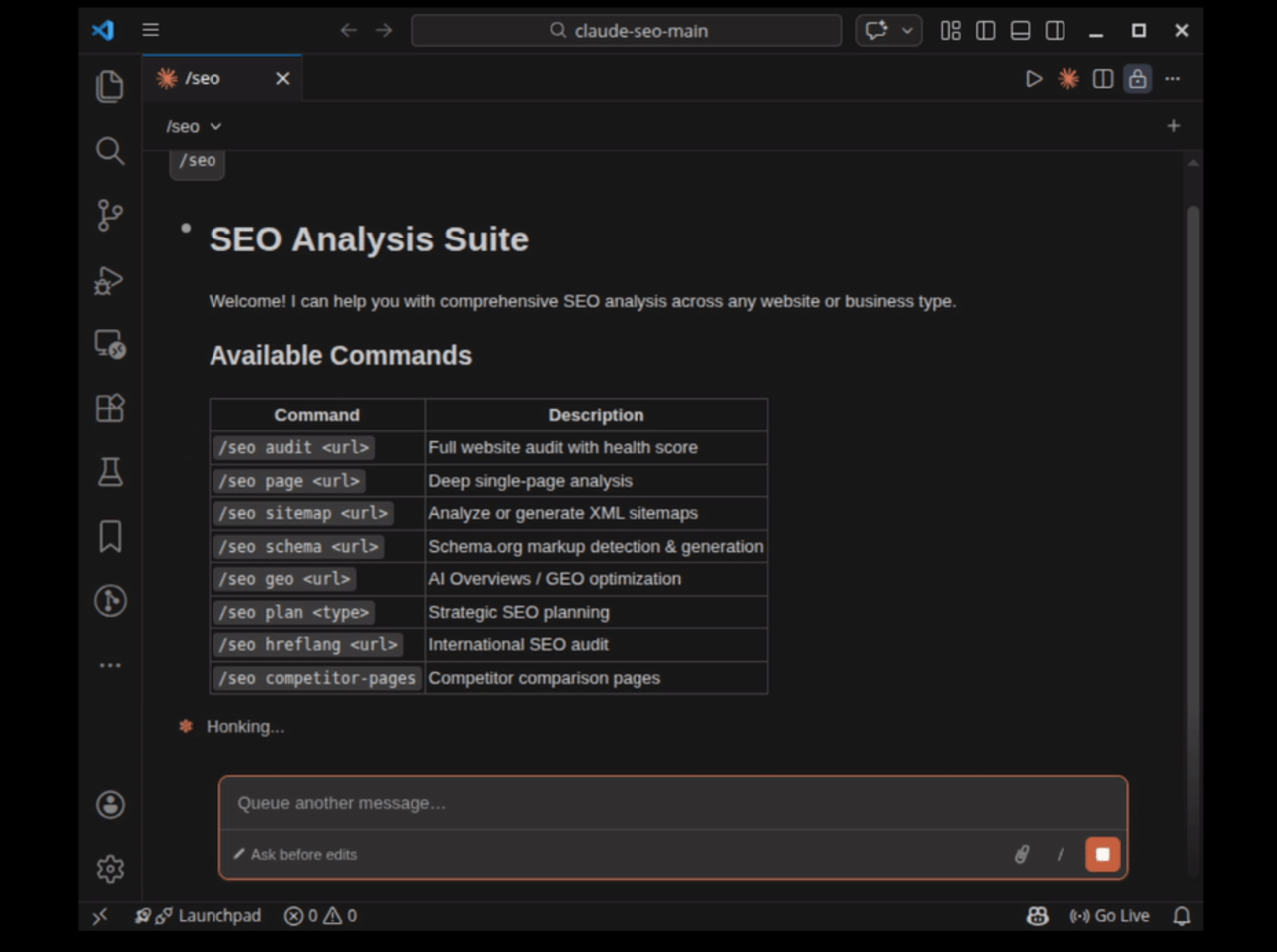
The repository identifies version 2.2.5. Its commit-specific documentation says /seo audit can crawl up to 500 pages, coordinate technical, content, schema, sitemap, performance, and visual checks, and produce Markdown reports.
Those are maintainer claims, not independently measured results. The project declares Python 3.10 or later, plus packages for HTTP requests, HTML parsing, browser automation, content extraction, and optional Google data connections. Extra services may add search, analytics, backlink, or rendering data.
A buyer must still verify which sources were connected, which pages were reached, and whether each check used raw or rendered HTML.
Compare It With a Dedicated Audit Tool
Crawl Coverage and Data Sources
A dedicated crawler enumerates URLs, records responses, follows links, and exports structured evidence. The Screaming Frog SEO Spider guide documents database storage, configurable crawling, and URL, inlink, and outlink exports. Claude SEO’s documentation does not establish equivalent coverage or scale.
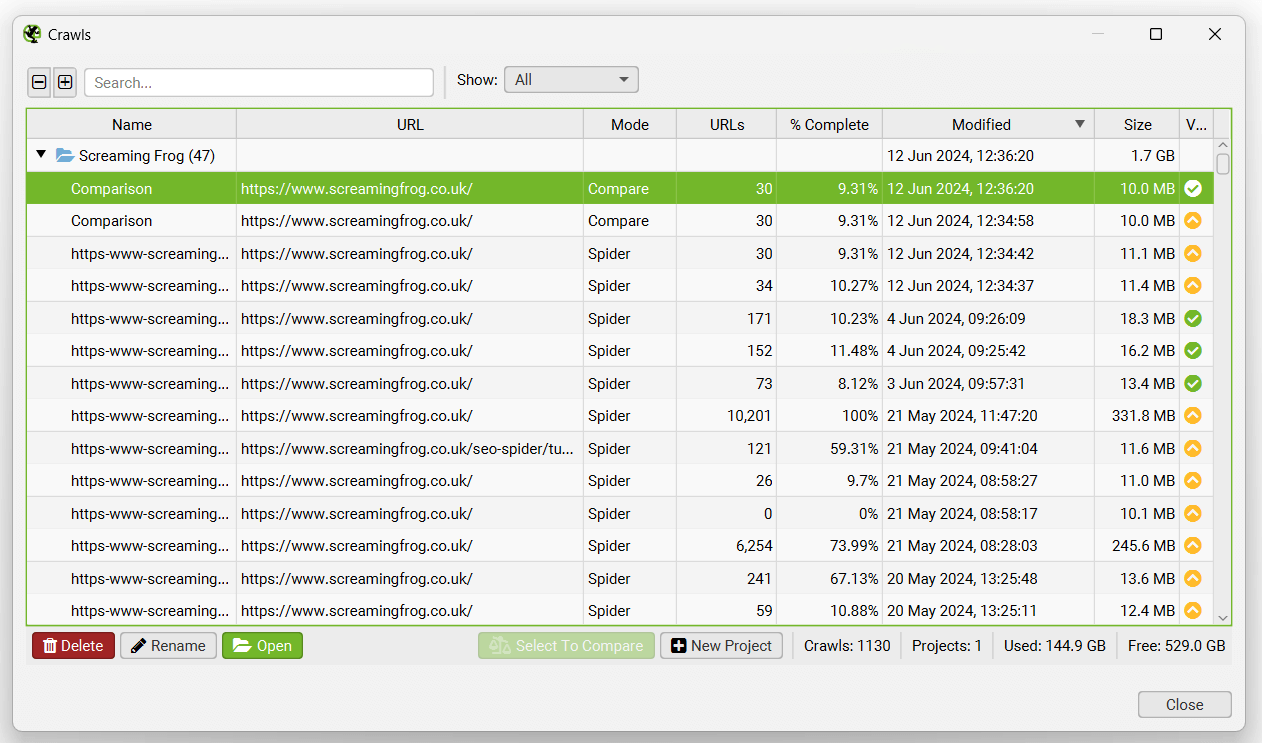
Test the skill against a known URL list, XML sitemap, and dedicated crawl. Check for missed orphan pages, JavaScript routes, redirects, canonicals, and blocked resources. A polished summary cannot repair an incomplete inventory.
Issue Validation and Prioritization
An AI SEO audit can explain a title, canonical, internal-link, or schema problem. It can also produce false positives or rank a minor warning above a critical issue.
Require every material finding to name a URL and its evidence: response data, source HTML, rendered output, or a connected search record. A specialist should validate conflicts and decide whether the fix fits the site and CMS.
Reports and Repeatability
Markdown reports can make results easier to share, but repeatability needs more. Record the commit, model environment, configuration, URL scope, data sources, and permissions for every run.
Repeat the same sample. If an unavailable API or a model response changes the conclusion without new site evidence, keep the crawl record as the audit baseline.
Where Specialist Review Still Matters
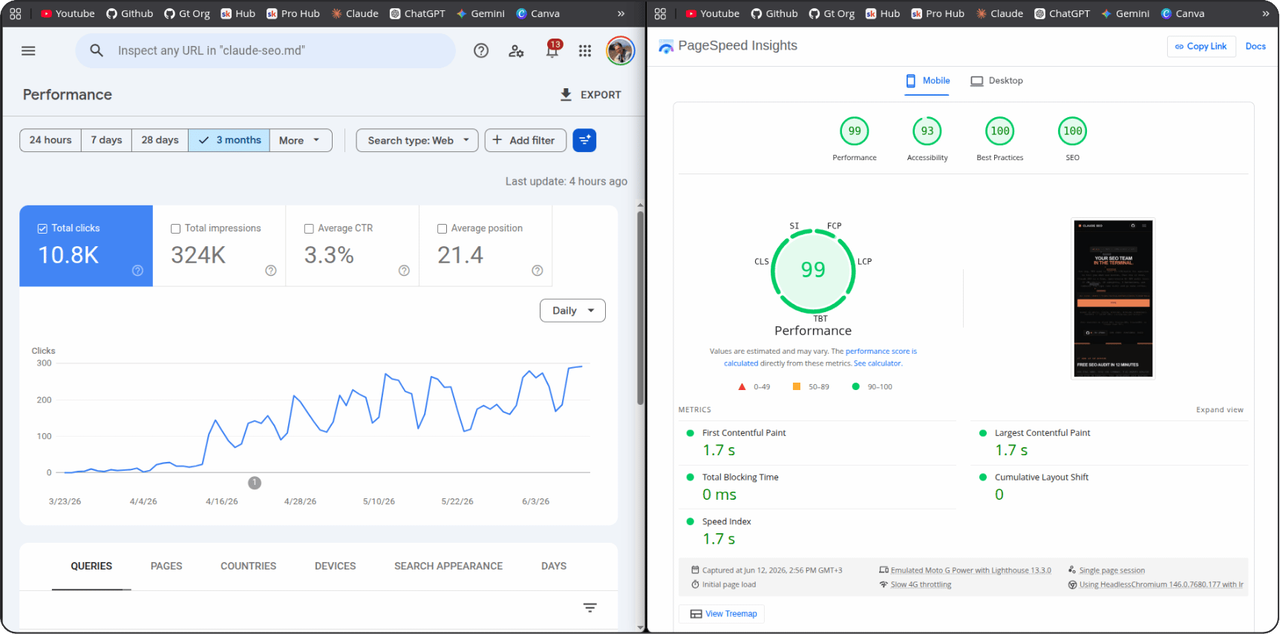
Specialist judgment matters when evidence conflicts or a wrong fix could affect revenue. Examples include JavaScript rendering, migration redirects, canonical or hreflang conflicts, server logs, and Search Console indexation differences.
A technically valid fix may still fail because of CMS limits or release dependencies. The skill can assemble evidence; a named owner must accept the priority and risk.
Run a Limited Audit Before Replacing Anything
Start with a representative sample of public pages. Pin the commit, omit optional credentials, and include a known defect plus an edge case.
Use this replacement test:
Evidence lane | Pass condition | Failure test |
Coverage | Known pages and the sitemap sample appear | Add an orphan or JavaScript-only route |
Findings | Five important issues trace to source evidence | Introduce conflicting canonical signals |
Repeatability | A second run produces explainable differences | Remove an optional data source |
Actionability | Priorities reflect business impact | Add a harmless warning beside a critical path issue |
If any lane fails, keep the existing crawler and specialist review. The skill may still assist the audit without replacing either one.
If the pilot exposes gaps, use SpringBrand to describe requirements and compare third-party SEO support.

FAQ
Which Claude Code versions currently support installing Claude SEO?
The project lists Claude Code 1.0.33 or later. That is a maintainer compatibility claim, not Anthropic certification. Check claude --version and retest after either product changes.
Does Claude SEO currently support Windows without WSL?
The repository documents a PowerShell installer, while Anthropic supports native Windows and WSL. WSL is not presented as mandatory. This review did not test Windows, so verify Python, Git, browser setup, and the doctor command first.
How should teams verify scripts before installing Claude SEO?
Pin a commit, clone the repository, and inspect the manifest, installers, hooks, and dependencies. Compare updates with that approved version. Anthropic warns that plugins can execute arbitrary code, so test away from production files and credentials.
Which Claude Code permission settings does Claude SEO require?
Its agents declare file reading, shell, writing, search, and subagent tools. Use Claude Code’s normal approval flow and grant only what the audit needs. Review allow, ask, and deny rules in the permissions documentation. Avoid unrestricted bypass mode on live systems.
Does Claude SEO store audit data outside the local machine?
The project says core reports stay local, while optional extensions may send data to connected services. Claude Code also sends relevant context to Anthropic’s model service. Review enabled integrations and Anthropic’s data-use terms before auditing confidential pages.
Conclusion
This Claude SEO review finds a potentially useful community analysis layer, not a demonstrated audit-tool replacement. Public documentation cannot prove crawl completeness, accuracy, or repeatability on a particular site.
Keep the replacement decision open until a pilot accounts for known URLs, traces findings to evidence, and produces a repeatable result. Until then, use Claude SEO to support the audit, not remove its crawler or specialist.