SEO Website Redesign: Pre-Launch Checklist
SEO website redesign planning helps small teams protect pages, redirects, tracking, content, and vendor responsibilities before launch.
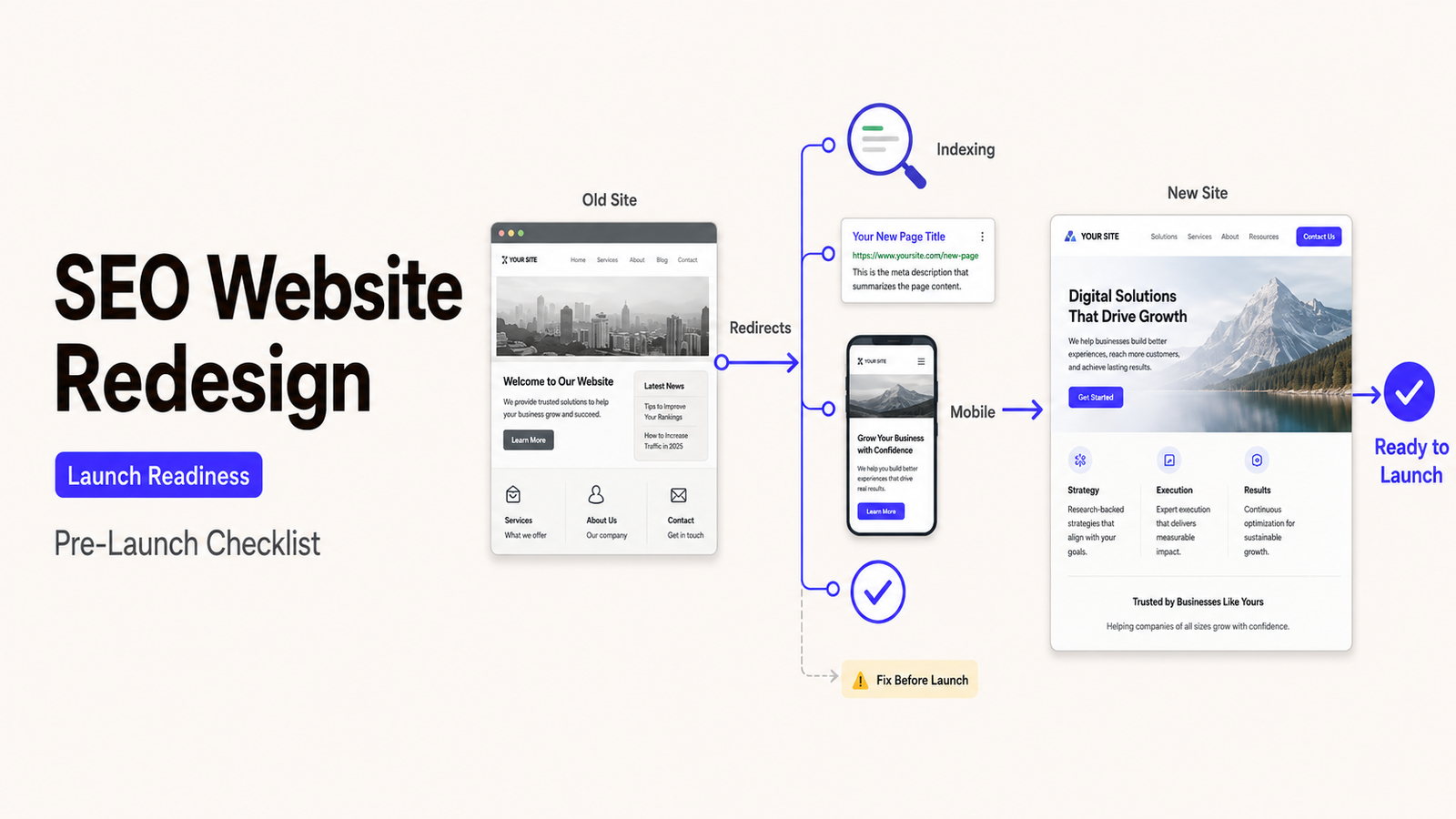
If a redesign changes only the visual system, the site owner can keep many current URLs and page purposes. If it changes the structure, that owner needs a redirect map, fresh tracking tests, and a rollback plan before launch. The SEO workload should follow the actual changes, not the size of the design presentation.
This website redesign checklist makes those decisions visible. It gives a small team the working record for an SEO website redesign before the new site goes live.
Start With the Business Reason for the Redesign
A redesign should begin with a business problem the new site can address. Visitors may misunderstand the offer, or mobile users may abandon a key form.
Write that reason in one sentence, then name the action the website should support. “Modernize the brand” is too broad for planning. “Help commercial buyers find the right service and request an estimate” gives the team a useful direction.
This decision shows what should remain stable. A company that depends on organic inquiries should not casually remove its most useful service pages.
Set one owner for the launch decision. That person needs enough evidence from each reviewer to approve or delay release.
Record four items before work expands:
- the business reason for the redesign;
- the primary visitor action;
- the pages and workflows most important to that action;
- the person who can approve launch or require another review.
Build a Pre-Launch SEO Inventory
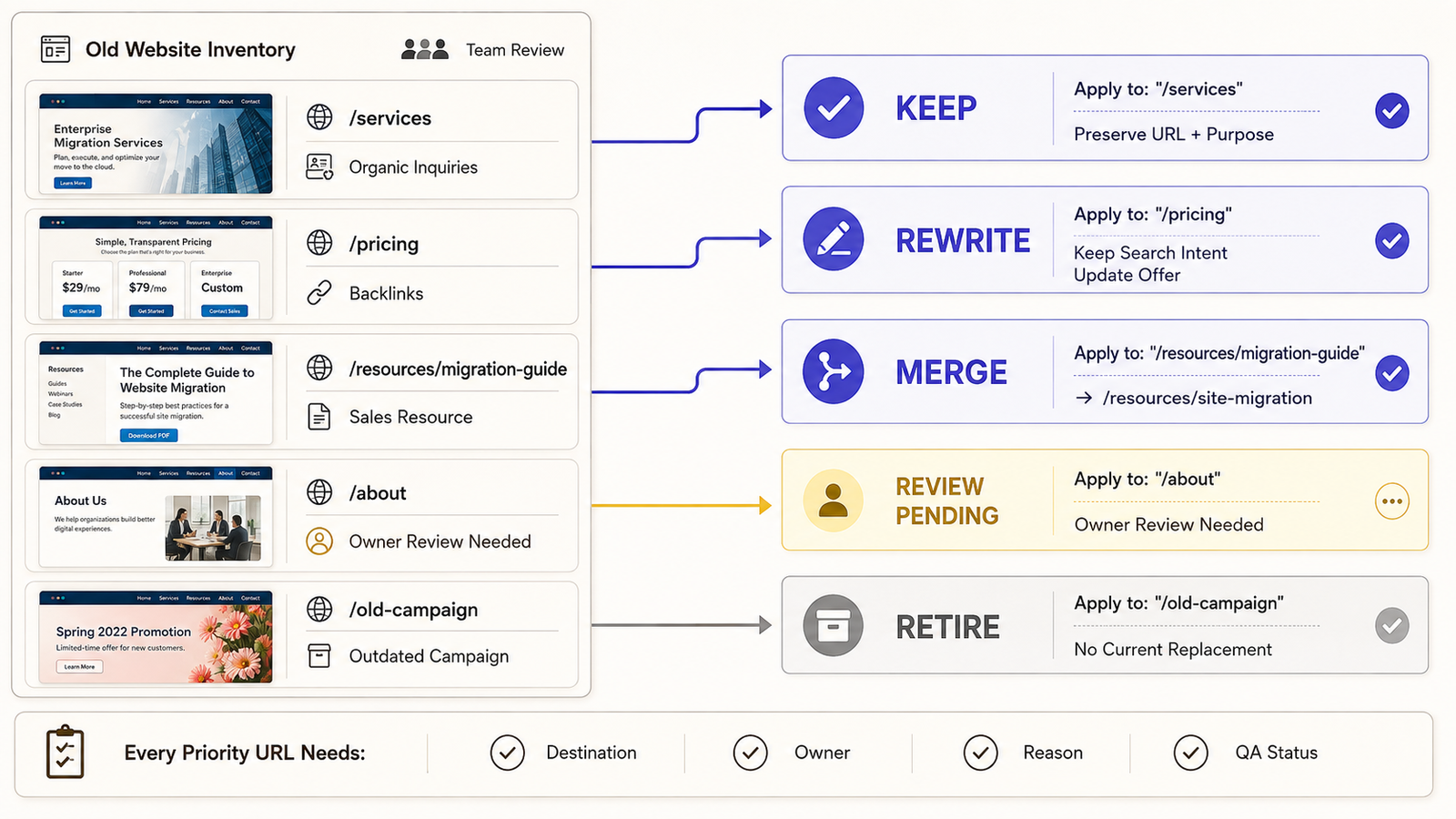
For an SEO website redesign, the inventory creates a baseline and a shared list for assigning decisions. Build it before URLs, templates, and copy change in several places.
Pages, rankings, backlinks, and conversion paths
List live URLs from the CMS, sitemap, analytics, and a site crawl. Combine those sources, remove duplicates, and keep each original URL.
Add business context rather than collecting search numbers alone. Mark pages that generate inquiries, explain core services, attract links, or support sales conversations. Low traffic does not make every page expendable.
For every priority URL, choose one planned state:
| Planned state | What the team must record |
|---|---|
Keep | New URL, page owner, template, and required QA |
Rewrite | Search intent, approved claims, reviewer, and new URL |
Merge | Source URLs, destination, retained information, and redirect |
Retire | Reason, response or redirect behavior, and approving owner |
Trace each priority page to its next meaningful action. Test forms, phone links, booking tools, downloads, and confirmation pages.
Content, metadata, schema, and tracking assets
Priority pages need a saved copy of the current title, description, main heading, canonical URL, structured data, internal links, and indexability instructions. The team may change them, but it should do so deliberately.
The measurement record should include the analytics tag, conversion events, consent behavior, Search Console ownership, and call tracking. It should also name the owner of each account. Copying code does not confirm that it sends data to the correct property.
A dated export or screenshot can preserve each trusted baseline. If current tracking is questionable, label it accordingly. An unreliable baseline should not become a confident performance claim after launch.
Protect URLs, Redirects, and Site Structure
In an SEO website redesign, URL decisions connect the old site with the new one. Make them page by page before launch.
Redirect mapping and internal link updates
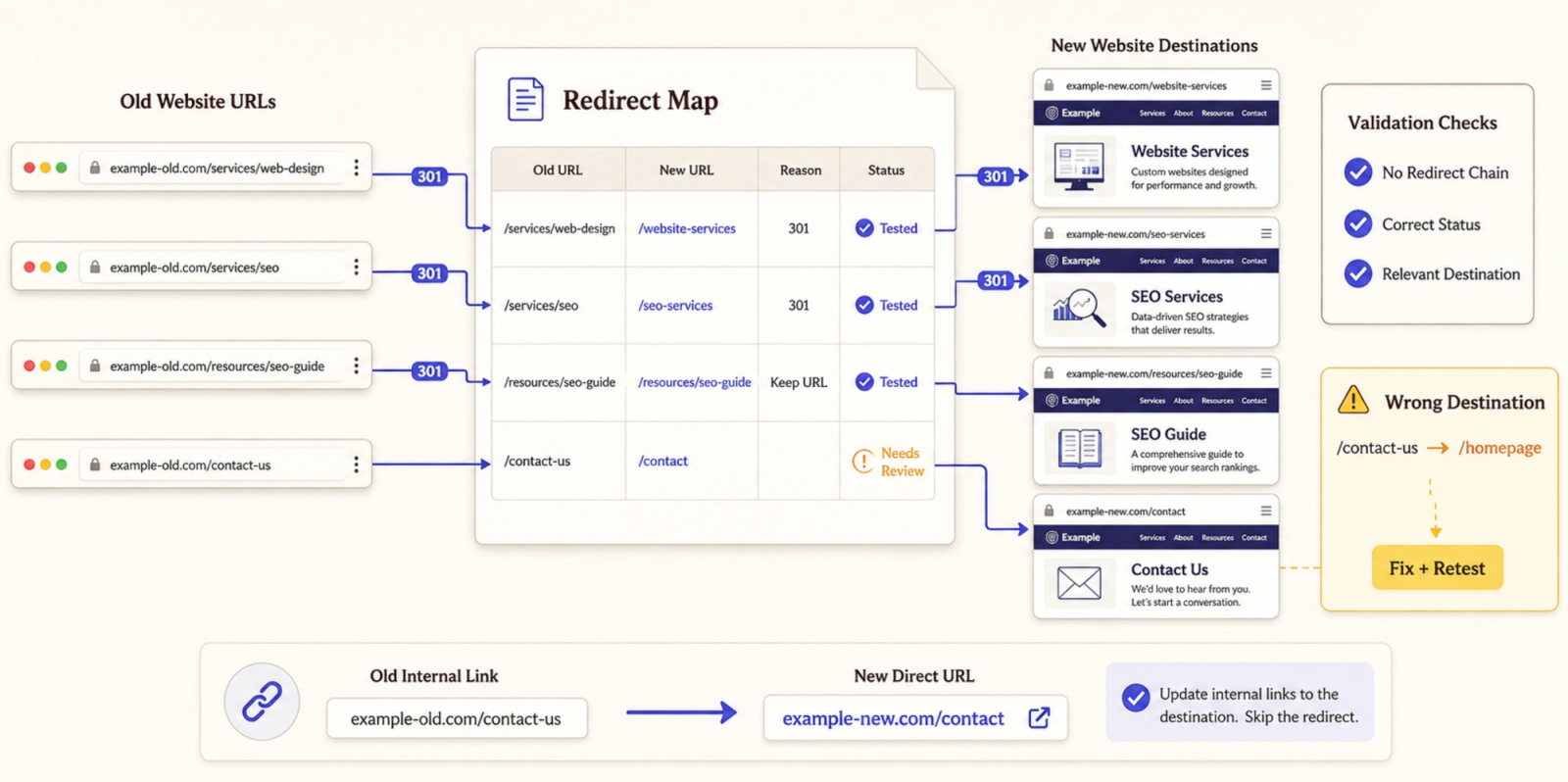
The redirect map needs the old URL, final destination, reason, owner, and test status. Each destination should answer the same need or provide a useful replacement.
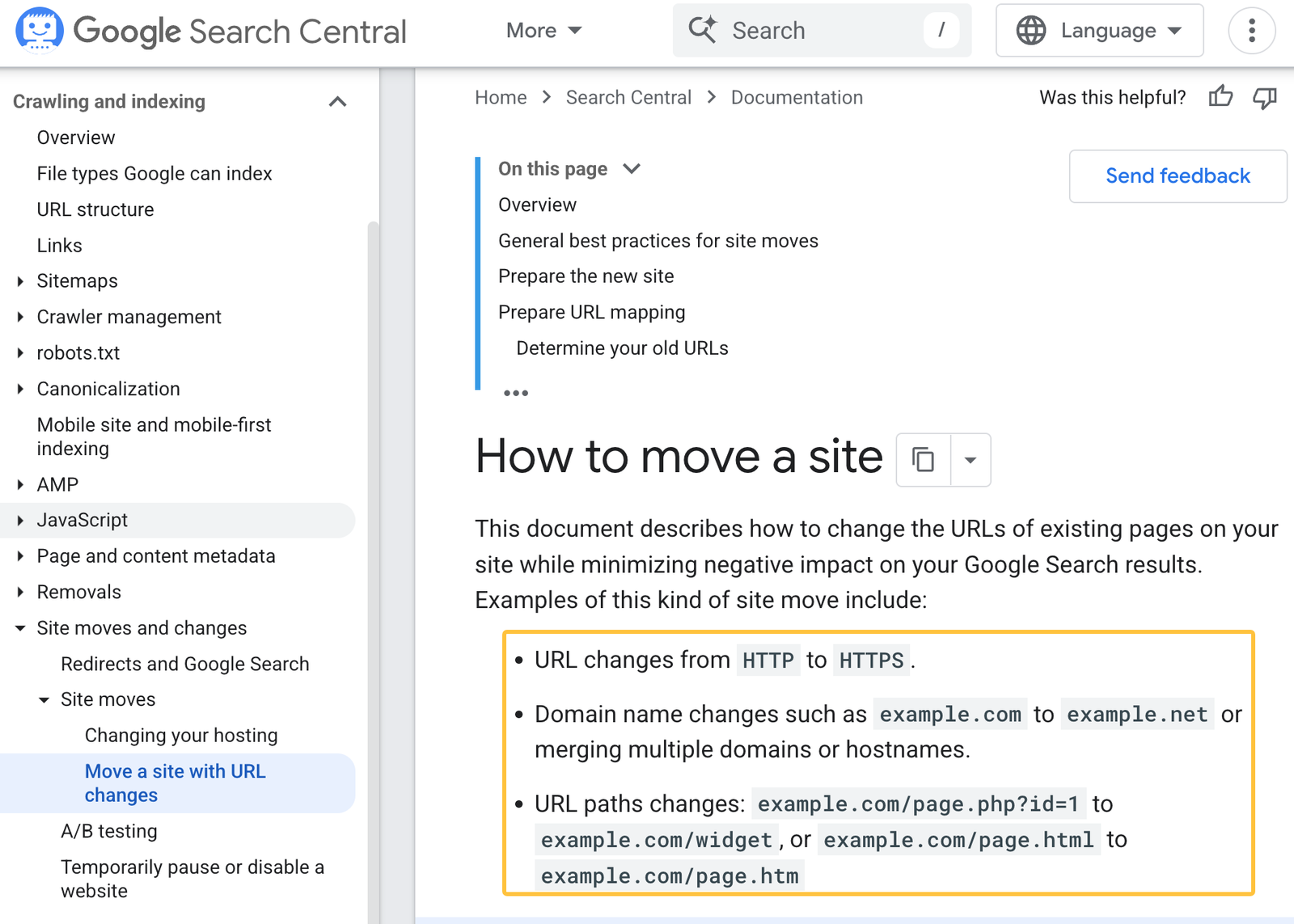
Google’s site-move guidance for URL changes recommends preparing an accurate URL map and testing the new site before the move.
Test each priority redirect. Check for chains, loops, wrong status codes, and broken destinations. Then update internal links to point directly to new URLs.
Correct redirects cannot promise stable rankings. They reduce avoidable mistakes while Google recrawls and reassesses the redesigned pages.
Navigation, templates, and crawl paths
Navigation should reflect how visitors find services and give crawlers a reliable path to important pages. Test menus, breadcrumbs, contextual links, pagination, and footer navigation.
Google explains that links are generally crawlable when they use an HTML anchor element with an href attribute. Review the requirements for crawlable links when a new menu, filter, or page builder relies heavily on scripts.
Test templates with real content. A polished sample may not reveal problems with tables, long headings, forms, or related links. Confirm the intended heading, canonical, robots, and schema settings.
The crawl should also reach pages outside the main menu when those pages still matter. Orphaning a valuable resource is a structural change, even if its URL remains live.
Review Content, Design, and Technical Changes
A redesign can change what a page explains and whether search systems can access it.
Copy changes that affect search intent
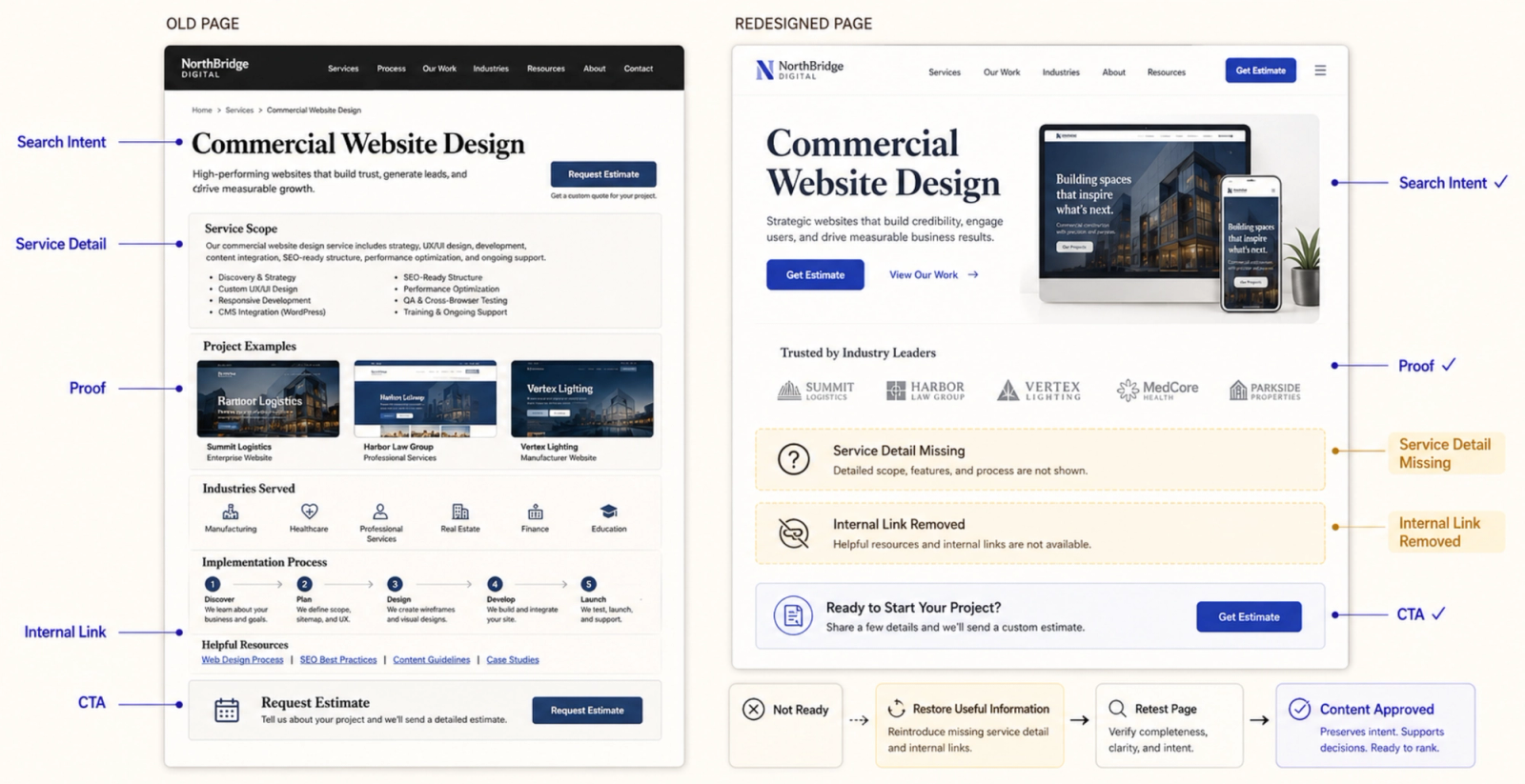
Compare both versions against the visitor’s question. Shorter copy becomes a problem when it removes useful service details, proof, location information, or a clear next step.
The subject owner should check facts, prices, product details, and regulated claims. The SEO reviewer checks headings, titles, internal links, and query alignment. A keyword check cannot approve a specialist claim.
Keep change history for important pages. Record what changed, who approved it, and which assumptions remain open.
Page speed, mobile, and indexability checks
Review representative templates on real phones and common browsers. Look for unreadable text, layout shifts, delayed controls, oversized media, and keyboard problems.
Performance tests should cover the final build on production-like hosting. Review Core Web Vitals alongside hands-on checks of the tasks customers need to complete.
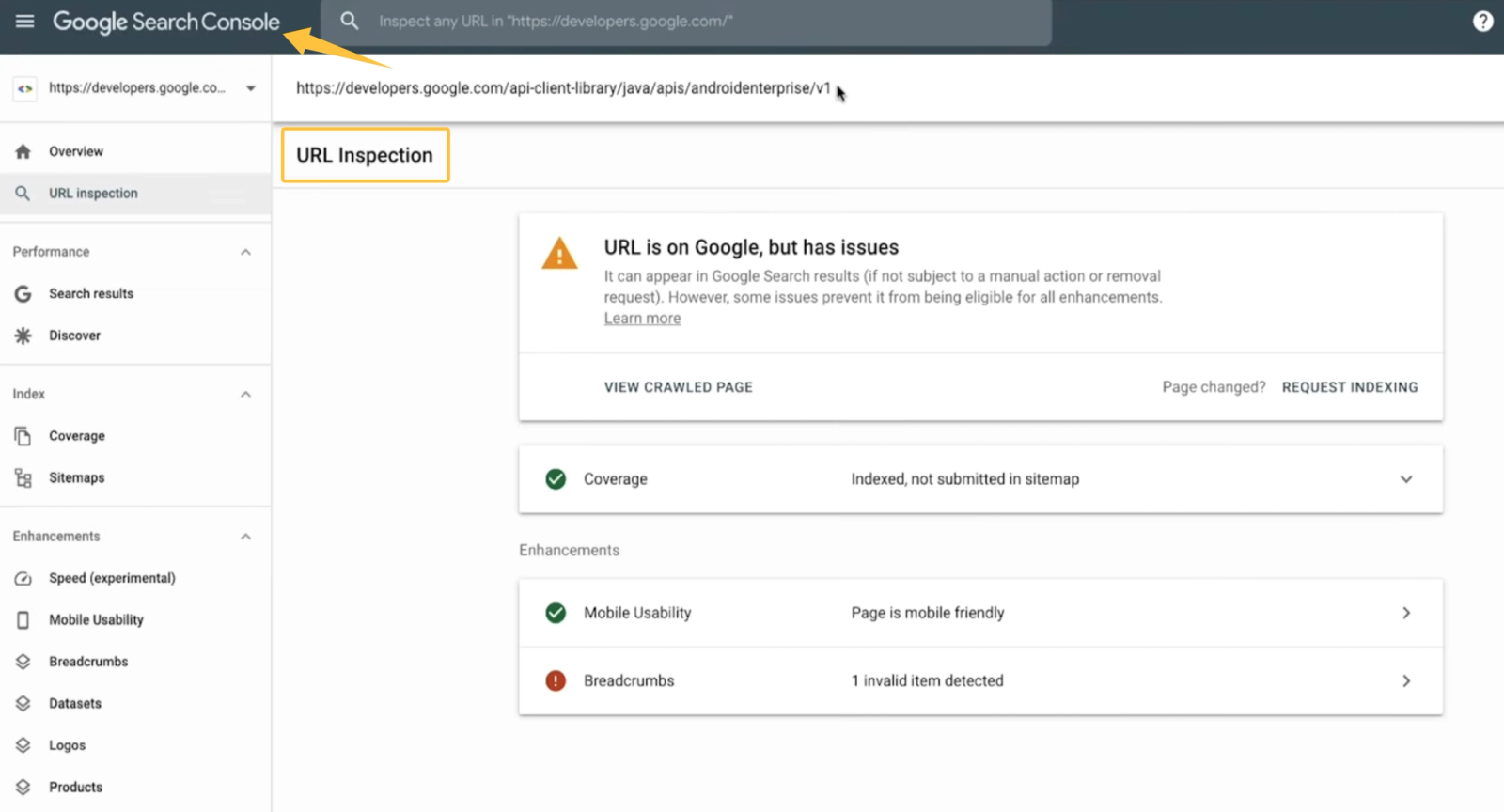
Confirm that production pages are not blocked by staging controls. Check robots directives, canonical tags, authentication, sitemap URLs, error responses, HTTPS behavior, and rendered page content. Use Search Console’s URL Inspection tool after public URLs become testable. A successful live test indicates potential indexability; it does not guarantee appearance in search results.
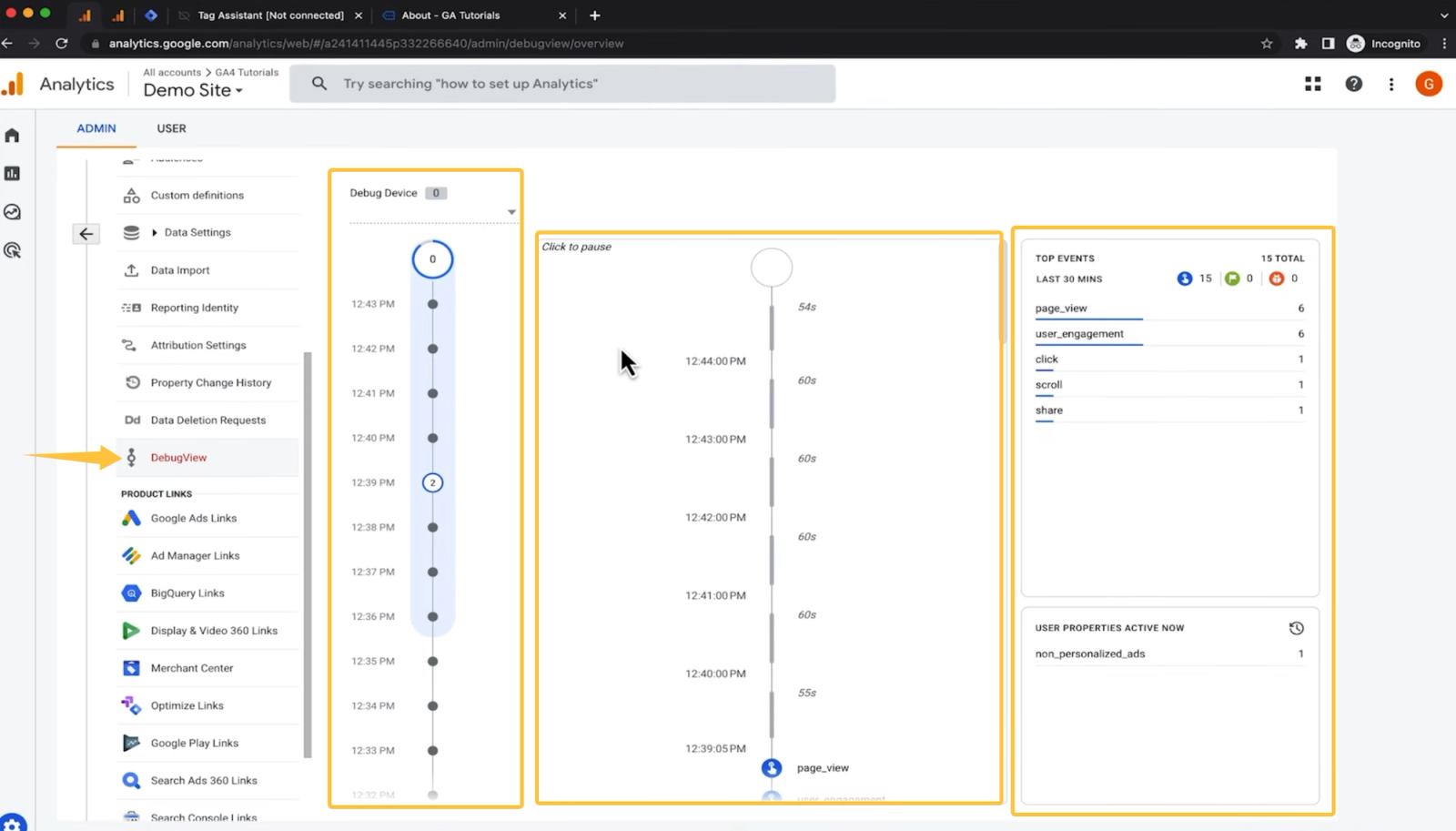
Finally, complete a release rehearsal. Submit forms, place test calls, open emails, use booking paths, and verify analytics events. Google Analytics DebugView can display events collected from a debug-enabled device in real time. The team still needs to confirm that each event uses the intended name, parameters, and business meaning.
Coordinate Agencies, Developers, and Internal Owners
The redirect map may sit with an SEO provider, while a developer controls deployment and a marketing lead approves copy. Every handoff needs an owner.
A responsibility table should be ready before the final week:
| Decision or task | Produces the work | Approves it | Provides launch evidence | Handles failure |
|---|---|---|---|---|
URL and redirect map | SEO owner | Marketing lead | Tested redirect report | Developer |
Templates and navigation | Developer or agency | Site owner | Staging QA record | Developer |
Priority-page copy | Writer or marketer | Subject owner | Approved version | Content owner |
Analytics and conversions | Analytics owner | Marketing lead | Test-event record | Analytics owner |
Deployment and rollback | Developer or host | Launch owner | Backup and release log | Technical owner |
Give every deliverable an acceptance condition. “SEO checked” is not enough. Require priority redirects, indexable templates, and test conversion events to pass their recorded checks.
The issue path should name who can pause deployment, roll back the release, and record defects. Add the escalation route for any fix owned by a host, CMS vendor, or booking supplier.
The final packet can stay simple: inventory, redirect results, priority-page review, tracking tests, open issues, rollback plan, and approver. Keep every unchecked item visible.
How SpringBrand Fits This Workflow
SpringBrand is not the developer or SEO agency responsible for these checks. It can help a small team describe the redesign need and compare relevant third-party service scope.
If ownership or pre-launch evidence is still unclear, turn the redesign into a service brief before comparing outside website or SEO support.
The business should still review the provider’s evidence, contract, access needs, and acceptance terms. A platform match does not guarantee rankings, traffic recovery, or delivery quality.
FAQ
What if analytics tracking was already unreliable before the redesign?
Preserve the available exports, document known gaps, and mark the baseline as uncertain. Establish a new test record before launch, but do not compare new results with old data as though both were measured consistently. Assign someone to explain which reports remain comparable and which should restart from the launch date.
What if a third-party booking tool cannot be tested on staging?
Ask the vendor which test environment or sandbox is available. If none exists, schedule a controlled production test with named participants, a rollback step, and a way to remove test records. Keep the dependency open in the launch log until the complete booking and confirmation path has been verified.
Can accessibility issues delay launch even if SEO checks pass?
Yes. SEO approval does not replace the accessibility review required by the organization, contract, or applicable rules. W3C recommends evaluating accessibility early and throughout development, and notes that automated tools alone cannot determine conformance. Use its web accessibility evaluation resources with qualified human review where needed.
When should a small business seek professional review for consent-banner wording?
Seek qualified review when the banner involves personal data, analytics, advertising technology, regional consent requirements, or a material change in tracking. The right wording and behavior depend on the site’s tools, users, and applicable law. General SEO or development approval should not be treated as legal approval.
What records should be kept when legal pages change during redesign?
Keep the prior and new versions, publication dates, approving person, reason for the change, and any supporting review. Also record where the page is linked and whether visitors must receive a separate notice. Retention periods and notice duties should be confirmed under applicable law, contracts, and internal policy.
Conclusion
An SEO website redesign is ready for launch when the team can connect important old pages to approved destinations, working conversion paths, tested tracking, and named owners. That evidence cannot promise stable rankings, but it can show that the business controlled the changes within its reach.
Keep the final approval with one owner until the redirect tests, priority-page checks, conversion paths, and unresolved exceptions are all visible in the launch record.