Website Copywriting Services: Scope and Hiring Guide
Compare website copywriting services by page scope, research, collaboration, revisions, and acceptance criteria before hiring.
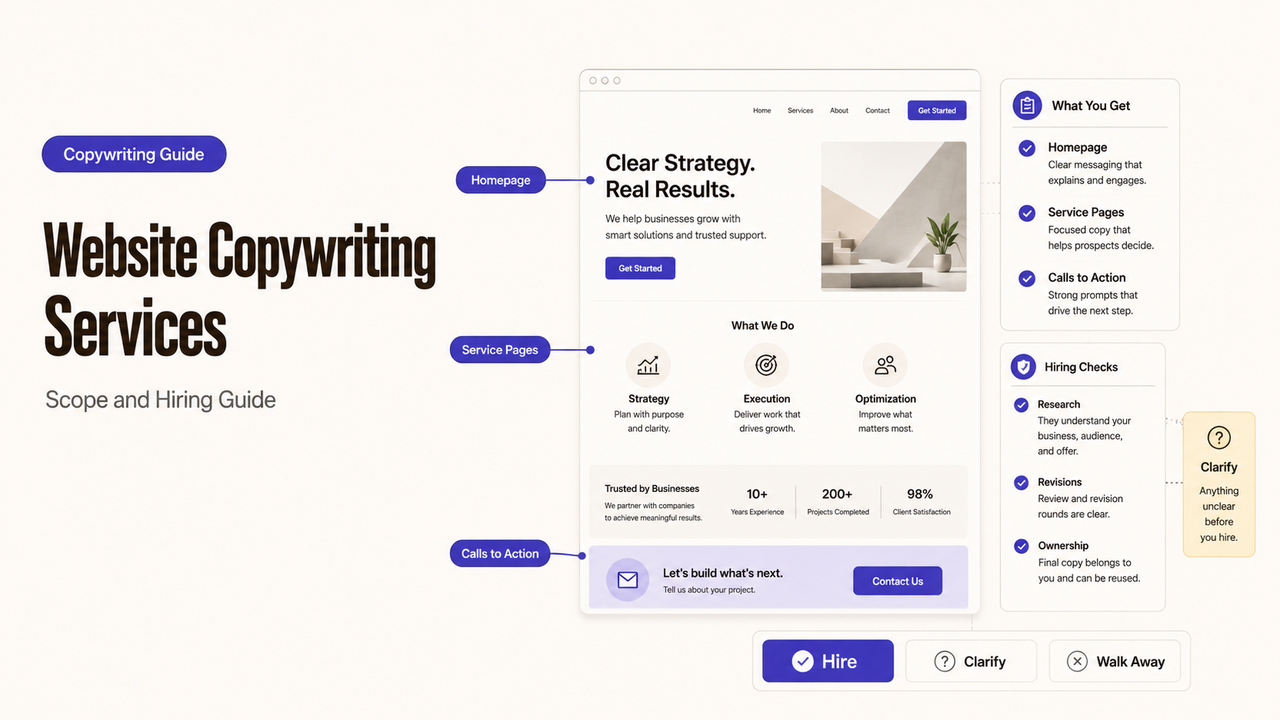
The designer says the homepage wireframe is ready. Sales says the service page lacks proof, while the copywriter says neither the proof nor the final offer appeared in the brief. All three may be right, which is why website copywriting services need a defined page scope, evidence owner, and approval path before drafting begins. I’m Alex; this guide will help you compare that commitment before a provider starts turning open business questions into finished copy.
What Website Copywriting Services Should Include
Core pages, landing pages, product or service pages, and microcopy
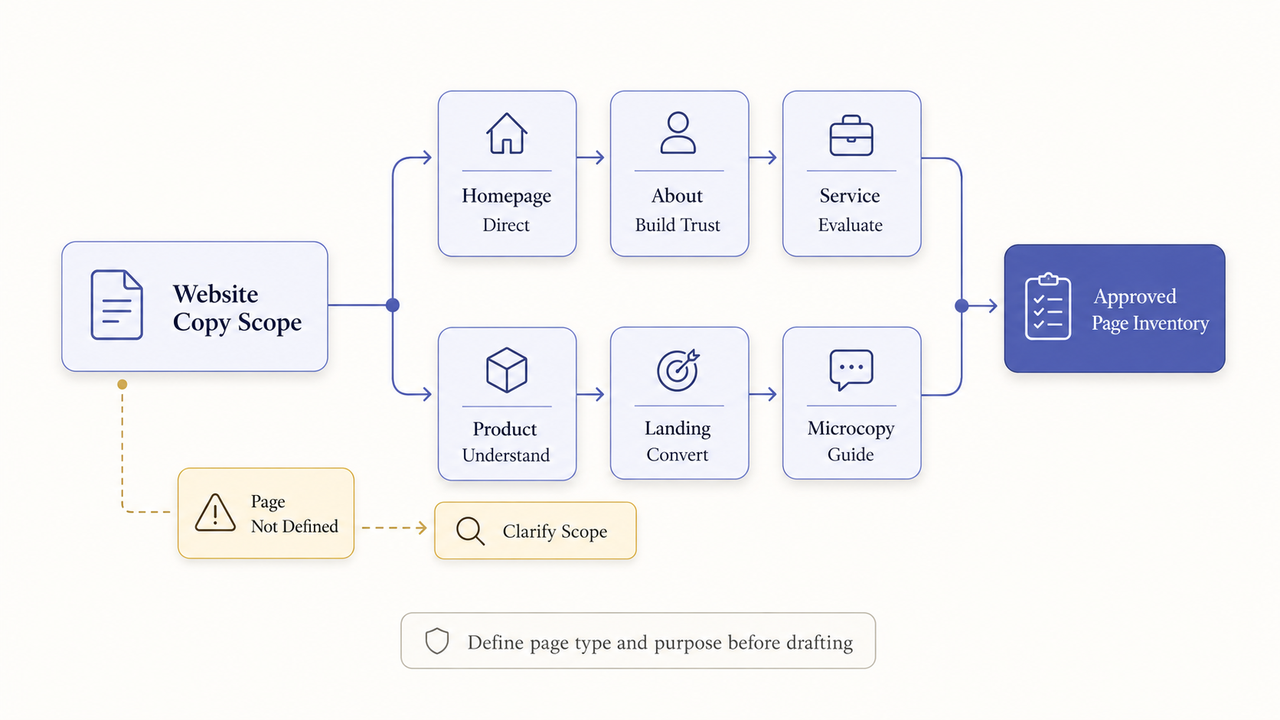
Start with a page inventory. “Rewrite the website” does not tell a provider how many pages exist, which ones need original research, or what must change on the live site.
A typical scope might cover:
| Page type | Primary job | Inputs commonly required |
|---|---|---|
Homepage | Explain the business and direct visitors | Positioning, audience, proof, priority paths |
About page | Establish relevance and credibility | Company history, team facts, approved claims |
Service page | Help a buyer evaluate one offer | Scope, process, exclusions, evidence, next step |
Product page | Explain value and buying conditions | Features, use cases, specifications, policies |
Landing page | Support one campaign action | Audience source, offer, form, tracking plan |
Microcopy | Guide small interface decisions | Form states, errors, confirmations, user actions |
Confirm whether the provider is writing from scratch, restructuring existing copy, or editing supplied material. These activities consume different research and review time.
Microcopy also needs a boundary. Button labels, form instructions, error messages, checkout explanations, navigation terms, and confirmation states may be short, but they depend on the actual interface. The provider should not invent a user flow that design or development has not approved.
Research and revision boundaries—not SEO article examples or tutorials
Website copy research may include stakeholder interviews, customer language, offer documents, analytics, search behavior, competitor positioning, and existing sales material. The contract should state which sources the provider will examine and which ones the client must supply.
This engagement is not a writing tutorial. Readers looking for adaptable page structures can review these SEO copywriting examples, but a service proposal should describe deliverables rather than teach or reproduce those patterns.
Define revisions at the same time. A revision corrects or improves copy within the approved brief. A new audience, redesigned offer, added page, changed product name, or replacement wireframe may be a scope change rather than another editing round.
If that distinction remains vague, the client may believe it purchased a finished website while the provider believes it delivered an initial copy deck.
Prepare the Inputs Before Hiring
Audience, offer, proof, voice, and conversion action
The copywriter needs more than a brand adjective list. Give the provider a usable description of the buyer: what triggered the visit, what the person already understands, what creates hesitation, and what evidence can answer that hesitation.
Next, document the offer. Include what is sold, who qualifies, how the process works, where delivery ends, and which conditions must appear on the page. Mark unresolved details as open instead of letting draft copy turn an assumption into a promise.
Proof may include approved customer statements, documented product capabilities, credentials, research, policies, or examples of completed work. The business must verify that the evidence supports the claim being written. The FTC’s advertising guidance for small businesses states that advertising should be truthful and that objective claims require an appropriate basis before publication.
No copywriter should become the final approver for a medical, financial, legal, technical, or safety claim simply because they improved its wording. Assign those claims to the relevant internal owner and, where required, a qualified professional.
Finally, name the desired action for each page. A homepage may guide visitors toward several relevant paths, while a campaign landing page may need one form or booking action. The copy cannot resolve competing conversion priorities unless the business first decides which action matters.
Existing analytics, interviews, and stakeholder access
Analytics can show where visitors enter, leave, click, or fail to complete a path. They cannot explain every reason behind that behavior. Give the provider the date range, tracking limitations, site changes, and definitions behind any reported conversion.
Customer and sales interviews can supply the missing context. Decide who will recruit participants, conduct interviews, store recordings, and approve the use of quotations. Permission to participate in research should not be treated as automatic permission to publish a person’s words or identity.
The FTC distinguishes testimonials from ordinary consumer reviews and addresses deceptive or misleading uses in its consumer reviews and testimonials guidance. The applicable rule depends on the market and intended use, so obtain the necessary authorization and review before placing a quotation on a sales page.
Stakeholder access should be scheduled, not merely promised. If the subject-matter expert is unavailable until the final week, the provider may draft around gaps that later require structural changes. Put interview dates, evidence deadlines, and approval owners into the project calendar.
Compare Copywriting Providers
Relevant samples, research method, and collaboration style
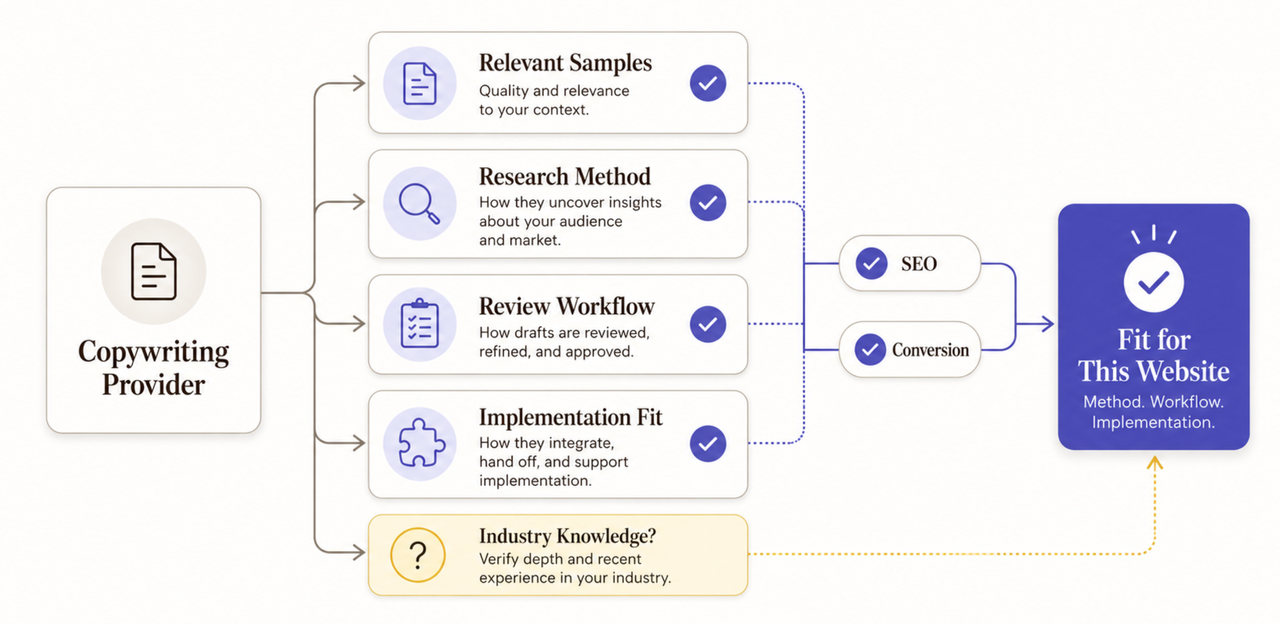
A portfolio shows finished language. It does not show whether the writer received a complete brief, developed the page structure, interviewed experts, or worked inside an existing wireframe.
Ask candidates to explain one relevant sample:
- What problem was the page meant to solve?
- Which inputs did the provider receive?
- What research did the provider conduct?
- Which decisions remained with the client?
- How did review and implementation work?
- Which parts of the outcome can actually be attributed to the copy?
The answer should reveal a process, not confidential client information. Be cautious when a provider shares private dashboards, unapproved test data, internal documents, or identifiable customer material as proof of capability.
Collaboration style matters when several people will review the work. Ask how the provider collects comments, reconciles conflicting feedback, records open questions, and escalates factual disagreements. A strong sample does not compensate for a workflow that leaves the founder, designer, and legal reviewer editing different versions.
SEO, conversion, and industry expertise as separate checks
SEO copywriting services may include search-intent research, headings, titles, descriptions, internal-link recommendations, and alignment between a query and the page’s purpose. Ask what is included rather than assuming every website writer handles those tasks.
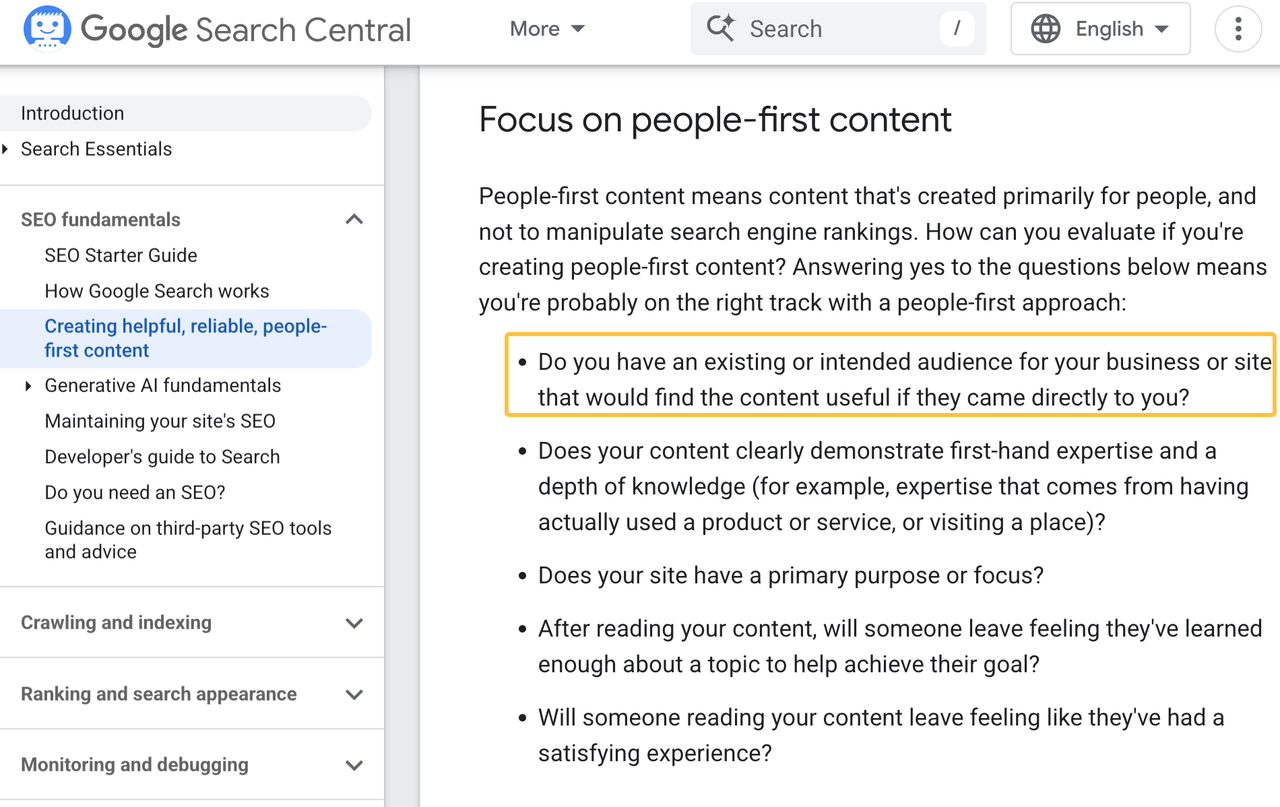
Google recommends content created for an intended audience and asks whether a page provides substantial, trustworthy value in its people-first content guidance. Search optimization should help the right visitor understand the page; it cannot guarantee rankings or traffic.
Conversion expertise is a separate check. A provider should be able to connect message order, proof, objections, and calls to action to a testable page decision without promising a conversion lift.
Industry familiarity is useful when the writer understands the buyer’s terminology and review burden. It does not authorize the writer to approve regulated claims. Ask who verifies technical accuracy, which sources are acceptable, and what happens when the internal expert rejects a draft statement.
Define Workflow and Revision Control
Page priorities, wireframes, approvals, and change requests
Do not begin every page at once. Approve one or two pages that establish the offer, message hierarchy, terminology, and review process. Their decisions can then inform the remaining copy.
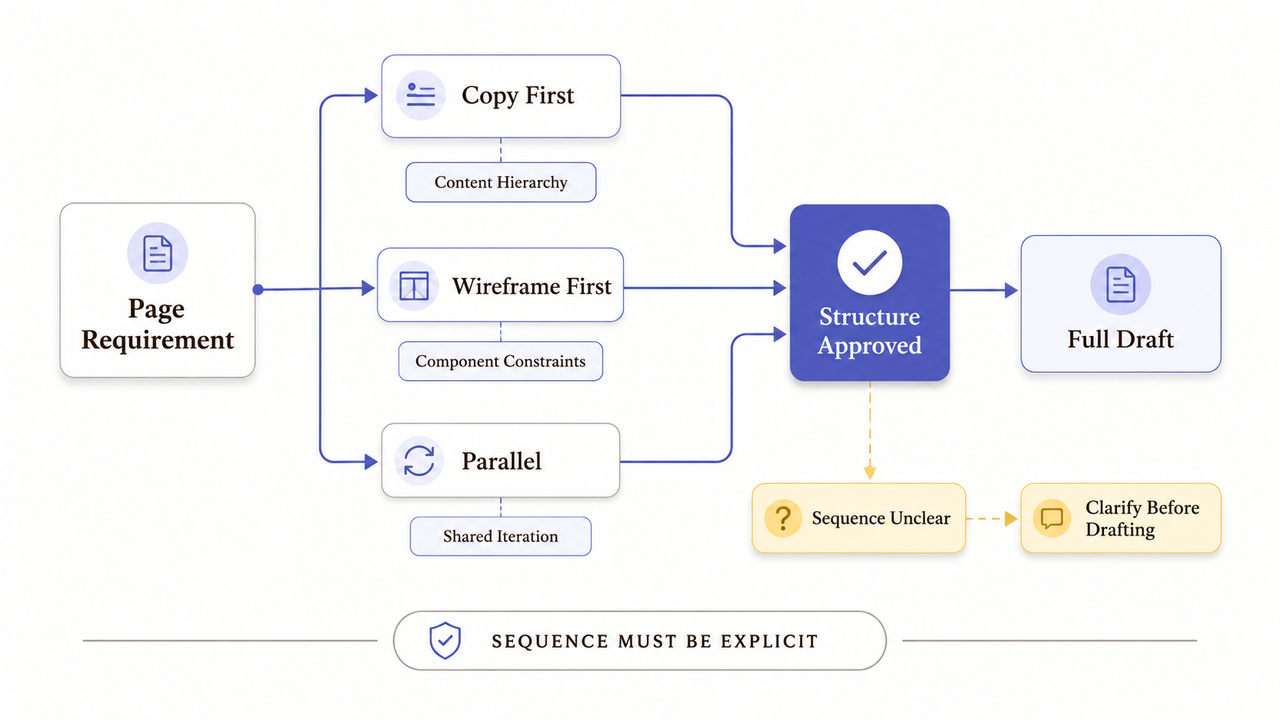
Clarify whether copy precedes the wireframe, follows it, or develops alongside it. When the design is fixed first, the writer needs realistic space and component constraints. When copy leads, the designer needs the content hierarchy before committing to the layout.
Each page should move through named states, such as:
- inputs ready;
- structure approved;
- first draft submitted;
- factual review complete;
- final copy approved;
- handed to design or development.
A change request should record the requested change, reason, owner, affected pages, deadline effect, and whether it remains within scope. This prevents a new positioning decision from being hidden inside a comment such as “Can we make this stronger?”
Feedback ownership and version management
Assign one person to consolidate feedback. That owner does not need to make every decision, but they should identify which comments are factual corrections, brand preferences, legal questions, or new scope.
Use one agreed review location. Email attachments, design comments, shared documents, and messaging threads can produce several “final” versions with different approved claims.
The source file should show the page name, version, review status, open questions, and final approver. Once copy moves into the content management system, record any implementation changes so the accepted copy and the published page can be compared.
If stakeholders disagree, return the issue to the relevant decision owner. The writer should not resolve a product-policy conflict by selecting whichever comment arrived last.
Accept and Implement the Copy
Accuracy, clarity, consistency, and page-level intent
Acceptance begins with the brief, not personal preference. Review each page against its audience, offer, evidence, intended action, exclusions, and approved terminology.
Read the page without the design. The offer and next step should still be understandable. Then review it inside the intended layout on desktop and mobile, where headings may wrap, proof may move, and form instructions may appear in a different order.
Check:
- names, prices, qualifications, product details, and contact information;
- explicit and implied claims;
- links, buttons, forms, errors, and confirmation states;
- voice and terminology across pages;
- search title and description fields when included;
- required disclosures and supporting records.
Do not accept copy because every requested file arrived. The delivery is complete when the pages satisfy the agreed checks or when unresolved exceptions have been documented and assigned.
Handoff to design, development, and future testing
The handoff should identify the approved copy source, page mapping, component notes, links, metadata, form states, disclosure requirements, and unresolved dependencies. Design and development should know which wording is fixed and which elements may be adjusted to fit the interface.
Cookie-banner copy deserves a separate review because requirements vary by technology, purpose, and region. For example, the ICO’s current cookies and similar technologies guidance addresses clear information, consent, and exceptions under the UK regime. A qualified privacy or legal reviewer should determine what applies in each operating region.
After launch, testing becomes a new workstream. Preserve the original version, hypothesis, date, audience, change, and result. A performance test can inform the next revision, but it does not retroactively guarantee that the provider’s original copy caused the observed outcome.
How SpringBrand Fits This Workflow
SpringBrand is an AI-assisted service marketplace that can help buyers clarify a website-copy request and match it with independent providers from the current service catalog. It is not a copywriting agency and does not guarantee the provider’s work or conversion results.
Convert the approved page scope into a comparable writing-service request before choosing an independent provider.
FAQ
The following answers provide general workflow information, not legal advice. Applicable contracts, laws, regulations, and publishing policies should be reviewed by qualified professionals.
Who can approve medical or financial claims on a website?
The business should assign approval to someone qualified and authorized for the claim and jurisdiction involved. That may include an internal compliance, clinical, financial, or legal reviewer. The copywriter can flag missing evidence and preserve approved wording but should not replace the required professional judgment.
What consent is needed before quoting a customer?
Confirm permission for the intended quote, attribution, edits, media, duration, and commercial context. A truthful statement can still create risk if its use exceeds the customer’s authorization or implies an unsupported result. Keep the approval attached to the final wording and check applicable testimonial rules.
Can competitor trademarks be referenced in comparison copy?
Sometimes, but context matters. The USPTO explains that trademark rights relate to how a mark identifies goods or services; they do not amount to unrestricted ownership of a word in every context. Do not imply sponsorship, distort the competitor’s mark, or let the copywriter make the final legal determination.
How should cookie-banner copy be reviewed across regions?
First inventory the technologies, purposes, data recipients, and user choices. Then have an appropriate privacy or legal owner review the language against each applicable region’s current rules. A banner translated into another language does not automatically become compliant with another jurisdiction.
Can a provider publish unpublished conversion-test results in a case study?
Only with the required authorization. The agreement should address confidentiality, data ownership, anonymization, client identification, publication timing, and permitted claims. Removing a company name may not be sufficient if the campaign, screenshots, dates, or figures still identify the business.
Conclusion
Useful website copywriting services leave the business with more than polished sentences. Each page should have an approved purpose, verified evidence, a controlled review history, and a clear route into design and development.
The project is ready to close when the implementation team can identify the approved version and every unresolved claim, disclosure, or page decision still has a named owner.