Content Creation Services for Lean Marketing Teams
Learn what content creation services include, which formats fit your goals, and how a lean team can brief, compare, and accept outsourced work.
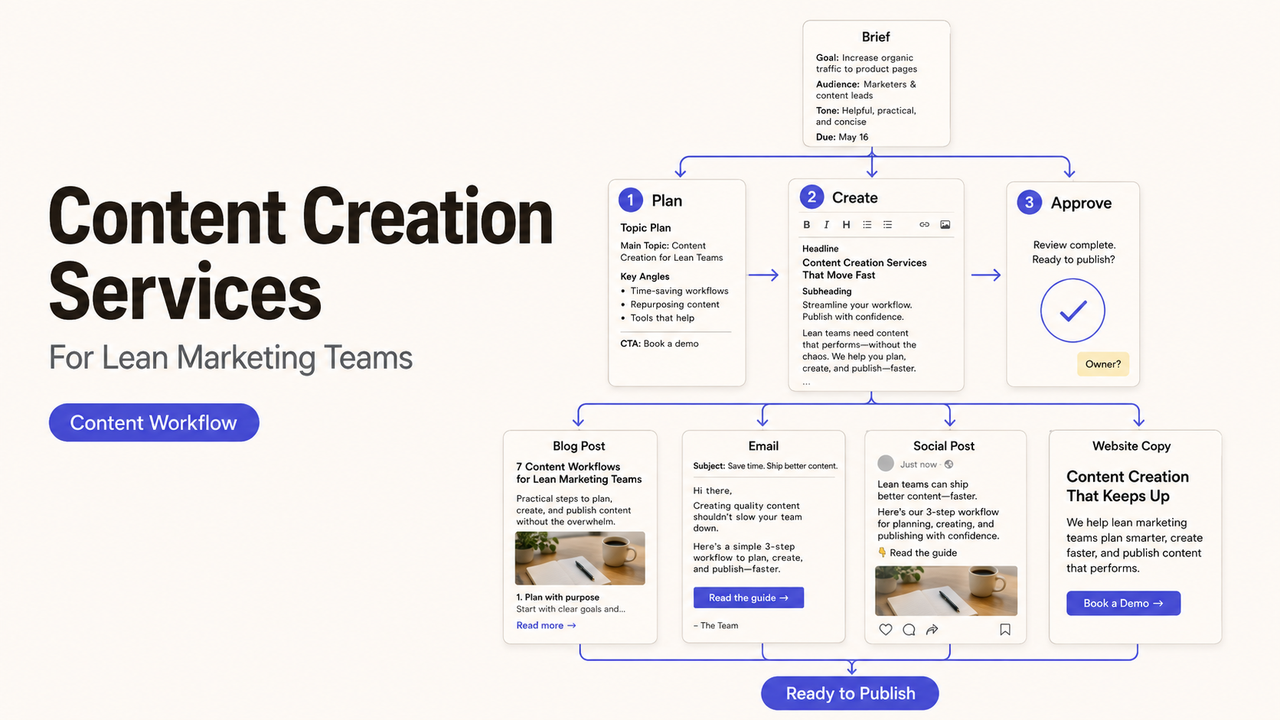
On Monday, a founder opens a shared folder labeled “final” and finds one blog draft, four square graphics, and a video file with no captions. The provider considers the package delivered; the marketing lead is still looking for source files and approval notes. This guide explains how to define, compare, and accept content creation services before that handoff breaks. I’m Alex. I would treat “content” as a set of named deliverables, not a promise to keep the calendar busy.
What Content Creation Services Include
Content creation services turn an approved message or campaign direction into assets a business can publish, distribute, or give to its sales team. The work may cover one format or a coordinated package, but the scope should identify every expected file and version.
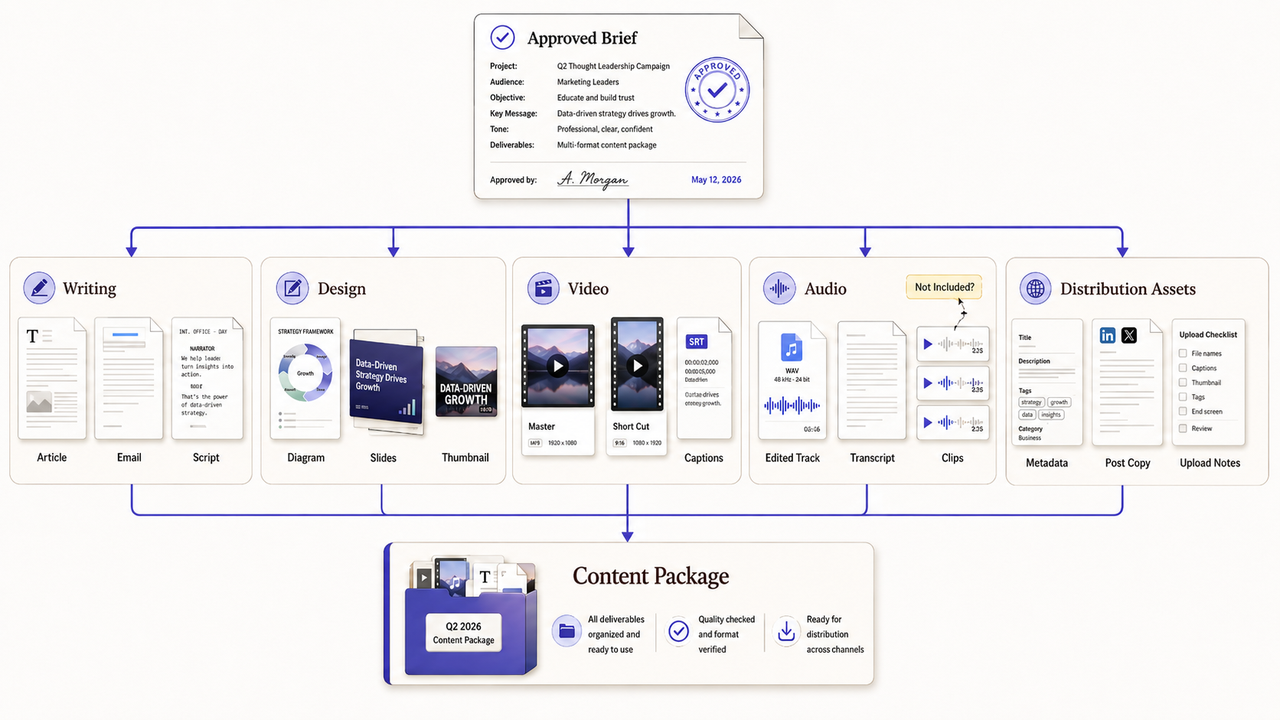
Writing, design, video, audio, and distribution assets
Writing deliverables may include articles, emails, scripts, social posts, customer stories, sales sheets, or product education. If the main requirement is conversion-focused page copy, define it through a separate website copywriting services brief. Search-led article production should follow the evidence and optimization requirements of SEO content writing services.
Design work may cover campaign graphics, presentation slides, diagrams, social templates, thumbnails, or downloadable resources. Specify the dimensions, editable format, brand elements, and channels rather than requesting “ten graphics.”
Video production can range from interview editing to animation, demonstrations, event footage, and short channel versions. Audio work may include podcast editing, narration, sound cleanup, or clips. A short video and its caption file are separate deliverables if the buyer expects both.
Distribution assets help the internal team publish the work. Examples include post copy, thumbnails, metadata, transcripts, email introductions, and upload notes. Publishing or community management should be listed separately when the provider is expected to handle it.
Where creation ends and strategy begins
Creation begins after enough strategic direction exists to make production decisions. The provider needs to know the audience, offer, message, channel, intended action, and rules that cannot be changed.
A creator can suggest a stronger hook or a more suitable format. That does not mean the engagement includes audience research, positioning, editorial architecture, or channel planning. When those decisions remain open, resolve them through a content strategy services scope before ordering a large batch of assets.
Put the boundary into the brief. Record which decisions the provider may recommend, which it may make, and which require client approval. Otherwise, an execution package can quietly become an unpriced strategy project.
Match Content Formats to the Business Goal
A format is useful only when it carries the right message to a reachable audience. Starting with “we need more video” makes the medium the decision before the business goal has been defined.
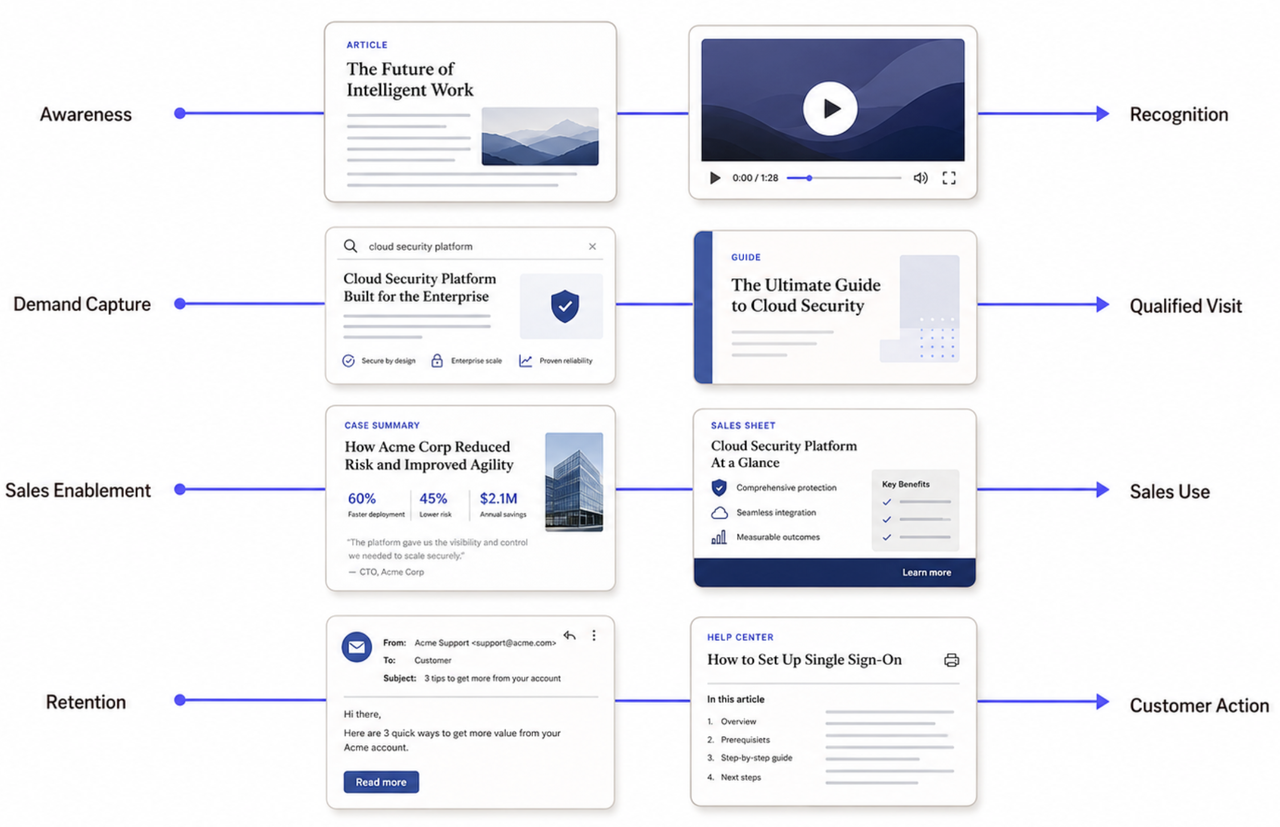
Awareness, demand capture, sales enablement, and retention
Use a simple goal-to-asset map:
| Business job | Possible assets | Evidence to review |
|---|---|---|
Introduce the brand | Short video, founder article, visual series | Correct audience, consistent message, usable channel versions |
Capture existing demand | Educational article, comparison page, FAQ asset | Search or buyer question addressed, factual support, relevant next step |
Help sales conversations | Case summary, deck, demo script, objection sheet | Sales-team usability, approved claims, current product information |
Support retention | Onboarding email, customer guide, training clip | Correct customer stage, clear instruction, working destination |
The table is not a performance forecast. It tells the team what each asset is expected to do and what can be checked before publication.
One asset may support several channels, but it should still have a primary job. A technical interview edited for sales enablement may later supply social clips. The interview should not lose the detail sales needs merely because the social team also wants short excerpts.
Choosing fewer formats a small team can sustain
A five-person business rarely needs every format at once. It needs a manageable production rhythm and an owner for each handoff.
Start with the formats the team can brief, review, publish, and update. One monthly expert article, two sales assets, and a small set of social adaptations may be more useful than a large package that waits for approval.
Maintenance matters too. Product comparisons, statistics, screenshots, pricing, and regulated claims can age quickly. If nobody can review them later, reduce the volume or choose assets with a longer useful life.
Design an Outsourced Content Workflow
The workflow should make it clear when the provider is waiting, when the client must act, and which evidence moves the asset forward.
Inputs, subject-matter access, and brand guidance
Begin with the business goal, audience, channel, offer, approved facts, source material, brand examples, prohibited claims, and required formats. Mark drafts, confidential documents, and outdated assets so they are not mistaken for approved sources.
Name a subject-matter contact and define how the provider can use that person’s time. A thirty-minute recorded interview, written question sheet, or annotated draft can prevent several rounds of factual correction.
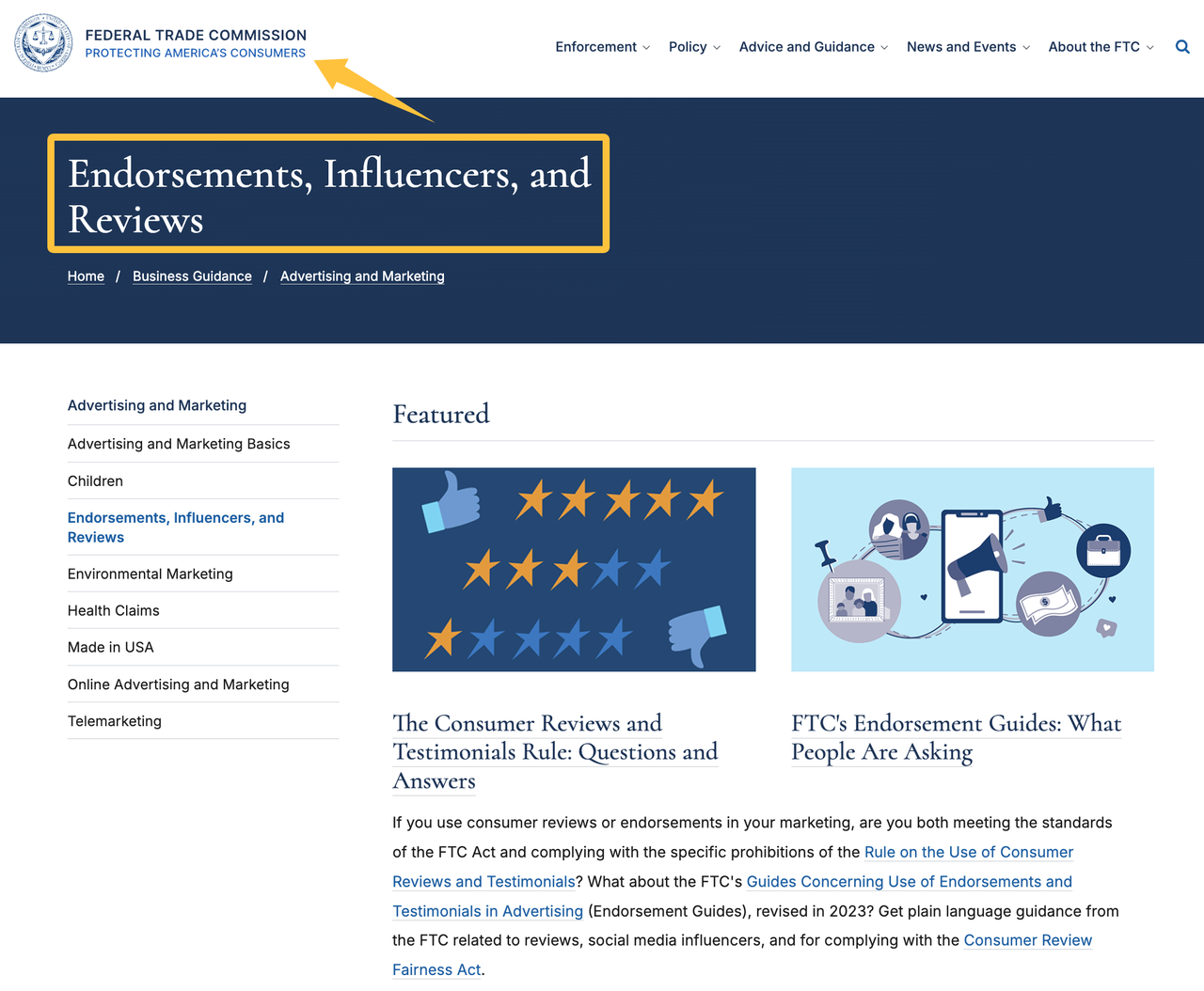
When an employee or customer appears in branded content, obtain written permission that covers the intended media and use. If the person’s statements function as an endorsement, the FTC guidance for endorsements and testimonials also matters. Permission to show someone’s likeness does not verify the claims they make.
AI use requires another boundary. Do not assume that an unpublished brief may be entered into any model or retained for future training. The provider should identify the tool, account type, data handling, retention setting, and any secondary use. The NIST Generative AI Profile treats data privacy, intellectual property, third-party systems, and defined ownership as risk-management concerns.
Calendar, review stages, and approval ownership
Use statuses that describe the work rather than vague percentages:
- Inputs incomplete
- Ready for production
- Draft under internal review
- Changes returned
- Approved for channel preparation
- Accepted and archived
A due date is useful only when its dependencies are visible. If the product specialist has not supplied the source material, the provider should not be recorded as late.
Choose one internal approval owner. Other reviewers can comment, but that person resolves conflicts and sends a consolidated response. The file exists. The approval does not.
Decide What to Keep In-House
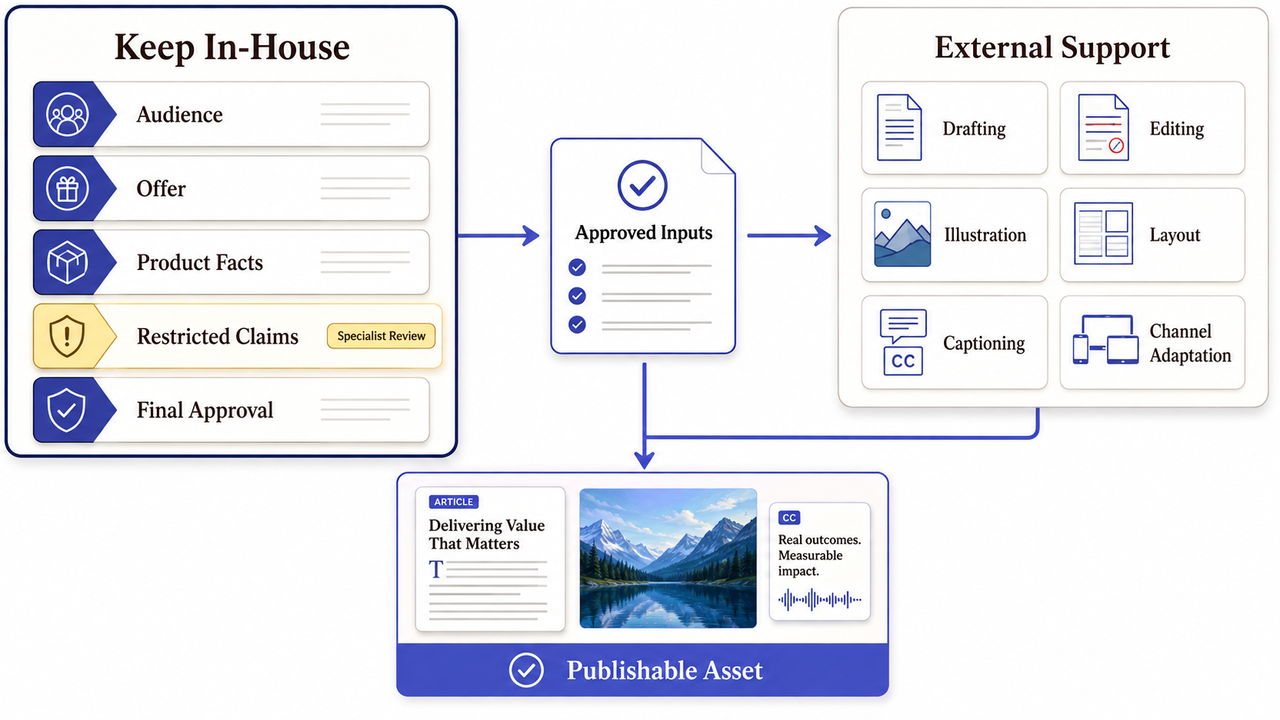
External support can increase production capacity. It should not remove the company from decisions that depend on business truth, customer knowledge, or organizational risk.
Strategy and expertise that require internal ownership
Keep ownership of the audience, offer, positioning, product facts, restricted claims, and final publishing decision. Providers can challenge or organize those inputs, but the company must decide which statements it is prepared to make publicly.
Technical, financial, health, legal, safety, or other regulated claims require an appropriate reviewer. Assign those statements to a qualified internal owner or professional rather than expecting a content creator to determine whether they are acceptable. The FTC advertising guidance for small businesses reinforces the need to substantiate advertising claims and endorsements.
The internal team should also decide how much AI assistance is acceptable and whether disclosure is required by the client, channel, industry, or applicable policy.
Production tasks suited to external support
External providers are well suited to work that can be described through inputs, formats, revision stages, and acceptance criteria. This may include drafting, editing, illustration, layout, animation, transcription, captioning, audio cleanup, or creating channel adaptations.
The provider should still know where judgment is required. A designer may choose a layout but should not rewrite an approved compliance statement without review. A video editor may shorten an interview but should not change its meaning for pacing.
Outsource the production burden while keeping named internal owners for facts, rights, and approval.
Compare Providers and Accept Deliverables
A portfolio shows what a provider can make. It does not show how that provider handles incomplete inputs, conflicting comments, sensitive files, or a missed deadline.
Portfolio fit, workflow transparency, and revision terms
Look for examples that resemble the required format, audience, and review environment. A provider with attractive consumer visuals may still be a poor fit for technical B2B content requiring several subject-matter approvals.
Ask the provider to describe its workflow from input receipt to final handoff. A provider that will not explain its review process is asking the buyer to purchase an output without a control path.
Revision terms should distinguish corrections, agreed changes, and new direction. Record the number of rounds, who submits feedback, what counts as added scope, and how unused work is treated.
Do not assume that payment automatically transfers every underlying right. The U.S. Copyright Office explains that commissioned work qualifies as work made for hire only under particular conditions. Ownership, licences, portfolio use, source files, and unused concepts should be addressed expressly in the agreement and reviewed professionally when uncertain.
Quality checklist and handoff expectations
Before accepting the delivery, check:
- every contracted asset and channel version is present;
- names, product facts, links, and claims match the approved source;
- captions, transcripts, alt text, or accessibility elements are included where required;
- stock media, fonts, music, and templates have licence records;
- source or editable files match the agreement;
- filenames and folders are understandable to the internal team;
- approval history and unresolved issues remain attached to the work.
Music deserves a specific record because the composition and the recording can involve separate rights. The U.S. Copyright Office explains the distinction between musical compositions and sound recordings. Keep the applicable licence, intended channels, territory, duration, and editing permissions with the delivered asset.
The handoff should name the person responsible for storage, future updates, and publication. A folder called “final” is not an acceptance record unless the business can trace what was checked and approved.
How SpringBrand Fits This Workflow
SpringBrand is an AI-assisted marketplace that matches business requests with independent service providers. The marketplace does not become the content team or approve the work for the buyer.
Turn the request into a content service brief before comparing third-party production options and their deliverables.
FAQ
What permission is needed to use an employee or customer likeness?
Obtain written permission suited to the planned use, including the person’s image, voice, statements, channels, duration, and editing where relevant. An employee relationship does not automatically answer every usage question. Testimonial claims, compensation, privacy, and local rules may require separate review.
Can a provider train an AI system on unpublished brand materials?
Only if the applicable agreement, tool terms, permissions, and policies allow that use. Do not treat ordinary file access as permission to train, retain, or reuse the material. State the permitted AI uses, prohibited secondary uses, deletion requirements, and disclosure duties in writing.
Who verifies licenses for stock media, fonts, and music?
Assign the task in the contract. The provider may source the asset and supply the licence record, while the buyer confirms that it covers the intended channel, territory, duration, editing, and commercial use. Preserve the evidence with the final files.
Can unused creative concepts be reused for another client?
That depends on the agreement and applicable rights. The contract should say who owns or may reuse drafts, rejected concepts, templates, and underlying methods. Do not infer exclusivity or transfer merely because the buyer paid for the final deliverable.
Who reviews claims when content is for a regulated industry?
The business should appoint a qualified internal reviewer or appropriate professional. The content provider can follow approved language and flag uncertainty, but it should not become the final authority on legal, technical, medical, financial, or regulatory claims unless that role is explicitly qualified and scoped.
Conclusion
Content creation services are ready to close when the agreed assets, approvals, licence records, editable files, and unresolved issues are attached to one handoff.
Close the engagement only when that record matches the scope the owner approved.