Gemini 4 Argon for a Marketing Operations Brief
Written by
Alex
Springbrand Researcher

Reviewed by
Springbrand Audit Team
Editorial review team
Springbrand Audit Team supports editorial quality through source checking, clarity, and consistency across the blog.
Updated
Published
Gemini 4 Argon marketing: plan one campaign brief workflow from approved inputs to a reviewed recommendation, with clear source and action boundaries.
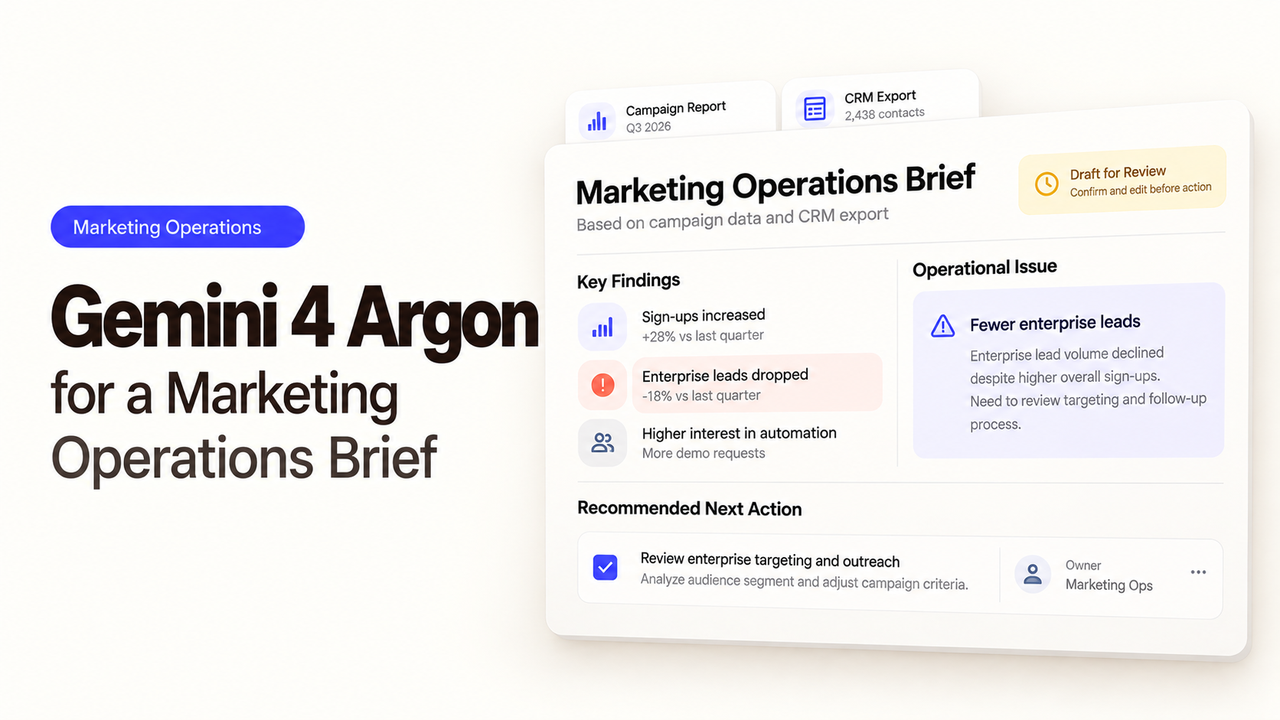
Paid search reports more form submissions, sales questions lead quality, and the landing-page owner has revised the offer. Treating those inputs as equally reliable could prompt more spend before anyone knows whether the leads fit.
The first Gemini 4 Argon marketing workflow I would consider is one brief from approved material, reviewed before anyone acts. Google's model page lists text and PDF inputs, File Search, and structured outputs. It does not supply a campaign source policy or budget authority.
What Should the Campaign Brief Answer?
It should answer: what should the team investigate or change next week, and on what evidence? Ask for results, offer changes, contradictions, and one proposed next step for this campaign. A general market report would bury the decision.
Each factual claim needs a source and reporting period. A recommendation needs supporting facts and remaining uncertainty. If sales says “these leads look weak” without qualification counts, flag the concern; do not announce that lead quality fell.
A campaign brief agent can assemble a draft. The team still decides whether the data warrants action; a large context window cannot resolve conflicting metrics by itself.
How Should Approved Campaign Inputs Be Brought Together?
Supply a dated packet: approved paid-search figures, current landing-page copy, last week's brief, and the attributed sales note. Mark the note as an observation pending corroboration. Remove unnecessary personal lead details.
For each item, include owner, date range, version, and the question it can answer. A landing page shows the current offer, not what caused more submissions. A performance export's attribution rules must travel with its counts. The prior brief is a comparison point.
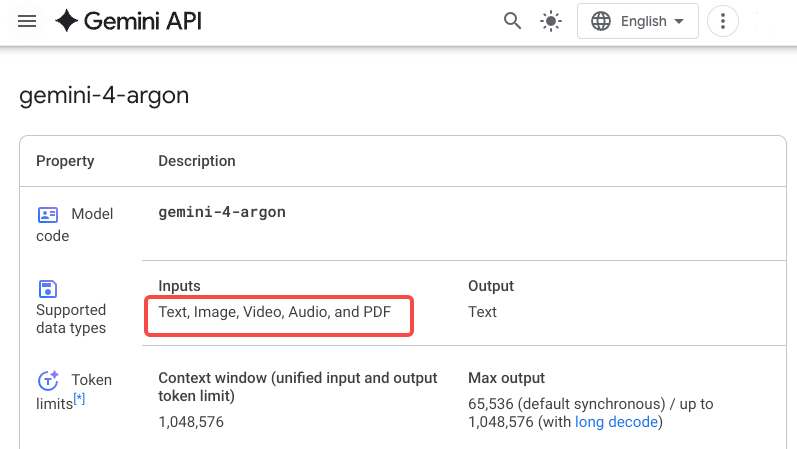
Google lists text, image, video, audio, and PDF inputs. Pass approved spreadsheet rows as text rather than assume native Excel support. File Search citations can identify passages which the lead should open before repeating a claim.
Before uploading internal material, check the data route. Google's Gemini API terms say unpaid content may improve Google products and be reviewed by people; paid-service prompts and responses are not used to improve products. Verify billing status and company policy before submitting nonpublic inputs.
How Can Findings Become a Reviewable Brief?
Ask for observed facts, interpretation, and decision requested. “Form submissions rose” needs a dated export. “The new offer may have helped” is an interpretation. “Compare qualified-lead rate before increasing spend” is a decision proposal.
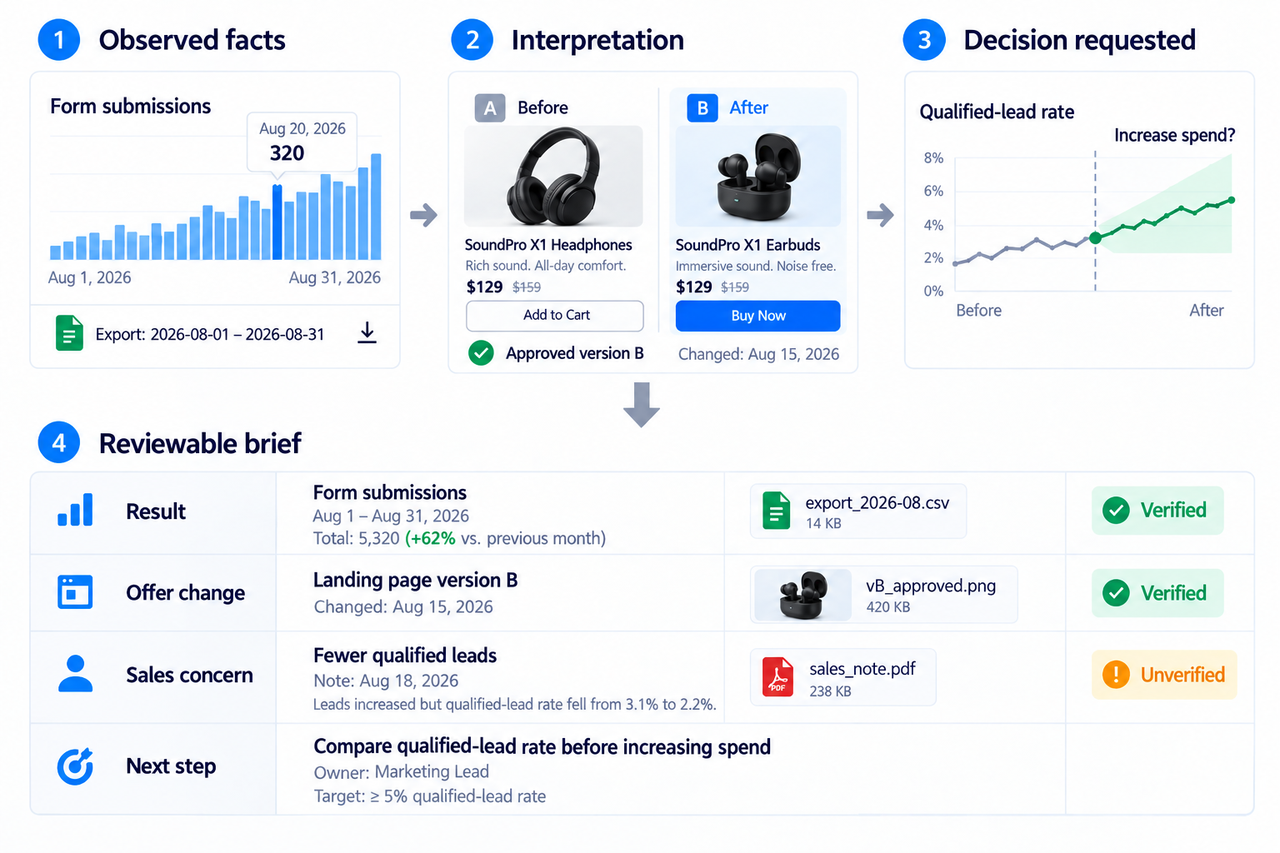
A useful brief layout is compact:
Brief line | What must travel with it |
Result | Metric definition, date range, and export reference |
Offer change | Approved page version and change date |
Sales concern | Named note, date, and missing corroboration |
Next step | Decision owner and the evidence still needed |
A builder can use structured output to keep this marketing data synthesis consistent. Format cannot verify a claim. Return “unverified” when no approved source supports a field.
Which Decisions and External Actions Stay With the Team?
The marketing lead reviews sources, metric definitions, and interpretation. The channel owner checks capacity and budget. Then the team circulates an accepted version, with unresolved questions attached. That is the human review handoff.
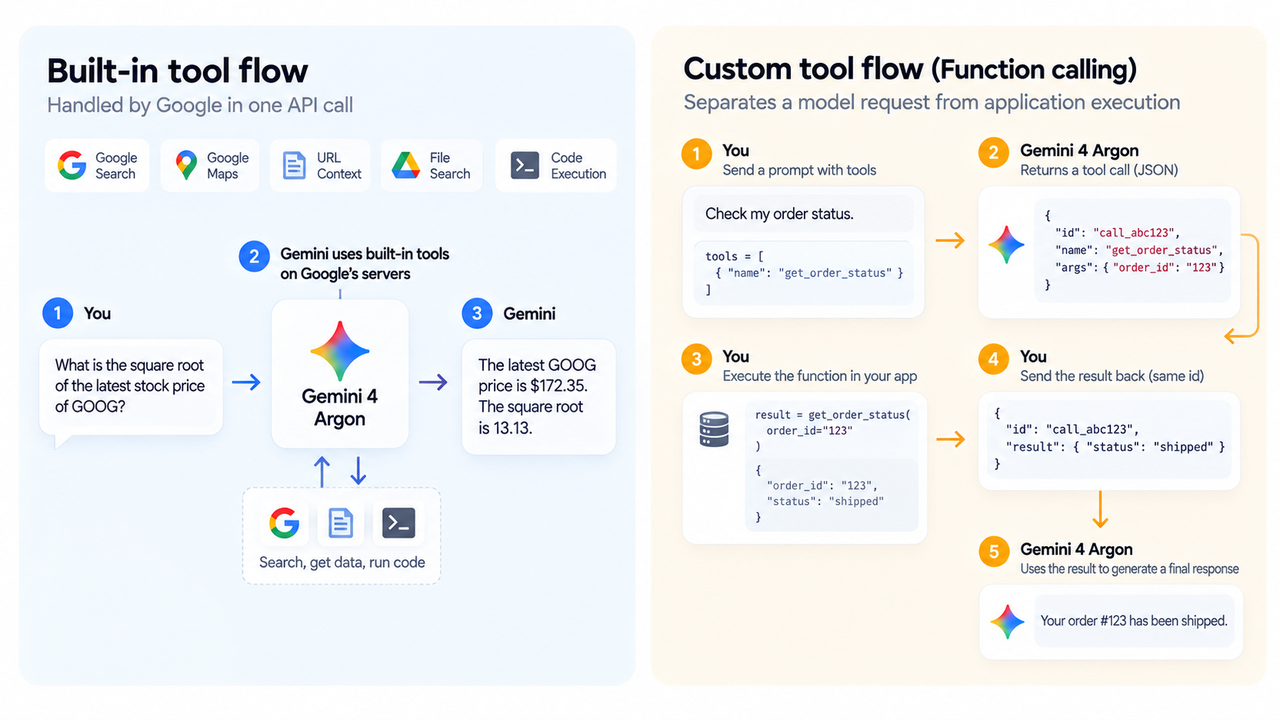
Argon lists function calling, but Google's tools documentation separates a model request from application execution. The team must build and authorize ad-account edits, messages, or CRM writes. Keep those tools out of this brief; add them only with an approved action and responsible person.
Compare every draft metric with its source period. If the export and sales note cover different weeks, the right output may be a question, not a spend recommendation.
Conclusion
Use Argon to prepare the meeting's draft when the team can name the approved inputs and inspect each consequential claim. Let the marketing lead sign off on the recommendation; leave budget changes and external messages outside this first workflow.
FAQ
Which Gemini 4 Argon access route fits a marketing team?
Google currently documents Gemini API and Google AI Studio access for this model. AI Studio is useful for exploring a prompt; an API project gives a builder control over the approved input packet and brief format. Check the account's billing and data terms before uploading internal material. The model page does not establish that a consumer Gemini app chat uses Argon.
Can the model cite the source behind a campaign claim?
It can return File Search citation annotations when the application uses that tool. A URL or filename repeated in ordinary generated text is weaker evidence. Keep source IDs with the supplied packet and open the cited passage before approving the brief.
Which file types can a team submit to Gemini 4 Argon?
The model page lists text, images, video, audio, and PDF as inputs, with text output. It does not list .xlsx as a native model input. For campaign tables, extract the approved rows into text or an application-controlled data structure, then retain the original export for review.
Can marketing data be excluded from model training?
As of October 2026, under Google's API terms, paid-service prompts and responses are not used to improve its products. Unpaid-service content has different terms. “Not used to improve” does not mean “never retained.” Before submitting confidential campaign data, verify with the team’s administrator the exact project, billing status, region, and retention requirements.
Does Gemini 4 Argon support structured brief output?
Yes. Google lists structured outputs for Argon. A builder can require fields such as claim, source, period, uncertainty, and proposed decision. The schema controls the shape of the answer; a reviewer still decides whether each field is true and useful.
Explore SpringBrand
Turn ideas into working workflows
Connect agents, APIs and tools in one workspace. Start with a task you want to get done.
Get started free
One account. 10,000+ APIs & capabilities
Give your agent APIs and plugins without separate keys or integrations for every provider.
Explore APIs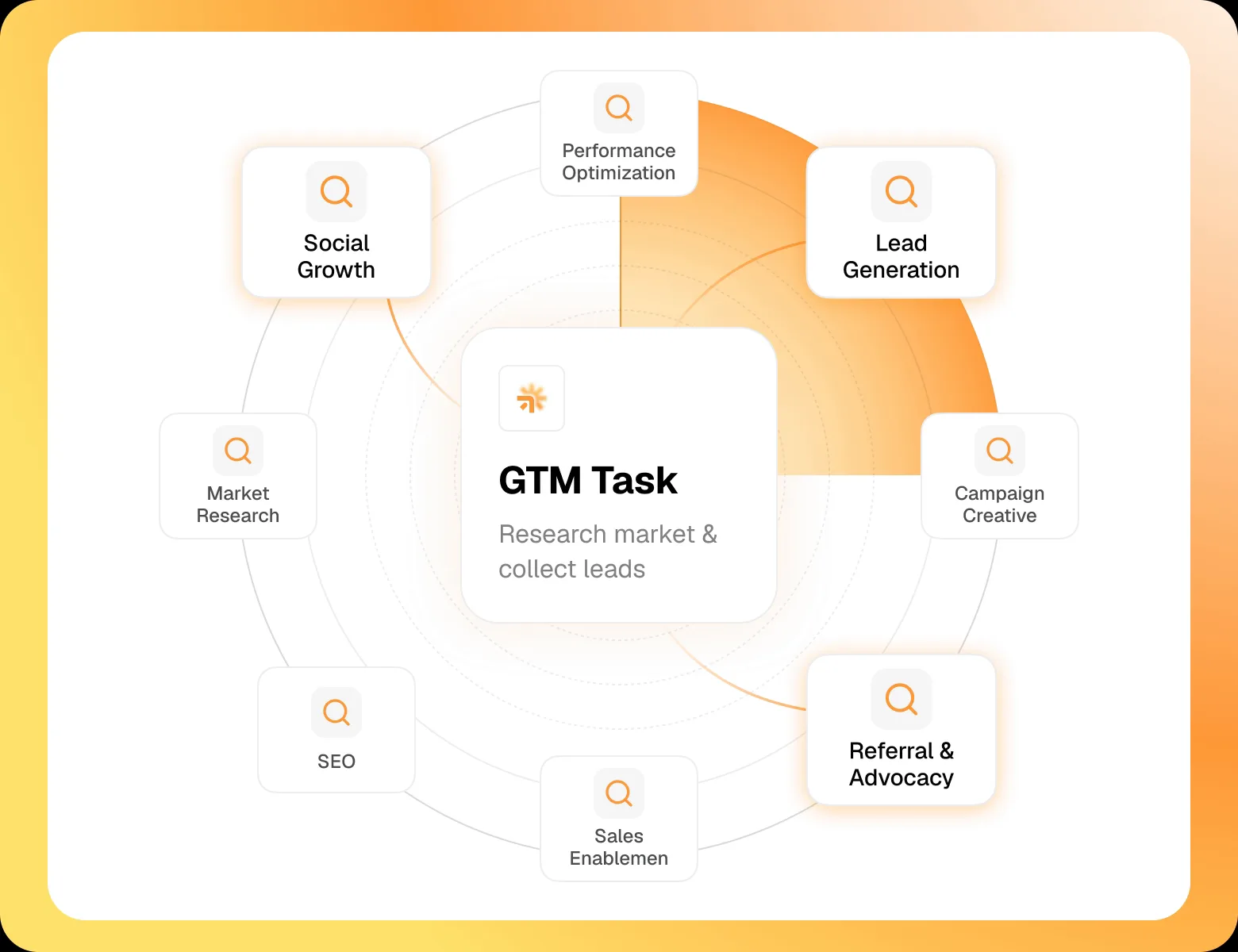
No tool expertise needed
Describe your GTM task. SpringBrand chooses the right APIs and plugins for your agent automatically.
Find tools for your task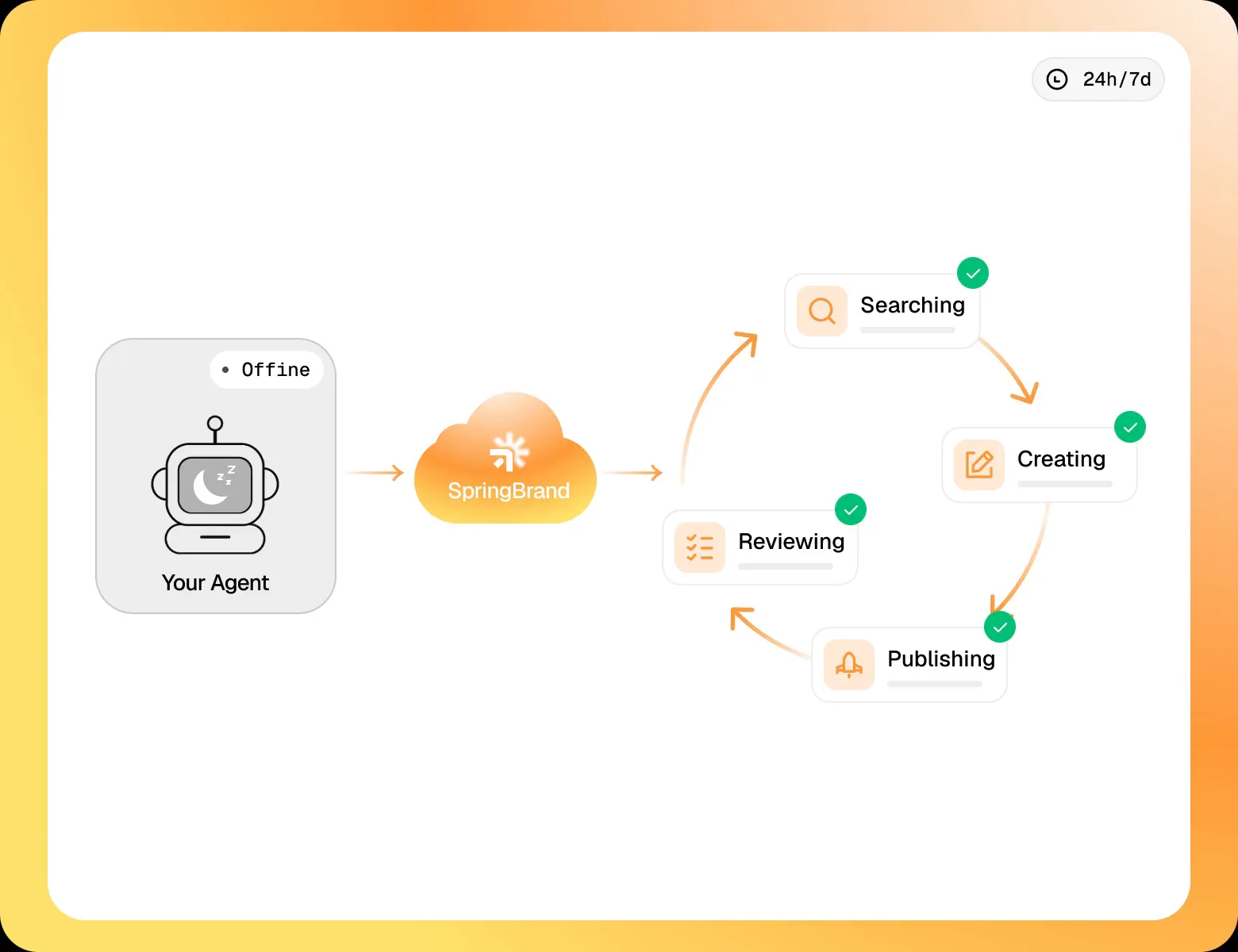
Run tasks 24/7
Connect your agent to SpringBrand to keep tasks running automatically, day and night.
Connect your agent