Corporate Video Production for Small Teams: What to Know
Corporate video production for small teams covers planning, production roles, cost drivers, review checkpoints, and delivery responsibilities.
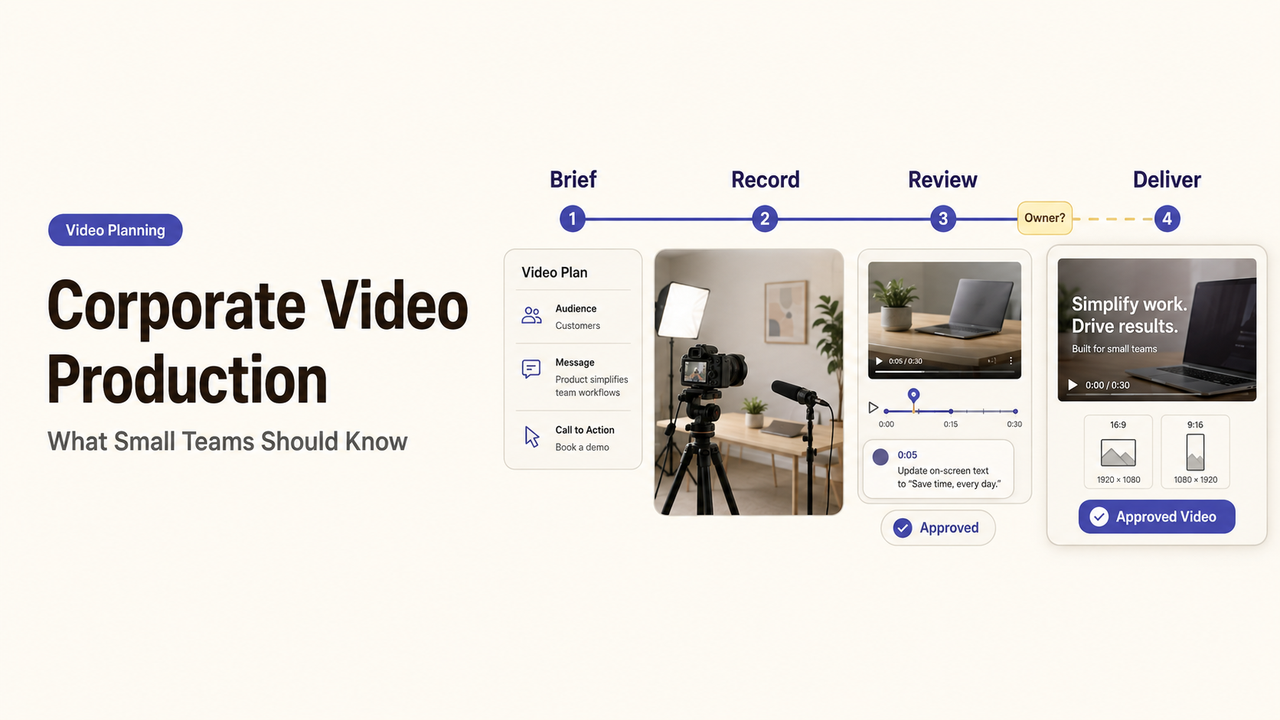
The treatment has been approved, yet the marketing lead still cannot sign the corporate video production quote. It mentions two filming days and three edits but says nothing about captions, source files, music rights, or what happens when an executive comments after approval. I’m Alex. The aim here is to help a lean team make the purchase with fewer hidden assumptions and a much clearer handoff.
What Corporate Video Production Covers
A finished video may last only two minutes, but the work behind it stretches from the first business decision to the final file archive. It includes planning, scripting, filming, editing, reviews, rights checks, and delivery.
Problems usually appear where one stage meets the next. The script reaches production before a technical claim has been checked. The crew arrives and discovers that part of the location cannot be filmed. The final cut looks good, but it does not fit the screen or channel for which it was commissioned.
A proposal should therefore describe the work between the milestones, not merely name them.
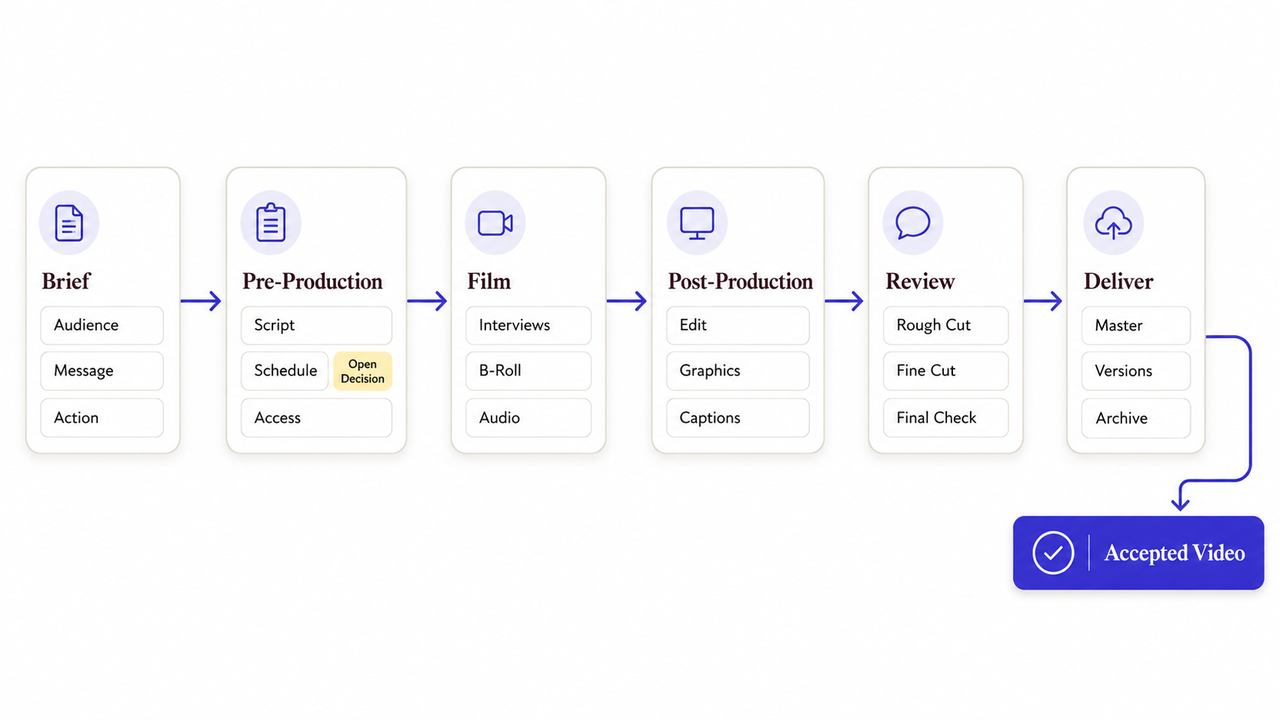
Strategy, pre-production, filming, and post-production
The strategy stage answers a practical question: what job must this video do? It might help a buyer understand a complicated service, give sales teams a clearer explanation, support recruitment, or introduce the business to people encountering it for the first time.
Pre-production makes that idea filmable. This is when the team settles the script or interview plan, participants, locations, schedule, visual references, product access, graphics, and approvals. Any confidential areas, unannounced features, specialist claims, or limited participant availability also belong in this conversation.
On the filming day, reality may not match the plan. An interview takes a different direction. A demonstration runs longer than expected. Background noise makes a location difficult to use. Someone should record these changes so the editor understands what happened and which parts of the original plan still matter.
After the shoot, much of the work becomes less visible. Editors sort the takes, clean the audio, add the approved graphics, prepare captions, balance the colour, and build each required version. Accessibility should already be part of those decisions. The W3C’s guidance for planning accessible audio and video addresses scripting, recording, captions, descriptions, and other accessibility considerations throughout production rather than only at export.
Common deliverables for lean marketing teams
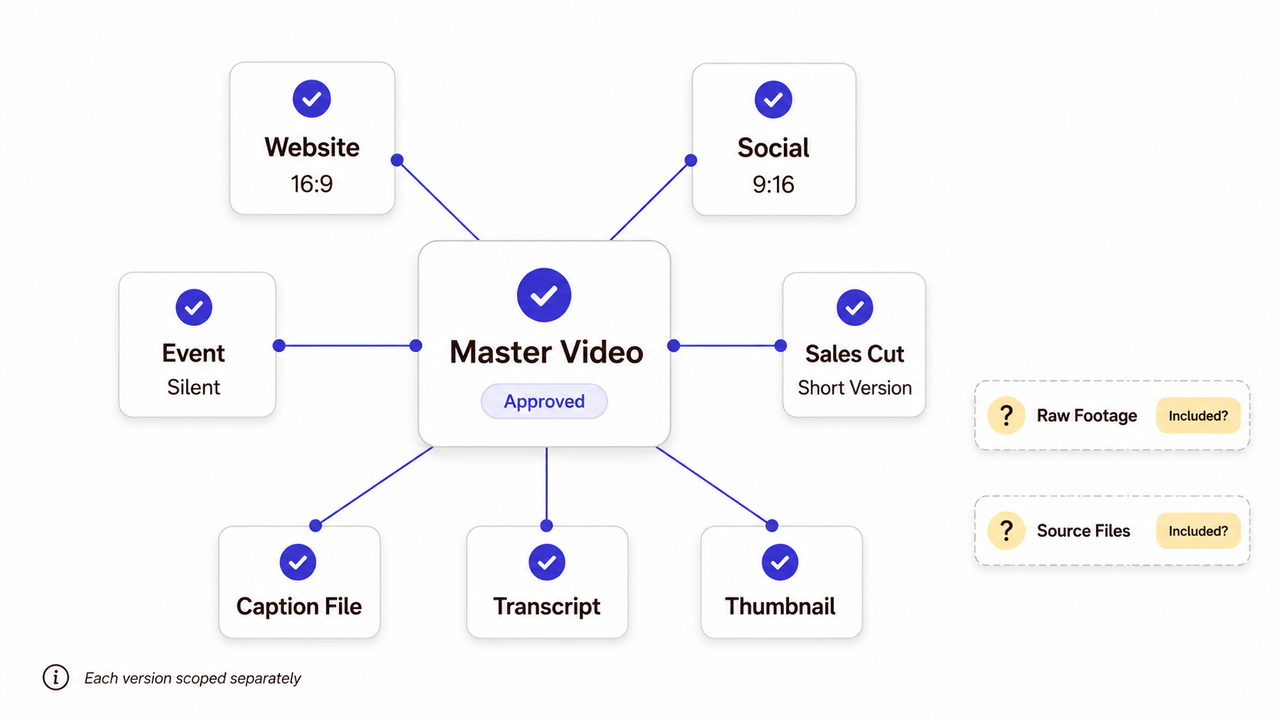
The request may begin as “one company video” and expand as soon as people discuss where it will be used. Sales wants a short cut for presentations. The events team needs a silent version. Social channels require a different shape, while the website needs captions and a clear thumbnail.
That difference matters. It changes the cut.
Record each required version separately, including its destination, approximate length, aspect ratio, caption needs, audio treatment, file format, and approval owner. This prevents a vague promise of “social edits” from becoming a disagreement about how many versions were expected.
Do the same for supporting materials. Raw footage, editable project files, caption files, transcripts, thumbnails, and separate graphics are not automatically part of every delivery. If the business expects them, they should appear in the scope.
Build the Brief Around a Business Goal
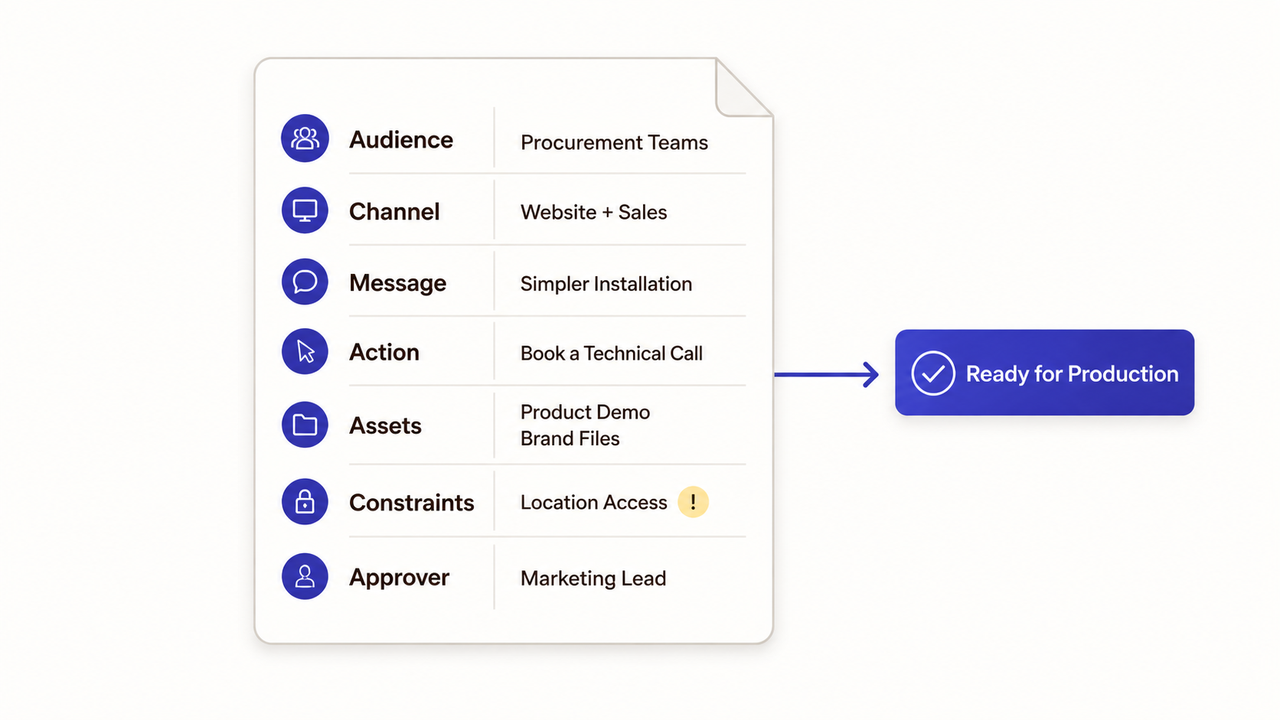
A useful brief begins with the job the video must perform. “Make us look innovative” gives a production partner very little to work with. “Help procurement managers understand the installation process before requesting a technical call” provides an audience, purpose, and next step.
Audience, channel, message, and desired action
Picture two viewers. One watches with sound while a salesperson introduces the video. The other notices it playing silently on a trade-show display while walking past the stand.
They can receive the same central message, but not in exactly the same way. The second viewer may need faster context and readable on-screen text. The first can follow a slower explanation supported by spoken detail. Their next actions may differ as well.
Before commissioning the script, complete one sentence: “After watching, this person should understand ___ and be ready to ___.” If several departments produce different answers, the team has a positioning decision to make. The production partner should not have to settle it indirectly through editing.
Customer interviews require another layer of care. A sincere testimonial can still contain an unsupported or misleading claim. The FTC’s information on advertising endorsements explains that endorsements must be truthful and that material connections may need disclosure. The company should verify the statements and arrange appropriate specialist review where necessary.
Available assets, constraints, and approval owners
Tell the provider what is already available. Useful material might include brand files, approved product descriptions, technical diagrams, previous footage, photography, customer research, or recorded presentations.
Then discuss what will make the project harder. Perhaps the factory permits filming during only one shift. The product may still be changing. A customer site could have confidentiality restrictions. The founder may be available for one short interview and no reshoot.
These are not minor production details. They influence the treatment, schedule, crew, and quote.
The brief should also name the factual reviewer, brand reviewer, and final approver. One person can collect their comments and return a consolidated response. Without that owner, the editor may receive incompatible instructions from several people, each believing their change takes priority.
Understand the Process and Cost Drivers
There is no standard price that tells a small team what its project should cost. Two videos of the same length can require very different amounts of planning, travel, filming, specialist work, and editing.
Crew, locations, animation, editing, and production complexity
A quote becomes easier to understand once its working assumptions are visible. Instead of asking only why one provider costs less, ask what each provider expects the project to involve.
One location may keep travel and setup limited. Several sites create more scheduling, permission, equipment, and continuity work. An interview-led film may use a small crew, while a detailed product demonstration could need additional cameras, lighting, technical supervision, or rehearsal.
Animation also changes the process. Graphics built from existing brand assets are different from a fully illustrated sequence created from scratch. Likewise, one final video is not the same workload as a master edit followed by several channel versions, caption files, alternate endings, and language variants.
AI-generated voices or images need their own review. The U.S. Copyright Office’s report on digital replicas discusses concerns involving realistic simulations of a person’s voice or appearance. Before approving such material, check the provider’s terms, the source inputs, identifiable likenesses, intended use, and any consent or disclosure requirements.
A low quote may be entirely reasonable. It may also assume fewer deliverables, simpler graphics, less location work, or a smaller review allowance. The assumptions reveal which explanation applies.
Timelines, dependencies, and revision rounds
The provider does not control the entire schedule. Filming and editing may sit on its side, but the client controls location access, product readiness, participant availability, factual checks, and approvals.
A missed interview does not only change the shoot. It may remove the proof that held the story together. The schedule should explain what happens if that person cancels, the product changes, or feedback arrives after the agreed deadline.
Define a revision round before work starts. Correcting an inaccurate product name is different from replacing an approved message after the rough cut. Both sides should know what the quoted rounds include and how additional changes will be handled.
Understand Production Partner Roles
How production companies, freelancers, and specialists differ
A corporate video production company may coordinate the project from planning through delivery. A freelancer may handle one role or assemble a small crew. Sound mixing, animation, colour work, captions, aerial filming, and other needs may bring in separate specialists.
The label does not tell you who is responsible for what. Ask who develops the concept, manages the schedule, attends the shoot, edits the footage, completes quality control, and communicates with the client. If subcontractors are involved, ask which parts they will handle.
A showreel is useful for judging the visible work. It cannot show whether the provider documents decisions, manages a missed filming window, resolves conflicting comments, or leaves the client with an orderly set of files.
Where external support changes the workflow
Outside help can remove a large coordination burden from a small team. A provider may prepare call sheets, arrange crew, manage filming, organise edits, and produce the delivery versions.
The client still owns the business truth behind the video. Someone internally must provide accurate information, grant access, confirm permissions, gather comments, and approve the result.
Ask providers to talk through an awkward situation, not only an ideal project. What happens if a participant cancels? Who updates the plan if a location becomes unavailable? How are extra versions priced? Where will project records be stored?
A provider that can answer those questions clearly is showing its working method, not just its visual taste.
Prepare for Review and Delivery
Review checkpoints and approval responsibilities
Waiting until the final cut to discuss the message is risky. Reviews are easier when they happen at defined points: brief, script or interview plan, pre-shoot preparation, rough cut, fine cut, and final quality check.
Feedback should identify both the location and the problem. “The middle feels weak” sends the editor searching. “At 00:48, the explanation uses the former product name; replace it and return the line to the product reviewer” can be acted on.
Comments should reach the provider as one agreed response. The final approver does not have to write every note, but that person should resolve contradictions before the feedback leaves the business.
Delivery formats and internal file stewardship
Do not accept a folder solely because the filenames look correct. Open each version. Watch the opening and closing frames, test the captions, listen through headphones, and check the text on the screen where the video will actually appear.
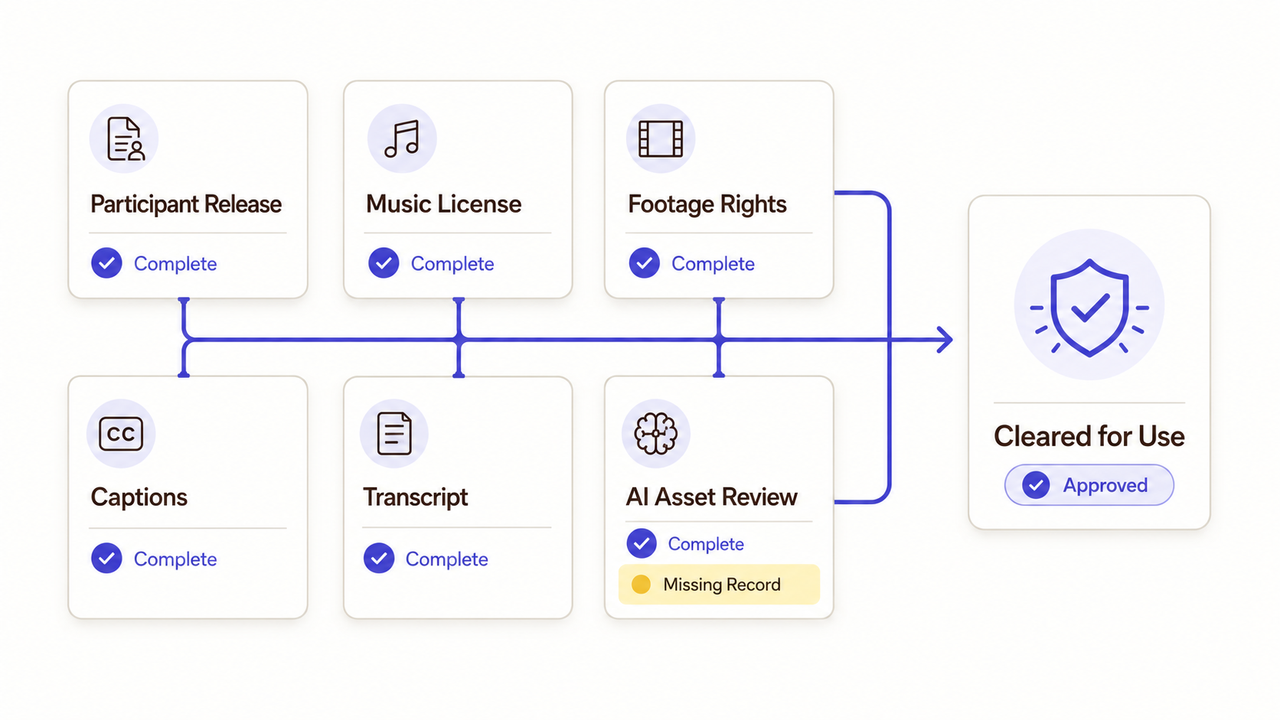
Keep the music documentation with the project. The U.S. Copyright Office explains the distinction between a musical composition and its sound recording. The licence—not the presence of the track in the finished video—defines the permitted use. Check whether it covers the relevant media, territories, duration, paid advertising, and future edits.
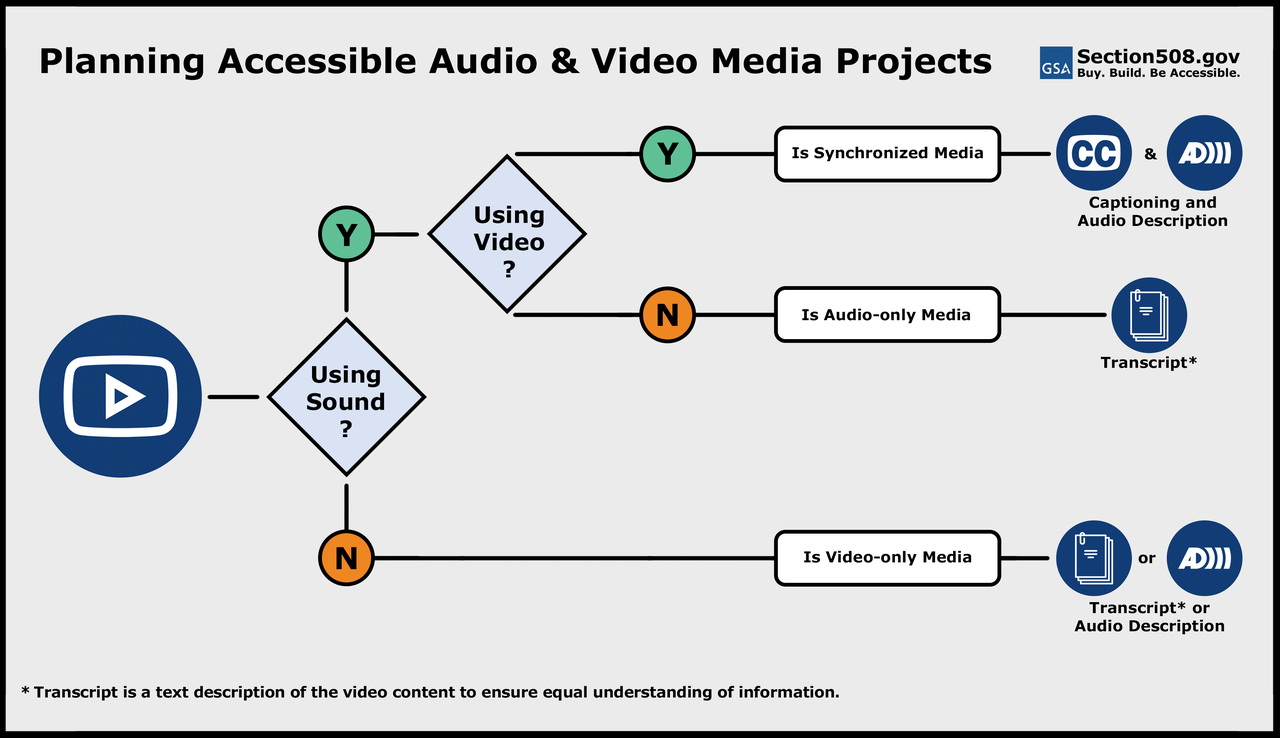
Public-sector work may come with specific accessibility conditions. For U.S. federal projects, Section 508 guidance for synchronized media discusses captions, transcripts, audio description, and planning responsibilities. Requirements can differ by buyer and jurisdiction, so confirm the applicable standard while writing the brief.
The internal archive should contain the approved master, channel versions, captions, transcript, releases, licence records, and any raw or editable files included in the contract. Name the person responsible for that archive before the project team disperses.
How SpringBrand Fits This Workflow
SpringBrand is not a corporate video production company. It helps businesses clarify a service requirement and find relevant third-party options to compare.
Turn the video requirement into a service brief before approving a provider, so the scope, responsibilities, and expected handoff are easier to compare.
SpringBrand does not produce the video, certify the provider, or guarantee the creative quality or business outcome. The buyer remains responsible for reviewing the proposed scope, evidence, access requirements, and contract terms.
FAQ
Can licensed music from the final video be reused in paid ads?
Do not assume so. A track may be licensed for the original video or selected channels without covering paid media, later edits, every territory, or unlimited use. Read the applicable licence and seek qualified advice if the permitted use remains unclear.
What release is needed before filming a customer testimonial?
The release should reflect the actual project, including the intended media, use of the person’s name, voice, image, and statements, editing permission, duration, territory, and compensation where relevant. No single form fits every situation. Unclear rights or contract terms should be reviewed professionally.
What if a participant withdraws consent after filming?
Preserve the signed documents and record the request. Before publishing or continuing to use the material, review what was agreed, what has already been distributed, and what the applicable rules require. This may need legal review rather than an informal decision by the production team.
Can AI-generated voice or imagery be used in a corporate video?
It may be possible, but the tool’s ability to generate an asset is not permission to use it everywhere. Review the service terms, source material, resemblance to real people, intended channels, client conditions, and possible consent or disclosure obligations. Save the relevant input, output, permission, and version records with the project.
Which accessibility rules should be checked for public-sector audiences?
Begin with the buyer’s procurement documents and the requirements for that organization and location. They may address captions, transcripts, audio description, player controls, or delivery formats. Add the applicable requirements to the production scope and test them before acceptance.
Conclusion
A corporate video production project is easier to control when the business can trace its purpose through the brief, quote, reviews, rights records, and final delivery.
The closing record should make the result easy to verify: agreed files, completed checks, named approvals, stored permissions, and any unresolved items. Accept the project against that evidence, not against the first impression created by a polished screening.