Account-Based Marketing Agency: Pricing and Fit
Account based marketing agency pricing should compare scope, data needs, sales readiness, proof, and quote terms.
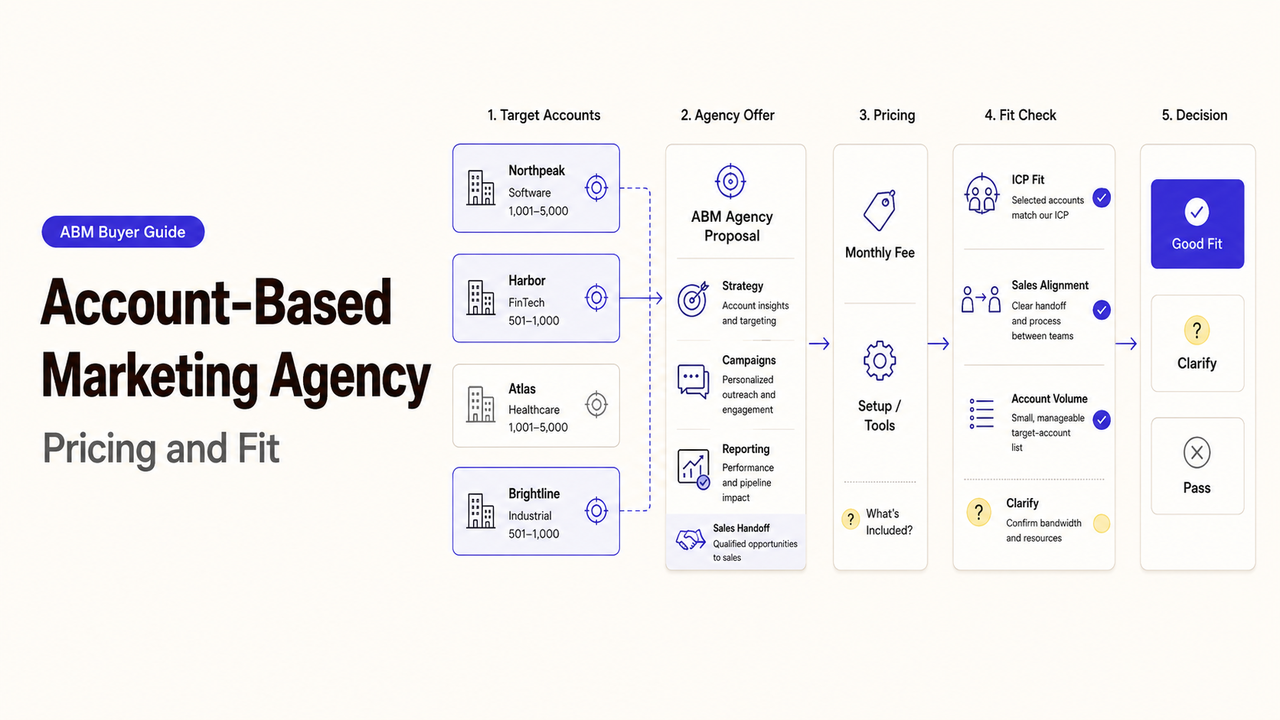
Two ABM proposals can show the same total while buying very different work. One may include account research and content. Another may reserve most of the fee for media management while billing data separately.
A lean team should compare the commitment behind the number before comparing the number itself. This guide explains when an account based marketing agency fits, what the quote should cover, and which internal gaps can stall the work.
Quick Fit: When an ABM Agency Makes Sense
An agency is useful when the business has defined target accounts but lacks the time or skills to coordinate research, content, media, operations, or measurement.
The company still needs internal ownership. Sales must help select accounts, explain buying conditions, and follow up when interest appears. Marketing must provide approved positioning, proof, and campaign inputs. A senior owner should decide what the agency may access and publish.
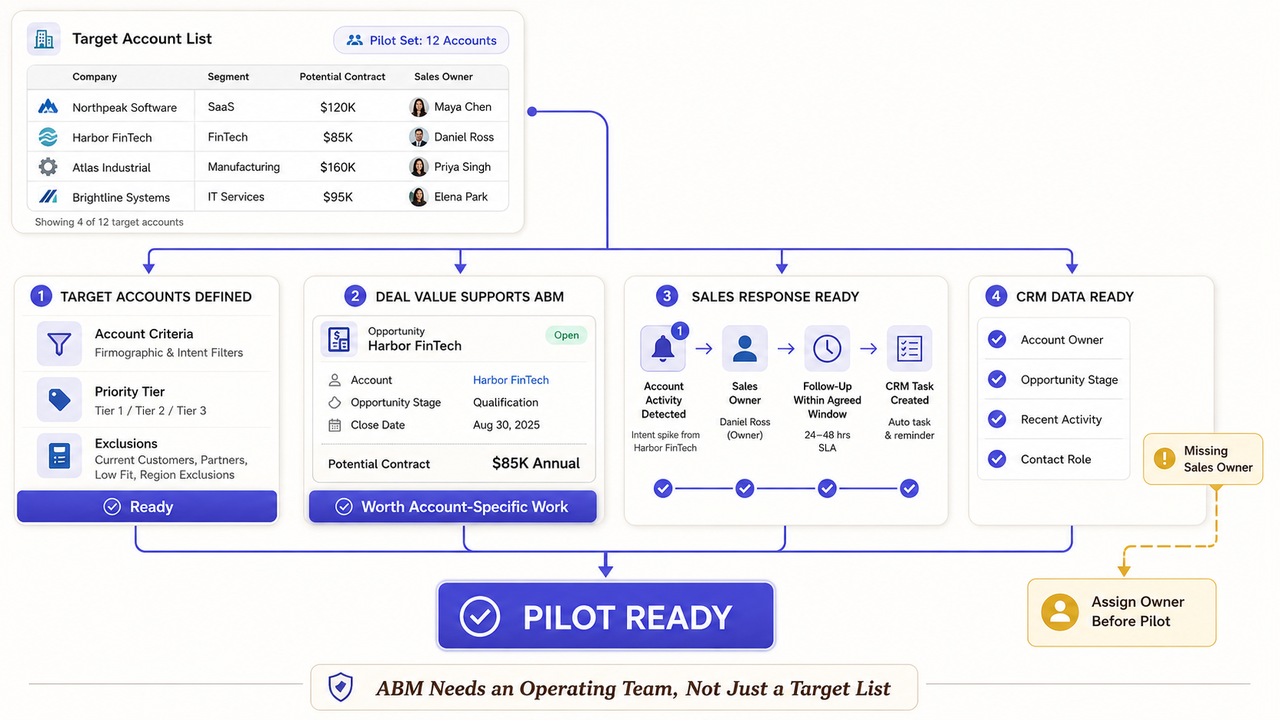
Use four questions before requesting proposals:
- Can the team name the companies or account criteria it wants to pursue?
- Is the potential contract valuable enough to justify account-specific work?
- Can sales respond to activity from those accounts within an agreed window?
- Does the CRM show account ownership, opportunity stages, and recent activity well enough to support a pilot?
The engagement is a weaker fit when the target list changes every week or sales cannot act on campaign signals. It may also be premature when the offer is still unclear. An agency can challenge the assumptions, but it should not quietly become the owner of product-market fit.
The first scope might cover one segment, account tier, or buying situation. This keeps the price and evidence reviewable.
What ABM Agencies Can Actually Deliver
The label ABM agency does not define a standard package. Providers may lead strategy, operate campaigns, or combine data, content, technology, and media.
Ask every provider to separate recommendations, production, implementation, and ongoing operation. A deck is different from a working audience. A campaign launch is different from sales follow-up.
Account selection and campaign strategy
This work may include account criteria, tiers, buying groups, research, messages, and channel plans. The client should supply sales history, exclusions, territory rules, and buying context.
The account list needs an approving owner. Sales and marketing should agree on why each tier exists and what would move an account between tiers. HubSpot’s current ABM setup documentation shows how target-account properties and buying roles can support shared work inside one CRM. The exact fields will depend on the client’s system.
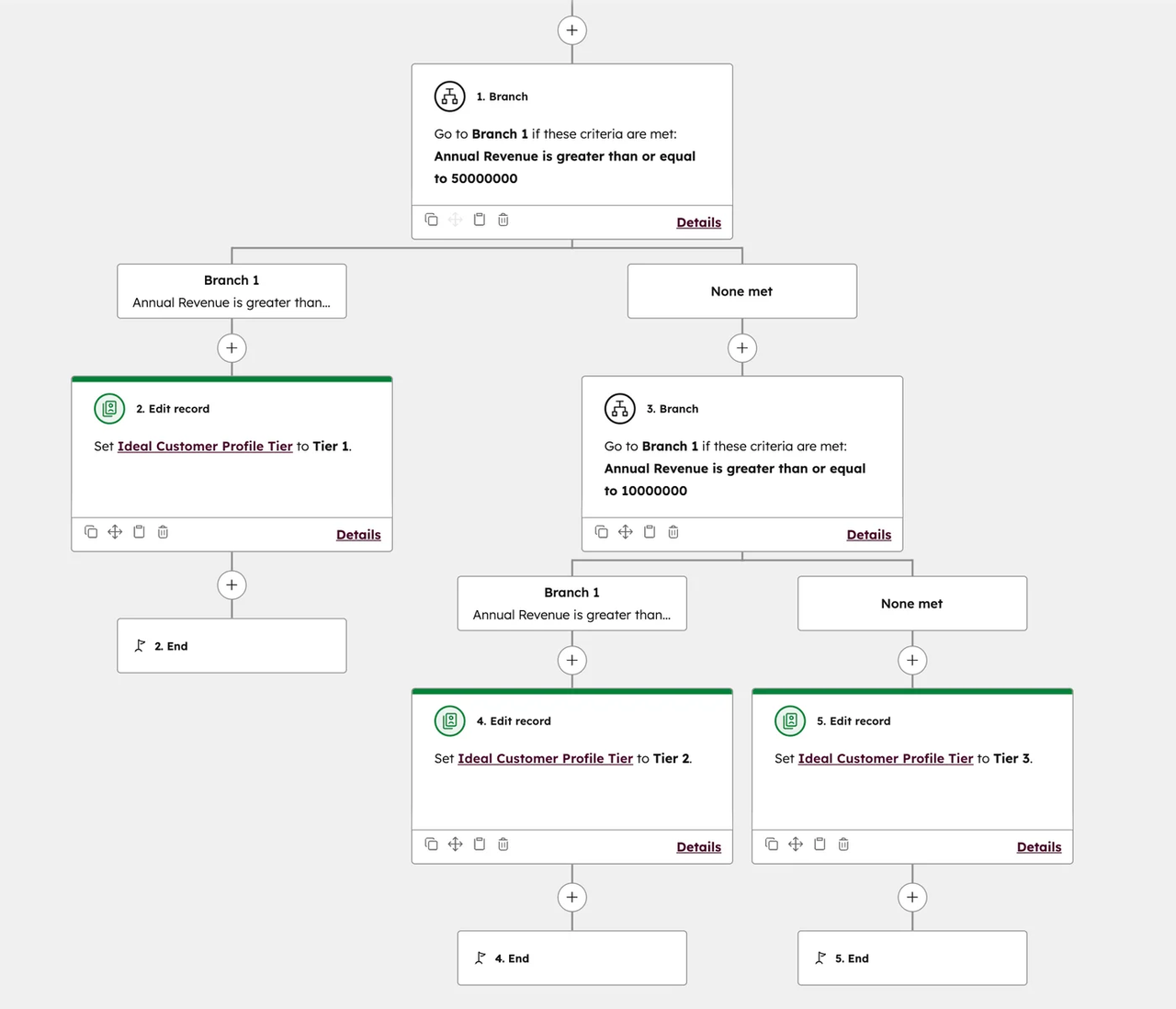
Company size and industry may be insufficient when technology, location, contract timing, or a specific operating problem determines fit.
Assets, channels, and sales coordination
Account based marketing services may cover landing pages, email, ads, direct mail, event support, sales materials, or account-specific research. The quote should state the number of accounts, segments, assets, variants, channels, and revision rounds.
Identify who builds audiences, approves copy, funds media, sends outreach, and manages replies. Record direct-mail production and fulfillment separately when relevant.
The sales handoff needs a trigger and an action. “Notify sales when an account engages” is incomplete. State which activity creates the alert, where it appears, who receives it, and how quickly that person should respond.
Reporting and pipeline handoff
Agree on the reporting unit before launch. ABM reporting may follow accounts, buying groups, opportunities, campaign activity, or a combination. The provider should explain how records connect across advertising, the website, marketing automation, and the CRM.
Current Demandbase materials describe account-based analytics through engagement, journey stages, advertising, and CRM program activity. That is first-party product positioning, not independent proof that a particular agency can attribute pipeline.
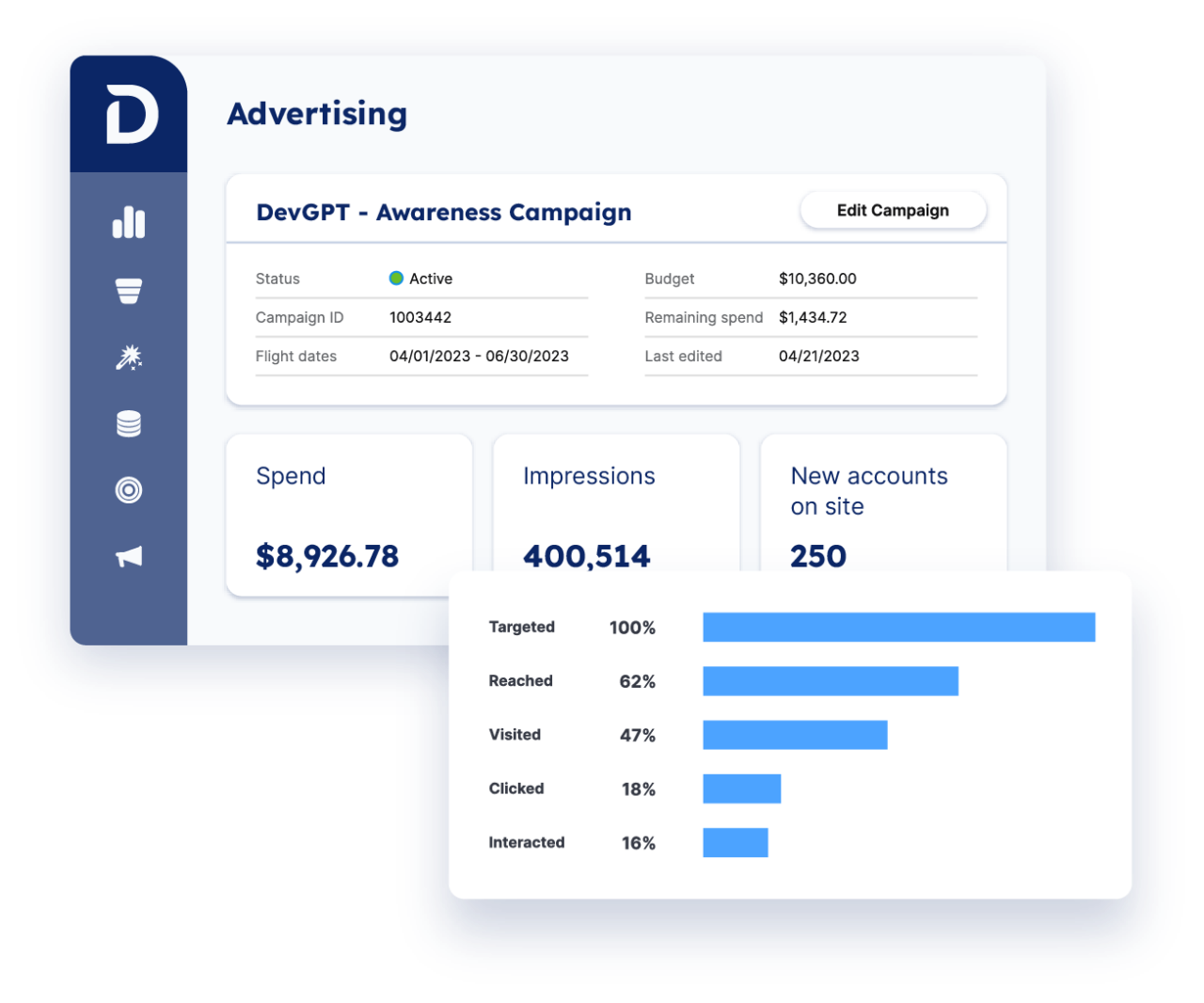
Request a field map and sample report. It should distinguish platform activity from a sales-confirmed opportunity. The final handoff should also show unresolved account matches, missing CRM fields, and records that need a human decision.
Compare Service Models and Pricing Structures
There is no useful universal price for an account based marketing agency without a common scope. Compare the same account volume, channels, assets, systems, review burden, and contract period.
Build a comparable total with this formula:
Agency fee + media spend + data and technology + content production + implementation + fulfillment + internal labor = planned program cost
Keep pass-through costs visible. A lower agency fee may sit beside a larger media commitment, separate data license, or substantial client-side production work.
Pilot, campaign, and retainer arrangements
A pilot can test an account group, workflow, or campaign play. Name the hypothesis, setup, delivery period, review date, and decision that follows.
A campaign arrangement may suit a launch, event, territory, or time-bound play. Confirm whether planning and final reporting are included.
A retainer may cover continuing strategy, production, optimization, reporting, and coordination. Check whether unused production capacity carries forward and how the provider treats urgent requests. Also define which work requires a separate estimate.
Ask what the first invoice buys, what repeats each month, and what needs separate approval.
Data, technology, and content cost drivers
Data costs reflect sources, markets, fields, refresh timing, and license terms. Technology costs may cover platforms, enrichment, CRM work, integrations, or reporting.
Content cost grows with account depth and production complexity. One-to-one research and custom executive material require different effort from a shared campaign adapted across a larger tier.
Ask which tools belong to the agency and which belong to the client. A provider-owned platform may lower setup work during the engagement but complicate the exit. A client-owned account may require more implementation while preserving access and history.
Quote validity, inclusions, and price changes
Every proposal should state its issue date, validity period, currency, taxes, payment schedule, and assumptions. Record whether media, travel, postage, software, data, translations, and third-party production are included.
Price changes need a written trigger. Examples include adding accounts, markets, channels, asset types, integrations, or review rounds. The change process should require an updated scope, price, timeline, and client approval before work expands.
Use the same comparison sheet for every quote:
| Quote field | What to record |
|---|---|
Account scope | Number, tier, market, and selection owner |
Deliverables | Assets, campaigns, research, reports, and revisions |
Systems | Client tools, agency tools, integrations, and access |
Separate costs | Media, data, software, fulfillment, and taxes |
Timing | Setup, launch, review, renewal, and quote expiry |
Change rule | Trigger, approval owner, revised price, and schedule |
Exit | Data export, audience transfer, files, access, and support |
Check Data, Technology, and Sales Readiness
Map the data before granting access. Identify the account, contact, opportunity, activity, suppression, and consent records the agency expects to use. Then name the system that holds the approved version.
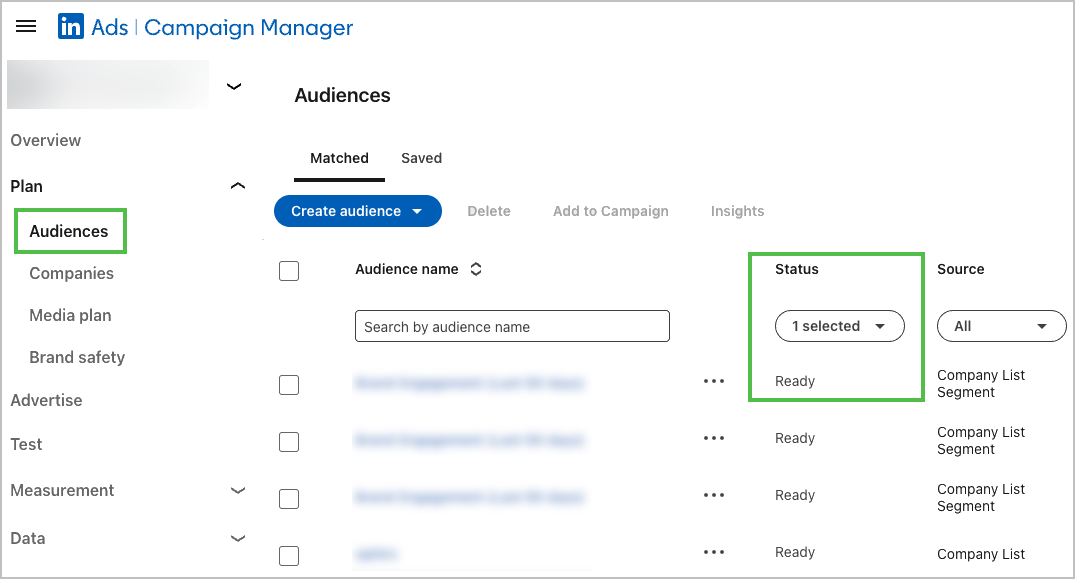
Advertising audiences need platform-specific review. LinkedIn says its Matched Audiences can use contact lists, company lists, retargeting sources, or connected data partners. Availability does not establish that every client list is suitable for upload.
Google’s current Customer Match policy limits uploads to qualifying first-party data and places obligations on advertisers. Check the current policy, applicable law, client privacy notice, and approved purpose before an agency uses a customer list.
Use individual provider accounts where possible. Limit access, keep a client administrator, and define data return, deletion, incident reporting, and offboarding.
Sales readiness needs equal attention. Assign owners for alerts, outreach, opportunity updates, and disqualification. If representatives ignore the handoff, the agency cannot repair the operating gap with more impressions.
Run a small data test before launch. Check account matching, exclusions, routing, reporting fields, and the sales alert. Keep any uncertain records out of activation until the owner resolves them.
Vet Evidence Without Buying a Guarantee
Ask for evidence that matches the proposed work. A media case study does not prove CRM implementation skill. A technology badge does not prove that the people assigned to the account have used the platform.
Request the case period, client situation, scope, baseline, measurement method, and provider contribution. Results without that context are difficult to apply.
For technology partnerships, check the current vendor directory and the status claimed in the proposal. Ask which team members hold relevant training and whether subcontractors will perform the work.
Data practices deserve their own review. The FTC’s business data-security guidance recommends knowing what personal information the company holds, limiting what it keeps, protecting it, and disposing of it properly. Apply those questions to agency access and data providers.
Treat guarantees as a warning sign. An agency can commit to research, launches, assets, tests, reporting, and response times. It cannot control every buying decision, sales conversation, platform change, or revenue outcome.
References should include operational questions. Ask former clients how the agency handled missed inputs, disputed attribution, changing target accounts, and the final data handoff.
How SpringBrand Fits This Workflow
If the ABM scope is ready for comparison, turn it into a service request and review matching providers through SpringBrand’s third-party services marketplace.
FAQ
Can an agency use customer lists for lookalike audiences?
Only after the client confirms that the planned use fits its notices, permissions, contracts, applicable law, and the current advertising-platform rules. The agency should identify the source list, destination platform, audience type, retention plan, and approval owner. Availability of an upload feature does not settle permission.
Who owns suppression lists after an ABM campaign ends?
The contract should state who controls the list, where it is stored, and who must maintain it after termination. Include the required export format and deletion duties. Suppression records may remain operationally important after campaign data is removed, so do not let the answer depend on an informal handoff.
Who owns campaign audiences after the contract ends?
Ownership and control depend on the contract, platform account, source data, and how the audience was created. Record whether audiences sit in a client-owned or agency-owned account. Define transfer, recreation, continued use, and deletion before launch, then obtain qualified advice for disputed rights.
How should intent-data providers be disclosed in a proposal?
Name each provider, the data or signal supplied, the licensed use, markets covered, refresh timing, and any important restrictions. The proposal should also state who contracts with the provider and what happens at exit. Do not present an intent signal as proof that a specific person wants to buy.
Can an ABM pilot be paused during a funding or budget review?
Yes, if the agreement provides a pause process. Define notice, media shutdown, treatment of committed costs, data access, scheduled content, staff availability, restart timing, and any reactivation fee. The client should receive a current status record before the pause begins.
Conclusion
An account based marketing agency becomes comparable when every quote uses the same scope, cost categories, data assumptions, and handoff rules. The total alone cannot show which team will do the work.
Before signing, assign one internal owner to approve target accounts, data access, price changes, and the sales handoff. Without that owner, the agency will inherit decisions the business still needs to make.