B2B Email Marketing Agency: Services and Hiring Guide
B2B email marketing agency services can cover strategy, campaigns, operations, and reporting. Compare scope, data needs, and provider fit.
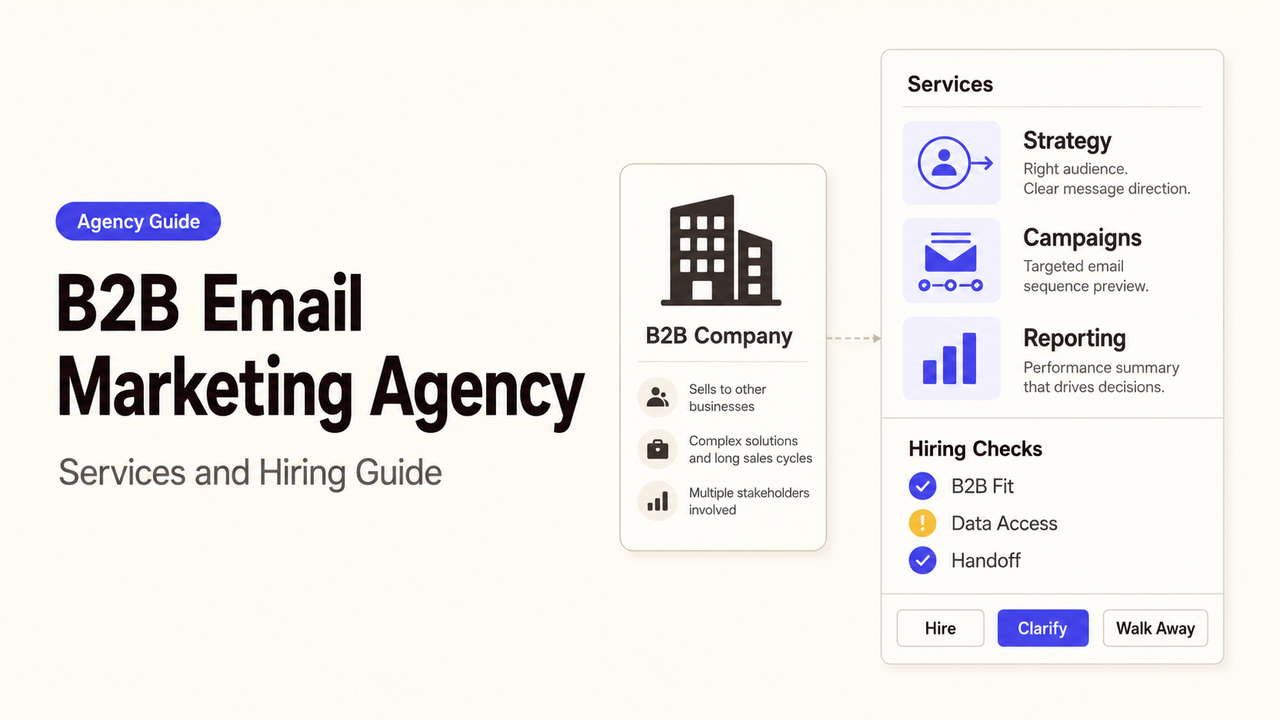
A send date is booked, the copy brief is approved, and the email campaign agency is ready to build. Yet nobody can show whether the imported contacts may be mailed, which lifecycle stage each record belongs to, or who stops the campaign when sales territories change. A B2B email marketing agency should begin with a usable audience, a defined business event, and an approval path—not with copy alone. I’m Alex; use this guide to decide whether you need production help, ongoing operations, or a partner responsible for the lifecycle handoffs.
Quick Fit: Campaign Support or Lifecycle Partnership?
Campaign support is appropriate when your team already owns the audience, offer, data rules, platform, sales process, and final approval. The agency receives a clear brief and delivers a defined asset or send.
That scope may include:
- Campaign planning
- Copy and subject lines
- Email design
- Template production
- Platform setup
- Testing and scheduling
- Performance reporting
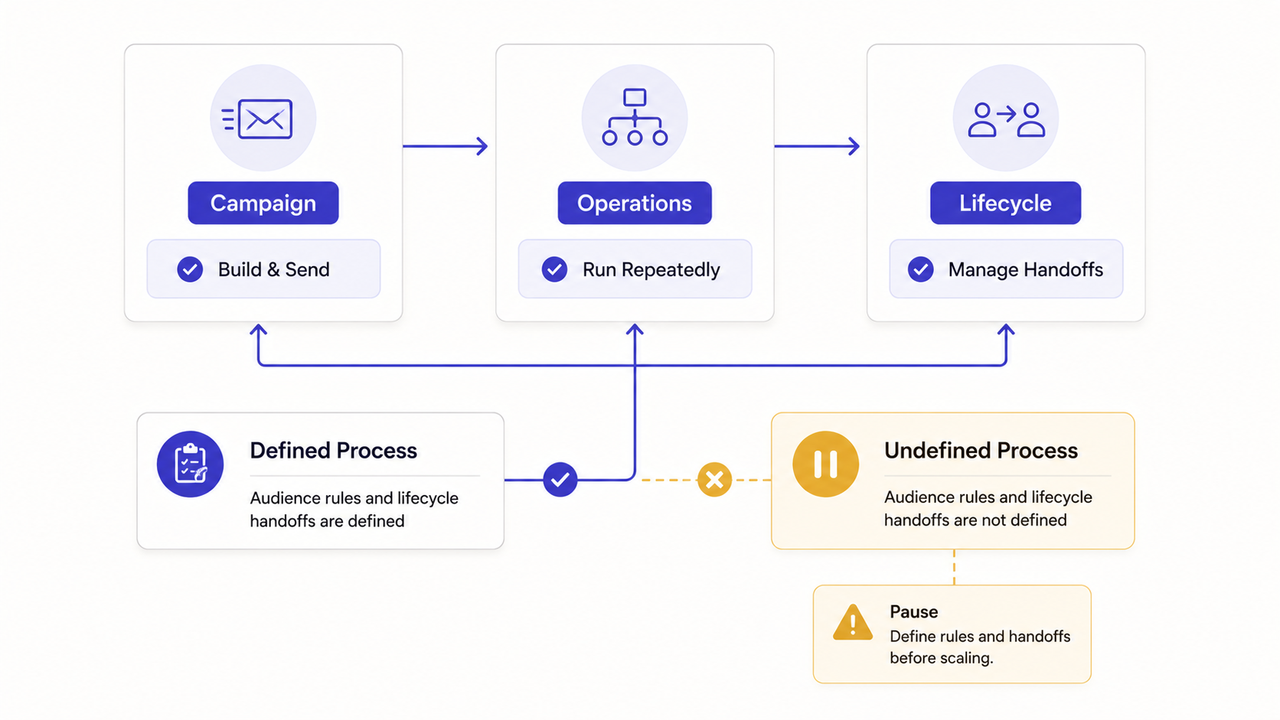
Ongoing operations add recurring calendar management, segmentation, list hygiene, experimentation, and coordination with sales. A lifecycle partnership goes further by connecting acquisition, nurture, qualification, onboarding, retention, expansion, and reactivation.
Use this decision table before requesting proposals:
| Current gap | Likely service |
|---|---|
We have the strategy but lack production capacity | Campaign support |
We need someone to run a recurring email calendar | Ongoing operations |
Contacts receive the wrong message for their stage | Lifecycle strategy and operations |
Leads enter the CRM but follow-up is inconsistent | Lead nurture services with sales coordination |
Several tools disagree about contact status | Data and workflow assessment before campaign work |
An email automation agency should not be hired to hide an undefined process. If the team cannot explain when a contact becomes qualified, who owns the next action, or which event ends a nurture sequence, those decisions need to be made before automation expands.
Define the Audience, Data, and Revenue Goal
“Generate more leads” does not establish who should receive the email or what should happen afterward.
Start with one audience and one business movement. A campaign might aim to move webinar registrants toward a consultation, reconnect with open opportunities, introduce an additional service to active customers, or help new leads reach a sales-ready stage.
The brief should include:
| Field | Required decision |
|---|---|
Audience | Which contacts qualify and which must be excluded |
Data source | CRM, form, event, customer system, partner list, or import |
Lifecycle state | Subscriber, lead, qualified lead, opportunity, customer |
Business event | Reply, booking, qualification, renewal, expansion |
Message owner | Marketing, sales, customer success, or product |
Approval owner | Who authorizes the audience, claims, and send |
Exit condition | Reply, conversion, opt-out, disqualification, or timeout |
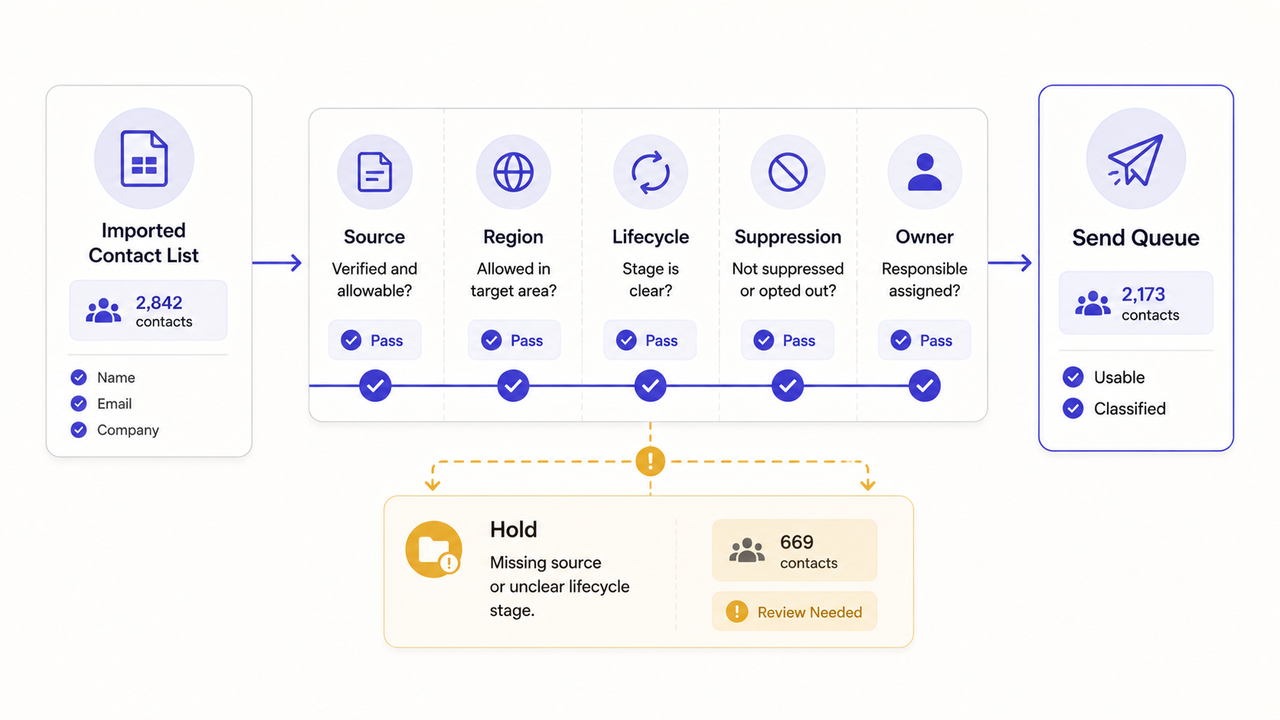
Audit the underlying data before estimating campaign volume. Check source, collection date, current relationship, geography, consent or other applicable basis, suppression status, owner, and lifecycle stage.
The agency can identify incomplete fields and conflicting records. The client remains responsible for confirming that the data may be used for the proposed purpose and jurisdiction.
Compare Strategy, Copy, Design, and Operations Scope
B2B email marketing services are easier to compare when every deliverable is attached to an owner and acceptance test.
Strategy
Strategy may include audience research, journey mapping, messaging themes, offer planning, sequence logic, testing priorities, and measurement design. Ask whether the provider is creating the strategy or translating an existing strategy into campaigns.
A strategic deliverable should show which contact state triggers each message, what the recipient needs at that stage, and what event moves the record forward.
Copy and design
Copy scope can range from editing a client draft to interviewing internal experts and writing a complete sequence. Confirm who supplies proof, product details, customer claims, links, and legal disclosures.
Design scope might include one reusable template, individual campaign layouts, or a broader modular system. Require mobile review, accessible text treatment, working links, and a plain-text or fallback plan where appropriate.
Operations
Operations may include:
- Building segments
- Configuring workflows
- Maintaining suppression rules
- Running pre-send tests
- Scheduling campaigns
- Monitoring replies and failures
- Updating documentation
- Producing reports
Clarify whether the agency can publish independently or only prepare a send for client approval. The latter may be safer when audience rules, regulated claims, pricing, or customer commitments require internal review.
Document how scope changes are handled. A new regional version, additional segment, or CRM integration should not appear halfway through the engagement as an assumed inclusion.
Check Deliverability, Consent, and System Readiness
Deliverability is partly technical and partly behavioral. Authentication cannot compensate for irrelevant messages, poor data, ignored opt-outs, or sudden volume changes.
Google’s current Gmail sender guidelines require authentication and additional controls depending on sending volume. Senders reaching the bulk threshold for personal Gmail accounts face requirements including SPF, DKIM, DMARC, TLS, low reported spam rates, aligned domains, and one-click unsubscribe for marketing messages.
Do not treat those requirements as an inbox guarantee. Ask the agency to document:
- Sending domains and subdomains
- SPF, DKIM, and DMARC ownership
- Platform and integration senders
- Bounce and complaint handling
- Unsubscribe processing
- Suppression synchronization
- Volume-change rules
- Seed and rendering tests
- Incident and pause procedures
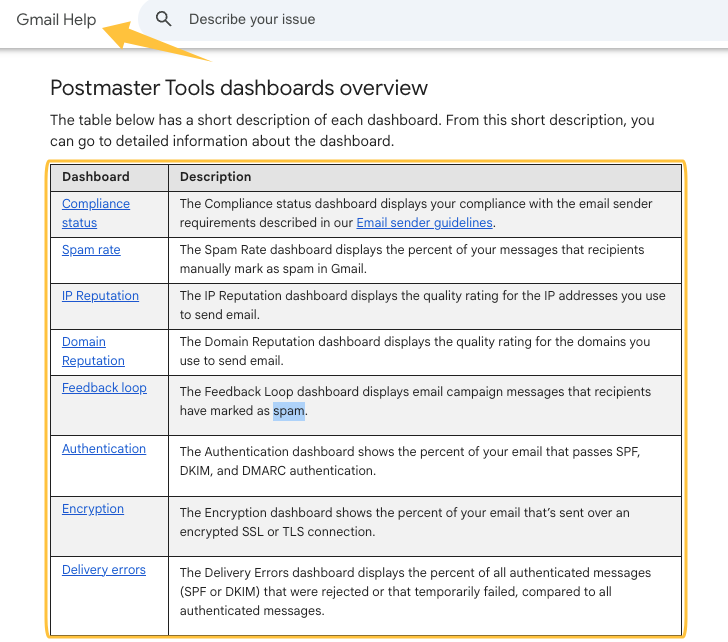
Google’s Postmaster Tools dashboards can report Gmail-specific authentication, spam-rate, compliance, and delivery-error signals when enough data is available. Those reports should be considered alongside platform data rather than presented as a universal view of delivery.
Legal requirements vary by location, recipient type, message purpose, and data source. In the United States, the FTC states that CAN-SPAM covers commercial B2B email and addresses sender identification, subject lines, postal information, and opt-out handling.
The UK ICO’s current B2B direct-marketing guidance distinguishes corporate subscribers from sole traders and certain partnerships while also addressing personal data and opt-out obligations.
These sources are starting points, not legal advice. The client should identify applicable jurisdictions and have qualified legal or privacy professionals confirm uncertain requirements. The contract should state whether the agency implements approved rules or is also expected to coordinate compliance review.
Connect Email Campaigns With Sales Follow-Up
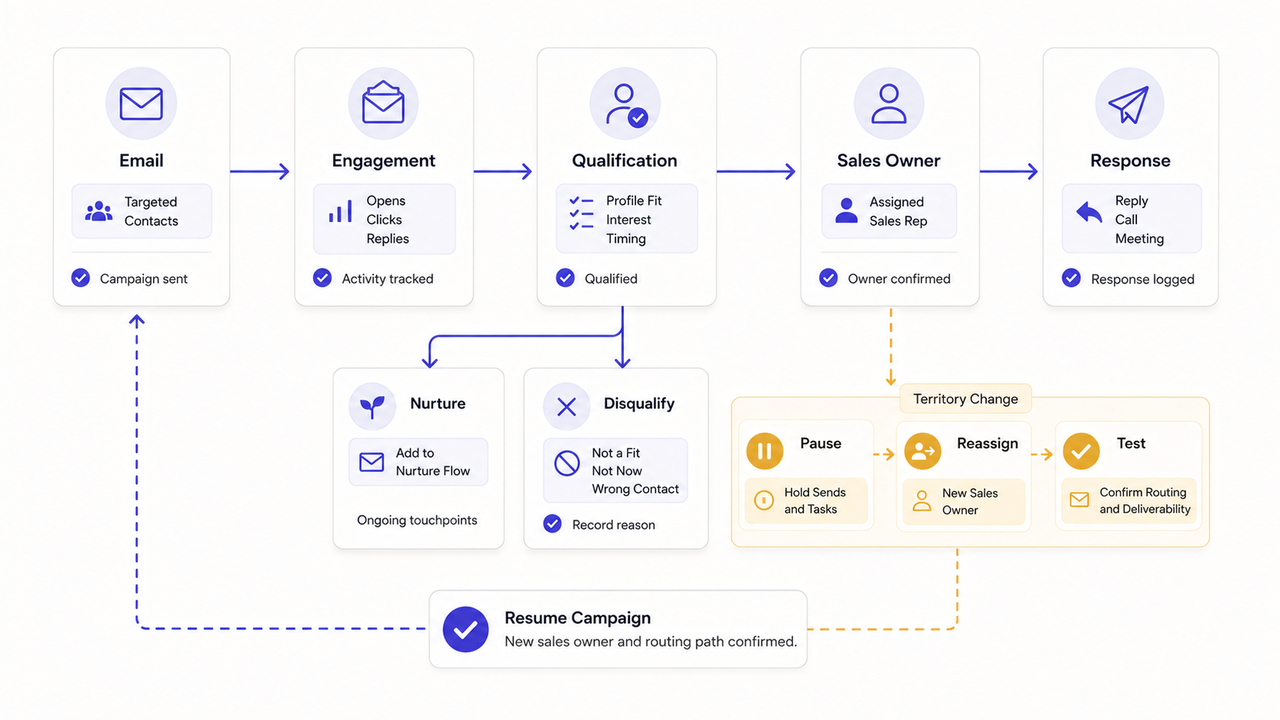
A lead nurture sequence is incomplete if sales cannot see why a contact was transferred or what the person received before the handoff.
Define the handoff record:
- Contact and account
- Source audience
- Campaign or sequence
- Relevant engagement
- Qualification reason
- Product or service interest
- Territory and owner
- Required response
- Handoff timestamp
- Return or disqualification reason
Marketing should not pass every click to sales. Sales should not quietly reject leads without recording why. Agree on which events indicate interest, which conditions establish fit, and how quickly an accepted lead should receive attention.
Google Analytics recommends distinct lead-generation events such as generate_lead, qualify_lead, disqualify_lead, working_lead, and closing outcomes. Its recommended lead events illustrate why a form submission and a qualified sales record should not be reported as the same business result.
If the agency has no CRM access, create a regular feedback export containing approved fields. The provider does not need unrestricted access to sensitive opportunity data, but it needs enough feedback to distinguish activity from useful progression.
Evaluate Reporting, Quality Control, and Provider Fit
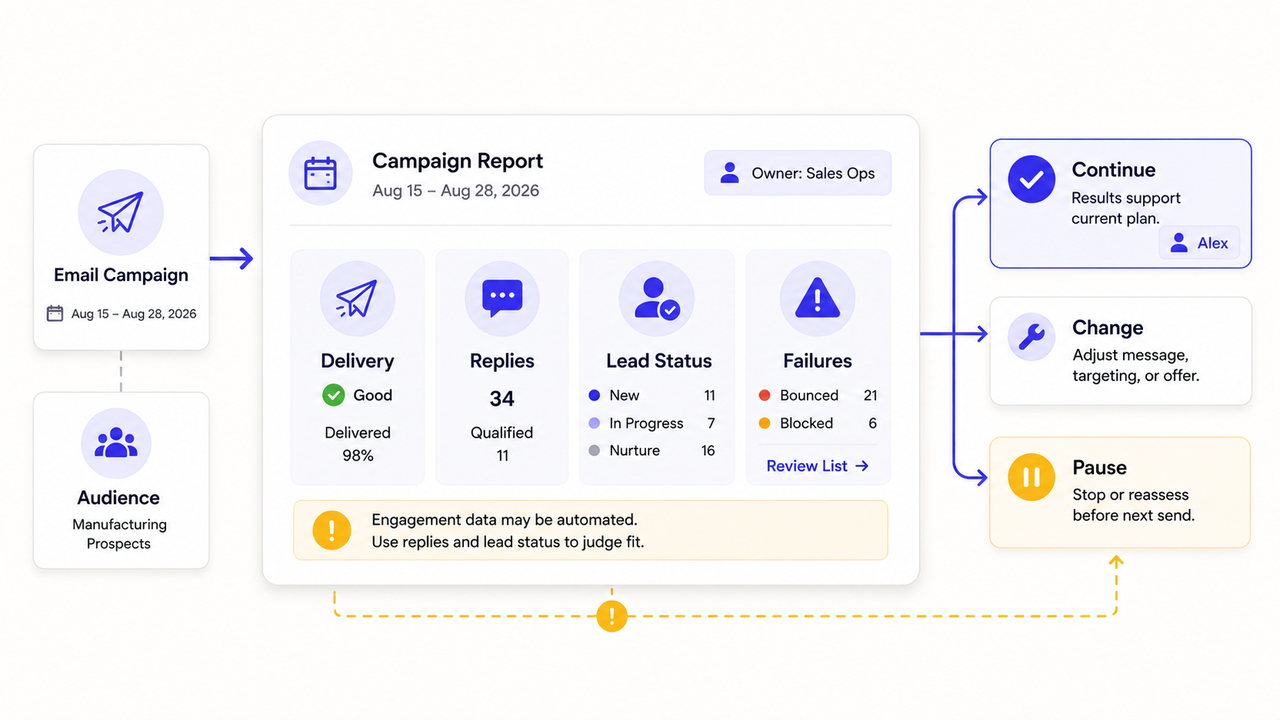
Request a sample report before signing. Look for decisions rather than a dashboard full of disconnected percentages.
A useful report separates:
- Sent, delivered, bounced, and suppressed records
- Unsubscribes and complaints
- Replies and booked actions
- Qualified and disqualified leads
- Lifecycle movement
- Segment and campaign performance
- Data or workflow failures
- Tests completed
- Changes proposed for the next period
Open rate should be interpreted cautiously because privacy features and automated scanning can affect tracking. Clicks also need context; internal security systems may inspect links, while an interested prospect may reply without clicking.
Quality control should include a named reviewer for audience logic, copy, links, claims, rendering, tracking, and final send approval. Record which version was approved and what changed after approval.
Compare providers with a responsibility matrix:
| Evaluation area | What to verify |
|---|---|
Strategic depth | Can the provider map messages to lifecycle states? |
Data readiness | Does it audit sources, exclusions, and ownership? |
Operations | Can it maintain workflows and suppression rules? |
Sales collaboration | Is the handoff and feedback process explicit? |
Reporting | Are activity and qualified outcomes separated? |
Quality control | Are approvals, tests, and pause rights documented? |
Boundaries | Does the provider avoid delivery and revenue guarantees? |
The right provider may be a specialist campaign team, a lifecycle partner, or an embedded operator. Choose based on the unresolved responsibility, not the largest service menu.
FAQ
Can an agency support email programs during a company merger?
Yes, but the affected programs may need to pause while ownership, domains, brand names, systems, privacy notices, suppression records, and approval rights are reconciled. Do not merge lists automatically.
Create a transition register showing which entity collected each contact, which system becomes authoritative, and who approves future use. Legal, privacy, and security teams should review unresolved data-transfer questions.
What if sales territories change during an active campaign?
Pause the affected segment before reassignment. Update territory logic, CRM owners, routing notifications, calendar links, signatures, and escalation rules, then test the full handoff with controlled records.
Do not let the campaign continue while the email names one representative and the CRM assigns another. Resume only after sales operations confirms the new routing state.
Should regional partners receive separate copies of shared campaigns?
Only when the region changes the language, offer, product availability, contact route, sender identity, or legal requirements. A shared master can preserve the approved message while regional modules handle genuine differences.
Assign one owner to the master and one approver per variation. Otherwise, minor local edits can create conflicting claims, links, or opt-out behavior.
Can one agency coordinate messages with customer success teams?
Yes, if ownership is explicit. Marketing might run acquisition and nurture, while customer success controls onboarding, adoption, renewal, and risk communications.
Use one lifecycle calendar and define which team can suppress, delay, or override a message. Customer success should be able to prevent an upsell email from reaching an account with an unresolved service issue.
How are dormant contacts handled after a long operational pause?
Do not place the entire dormant list into a new sequence. Review acquisition source, last activity, jurisdiction, previous consent or other approved basis, unsubscribe status, complaints, bounces, and current relationship.
Suppress records that no longer meet the business’s approved rules. If re-engagement is appropriate, use a limited, monitored plan with a clear stop condition rather than immediately restoring normal campaign frequency.
Conclusion
Hire a B2B email marketing agency for the responsibility your team cannot reliably own—production, recurring operations, or lifecycle coordination. Before the first send, the audience source, lifecycle state, suppression rules, approval owner, sales handoff, and pause procedure should all be visible.
Do not approve a broader automation scope until the agency and internal teams can explain who receives each message, what moves the record forward, and which evidence closes the campaign.