B2B SaaS SEO Agency: How to Choose a Partner
A B2B SaaS SEO agency should connect technical foundations, product education, and pipeline measurement. Learn what to verify before hiring.
The shortlist contains two agencies, and both proposals promise technical SEO, content, and monthly reporting. One starts with publishing volume; the other asks how a visitor becomes a trial user, a demo request, or a qualified opportunity—and who records that change. That difference deserves attention before the agreement is signed. This guide shows how to assess a B2B SaaS SEO agency against the product, buying journey, evidence, and working relationships it will inherit. I’m Alex. My selection rule is to follow every proposed deliverable until it reaches an owner, a customer decision, or a measurable product event.
Quick Fit: When a SaaS SEO Agency Adds Value
An agency can add value when the company has a defined product and audience but lacks the capacity to diagnose technical problems, plan search demand, produce expert-led content, and keep the work connected across teams.
Common signs include:
- product and documentation pages competing for the same searches;
- engineers handling SEO requests without an agreed priority;
- content publishing without reliable product review;
- organic traffic rising while trial or demo quality remains unclear;
- a migration, repositioning, or market expansion creating more work than the internal team can own.
Describe the need as a capability gap, not a traffic target. “We need more organic traffic” hides whether the constraint is crawlability, product education, demand, conversion paths, or measurement.
An agency is a weaker fit when the product, audience, pricing model, and positioning change so often that approved pages become inaccurate within weeks. In that situation, narrow research or technical work may be useful, but a large content commitment can create more rework than learning.
Map Product, Audience, and SaaS Search Journeys
B2B SaaS search rarely follows one funnel. A practitioner may research a daily task, a technical reviewer may investigate integrations or permissions, and a budget owner may compare commercial fit and implementation effort.
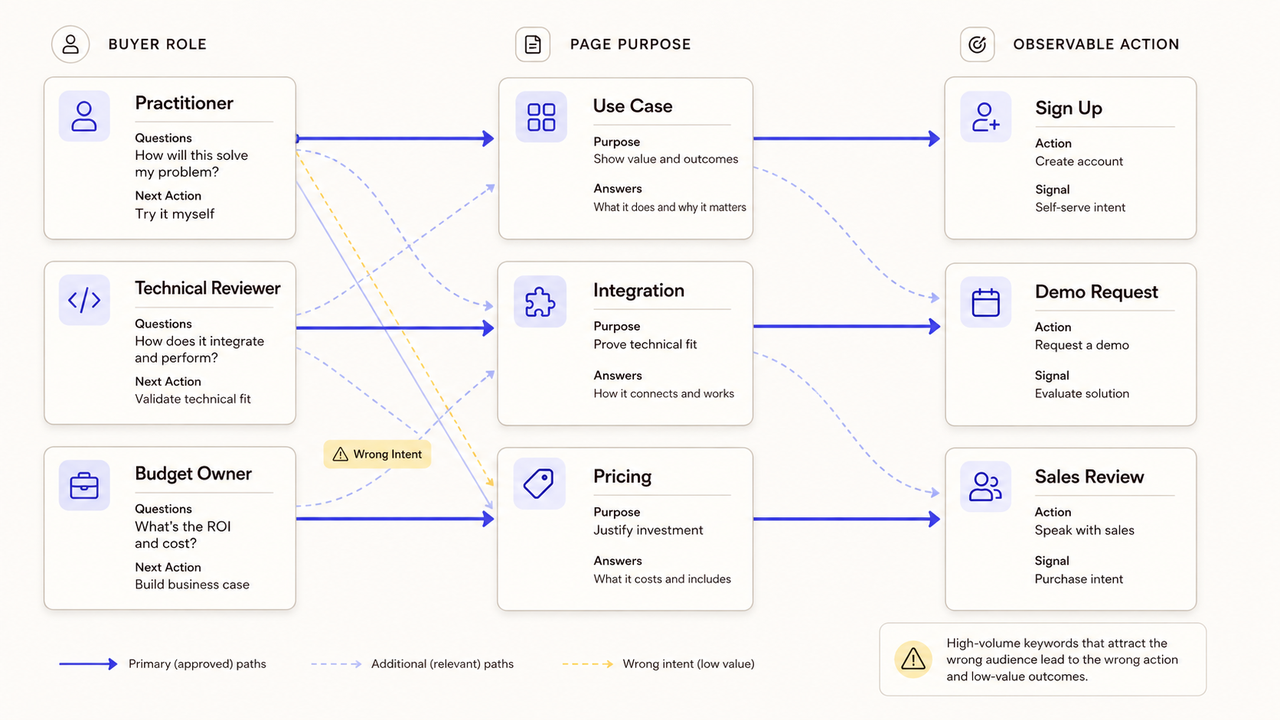
Map those journeys before approving a SaaS SEO services plan:
| Searcher | Typical question | Useful destination | Next observable step |
|---|---|---|---|
Practitioner | How can I complete this task? | Guide, template, feature page | Product exploration or signup |
Team lead | Will this work for our process? | Use-case or workflow page | Demo, trial, or internal share |
Technical reviewer | Does it fit our stack and controls? | Integration, documentation, or security page | Documentation use or technical review |
Economic buyer | Is the change worth the effort and risk? | Comparison, pricing, proof, or implementation page | Qualified conversation |
The agency should explain which journey each proposed page serves. A high-volume keyword can be a poor investment when it attracts students, consumers, job seekers, or users looking for a different product category.
The map also needs product boundaries. Record supported use cases, buyer segments, deployment model, integrations, geographic limits, terminology, and claims that require approval. Without that source of truth, a writer may create polished pages that sales, product, or security cannot stand behind.
Compare Technical, Product, and Content Scope
The technical review should reflect how the SaaS website is built and divided. Marketing pages, documentation, help centers, app routes, international folders, and subdomains may use different templates or owners.
Ask the agency how it will examine:
- crawling, indexation, canonicals, redirects, sitemaps, and internal links;
- JavaScript rendering, client-side routing, lazy loading, and metadata;
- documentation and application boundaries;
- site migrations and release dependencies;
- page templates, performance, and structured data;
- analytics events and form destinations.
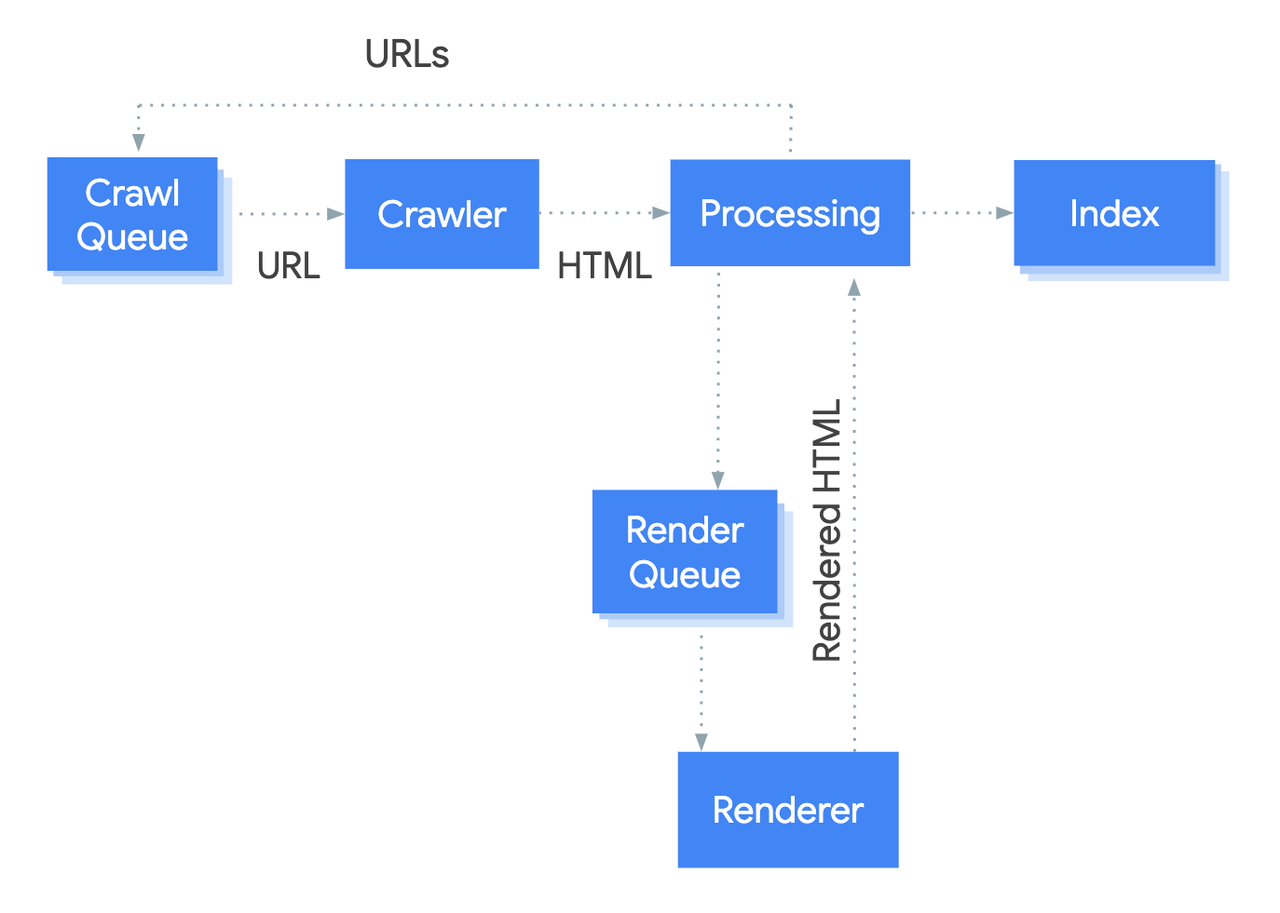
Google’s current JavaScript SEO guidance explains how Google processes JavaScript and identifies implementation details such as crawlable links. The agency still needs to test the company’s rendered pages and routes rather than treating a framework name as proof of a defect.
When marketing, documentation, and regional pages repeat similar material, ask which URL should represent it. Google’s canonicalization guidance explains that its systems select a representative URL from a group of duplicate pages.
Product scope should cover the pages that help buyers understand what the software does: features, use cases, integrations, pricing context, comparisons, migration paths, and documentation. The provider should distinguish a missing page from a product or positioning question that marketing cannot settle alone.
A B2B SaaS content strategy also needs an editorial boundary. Google recommends helpful, reliable content created for an intended audience and asks whether material demonstrates useful expertise. For a SaaS company, that means writers need access to product facts, customer questions, and qualified reviewers—not permission to invent certainty around an unfinished capability.
Define Expert Access and Content Review Responsibilities
An agency cannot create dependable product education from a keyword list and a homepage. It needs a controlled route to people who understand the product and the buyer.
Assign responsibilities before production begins:
| Role | Contribution | Approval boundary |
|---|---|---|
Product manager | Capabilities, use cases, roadmap status | Confirms current product truth |
Engineer or technical lead | Architecture, integration, and implementation detail | Reviews technical accuracy |
Sales or customer success | Objections, qualification signals, adoption friction | Supplies patterns without exposing confidential details |
Marketing owner | Positioning, audience, voice, and campaign fit | Approves publication |
Agency | Research, brief, draft, optimization, and source record | Cannot approve company claims on the client’s behalf |
Set a review window, escalation path, and rule for disputed claims. If a draft says an integration is “automatic” while engineering calls it configurable, publication should pause until the owner resolves the wording.
Preserve the brief, sources, reviewer comments, and approved version. When a feature changes, that record shows which pages inherited the old claim and who can authorize the update.
Connect Organic Performance With Pipeline Signals
Rankings, impressions, and clicks describe search visibility. They do not show whether the visitor fits the product, completes a meaningful action, or advances through a long buying process.
Define the evidence chain the agency can observe:
- query or topic reaches a landing page;
- the visitor completes a defined action;
- the product or CRM records the next relevant state;
- an owner reviews quality and progression;
- the team decides whether the page, offer, or channel needs to change.
Google Analytics documents recommended events including sign_up, generate_lead, and qualify_lead. Those names do not define the company’s lifecycle. Marketing, product, and sales must agree on what qualifies the event, where it is recorded, and whether duplicate or test activity is excluded.
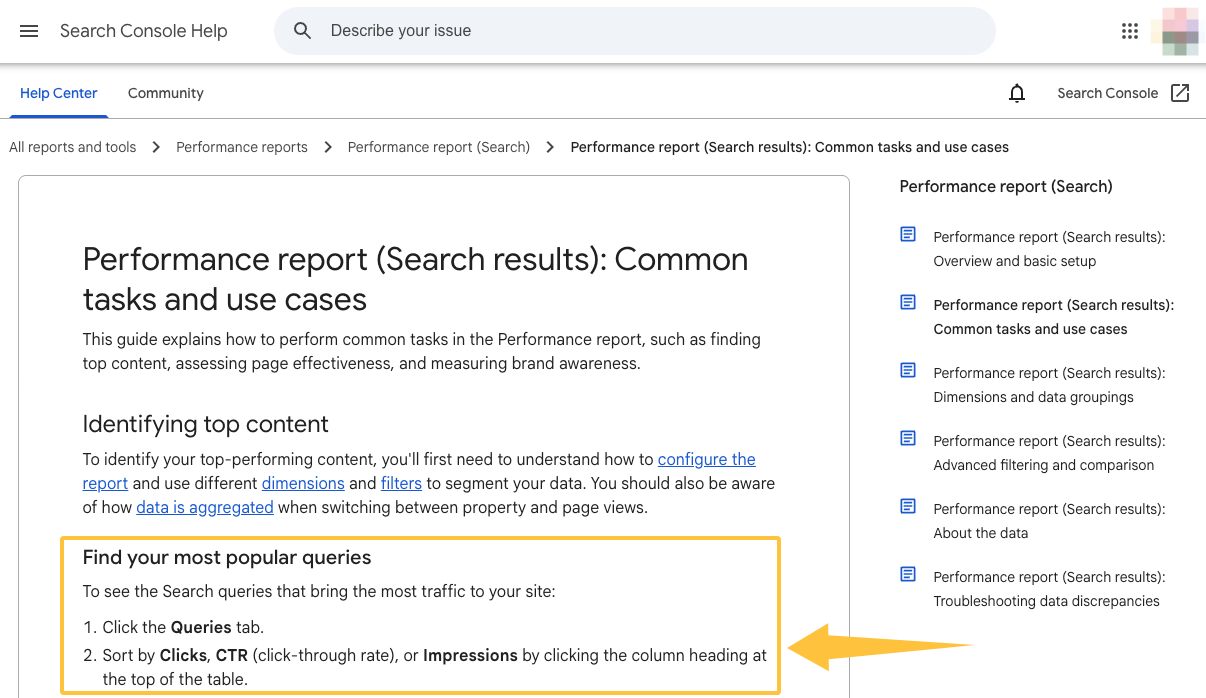
Search Console can help the team review queries, pages, impressions, and clicks through its Performance report workflows. Keep those observations separate from pipeline claims. A page can support research, sales conversations, or later branded searches without receiving the final conversion credit.
Agree on the agency’s reporting boundary. It may report organic landing-page behavior and opportunity influence while the client owns CRM accuracy, sales-stage definitions, and revenue confirmation.
Evaluate Evidence, Reporting, and Working Methods
Ask each shortlisted SEO agency for SaaS to respond to the same product and operating brief. The comparison should reveal how the team thinks, not just which tools it uses.
Review these areas:
| Question | Useful evidence |
|---|---|
How will the agency learn the product? | Interview plan, source requirements, reviewer roles |
How are technical findings documented? | Affected URLs, reproduction steps, dependency, acceptance test |
How are topics selected? | Audience, intent, product fit, evidence, destination, next action |
How is content quality controlled? | Brief, source record, expert review, revision history |
How are results reported? | Definitions, data sources, limitations, decisions |
What happens when the plan fails? | Escalation, reprioritization, paused work, scope-change rule |
Case studies can provide context, but ask which work the agency performed, which conditions existed, and which evidence can be verified. A traffic chart alone does not establish lead quality or show whether product, brand, paid media, or market changes contributed.
Reporting should name what changed and what the team should decide next. A dashboard without interpretation transfers the analysis back to the client.
Set Deliverables and the First 90-Day Priorities
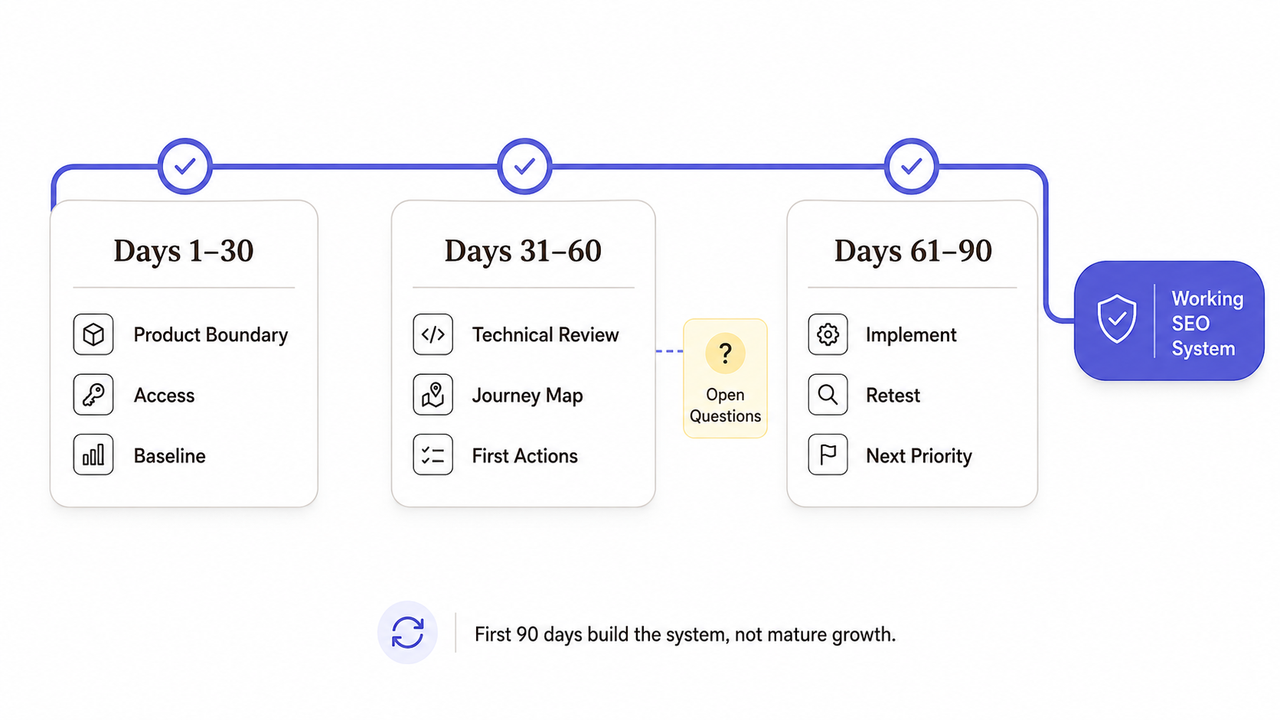
The first 90 days should establish a working system, not promise mature SaaS organic growth on a fixed date.
A practical sequence may be:
- confirm audience, product boundaries, access, and measurement definitions;
- record the technical and search baseline;
- investigate the highest-risk technical or architecture problems;
- map priority journeys and existing pages;
- approve a limited group of technical and content actions;
- implement, review, and retest the first changes;
- document open questions and set the next priority.
Attach a deliverable, owner, and acceptance condition to each phase. “Content strategy” might mean a journey map, topic boundaries, page briefs, review workflow, and publishing order. “Technical SEO” might mean a findings register and implementation tickets rather than deployed code.
The contract should state whether implementation, design, development, CRM configuration, digital PR, and ongoing content production are included. It should also define meeting cadence, revision handling, access removal, source-file ownership, and the response to missed client approvals.
Before assigning the first engagement, review relevant SEO and website optimization services through SpringBrand against the capability gap already defined.
FAQ
Is an SEO agency useful before product-market fit?
Sometimes, but keep the scope narrow. Technical foundations and search research may support learning. A large publishing program is harder to justify while the audience, problem, and offer keep moving. Search traffic cannot replace direct product and customer evidence.
What changes when a SaaS product has free and enterprise tiers?
Map separate decisions and actions for each tier. A free user may need fast setup and product education; an enterprise buyer may need implementation, security, procurement, and stakeholder material. Keep the product story consistent while assigning distinct pages, conversion paths, event definitions, and review owners.
Can SEO work continue during an acquisition?
Yes, if the parties define which brand, domain, product, and approval rules remain current. Preserve access, analytics history, URL inventories, and redirect decisions. Pause claims or migrations without an authorized owner. Send contractual, privacy, and intellectual-property questions to qualified reviewers.
How should a product-led company evaluate SEO without a sales team?
Use product actions that reflect meaningful progress, such as completed setup, qualified feature use, retained activation, or an upgrade request. Product and analytics owners must define these states. The agency can analyze the acquisition path, but it should not decide alone which behavior represents customer value.
When should security reviewers join the content process?
Bring them in before publishing pages that describe security controls, certifications, data handling, permissions, architecture, or regulated use cases. Give reviewers the source claim, intended wording, destination page, and deadline. Marketing approval should not replace security or legal review where specialized judgment is required.
Conclusion
A B2B SaaS SEO agency is a credible partner when it can connect technical work and product education to defined buyer journeys without overstating what organic data proves.
Keep strategy approval inside the company until every first-phase deliverable has an owner, a source of truth, and an acceptance condition.