B2B SEO Services: Scope, Costs, and How to Choose
Compare B2B SEO services by scope, operating model, evidence, reporting, and fit before choosing support for a lean growth team.
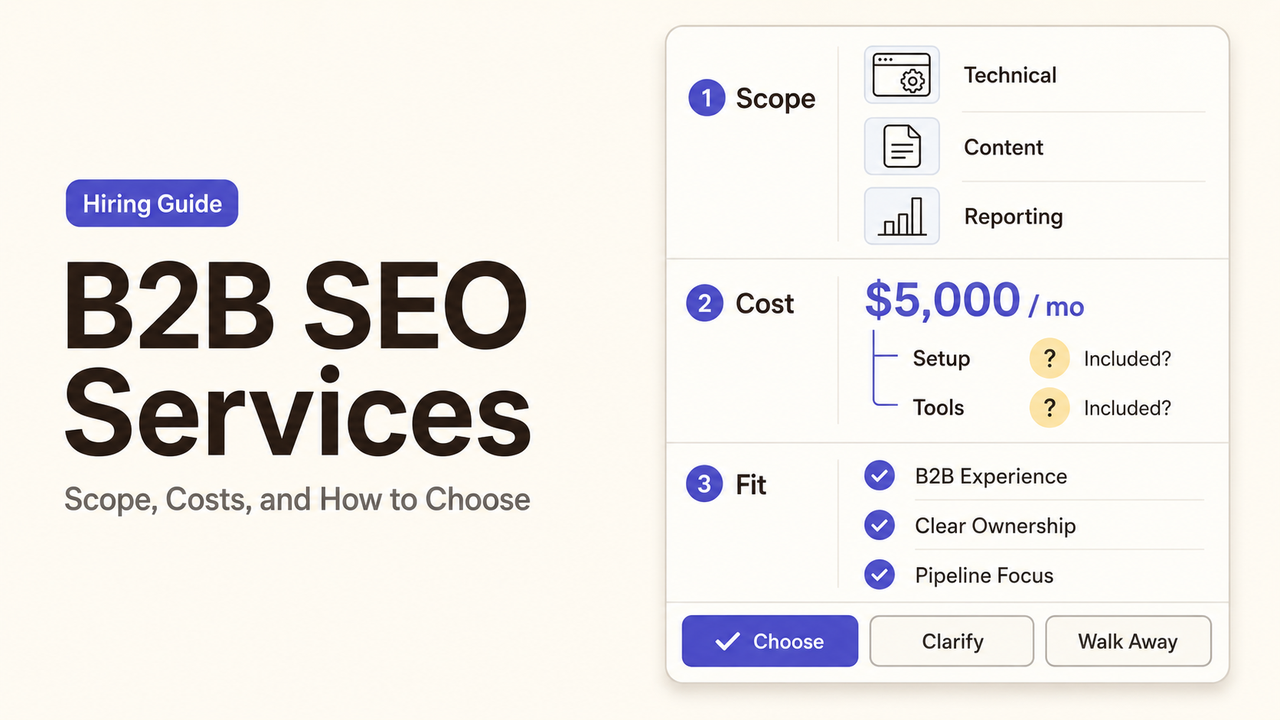
A lean marketing lead opens three proposals and finds three different products hiding under the same label. One is mostly technical cleanup, another centers on monthly content, and the third folds outreach into a larger demand program. I’m Alex. Before comparing retainers, put each proposal against the same business goal, access boundary, and 90-day definition of useful progress.
When B2B SEO Services Make Sense for a Lean Team
Outside support makes sense when search is relevant to the buying journey but the work has no reliable internal owner. It does not require the company to outsource every SEO decision.
The first question is what search needs to do for the business. That answer shapes the service more than a standard package name.
Demand Capture Versus Category Education
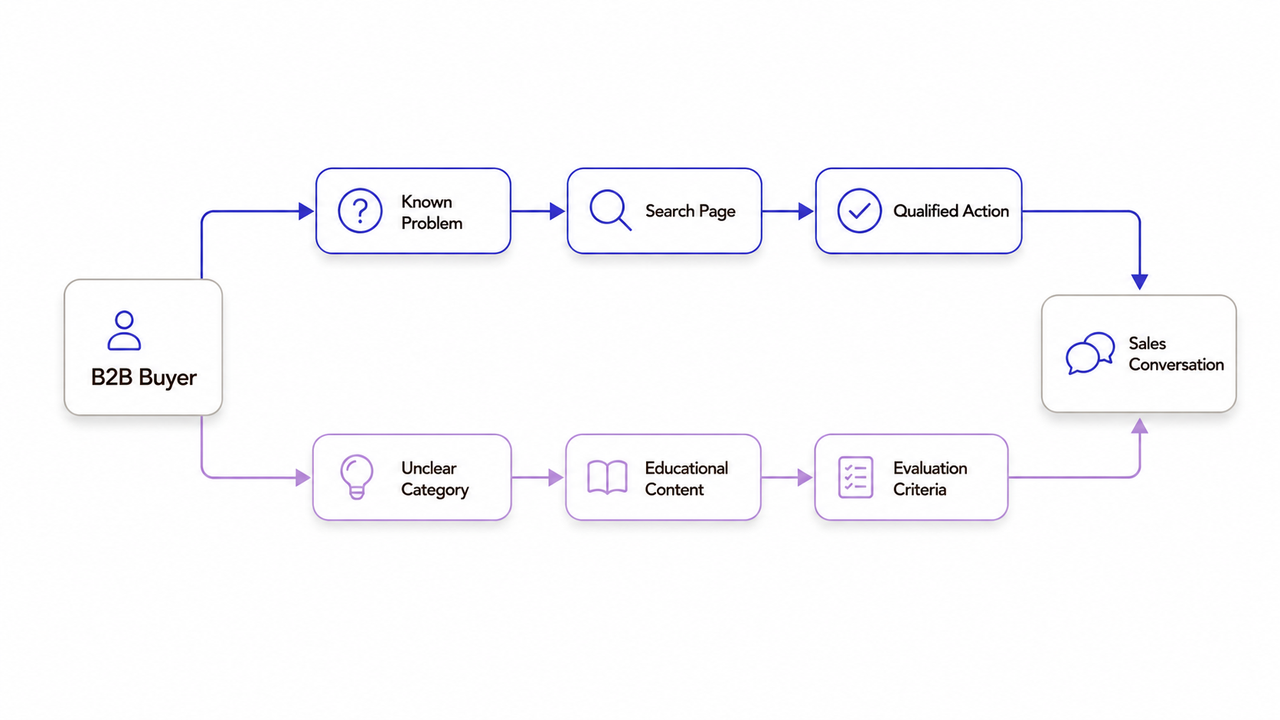
Demand capture starts with buyers who already know how to describe their problem. They may search for a product category, integration, supplier, comparison, use case, or implementation question. SEO helps those buyers find a useful page and move toward an appropriate next step.
Category education begins earlier. The buyer recognizes a problem but may not know the solution category or the language vendors use. Content then has to explain the problem, available approaches, evaluation criteria, and business consequences before a product page will make sense.
Many B2B programs need both, but not in equal proportions. A provider should show which queries and pages serve existing demand and which are intended to educate a less-informed audience.
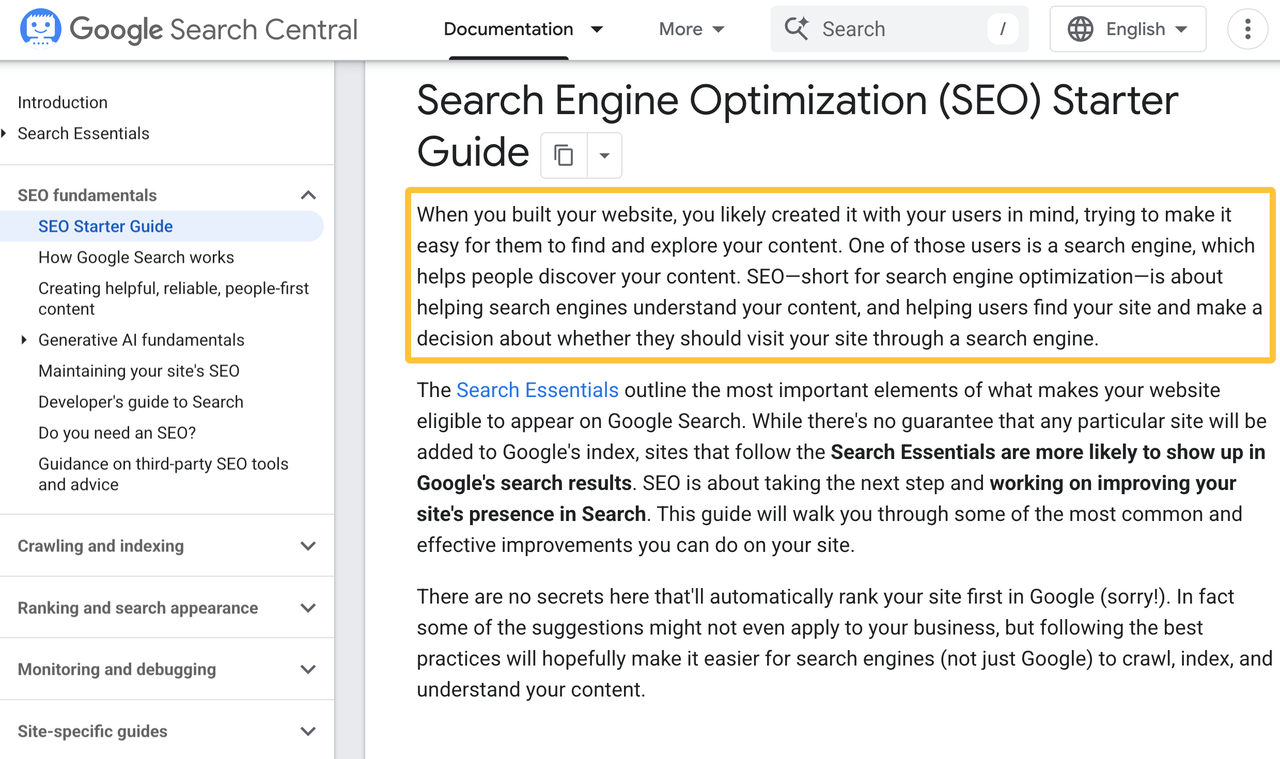
Google’s SEO Starter Guide describes SEO as helping search engines understand content and helping users decide whether to visit. It also states that there is no automatic route to a first-place ranking. Treat visibility as an operating objective, not a promised outcome.
Signs the Internal Team Needs Outside Execution
A lean team may understand its market and still struggle to maintain the work. Technical findings wait for development time. Subject-matter interviews keep slipping. Drafts reach approval without a clear reviewer, while Search Console data sits apart from sales records.
Those are execution gaps rather than proof that the entire strategy belongs outside the company.
It may be time to outsource SEO services when the team can name the desired business result but cannot consistently complete research, implementation, expert review, measurement, and updates. The internal owner should remain responsible for priorities, product truth, access approval, and the final publishing decision.
Boundary to SaaS and Manufacturing-Specific SEO Playbooks
This guide covers non-vertical B2B service procurement. Some businesses need a more specialized operating model.
A product-led software company balancing free users, enterprise buyers, product pages, and sales-assisted conversion should use the dedicated B2B SaaS SEO agency guide.
An industrial company working with applications, technical specifications, distributors, engineers, and long sales cycles should consult the manufacturing SEO agency guide. This article will not repeat either vertical playbook.
Define the Service Scope Before Comparing Providers
“Technical SEO, content, and links” is still too broad to price or approve. Each workstream needs a deliverable, client dependency, exclusion, and acceptance method.
A provider that refuses to define exclusions is not offering flexibility; it is transferring uncertainty to the buyer.
Technical SEO, Content, Authority, and Conversion Support
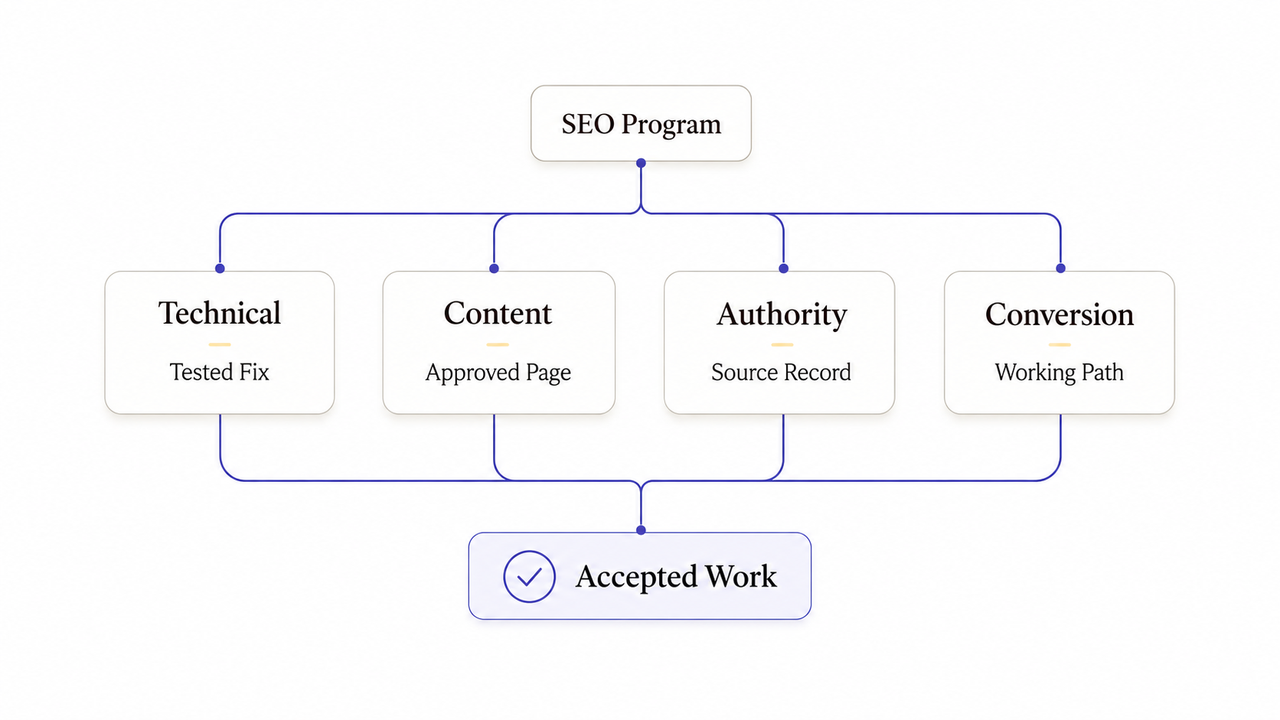
Use four workstreams to make proposals comparable:
| Workstream | Possible provider responsibility | Client decision that remains |
|---|---|---|
Technical SEO | Crawl review, indexation analysis, templates, internal links, implementation tickets | Development access, release timing, technical approval |
Content | Research, briefs, expert interviews, drafts, updates, optimization | Product accuracy, claims, brand voice, publishing approval |
Authority | Digital PR, relevant outreach, partnerships, link-gap analysis | Permitted tactics, target sites, relationship boundaries |
Conversion support | Page structure, CTA recommendations, form-path review, measurement requirements | Lead routing, CRM definitions, sales follow-up |
Technical findings should identify the affected URLs or templates, the evidence behind the issue, the proposed change, dependencies, and a repeatable acceptance test. An automated crawl export alone is not a finished audit.
Content scope should distinguish research from writing and writing from publication. If the provider interviews subject-matter experts, specify who schedules those conversations, who checks technical claims, and how unresolved comments are handled.
Authority work needs an explicit tactics boundary. Google defines link spam as creating links primarily to manipulate search rankings and lists paid ranking links, excessive exchanges, and automated link creation among its examples. A proposal should explain how outreach is selected and documented rather than hiding the method behind “authority growth.”
SEO without backlinks can still improve crawlability, page quality, internal linking, topical coverage, and conversion paths. It is not a universal answer when relevant authority is the actual constraint. The provider should diagnose that constraint before selling a volume of placements.
B2B content may also carry technical, performance, safety, financial, or regulated claims. The FTC’s guidance on advertising claims says advertising must be truthful and supported by evidence. The client needs a suitable reviewer for claims that require legal, regulatory, technical, or specialist judgment.
Project, Retainer, and Specialist Engagement Boundaries
A project fits a contained question: a migration review, technical audit, content architecture, or measurement cleanup. It needs a closing deliverable and should not quietly turn into open-ended implementation.
A retainer suits recurring work such as research, publishing, technical monitoring, reporting, and content updates. The agreement still needs a capacity rule. Clarify what happens when planned work is delayed by the client, a month contains more technical work than expected, or unused capacity remains.
A specialist engagement addresses a defined gap. The business might retain its content team while hiring technical SEO support, or keep strategy inside while outsourcing production. Record who coordinates the specialists; otherwise, each provider may complete its own task while the overall program stalls between them.
Compare B2B SEO Service Models
The best model depends on how much coordination the internal team can carry and where the missing expertise sits.
Agency, Consultant, and Specialist Team Tradeoffs
| Model | Often useful when | Main point to verify |
|---|---|---|
B2B SEO agency | Several workstreams need one coordinating provider | Who performs each discipline and what remains outside scope |
Consultant | The team can execute but needs diagnosis, priorities, or oversight | Availability during implementation and responsibility for follow-up |
Specialist team | A specific technical, content, or authority gap is clear | Who integrates the work with other providers and internal owners |
An agency may offer broader capacity, but breadth does not prove depth in every discipline. A consultant may provide strong judgment without production capacity. A specialist team can solve a difficult problem while leaving the client with more coordination work.
Compare the named people, not only the business model. Ask who will attend reviews, write content, examine the site, run outreach, and approve recommendations before they reach the client.
Cost Drivers Without Relying on Universal Price Benchmarks
Scope drives the quote. Relevant factors include the number and complexity of sites, markets, languages, templates, products, integrations, and content types. A difficult CMS, limited developer access, or a lengthy approval chain can add work without adding pages.
Content costs change with research depth, expert access, drafting volume, design needs, and regulated review. Authority work depends on the selected method and whether it includes research, original assets, outreach, or public-relations support.
Separate the service fee from media, software, development, design, research, and third-party production. Also ask which activities are capped. A quote that says “ongoing optimization” without capacity or priority rules is difficult to compare with anything else.
Vet Providers Using Evidence and Process
Provider evaluation should answer two questions: can this team diagnose the right problem, and can it work inside your operating constraints?
Past results matter, but they need context. A traffic chart without the starting position, market, work completed, and measurement method is not enough to support a buying decision.
Methodology, Reporting, and Ownership Questions
Ask the provider to walk through a recent deliverable with identifying information removed. A prioritized issue register, content brief, implementation ticket, change log, or reporting view shows how the work moves from observation to action.
The methodology should explain:
- how priorities are chosen;
- which evidence supports a recommendation;
- who implements each change;
- how content claims are reviewed;
- how approved changes are recorded;
- what happens when results differ from the working assumption.
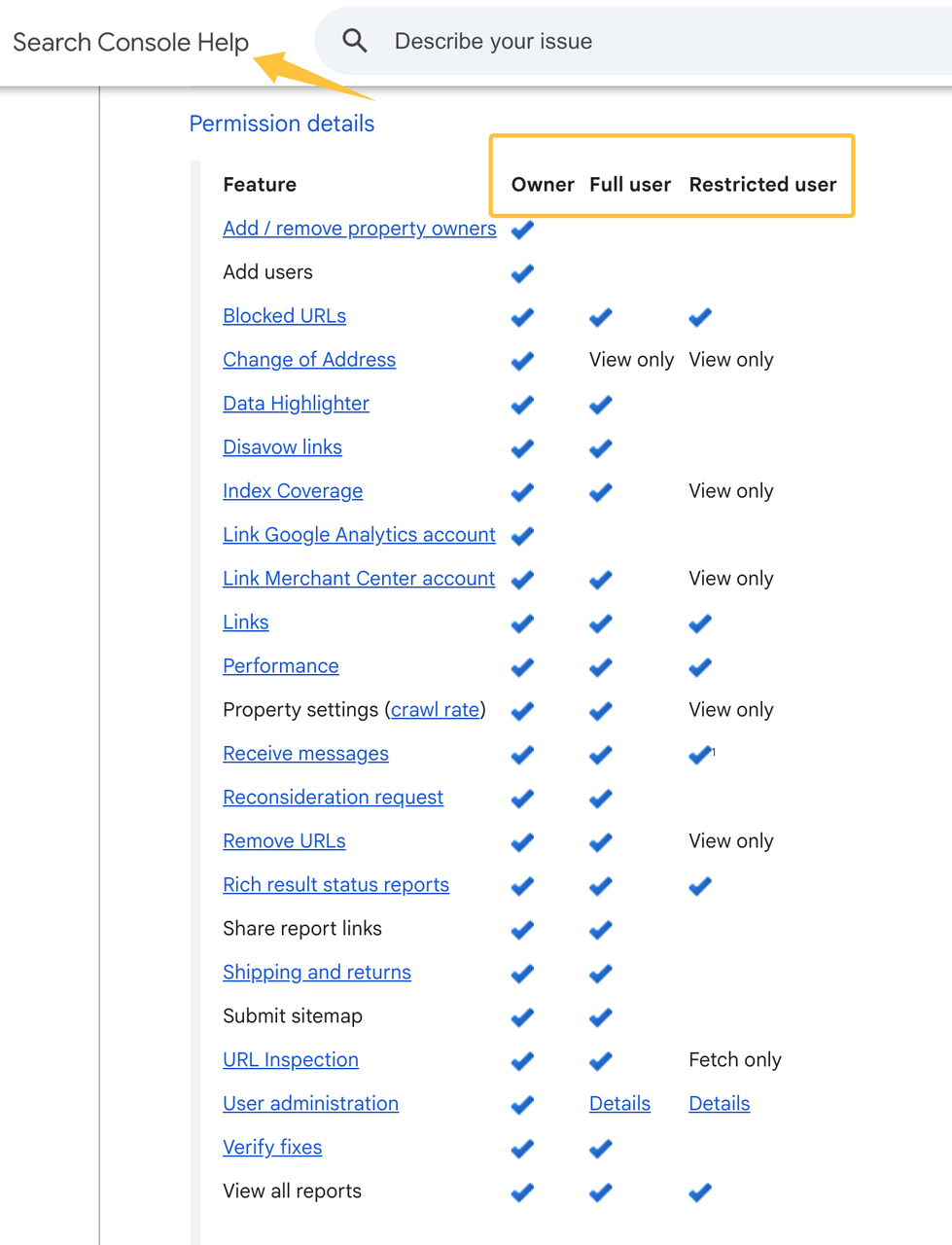
Keep ownership of the website, analytics, Search Console, content files, and business records with the company. Google documents distinct Search Console permission levels, including owner, full-user, and restricted-user roles. Give the provider the level required for the task and maintain at least one verified internal owner.
Reporting should connect activity, search observations, and business response without pretending they are the same metric. A page can gain impressions without generating qualified interest, and a qualified opportunity may involve several touchpoints that SEO reporting cannot fully attribute.
Warning Signs Behind Ranking or Pipeline Guarantees
A ranking guarantee avoids the real questions: for which query, location, device, page, duration, and business purpose? Search results change, and no provider controls the search engine.
Pipeline guarantees are equally difficult to support when the provider does not control pricing, product fit, sales response, lead qualification, or CRM hygiene. A forecast can state assumptions. It should not be presented as a certainty.
Be cautious when a proposal relies on proprietary methods that cannot be explained, refuses to identify link tactics, promises publication without client review, or uses case-study numbers without context. A showreel is useful. So is a case study. Neither explains how the provider will work on your site.
Build a Brief and a 90-Day Acceptance Plan
A service brief prevents providers from solving different versions of the problem. It also gives the buyer a record against which the first phase can be reviewed.
The 90-day plan should test the working relationship, quality of diagnosis, and ability to deliver—not promise that every search outcome will mature within a quarter.
Business Context, Audience, Sales Cycle, and Priorities
Give each provider the same starting information:
- business model, markets, and priority offers;
- primary buying roles and common questions;
- typical sales cycle and meaningful conversion points;
- current website, content, analytics, and CRM setup;
- known technical or organizational constraints;
- internal owners for development, content, sales, and approval;
- work that is explicitly outside the engagement.
Add the business reason for acting now. A migration, declining visibility, weak non-brand discovery, new market, incomplete content library, or implementation backlog leads to a different first phase.
Do not send unrestricted customer or CRM exports merely to make the brief appear complete. Start with aggregated or redacted information when it can answer the business question.
Baseline, Deliverables, Review Cadence, and Handoff
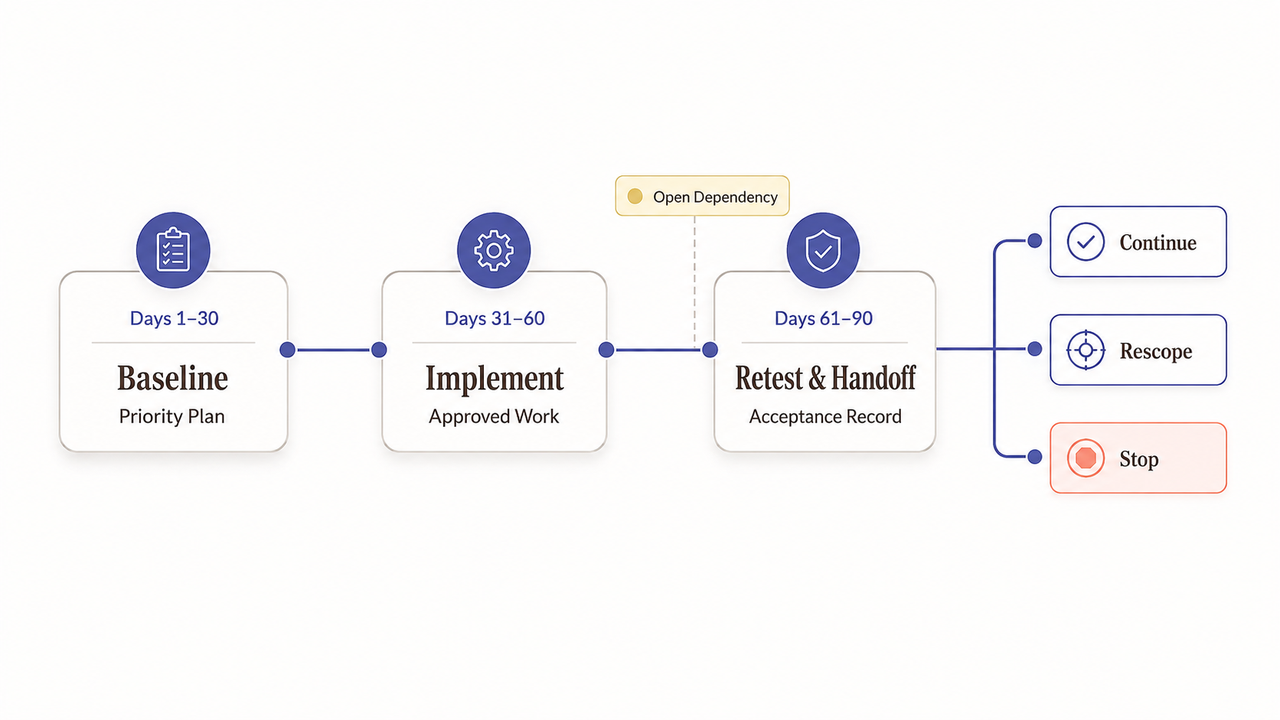
During the opening month, the provider should establish access, record the baseline, test the working assumptions, and produce a prioritized plan. The baseline may cover relevant queries, landing pages, indexation, existing content, known technical issues, and the client’s definition of a qualified response.
The next phase should leave an implementation record: approved briefs, completed fixes, updated pages, decision logs, and unresolved dependencies. Review work often enough to correct direction before a large batch is produced.
By the end of the 90 days, require a recheck of completed items, early performance observations with appropriate limits, an updated backlog, and a handoff record. The report should distinguish what changed, what remains open, who owns the next action, and which assumption still needs more evidence.
This is an acceptance plan, not a ranking deadline. Continue the engagement when the work is reproducible, useful, and operable inside the client team. Re-scope or stop when access, quality, ownership, or delivery remains unresolved.
How SpringBrand Fits This Workflow
SpringBrand can help structure the request and match it with relevant third-party services. It does not become the B2B SEO agency, certify the provider, or guarantee the resulting work.
Use SpringBrand’s service-matching workflow to turn the brief into comparable third-party options while keeping provider selection and approval with your team.
FAQ
Can an SEO Provider Access CRM Lead Data?
Yes, when access is necessary, approved, and appropriately limited. NIST defines least privilege as restricting users or processes to the minimum resources needed for assigned tasks. Start with aggregated or redacted data where possible. For direct access, document the fields, purpose, retention, security controls, removal date, and people authorized to use the data.
What Must Be Disclosed When an SEO Provider Uses Subcontractors?
The contract should identify whether subcontractors may be used, which work they perform, what systems or confidential material they can access, and who remains responsible for delivery. The client may also need information about location, data handling, security, conflicts, and further delegation. Requirements vary, so review the contract, privacy obligations, applicable law, and internal procurement policy with qualified professionals where necessary.
May an SEO Provider Show a Client’s Logo in Its Sales Deck?
Only with appropriate permission. Completing paid work does not automatically establish the right to use the client’s name, logo, results, screenshots, or testimonial in marketing. Permission should cover the asset, context, channels, duration, and any approval or withdrawal process. Trademark, confidentiality, publicity, and contract questions should be reviewed under the applicable agreement and law.
How Should SEO Content Be Reviewed in a Regulated B2B Market?
Assign a qualified internal reviewer before production begins. Keep a claim register with the source, evidence date, limitations, required disclosure, approver, and approved wording. Route each claim through the review required by the company’s industry, jurisdiction, and publishing policy. An SEO provider can manage the editorial workflow but should not silently become the legal, regulatory, medical, financial, or technical authority.
Can a Provider Publish SEO Content Under an Employee’s Name?
Not merely because the provider wrote the draft. The employee, employer, and publication owner should approve the byline arrangement, contribution expectations, editing process, and ongoing responsibility for updates. Do not attach an employee’s name to opinions, expertise, or experience the person has not reviewed or agreed to represent. Contract, employment, disclosure, and professional rules may also apply.
Conclusion
B2B SEO services are ready to buy when the scope, permissions, owners, deliverables, and exclusions can be compared without relying on a ranking promise. Close the first 90 days only when the completed work, supporting evidence, unresolved dependencies, and next owner are all attached to the same acceptance record.