Amazon SEO Services: What Sellers Should Know
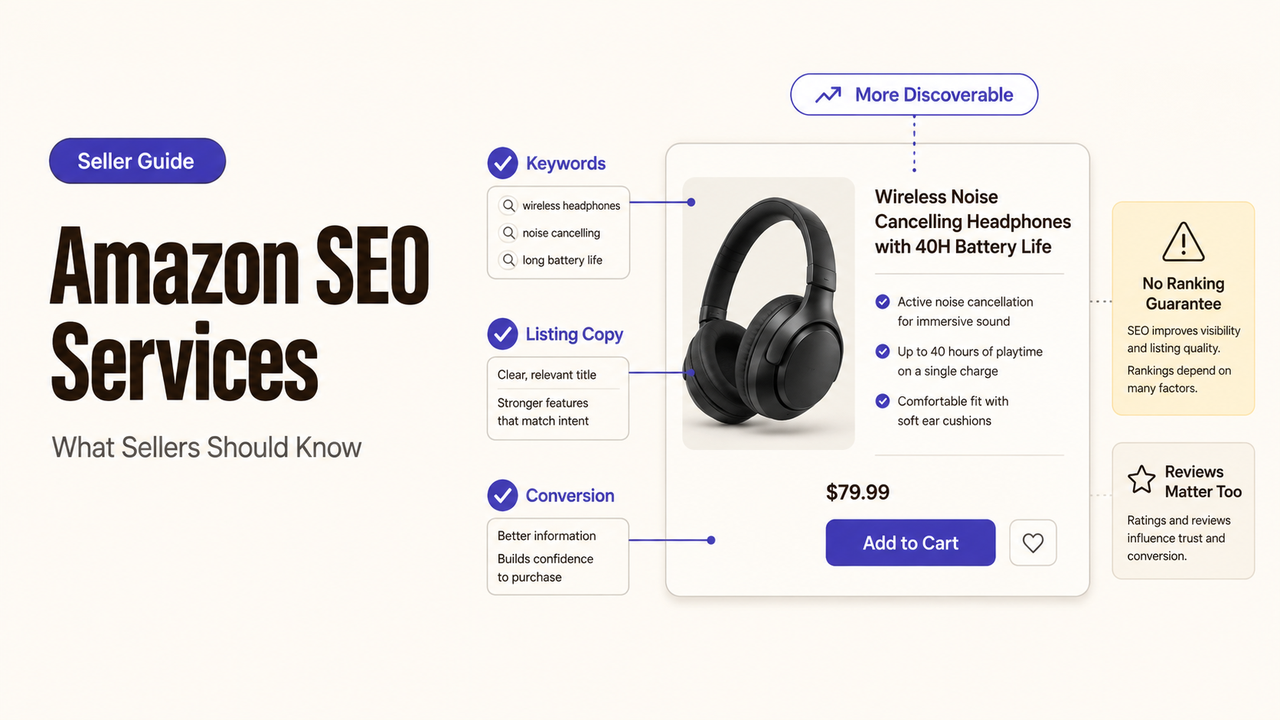
Amazon SEO services can include listing research, catalog content, account controls, policy monitoring, and provider-supported optimization.
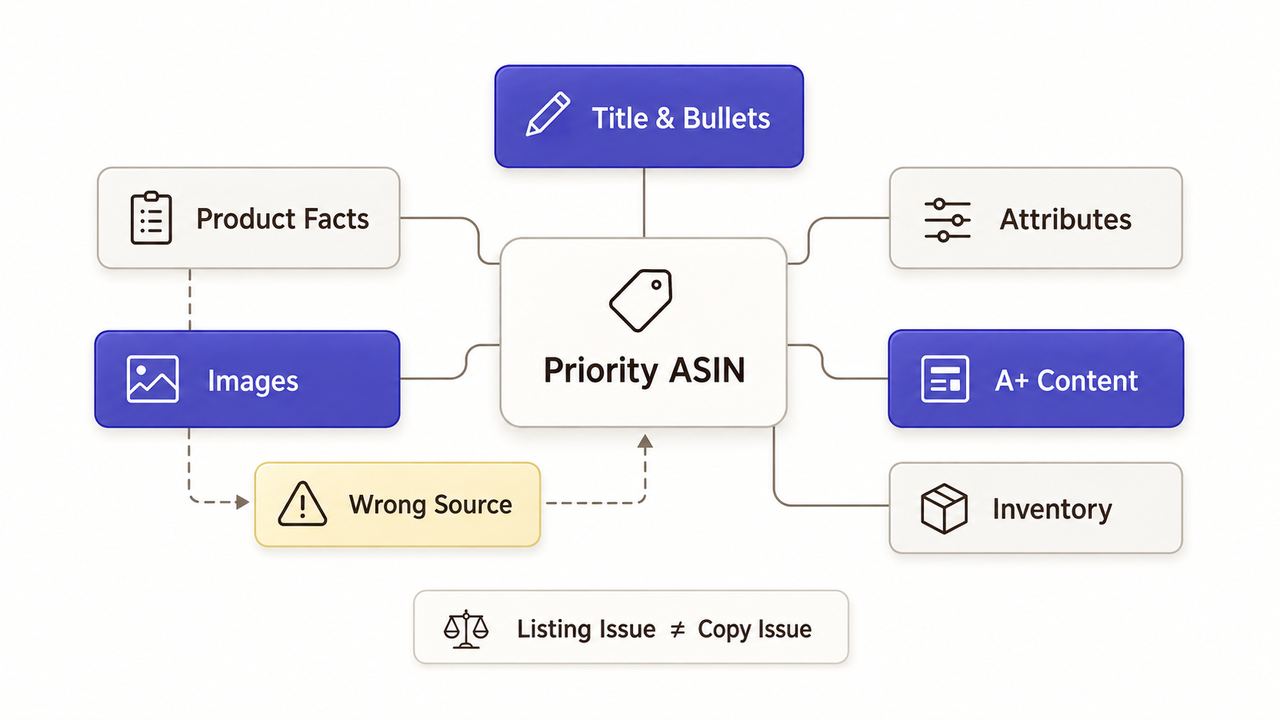
A seller opens a priority ASIN and finds that the title has reverted, one bullet has disappeared, and an earlier product image is live again. The provider’s report says the listing was optimized the day before. The marketplace record shows a different state.
That gap matters more than the number of keywords in the report.
I’m Alex. When evaluating Amazon SEO services, I would first establish which catalog fields the provider can influence, who approves each change and how the seller will know what Amazon actually accepted. This guide explains that operating scope without promising rankings, traffic or sales.
Amazon features and policies can change by marketplace, account type and product category. Sellers should check the current Seller Central documentation and obtain qualified legal or policy advice when needed.
What Amazon SEO Services Can Cover
Listing research, content, catalog work, and performance review
Amazon SEO commonly begins with research into how shoppers describe a product and which information helps them compare options. A provider may review search behavior, competitor listings, category conventions, customer questions and the seller’s own catalog data.
Content work can include titles, bullet points, descriptions, backend terms, images, product attributes and eligible A+ Content. The provider may also identify incomplete fields, inconsistent variation relationships or information that does not match the actual product.
Amazon describes a listing as a product detail page combined with one or more offers. Its current guide to creating Amazon product listings separates product identity, description, details, offer information and safety or compliance inputs. That structure matters because not every visible problem belongs to copy.

Performance review may cover search visibility, impressions, clicks, cart activity, conversion and sales where the seller has access to those records. The provider should explain which data came from Amazon, which came from an external tool and which conclusions remain uncertain.
Ecommerce SEO tools can support keyword discovery and tracking. They should not be treated as authoritative evidence of Amazon’s internal ranking logic.
Amazon listing operations versus advertising and general ecommerce audits
Listing optimization is different from paid advertising. A provider may research search terms that inform both organic content and campaigns, but PPC management services involve separate budgets, bids, targeting, creative approvals and reporting.
State clearly whether advertising is excluded, included or handled by another provider. Do not allow organic results and paid visibility to merge into one unexplained performance claim.
A storewide technical review is another adjacent service. Businesses that need to assess product templates, filters, crawlability or platform-wide architecture can use the guide to ecommerce SEO audit services. This article stays inside Amazon’s marketplace and catalog workflow.
An Amazon provider should not deliver a generic website crawl and call it a marketplace audit. The useful work begins with ASINs, catalog fields, seller permissions, marketplace rules and the live content customers can see.
Understand the Inputs the Service Requires
Catalog quality, inventory, brand assets, and account ownership
Before requesting optimization, identify the products the provider should review and the condition of their catalog data.
The input set may include:
- ASINs and SKUs;
- approved product names and brand terms;
- dimensions, materials and technical attributes;
- safety or compliance information;
- current images and usage rights;
- inventory status and fulfillment method;
- variation relationships;
- eligible A+ Content;
- marketplace and language;
- previous listing changes or policy notices.
A provider cannot safely improve a listing when the underlying product facts are unreliable. Marketing language should not fill gaps in dimensions, compatibility, ingredients, performance or included accessories.
Inventory deserves attention too. Ranking a product that cannot remain available may not be the immediate priority. The seller might instead focus on another ASIN, correct catalog issues or prepare content for a confirmed restock.
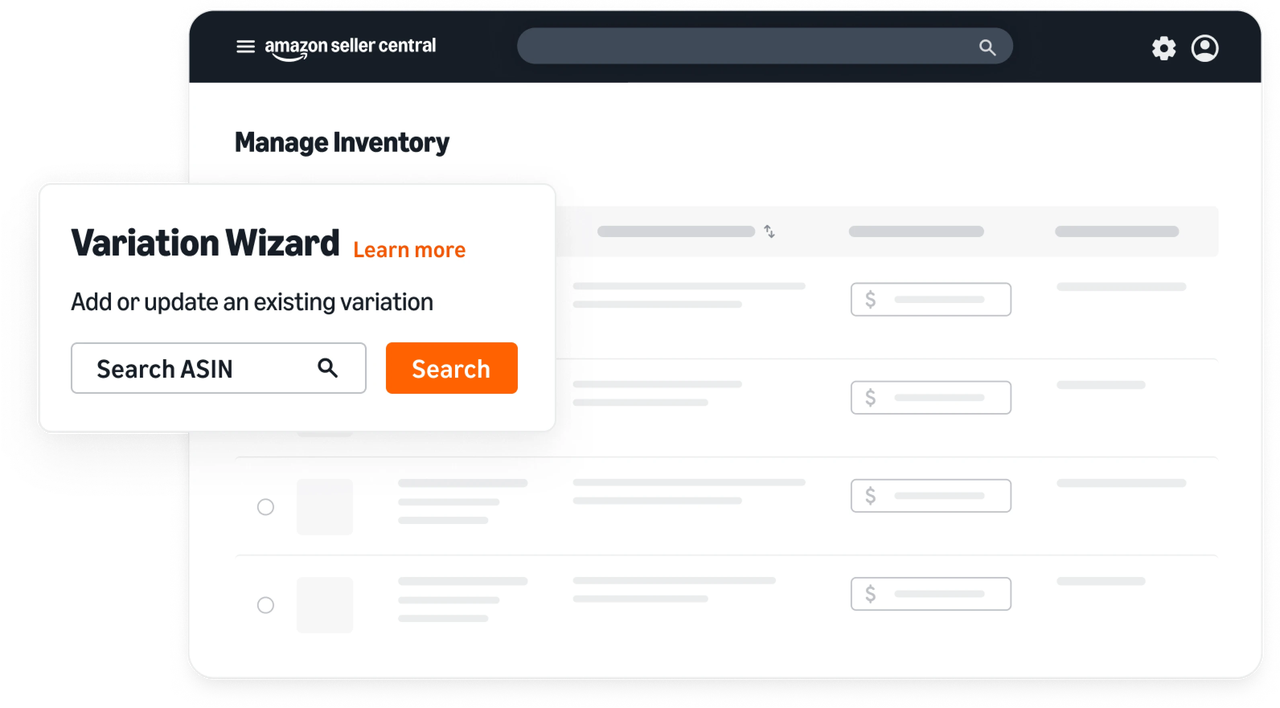
Account ownership should be settled before work begins. The seller should retain control of Seller Central, Brand Registry, advertising accounts and any connected analytics or research tools.
Goals, constraints, and problems a provider can influence
“Improve Amazon SEO” is too broad to guide a proposal. Name the observed problem.
A seller may need to:
- improve weak or incomplete product content;
- correct inconsistent attributes across a family;
- investigate poor visibility for relevant searches;
- prepare listings for another marketplace;
- organize a catalog after a brand or packaging change;
- create a controlled testing plan;
- document recurring unauthorized edits.
Then identify the constraints. Some products have strict category requirements. Others involve regulated claims, reseller contributions, limited inventory or assets still awaiting approval.
The provider can improve research, content quality, catalog organization and monitoring. It cannot control every competitor action, Amazon system decision, customer response or marketplace change.
Put that boundary into the brief. It protects the seller from guarantees and gives the provider a problem it can actually investigate.
Define Scope and Access Controls
Products, marketplaces, deliverables, and approval rights
List the ASINs and marketplaces covered by the engagement. A change suitable for one language or region should not be copied elsewhere without reviewing local product facts, search behavior and applicable requirements.
For every product, state which deliverables are included:
| Deliverable | Scope question |
|---|---|
Keyword research | Which marketplace, data source and review period? |
Listing copy | Titles, bullets, descriptions, attributes or backend terms? |
Images | Direction, production, resizing or uploading? |
A+ Content | Brief, copy, design, build or submission? |
Catalog work | Recommendations only or direct field changes? |
Reporting | Which ASINs, metrics and comparison dates? |
Monitoring | How often and what triggers escalation? |
Approval rights should be equally specific. Product claims may require technical, regulatory or legal review. Brand teams may need to approve images and terminology. The account owner should approve high-risk catalog changes and any use of sensitive seller data.
Do not let “full optimization” become standing permission to edit every product. Define the change window, approval state and fields the provider may touch.
Account permissions, data handling, and change logs
Use Seller Central’s permission tools rather than sharing the primary login. Amazon’s public Seller Central overview states that sellers can manage account access through user permissions.
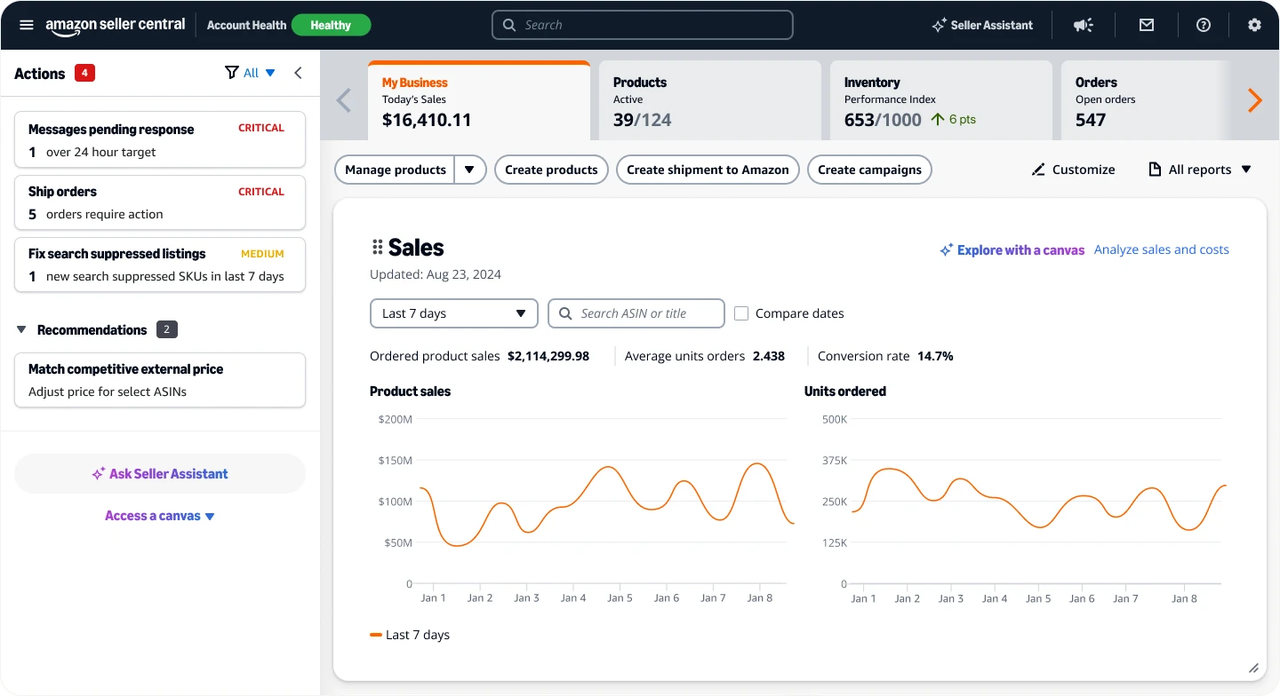
Give each person only the access required for their assignment. Record the user, permission, purpose, approving owner and expected removal date. Review access whenever the provider’s role changes.
The data boundary should cover catalog exports, search reports, advertising data, sales records and customer-related information. The agreement should say where files are stored, who may download them and whether subcontractors or external tools receive them.
Maintain a change log containing:
- ASIN and marketplace;
- original field or captured state;
- proposed content;
- approving person;
- submission date;
- submitting user;
- live result;
- unexpected overwrite or rejection;
- next action.
A submitted update is not the same as a live update. Acceptance should be based on the marketplace state, not merely the provider’s confirmation that it clicked “Save.”
Understand Provider Roles and Limits
Where provider expertise can support the catalog workflow
An experienced provider can connect search research with catalog operations. It may recognize when a content problem is actually caused by an incorrect attribute, variation structure or ownership conflict.
The provider can also help the seller separate discovery from conversion. A relevant search term may deserve inclusion, but the product page still needs accurate information, clear images and an offer that customers can evaluate.
Amazon’s current SEO guide for sellers discusses keyword research, titles, descriptions, backend terms and performance tools. It also distinguishes organic optimization from Sponsored Products and other advertising formats.
When comparing an Amazon SEO agency or specialist, ask which parts of that workflow it performs directly. Some providers only produce keyword maps and copy. Others upload content, coordinate Brand Registry issues or monitor changes after publication.
Neither model is automatically better. The proposal must say which one you are buying.
Limits around guarantees, reviews, and policy workarounds
No provider can guarantee an Amazon search position or sales outcome. Rankings and conversion can be influenced by factors beyond the provider’s control, including inventory, offer conditions, competition, account health and marketplace changes.
Reject tactics that depend on misleading product information, irrelevant keywords, review manipulation or attempts to evade a policy. A temporary visibility gain does not justify account risk.
Amazon’s current seller guidance on customer product review policies warns against incentives, requests to change reviews, review clubs and third-party services that sell or manipulate reviews.
The seller remains responsible for the conduct of people working on its behalf. “The agency did it” is not an adequate account-control process.
When a provider proposes a workaround, request the relevant current policy, the exact account action and the person accepting the risk. If the policy basis cannot be established, keep the change unapproved.
Review Results and Maintain Account Oversight
Baseline, controllable metrics, tests, and review cadence
Capture a baseline before editing the listing. At minimum, record the content currently live, review date, relevant ASINs and available performance measures.
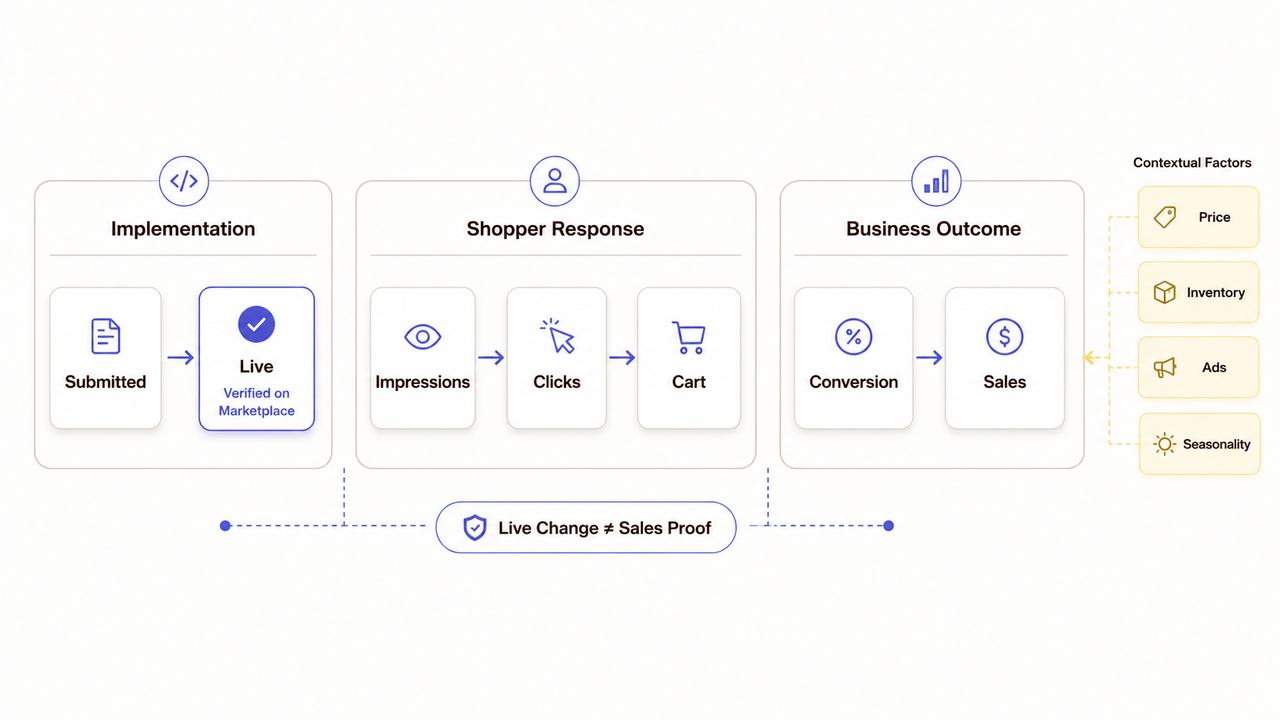
Depending on account eligibility and scope, a review may examine impressions, clicks, cart actions, conversion, sales, search-query visibility and content experiments. Do not combine different periods, marketplaces or ASINs without explaining the comparison.
Separate three questions:
- Was the approved content submitted?
- Did Amazon accept and display it?
- Did shopper behavior change afterward?
The first two are implementation questions. The third requires enough time and context to interpret. A traffic or sales change may coincide with price, inventory, reviews, advertising or seasonality.
Use tests where the account and content type support them, but define the hypothesis before changing the page. A test should compare a controlled difference, not several simultaneous rewrites followed by a confident conclusion.
Set a review cadence that matches sales volume and operational risk. Low-volume products may need more time before results are interpretable.
Policy monitoring, documentation, and exit handoff
The provider should identify which Amazon policies affect the assigned work and how the team will monitor changes. The seller still needs an internal owner for policy notices, account health and escalations.
Keep the current brief, approved content, research files, change log, reports and policy correspondence together. If an edit is reversed, the record should show whether Amazon, another contributor or the provider changed it.
At exit, require:
- current listing and research files;
- live and pending changes;
- unresolved catalog issues;
- marketplace-specific notes;
- tool exports owned by the seller;
- access and user list;
- policy notices or support cases;
- test history and reporting definitions.
Remove access only after confirming that the seller has received the material and can continue the workflow. The handoff is incomplete if the business receives a spreadsheet but cannot explain which version is approved.
How SpringBrand Fits This Workflow
SpringBrand can help a seller organize the request and compare relevant independent Amazon services. It does not operate Seller Central, certify provider compliance or guarantee rankings and sales.
Turn the approved Amazon catalog backlog into a comparable service request before choosing an independent provider.
FAQ
Can a provider use a seller's logo in its public portfolio?
Not without appropriate authorization. Access to the logo for listing work does not automatically include permission to publish it in a portfolio, sales deck or social post.
The agreement should identify the logo, proposed context, duration and whether the seller’s name or performance claims will appear beside it. Trademark, copyright, confidentiality and endorsement questions should be reviewed by qualified professionals where necessary.
May a provider reuse anonymized engagement data in a conference presentation?
Only after checking the agreement, confidentiality obligations, privacy requirements and whether the data can still identify the seller or product.
Removing a company name may not be enough when an ASIN, category, campaign date or unusual result makes the source recognizable. Obtain explicit approval for the presentation and record which data, charts and conclusions may be shown.
Can competitor trademarks appear in backend search terms?
Do not assume they can. Amazon has previously identified other brand names among prohibited backend terms, but marketplace guidance and field rules can change.
Check the current “Using search terms effectively” guidance in the relevant Seller Central marketplace before submission. Trademark or comparative-use questions may require qualified legal review. The provider should never add competitor terms without showing the seller exactly what will be submitted.
How should suspected unauthorized listing edits be escalated?
Capture the live page, affected field, marketplace, ASIN, date and known previous value. Check the account’s users, contribution history where available, Brand Registry status and recent provider activity.
Do not repeatedly overwrite the field without understanding the conflict. Assign one internal owner to coordinate the provider, Amazon support and any authorized resellers while preserving case IDs and submitted evidence.
Can AI-generated product images be used in an Amazon listing?
Amazon provides optional generative tools for listing content and A+ Content, including image features described in its current AI listing guidance. The seller is still responsible for reviewing and approving the proposed content.
Check the current image requirements for the product category and marketplace. The image must represent the product accurately, and the seller must have the necessary rights to its inputs and final use. Do not publish an image that invents accessories, packaging, features or results.
Conclusion
Amazon SEO services are most useful when research, catalog content, permissions and live marketplace changes are treated as one controlled workflow.
Define the ASINs, marketplaces, fields and approval rights before granting access. Judge providers by the evidence they preserve, the changes Amazon accepts and the clarity of the handoff—not by ranking promises.
The engagement can close when the seller knows what changed, which version is live, what remains unresolved and who still has authority to modify the account.