Shopify SEO Experts: When to Hire and What to Expect
Shopify SEO experts can help when store growth is blocked by technical, content, or merchandising issues. Compare scope, evidence, and hiring fit.
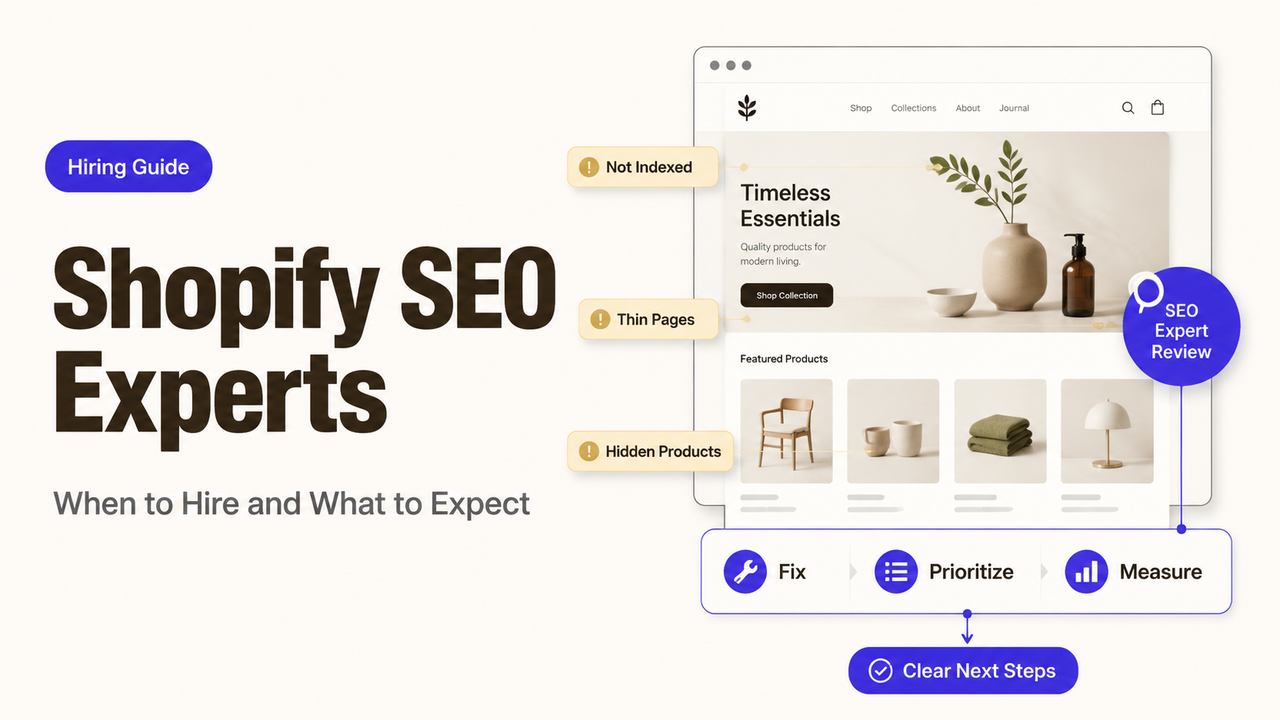
A Shopify store can have healthy demand and still stall in organic search because products sit too deep in the navigation, collection pages offer little help, or a theme change affects shared templates. Outside support may be useful at that point, but an expert title alone says nothing about the diagnosis, handoff, or approval process. This guide shows how to assess Shopify SEO experts by the store problem they can isolate, the work they can scope, and the evidence they leave behind; I’m Alex, and I would establish that chain before discussing an ongoing engagement.
Quick Fit: When a Shopify SEO Expert Is Worth Hiring
Hiring an expert makes sense when the store has a material search problem but the team cannot confidently identify its cause or coordinate the fix.
Good reasons to seek help include:
- Important products or collections are not being discovered or indexed as expected.
- Organic traffic has fallen after a theme, navigation, domain, or app change.
- Similar collections or product variants are competing with one another.
- Product and collection templates need changes across many URLs.
- Merchandising decisions repeatedly conflict with search requirements.
- Several markets, languages, or regional catalogs must be managed together.
- The team has a long audit list but cannot decide what to fix first.
A consultant may be unnecessary when the remaining work is narrow and already understood. Updating a few page titles, improving several product descriptions, or adding internal links can often stay in-house if someone owns the work and can check the result.
The dividing line is not store size. It is whether the problem crosses enough pages, systems, or teams that diagnosis and implementation are no longer straightforward.
Define the Store Growth Problem Before Hiring
“Improve our Shopify SEO” is too broad to price or approve. Begin with the business symptom and the affected part of the store.
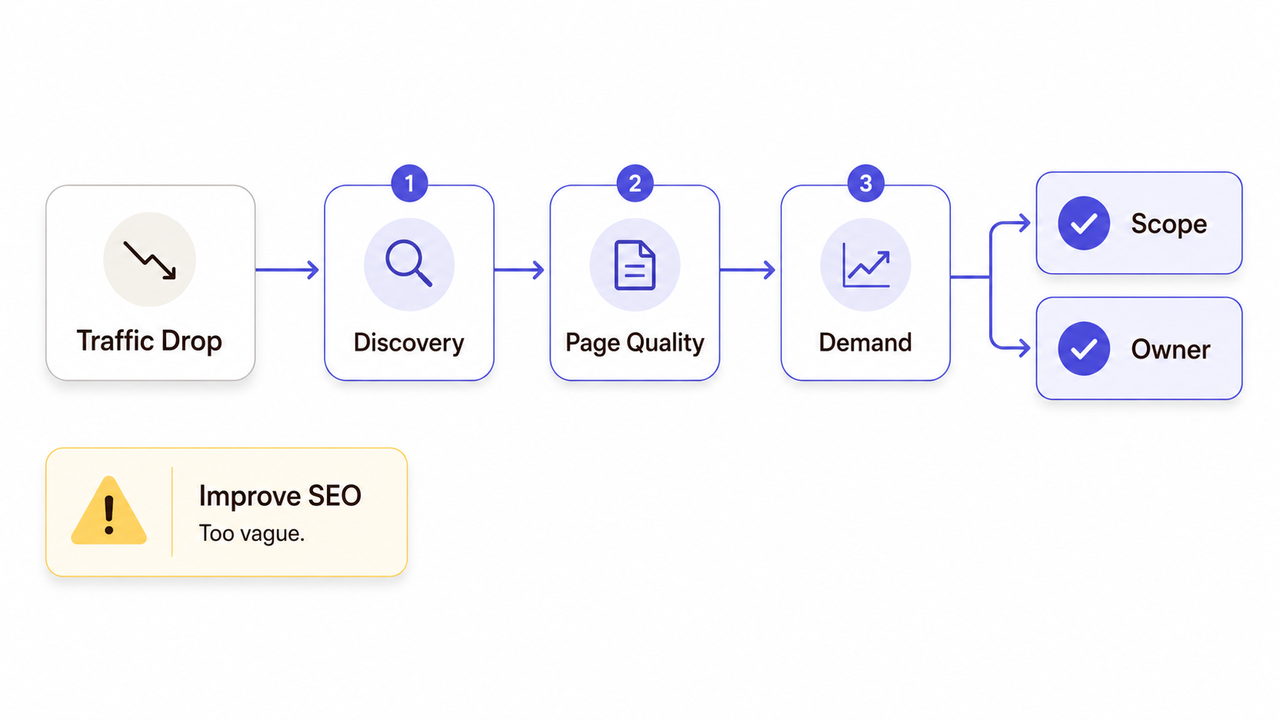
A usable brief might state:
Organic visits to three priority collections have declined since the navigation changed. We need to determine whether discovery, page quality, internal links, or search demand is responsible before approving template work.
Include five items in the initial brief:
| Brief field | What to record |
|---|---|
Business objective | Which products, collections, or markets matter |
Observed problem | What changed in traffic, visibility, indexing, or sales behavior |
Evidence available | Search Console data, analytics, crawl records, release notes |
Known changes | Theme releases, app installations, migrations, catalog updates |
Decision needed | Diagnosis, prioritized plan, implementation, or monitoring |
Traffic alone does not identify the fault. Demand may have changed, rankings may have moved, pages may have disappeared from search, or visitors may be arriving without finding the right products. A capable ecommerce SEO consultant should separate those possibilities before proposing a large package.
Compare Technical, On-Page, Content, and Merchandising Scope
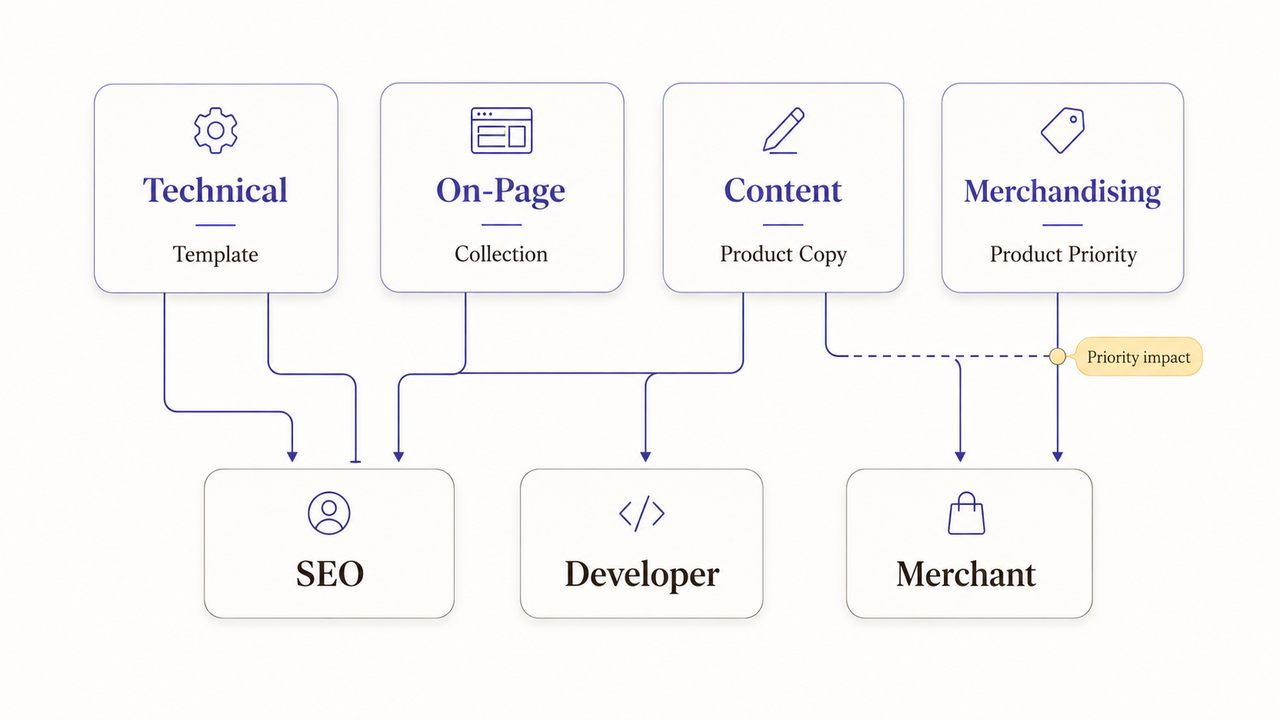
Shopify SEO services often use the same labels while covering different work. Open the scope and identify which person handles each layer.
Technical work
Shopify provides several built-in SEO elements, including automatically generated canonical tags, sitemap.xml, robots.txt, and editable page metadata. Those defaults reduce setup work, but they do not establish that the store’s architecture, templates, redirects, or rendered pages are correct. Shopify’s SEO overview explains both the built-in features and the elements merchants still need to manage.
Technical scope may include:
- Crawl and indexation analysis
- Canonical and redirect review
- Theme-template inspection
- Structured-data testing
- Internal-link and navigation analysis
- App-generated page or script review
- Performance investigation
- Migration planning
Ask whether the expert only documents problems or also changes themes, templates, navigation, and redirects. Shopify technical SEO can require developer support, particularly when the proposed fix affects Liquid code, JavaScript, shared sections, or third-party apps.
On-page and content work
On-page work may cover titles, descriptions, headings, product copy, collection content, image text, and internal links. A useful proposal should identify the page groups involved rather than promise to “optimize the store.”
For example, twenty priority product pages may need new search snippets, while six collection pages need clearer intent, buying guidance, and links to relevant products. Those are different deliverables with different approval owners.
Content scope also needs a merchandising check. A collection page can target a useful query and still fail the business if it features unavailable products, sends shoppers into unsuitable variants, or conflicts with a seasonal campaign.
Architecture and merchandising
Search engines use navigation and internal links to understand which ecommerce pages matter. That makes collection structure partly an SEO decision and partly a merchandising decision.
The expert can recommend a new hierarchy, but the merchant should approve changes affecting product prominence, collection membership, promotional priorities, or regional availability. Record disagreements rather than allowing the SEO recommendation to silently override commercial priorities.
Ask for Evidence, Priorities, and Deliverables
A Shopify SEO audit should produce more than a crawl export or slide deck. Each accepted finding needs enough context for someone else to reproduce and act on it.
Ask for a working register containing:
- Affected URL, template, or page group
- Observed behavior
- Evidence and test method
- Likely business or search impact
- Recommended change
- Dependencies and risks
- Implementation owner
- Approval status
- Acceptance test
Priorities should reflect impact, confidence, effort, and dependency. A problem affecting every product template may deserve early attention, but only if the evidence shows that the shared template is responsible. A speculative recommendation should not outrank a reproducible indexing failure merely because it sounds more strategic.
Request examples of past deliverables, with confidential details removed. You are evaluating whether the expert communicates clearly enough for your content, merchandising, and development teams to use the work—not asking for another merchant’s private results.
Ranking screenshots and percentage-growth claims need context. Look for the starting period, query or page group, market, measurement source, and the provider’s actual contribution. Even credible past performance does not guarantee the same outcome for your store.
Set Access, Workflow, and Reporting Rules
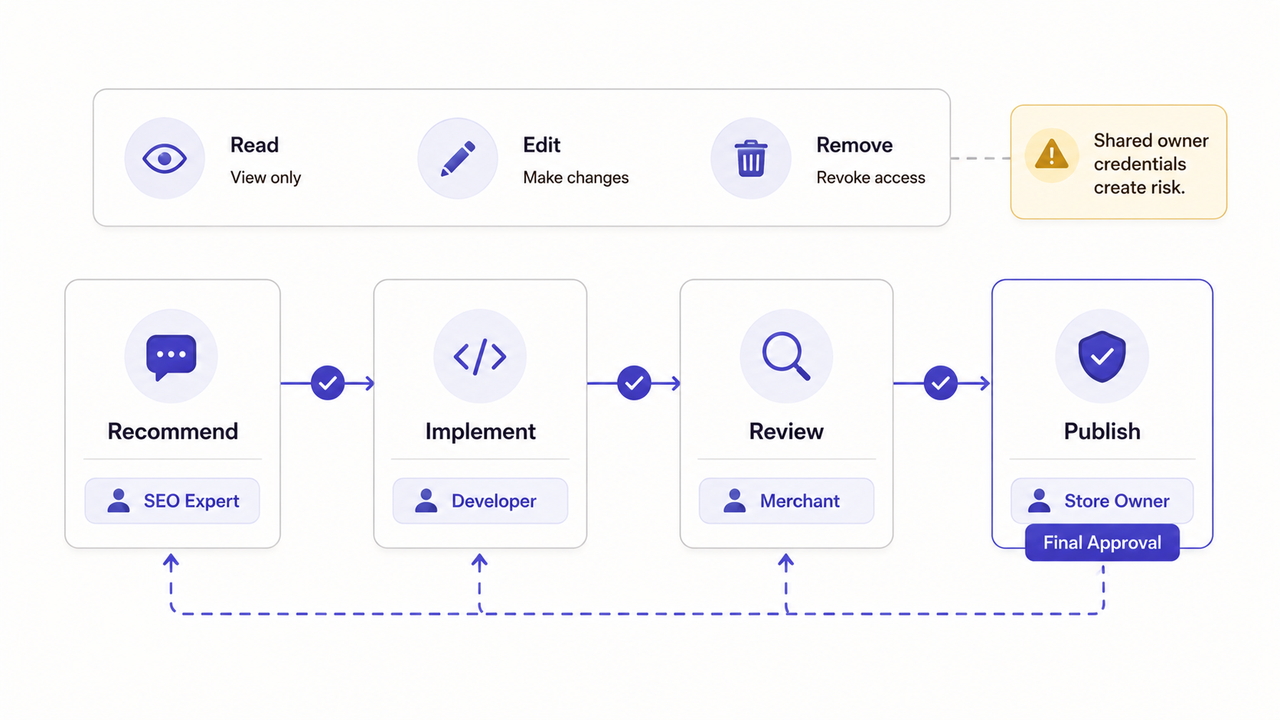
Do not share the store owner’s password. Shopify supports collaborator accounts whose permissions can be limited and later removed; its collaborator-access guidance also explains request codes, role restrictions, and access expiration.
Before granting access, create a simple access table:
| Area | Access level | Reason | Approver |
|---|---|---|---|
Analytics and search data | View | Diagnose traffic and indexing | Marketing owner |
Products and collections | Limited edit or review | Prepare approved changes | Merchandising owner |
Themes | Staging or duplicate theme | Test template recommendations | Developer |
Orders and customers | None unless justified | Usually unnecessary for SEO | Store owner |
Apps and settings | Case-by-case | Only for a named dependency | Store owner |
Separate recommendation, implementation, and publication. An expert may prepare a change, a developer may review it, and the store owner may approve publishing. The report should preserve who approved what and when.
Set a reporting cadence around decisions, not activity volume. A useful update explains what was checked, what changed, what remains unresolved, and which approval is needed next.
Compare Experts, Agencies, and In-House Options
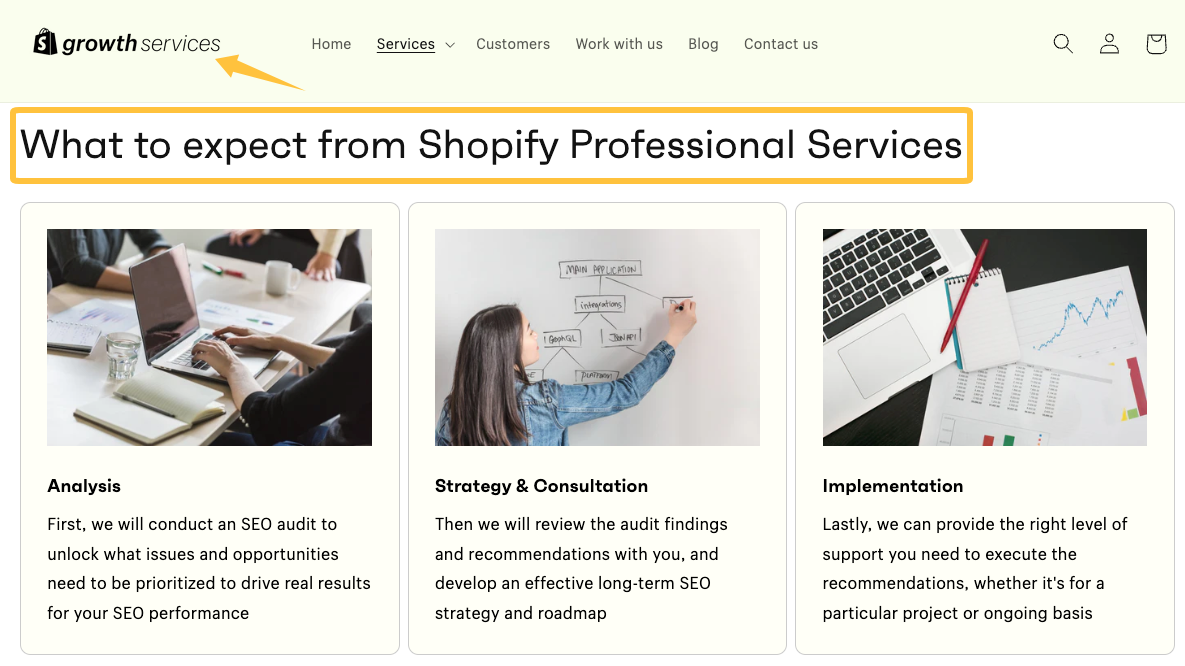
An independent expert is often a good fit when the problem is defined, one senior person can lead the diagnosis, and the merchant already has development or content support.
An agency may fit better when the engagement requires SEO, content production, analytics, development, design, and project management at the same time. Confirm which work is completed by employees, specialist partners, or subcontractors.
An in-house hire can make sense when search affects daily merchandising, large catalogs, international operations, and frequent releases. The benefit is continuous context; the tradeoff is that one hire may not cover every technical and editorial specialty.
Compare the operating model, not the label:
| Question | Why it matters |
|---|---|
Who performs the audit? | The salesperson may not be the practitioner |
Who implements changes? | Recommendations can stall without an owner |
Who approves merchandising changes? | SEO does not own commercial priorities |
What evidence closes a ticket? | “Completed” needs a testable meaning |
What happens outside scope? | New findings need a change process |
What remains after departure? | The store needs records, files, and access control |
The strongest proposal is not necessarily the longest. It is the one that connects the store’s problem to a defined investigation, named deliverables, responsible owners, and an acceptance process.
FAQ
Can one expert work across multiple Shopify markets?
Yes, if the scope covers each market’s URLs, languages, catalog availability, search demand, and approval owner. Shopify can automatically handle elements such as hreflang annotations, canonical URLs, sitemaps, and crawler access when markets are configured correctly, but configuration still needs review. Check Shopify’s current international SEO guidance for Markets before defining the engagement.
Do not treat translated pages as one interchangeable set. A recommendation suitable for the primary market may conflict with another region’s product availability or merchandising plan.
What happens if the theme changes during the engagement?
Pause template-dependent implementation and compare the old, proposed, and new theme states. Record which recommendations are still relevant, which code changes must be recreated, and which tests need to be repeated.
Shopify advises merchants to duplicate a theme before code customization and warns that incompatible custom edits may not carry into an updated copy. Its theme-code guidance should inform the backup and review process.
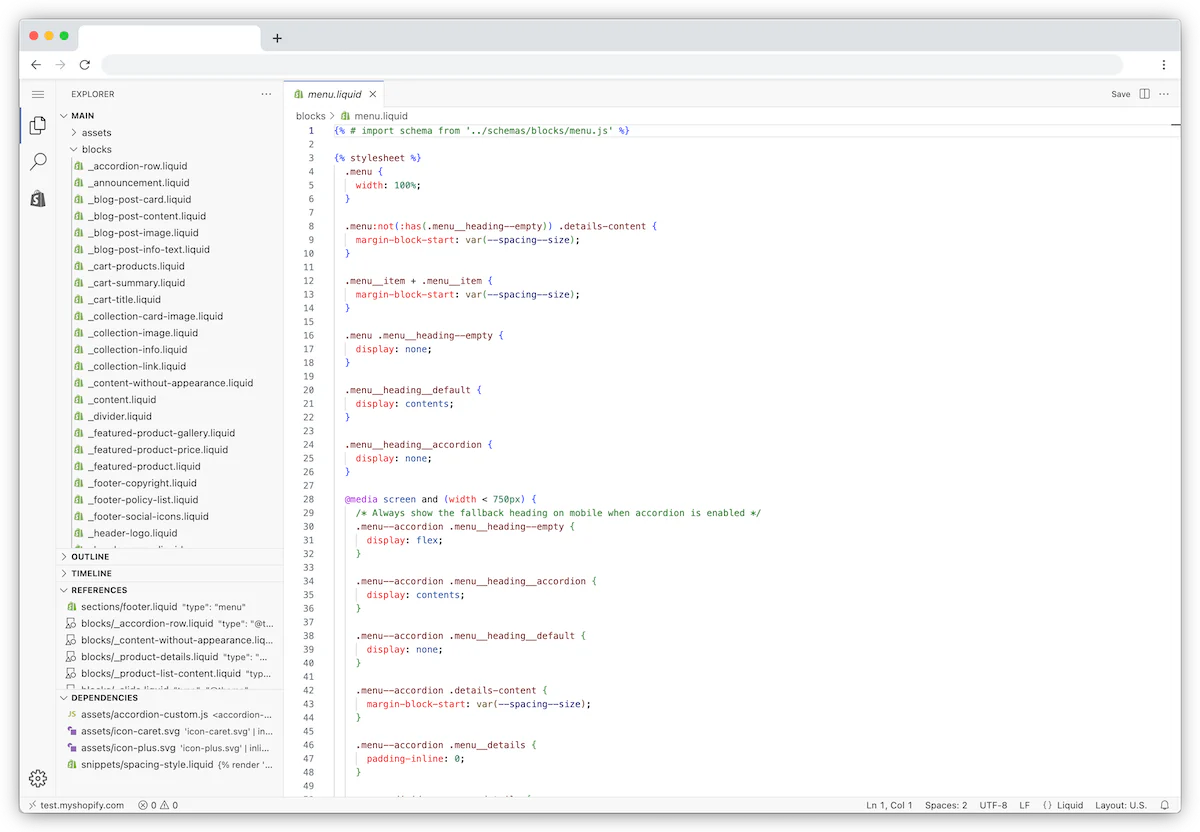
The theme release needs a named owner. Otherwise, the SEO expert may validate one version while the business publishes another.
Should a developer review SEO code recommendations before implementation?
Usually, yes. Developer review is appropriate when a recommendation changes Liquid templates, JavaScript, structured data, navigation behavior, rendering, performance, or app integrations.
The SEO expert should explain the observed problem and expected result. The developer should assess implementation risk, theme compatibility, and maintainability. Neither role should approve its own assumptions without a repeatable test.
Who owns custom templates after the contract ends?
The answer depends on the contract, the original theme licence, third-party components, and the terms governing commissioned work. Before work begins, document which files will be delivered, where they will remain, who can use or modify them, and what access will be removed.
Do not rely on a general assumption about ownership or reuse rights. Put the agreed terms in the contract and ask a qualified legal professional to review them when the rights matter to the business.
Can an expert support a store preparing to migrate?
Yes. The engagement should begin before URLs, navigation, metadata, structured content, and analytics records are changed. Ask for an inventory of important pages, a source-to-destination URL map, redirect requirements, launch checks, and post-launch monitoring.
Shopify’s migration guidance recommends setting up and testing redirects for important legacy pages. The expert should coordinate with the migration developer rather than treat SEO as a review performed after launch.
Conclusion
Shopify SEO experts are worth hiring when a consequential store problem cannot be diagnosed or implemented cleanly by the existing team. Define the affected pages and business symptom first, then compare providers by their evidence, priorities, access needs, implementation responsibilities, and acceptance tests.
If a relevant Shopify service later appears in SpringBrand’s live catalog, use the same brief to compare its scope; until then, take it directly to qualified providers.
Keep final approval with the merchant until technical changes, merchandising effects, and the test for success are visible in the same record.