Local SEO for Dentists: A Practical Growth Guide
Local SEO for dentists helps practices assess visibility, prioritize practical fixes, and decide which recurring tasks to manage or outsource.
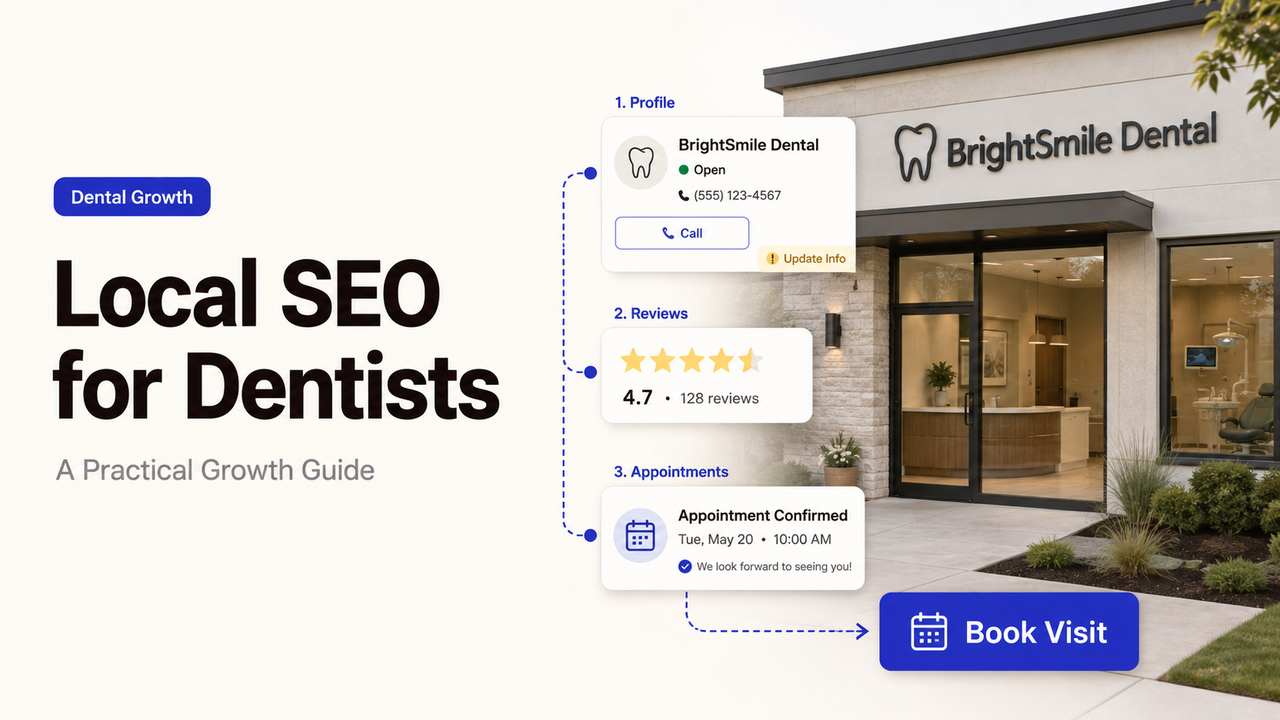
Someone looking for a dentist may come across a surprisingly messy trail. The practice website names two clinicians, Google still displays a dentist who left months ago, and the online scheduler offers appointments later than the stated closing time.
None of these problems seems especially serious on its own. Put them together, though, and a patient may wonder which information is current—or whether it would be easier to call another practice.
That is why local SEO for dentists involves more than moving up a search result. The practice has to be discoverable, but it also needs accurate information, credible treatment pages and a booking route that works.
I’m Alex. In this guide, I’ll show you where that journey commonly breaks, which fixes deserve attention first and which recurring tasks need a clear owner. The guidance is general: privacy, medical advertising, clinical claims and recordkeeping requirements should always be checked against the rules applying where the practice operates.
How Local Search Connects Patients to Dental Practices
Discovery, comparison, trust, and booking stages
People rarely search for a dentist without a reason. One person may have chipped a tooth that morning. Another needs a routine cleaning, wants a second opinion or is looking into a treatment already discussed with a provider.
Those searches do not all carry the same urgency. Someone looking for opening hours may already know the practice, while a search for an implant consultation may involve weeks of comparison.
Finding the practice is only the start. Patients may then look at its location, dentists, services, insurance information, accessibility, opening hours and recent reviews. Some will check several sources before making contact.
The last part of the journey is less visible but just as important. Does the phone reach someone who can help? Does the appointment button open the correct page? Does the form explain what happens after it is submitted? A practice can appear prominently in search and still lose the inquiry during this handoff.
Why proximity alone does not explain visibility
A practice close to the searcher has a natural geographic advantage, but distance does not explain every local result. Google describes relevance, distance and prominence as the main factors affecting local visibility.
The practice cannot control where every patient is standing. It can, however, make its services easier to understand, keep its public details accurate and build legitimate signs that it is an established part of the area.
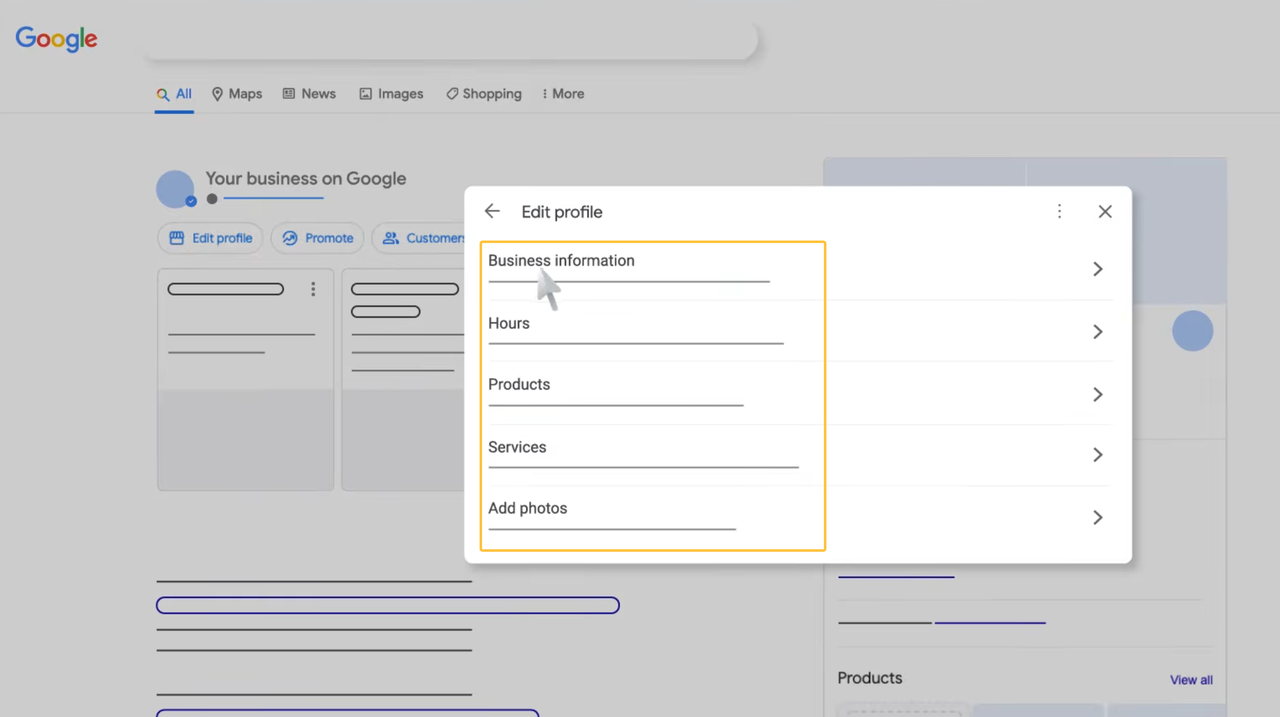
A complete profile may help Google match the practice with a relevant search. It does not buy a preferred position, and Google does not accept requests for better local placement.
Search results can also change with the wording of the query, the searcher’s location, local competition and the device being used. No single profile edit can guarantee a map ranking.
Audit the Practice's Local Search Presence
Dental website, profile, citation, and review checks beyond a general checklist
A general local SEO checklist is useful for establishing the basics. Dental local SEO needs another layer because the audit must also account for practitioner profiles, treatment claims, appointment systems and patient privacy.
Start with the places a prospective patient is most likely to check:
| Surface | What to review | A sign that something is wrong | Practical response |
|---|---|---|---|
Practice website | Dentists, treatments, hours, location and booking routes | A departed clinician or discontinued service is still shown | Identify every affected page and assign the update |
Business Profile | Practice name, category, address, phone, hours and appointment link | Details conflict with the website or scheduler | Compare them with the approved practice record |
Dentist profiles | Current public-facing practitioners and profile ownership | Duplicate listings or profiles for former dentists | Check the current practitioner rules before editing |
Relevant directories | Practice and clinician details | Old addresses or phone numbers continue to appear | Correct the most authoritative records first |
Reviews | Request process and public responses | Incentives, selective requests or private details in replies | Stop and revise the process |
Appointment path | Calls, forms, confirmations and internal routing | Requests arrive at an unattended inbox | Test the entire route and name an owner |
Dentists may qualify as individual practitioners under Google’s Business Profile guidance for practitioners. That does not mean every dentist should automatically receive a separate listing. The appropriate setup depends on how many practitioners work at the location, whether they are publicly contactable and how the practice is represented.
Check the current rules before opening a new profile, merging two listings or removing one. A rushed cleanup can create a second problem while trying to solve the first.
Name, address, phone, hours, and appointment consistency
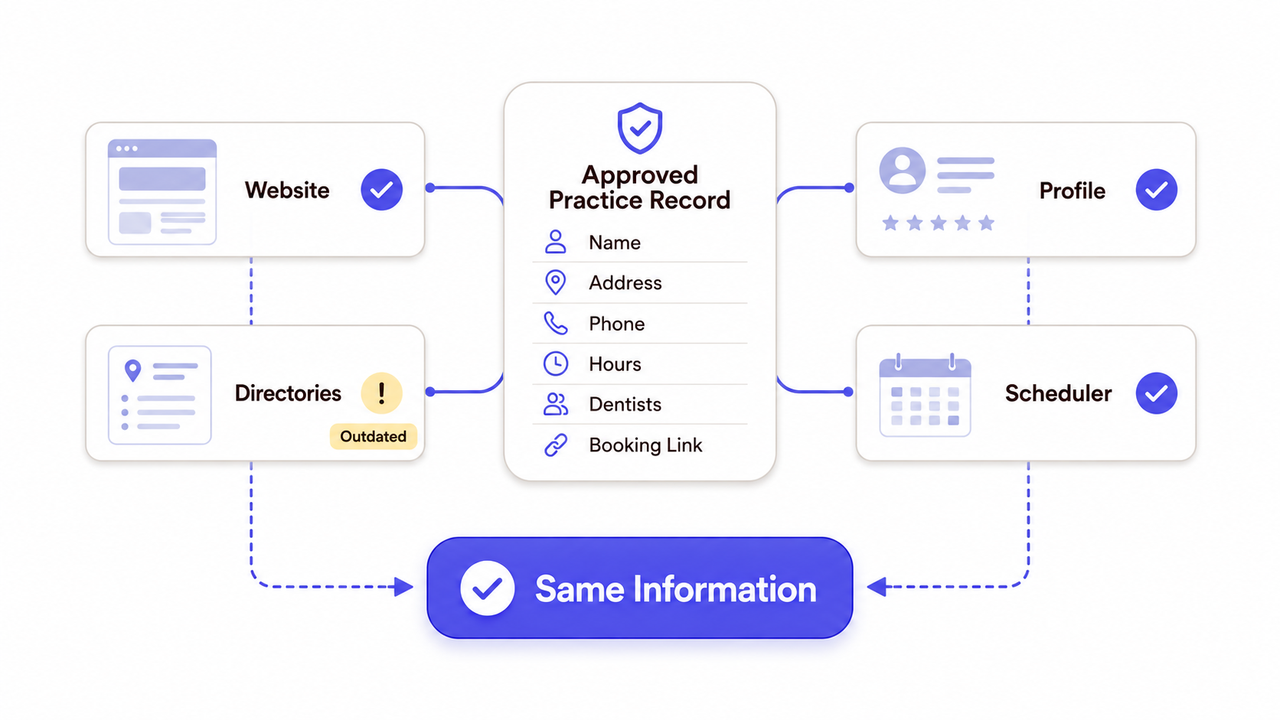
Keep one approved practice record that staff and outside providers can use. It should contain the current name, address, main phone number, regular hours, holiday hours, appointment link, practising dentists, accessibility details and any temporary changes.
Then compare that record with the live patient journey. If the office closes at 5:00 p.m., why can someone select a 5:30 appointment? If an urgent call follows a different route, does the website say when that line is actually staffed?
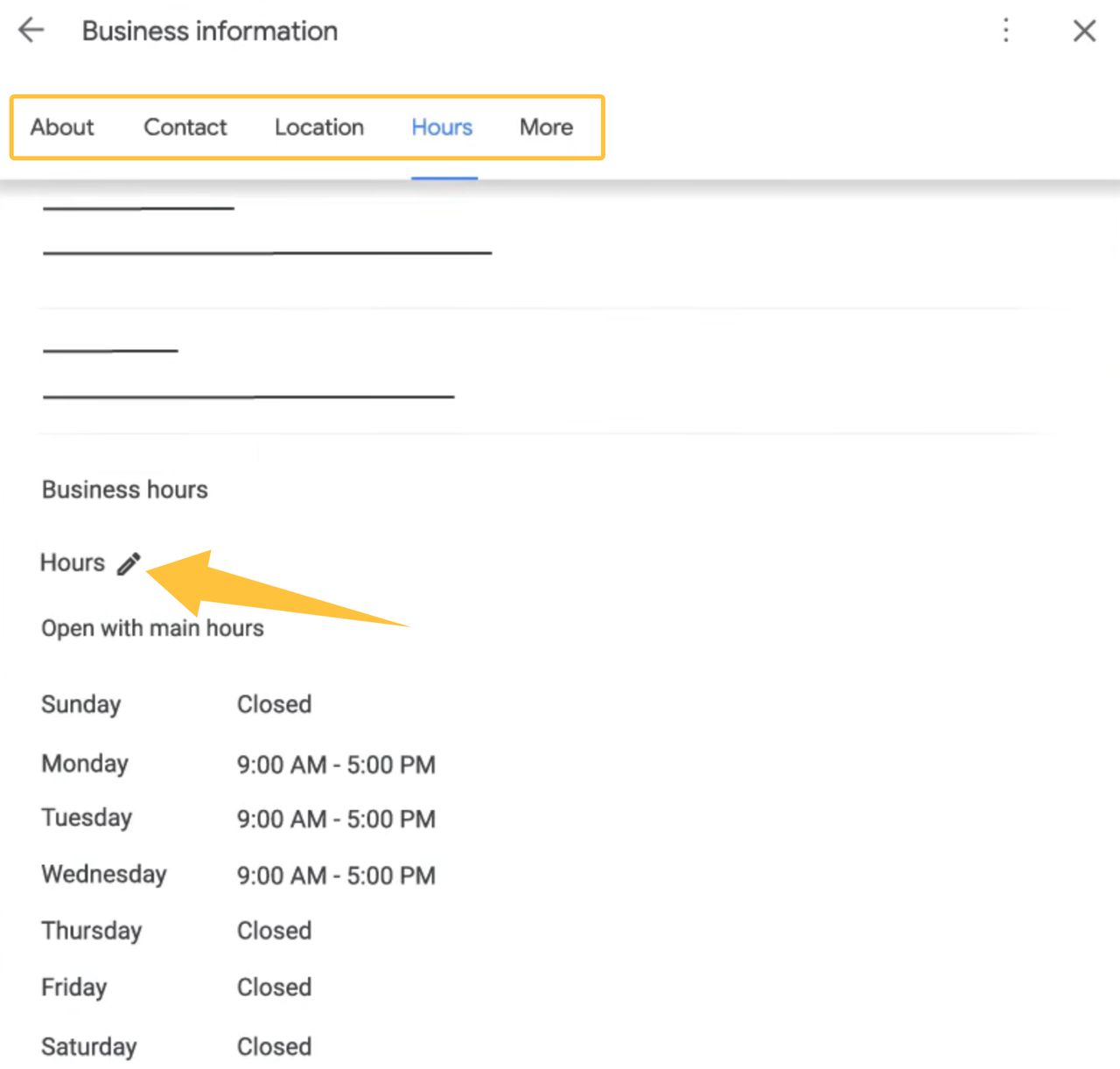
Phone tracking needs similar care. The marketing team may want to attribute calls, but patients still need a dependable number they can save and use again. Document forwarding rules, call ownership and what happens when the usual call handler is unavailable.
For Google Business Profile SEO, the first useful fix is often not another post or keyword. It is resolving the public details that contradict one another.
Improve Service and Location Pages
Treatment intent, location relevance, and useful patient information
A treatment page should help a reader decide whether contacting the practice is a sensible next step. It can explain what the service generally involves, which dentist provides it, what the consultation process looks like and which questions require an individual clinical assessment.
Write in the language patients use, but be careful not to turn a phrase from a search bar into a diagnosis. A person who types “tooth pain dentist” may need prompt attention. Someone else may simply be researching an intermittent problem before deciding whether to book. The page can explain how to contact the practice without claiming to know the cause.
Location information should be equally practical. Directions, public transport, parking, accessibility and nearby landmarks may help more than a paragraph that repeatedly mentions the city name.
Create separate location pages for genuine offices, not every town from which the practice hopes to attract patients. If there is only one clinic, make that page genuinely useful rather than producing near-duplicate pages for surrounding suburbs.
Trust signals without unsupported medical claims
Patients may look for dentist biographies, qualifications, languages spoken, accessibility details and an understandable explanation of what happens during the first visit. These details help people assess fit without requiring exaggerated claims.
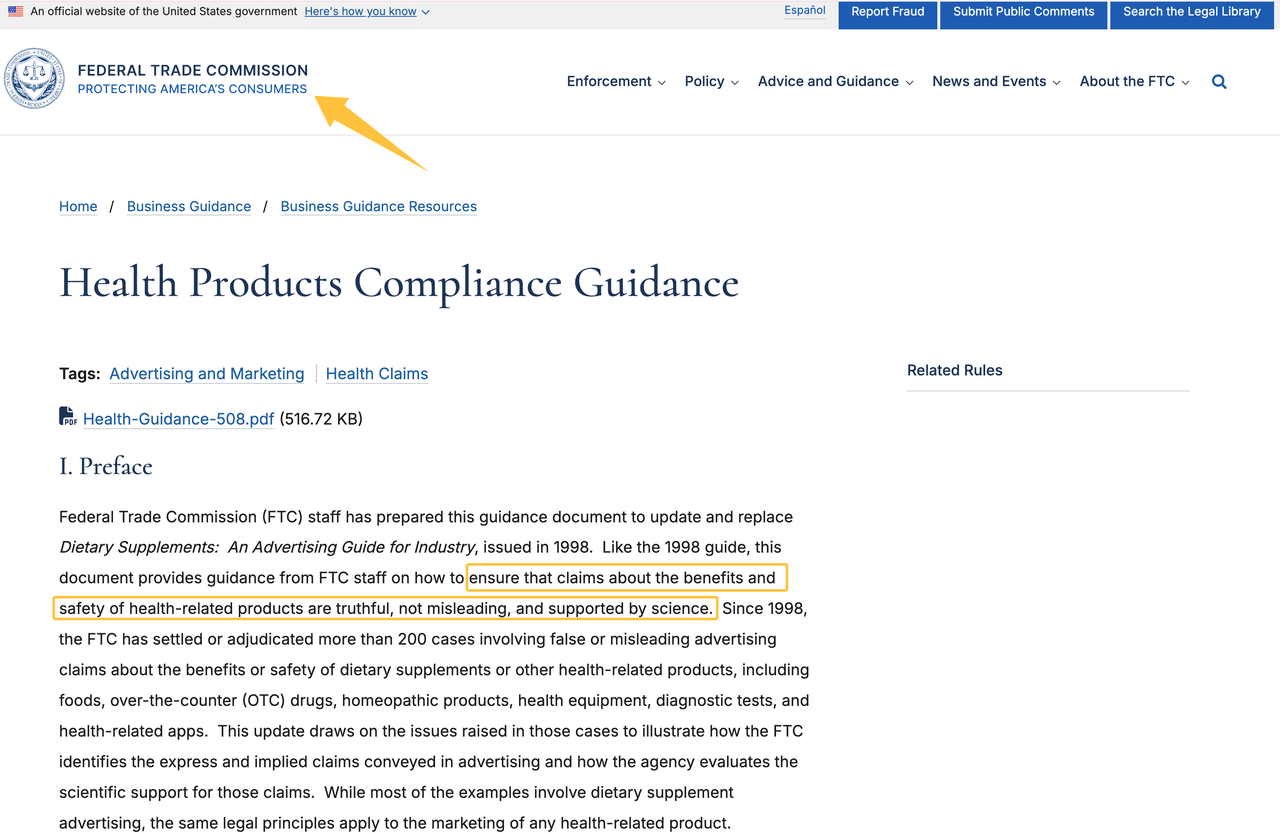
Clinical statements need a defined review process. The FTC’s health-products advertising guidance says objective health claims should be truthful, not misleading and supported by appropriate evidence.
Images can make a claim too. A before-and-after photograph may suggest that another patient can expect a similar outcome even when the page never states that directly.
Have a suitable clinician review treatment descriptions before they go live. Claims involving comparisons, results, financing, professional titles or regulated services may also require legal or compliance review.
Build a Responsible Review and Local Authority Process
Review requests, responses, and escalation
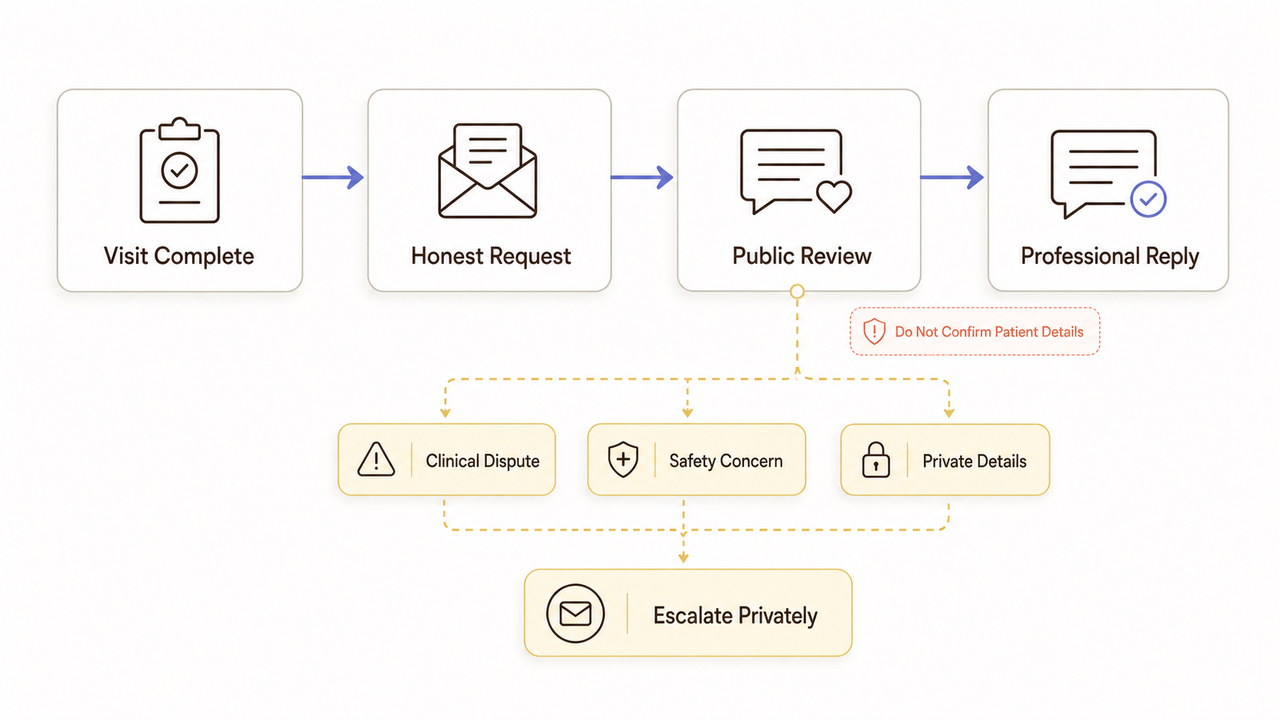
A review request should feel like a routine invitation, not a reward for praise. Choose an appropriate point in the patient journey, use the same process consistently and ask for an honest account of the experience.
Avoid discounts, prize entries or gifts tied to leaving a review. Staff also should not ask only the patients they expect to award five stars. Google’s Maps content policy prohibits incentives and other practices intended to manipulate ratings.
Public replies require restraint. A reviewer may mention a procedure, an appointment or a billing disagreement, but the practice does not need to confirm those details. A brief, professional response can invite the person to continue the conversation through an approved private channel.
Decide in advance who handles comments involving safety allegations, threats, discrimination, clinical disputes or requests to remove information. These situations should not be left to whichever team member happens to see the notification first.
Local partnerships and citation quality
A practice may build local recognition through professional groups, community organizations, nearby businesses, schools or events. The relationship should be genuine; a link is a possible by-product, not the entire reason for taking part.
Relevant directories can also help patients confirm that they have found the correct practice or dentist. Accuracy matters more than the total number of listings. An old phone number on a trusted directory can be more damaging than an absent listing on an obscure one.
Keep a record of who manages each partnership and what may be published. Do not use another organization’s name, logo or endorsement until the appropriate permission has been confirmed.
Decide What to Manage In-House or Outsource
Ownership, access, and recurring workload
The practice should control its domain, Business Profile, analytics, booking system and important directory accounts. A vendor may need access to complete assigned work, but it should not be the only party capable of changing or recovering those accounts.
Certain decisions also need to remain inside the practice. Clinical accuracy belongs with a qualified reviewer. Patient-data decisions need an appropriate privacy owner. Business hours, staff changes and appointment routing require confirmation from someone involved in daily operations.
An outside provider can still handle substantial work. It may audit listings, research patient questions, prepare page recommendations, coordinate updates and produce reporting. What it should not do is quietly assume responsibility for medical claims or patient information.
A workable division of responsibility might look like this:
- The owner approves the budget, business identity and higher-risk changes.
- A clinician reviews treatment information.
- An operations lead confirms hours, dentists and appointment routes.
- A marketing owner coordinates pages, profiles, reviews and reporting.
- The external provider completes the tasks covered by its agreed scope.
When the engagement ends, request the list of changed pages and profile fields, the current access record, working files, approval history, completed tests and unresolved items.
Metrics to monitor without promising patient volume
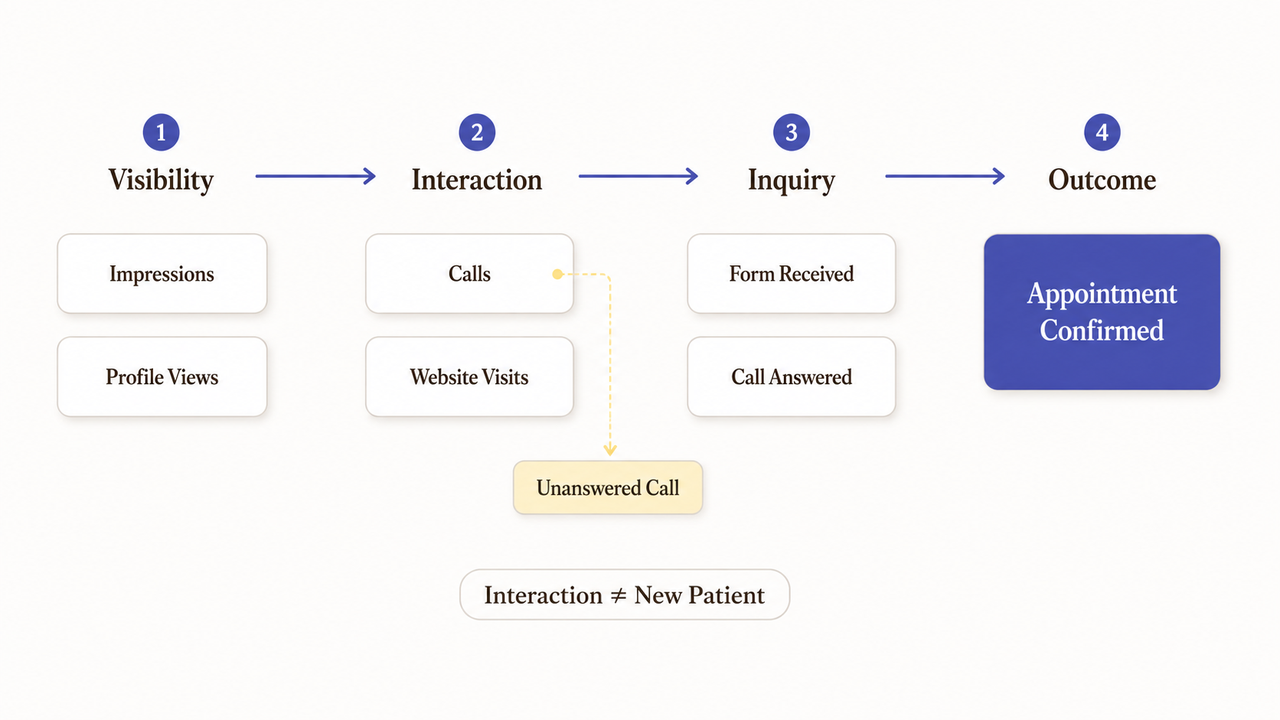
Visibility, inquiries and appointments are different measurements. Search impressions may show whether a page appeared. Profile actions indicate that someone interacted with the listing. Calls and form submissions sit further along the journey, while confirmed appointments require another layer of operational data.
Use the numbers to investigate what happened rather than forcing every action into a success claim. Are people reaching an outdated treatment page? Do calls go unanswered during lunch? Are form submissions sent to an employee who no longer manages appointments?
A call should not automatically be counted as a new patient. Nor should an appointment be credited to local SEO when the available records do not show how the person discovered the practice.
A useful report separates confirmed facts from assumptions. It should also name the person responsible for investigating the next question instead of leaving an unexplained number on the dashboard.
How SpringBrand Fits This Workflow
Before contacting a provider, write down the visibility problem, affected pages or profiles, access required, internal reviewers and expected handoff. This gives each provider the same starting point and makes proposals easier to compare.
Turn the audit findings into a clear Google Business Profile service brief before selecting an independent provider.
SpringBrand helps businesses organize their needs and explore third-party service options. It does not carry out the optimization, certify the provider or guarantee search positions, appointments or patient growth.
FAQ
What consent is needed before using dental before-and-after images?
The answer depends on the image, its intended use and the laws applying to the practice. For U.S. organizations subject to HIPAA, using protected health information for marketing generally requires written authorization, with limited exceptions covered in HHS’s HIPAA marketing guidance.
Permission for clinical documentation may not cover a website, advertisement or social post. Confirm the intended media and obtain qualified advice before publication.
May a local SEO vendor use anonymized call recordings in a case study?
Removing the caller’s name does not necessarily make a recording anonymous. The person’s voice, appointment date, treatment details or surrounding context might still reveal who they are.
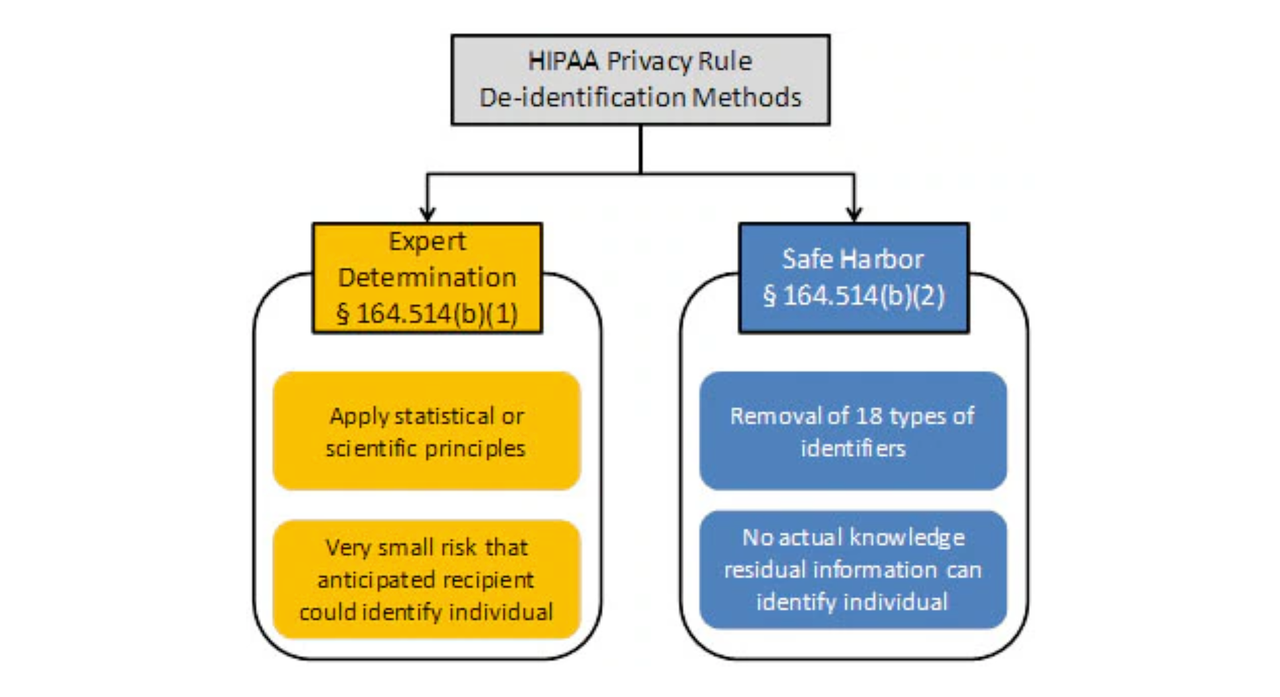
Where HIPAA applies, HHS describes Expert Determination and Safe Harbor as two routes for de-identifying protected information. Neither should be reduced to “remove the name and reuse the file.” Check authorization, contractual rights and the relevant privacy rules first.
Can patient-language data be entered into an AI keyword tool?
Do not copy identifiable appointment notes, call transcripts or patient messages into a general AI tool just to discover keywords. First determine what the material contains and review how the provider stores, uses, shares or trains on submitted data.
Aggregated search data, independently collected questions and language already approved for public use may provide safer starting points. Any workflow involving sensitive information should be approved by the practice’s privacy owner.
How should appointment tracking avoid exposing health information?
Begin with the decision the practice actually needs to make. A simple record that a booking form was completed may be enough; the analytics platform does not necessarily need the person’s name, symptoms, treatment request or complete form contents.
U.S. covered entities and business associates should evaluate tracking technologies against current HHS guidance on online tracking, their contracts and the data their systems actually transmit.
When should a departed practitioner's profile be removed or retained?
First verify whether the dentist still works at the location and whether the listing accurately represents a practitioner whom patients can contact there. Check profile ownership and Google’s current practitioner guidance before editing, merging or removing anything.
A public marketing profile is separate from business, regulatory or clinical records that may need to be retained. Those obligations should be reviewed under the rules applying to the practice.
Conclusion
Local SEO for dentists works when the practice treats search visibility and patient experience as parts of the same process. Accurate profiles bring less value when the service page is outdated, and a useful page cannot compensate for a broken appointment route.
Start with information that is wrong, contradictory or risky. Then improve the pages patients use to make decisions, test the contact path and assign the recurring work to named owners.
Outside help may make the workload manageable, but the practice should retain its accounts, clinical approvals and patient-data decisions. This approach cannot promise a map position or a certain number of appointments. It can give the practice a clearer, more dependable way to manage local search.