Branding Companies for Startups: Shortlist Guide
Branding companies for startups should be compared by process, deliverables, ownership, pricing signals, and fit.
The founders are ready to interview prospective customers, but the startup still uses a working name and an inconsistent explanation of what it does. A polished logo will not settle either issue. The shortlist should begin with the decision that must be made first. I’m Alex, and this guide explains how to compare branding companies for startups by scope, evidence, ownership, and fit.
Quick Verdict: Shortlist by Business Need, Not Awards
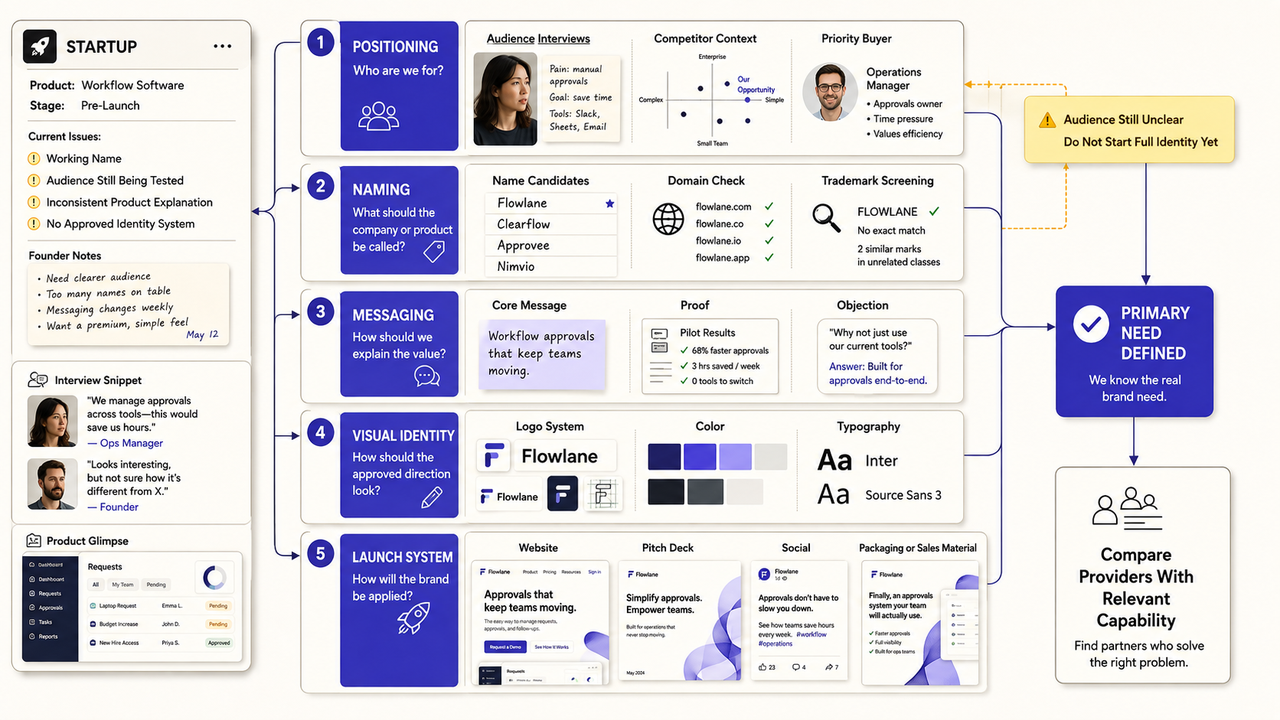
Start by naming the problem you need a branding partner to solve. Positioning work requires different skills from visual identity production. Another startup may already have both but need guidelines for a growing team.
Awards and recognizable client logos can earn attention. They do not establish fit. A useful shortlist shows how each company approaches your decision and what your team receives.
Similar offers may appear as branding services for startups or a startup branding agency. The label matters less than the documented scope.
Write one primary need at the top of your comparison sheet:
- clarify the audience and competitive position;
- develop or assess a company or product name;
- turn the positioning into usable messages;
- create a visual identity system; or
- prepare the system for launch across selected channels.
Several needs may belong in one engagement. The primary need determines which capability you investigate first. It also keeps a broad proposal from hiding a weak answer.
Founders should bring evidence, not certainty, into this process. The SBA’s market research guidance explains how direct research can test customer reactions and buying behavior. That research can give a branding team something stronger than founder preference to examine.
What a Startup Branding Company Should Clarify
Before comparing creative styles, ask each company to define the engagement. The proposal should identify decisions, inputs, deliverables, reviews, approval, and handoff. Record any missing element as an open question.
Positioning, naming, messaging, and identity scope
These activities are related, but they are not interchangeable. Positioning defines the market choice. Naming develops or evaluates candidates. Messaging organizes what the company says. Identity translates that direction into a visual system.
Ask whether the provider will recommend a decision or simply produce options. A naming scope might include candidate development and basic screening, for example. That does not necessarily include a legal clearance opinion, domain purchase, or registration work.
The USPTO’s federal trademark searching guidance says its database is one essential part of a broader clearance search. It also notes that searching can be complex. Put the planned search depth, markets, decision owner, and professional review into the brief.
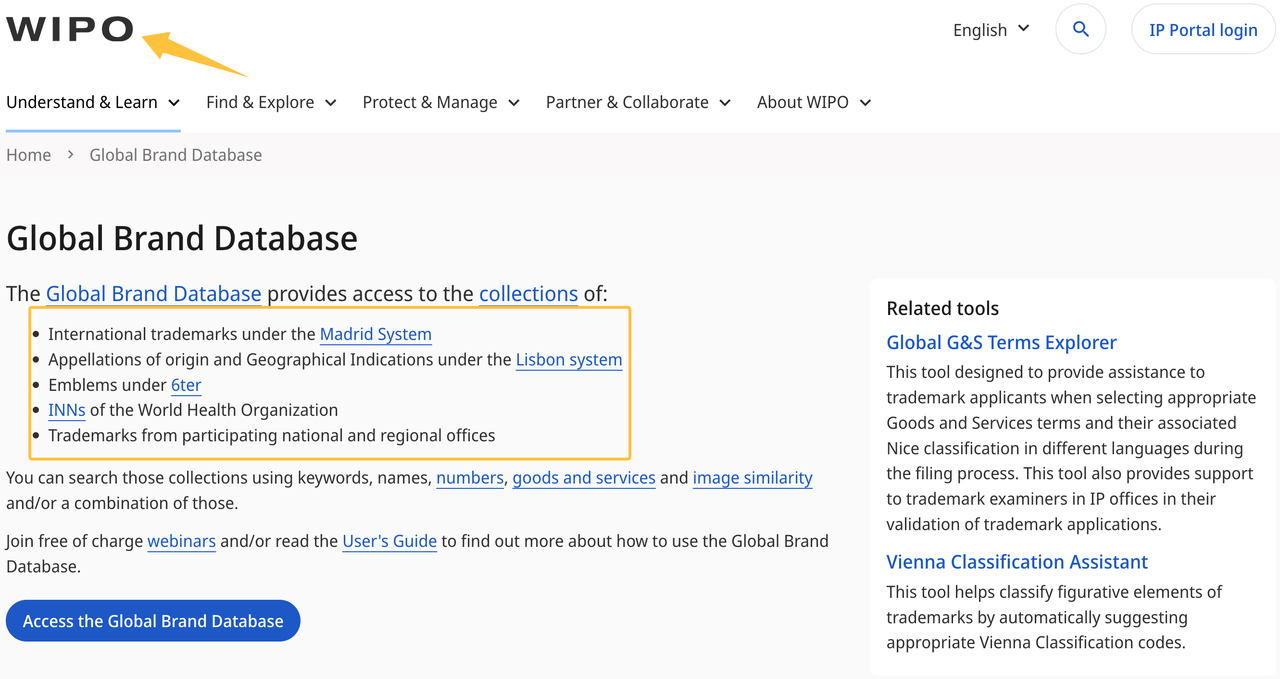
International plans require a wider question than whether an English name sounds good to the founding team. WIPO’s Global Brand Database covers international marks and participating national or regional collections. WIPO also advises checking relevant national or regional registers. Language, pronunciation, cultural meaning, domains, and local rules need separate attention.
Keep adjacent services separate while you compare them. A company offering brand strategy services may stop before visual production. A provider focused on brand identity services may expect approved positioning and messaging before design begins. The proposal should state where one responsibility ends and the next begins.
What must be ready before design begins
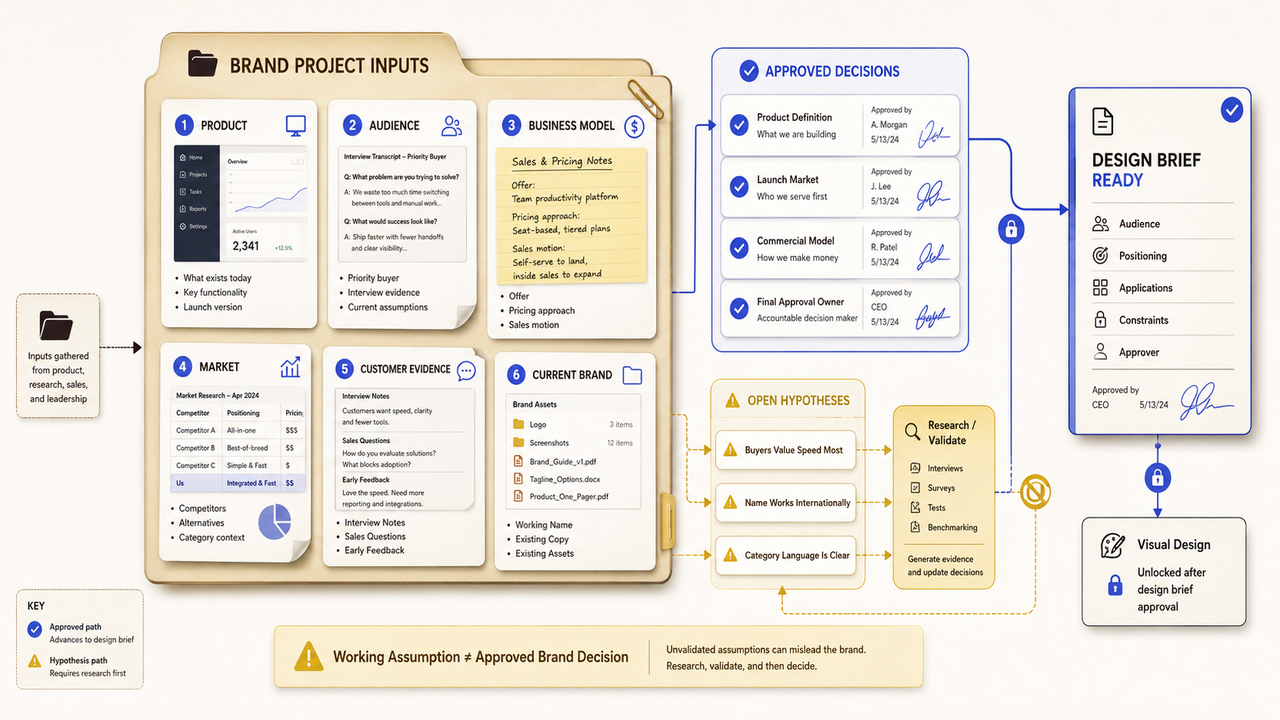
Design does not require a finished business plan. It does require a stable enough starting point. The team should be able to explain the product, intended buyer, current evidence, commercial model, launch context, and known constraints.
Identify which statements are decisions and which remain hypotheses. “We serve independent clinics” may be a chosen market. “They value speed over specialist depth” may still need research. A good branding partner should know which assumptions it may challenge.
The startup also needs one final approval owner. Other stakeholders can provide input. One person must resolve conflicting feedback and confirm the direction. Otherwise, each review can reopen a settled decision.
Prepare the materials the provider needs, such as interview notes, product demos, sales objections, and current copy. Label confidential items and agree on access before sharing.
Compare Portfolios, Process, and Deliverables
A portfolio shows the public result. It rarely reveals rejected routes, research limits, or client responsibilities. Use it to begin the assessment, not finish it.
Evidence of relevant startup work
Relevant does not have to mean the same industry. Look for a comparable business stage, decision type, buyer complexity, or rollout constraint. A regulated services startup may value claim review and stakeholder control. A consumer launch may need packaging, retail, and social applications.
Ask the company to explain its role in each example. Did it lead positioning, naming, identity, or rollout? Identify work supplied by the client or another partner. A finished brand can otherwise overstate one provider’s contribution.
Case-study results also need context. A traffic, funding, or sales figure does not prove branding caused the outcome. Ask what was measured, over what period, and which other business changes occurred. Treat unsupported performance claims as sales language, not selection evidence.
References can reveal the working relationship. Ask whether the provider explained tradeoffs, controlled revisions, and delivered usable files. Similar project experience matters more than general praise.
Strategy, design, files, and handoff details
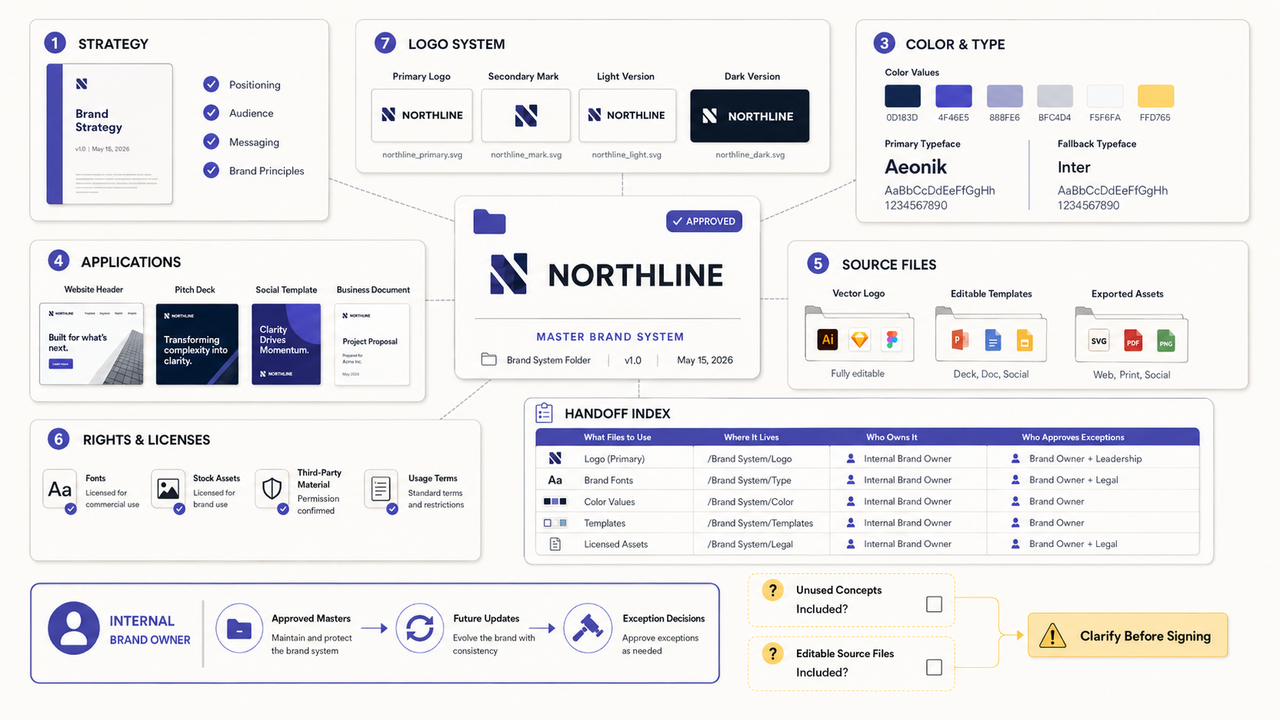
Turn every proposal into a deliverable register. Name the item, format, reviewer, revision allowance, due point, acceptance check, and owner after handoff. This makes differently worded proposals easier to compare.
Possible deliverables include positioning, messaging, naming, identity files, guidelines, and launch applications. Include assets the startup can use and maintain.
File handoff deserves its own line. Confirm final exports, editable source files, font details, stock licenses, templates, and usage guidance. Ask whether unused concepts, working files, research notes, or third-party assets are excluded.
Paying for a file does not automatically answer every ownership question. U.S. copyright law treats ownership of a material copy separately from ownership of the copyright. The Copyright Office’s ownership and transfer chapter also sets specific rules for transfers. Put the agreed rights in writing and obtain qualified legal review where needed.
Understand Pricing, Ownership, and Revision Limits
There is no useful universal price for startup branding. Research depth, naming, stakeholder count, applications, timeline, and rollout support all affect a quote.
Compare the assumptions behind each total. Check interviews, workshops, naming searches, source files, implementation, taxes, and third-party costs. Note the quote’s validity period and change process.
Revision language needs more detail than “two rounds included.” Does a round mean one consolidated feedback document or comments from every founder? What happens when the team rejects an approved direction? Separate corrections from scope changes so both sides know when a new fee or timeline applies.
The agreement should also address ownership and permitted use. Check final work, unused concepts, research, fonts, stock assets, templates, and any pre-existing provider materials. Confirm when rights transfer and whether full payment is a condition. These are contract questions, not assumptions a portfolio can answer.
Do not treat the lowest total as proof of efficiency. It may cover fewer decisions or assets. Compare cost against the same written scope.
Build a Shortlist and First Brief
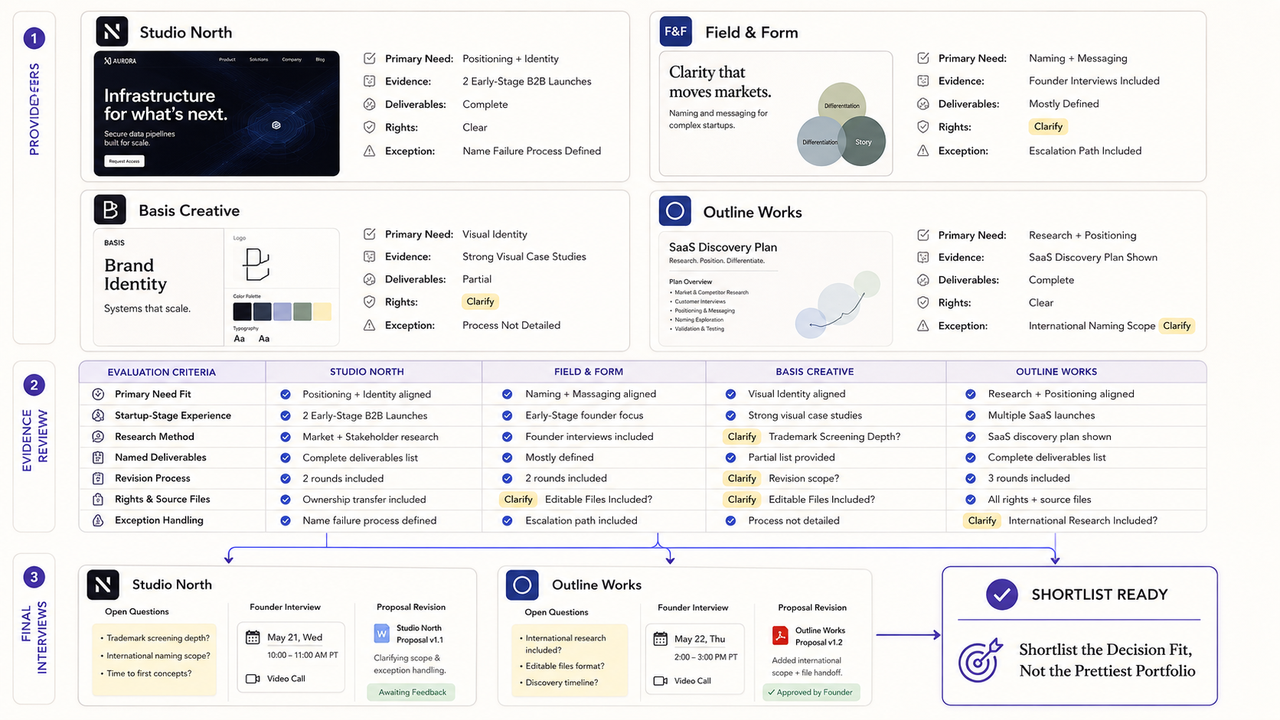
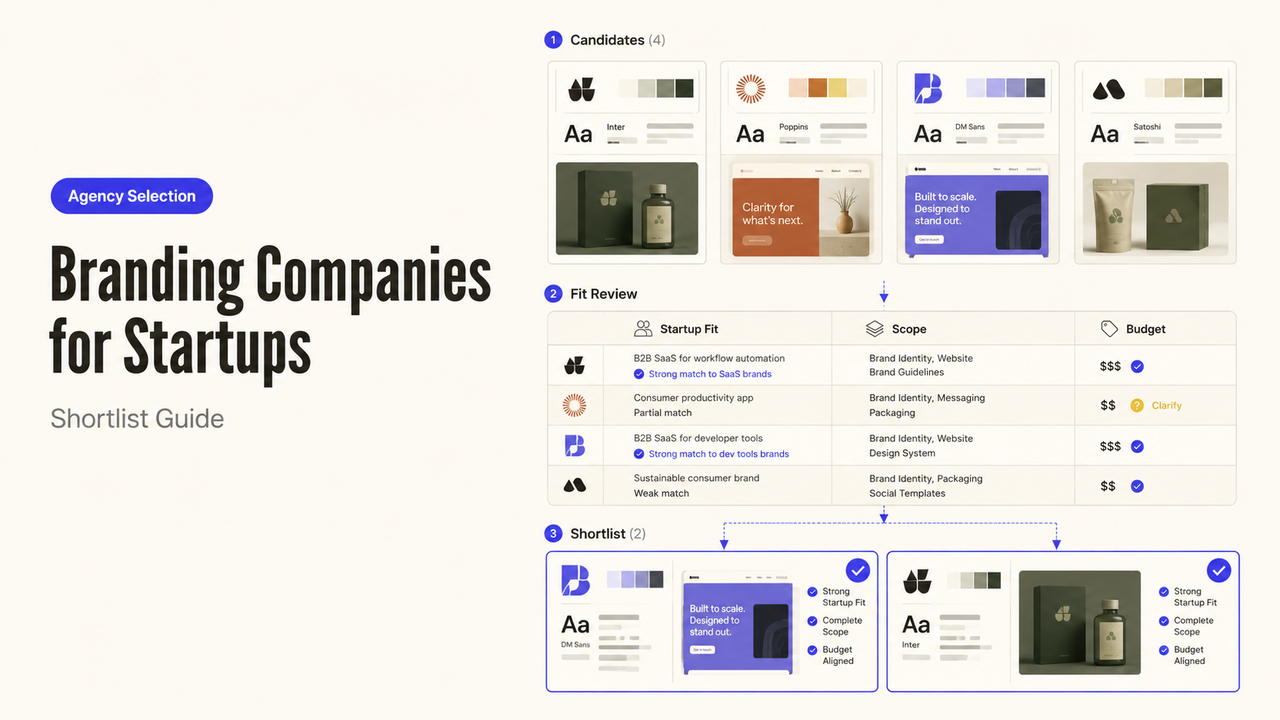
Keep the shortlist small enough for a meaningful review. Use the same evidence request for every candidate, then record differences rather than forcing every company into identical methods.
Your first brief should include:
- the business stage and reason for the project;
- the audience, offer, and evidence already available;
- the primary branding decision;
- required deliverables and launch uses;
- excluded work and internal responsibilities;
- markets, languages, and naming requirements;
- budget boundary and important dates;
- reviewers, final approver, and feedback method; and
- handoff, ownership, and acceptance expectations.
Ask each candidate to return its assumptions with the proposal. One company may require founder interviews before pricing. Another may offer a fixed discovery phase. Either model can work if the commitment, exit point, and resulting materials are clear.
If customer interviews inform the project, decide whether comments are research inputs or proposed public endorsements. Publication needs a separate approval path. The FTC’s Endorsement Guides address truthfulness and disclosures for endorsements. Consent, confidentiality, and quote use should also follow the applicable agreement and law.
Finally, compare how each provider handles an exception. Ask what happens if research challenges the original positioning, a name fails screening, or founders reject the first direction. A credible process should show who decides, what evidence is reviewed, and how scope changes are recorded.
How SpringBrand Fits This Workflow
SpringBrand is not a branding agency and does not guarantee a provider’s work. It can help a startup describe its need and compare relevant third-party service options.
Describe your branding need and review matching service options after you have identified the decision, deliverables, approval owner, and budget boundary.
FAQ
What happens if a proposed name fails trademark screening?
Stop treating that candidate as approved. Record why it failed, return to the agreed backup list, and confirm whether replacement work falls within scope. Screening is not the same as legal clearance. A qualified trademark professional should review the name for the intended goods, services, and jurisdictions.
Should customers be involved in brand testing before launch?
They can help test comprehension, relevance, and unintended interpretations. Customers should not be asked to make the final creative decision. Define what the test is meant to learn, use a suitable sample, and separate research feedback from founder approval. Obtain appropriate consent for recordings or attributed comments.
Can one English brand name work across two international markets?
Possibly, but spelling is only one test. Review pronunciation, meaning, cultural associations, existing marks, domains, product categories, and local registration requirements in each market. A favorable result in one country does not settle another. Use local language and legal expertise when the risk warrants it.
When should a startup revisit positioning after a major product pivot?
Revisit it when the target buyer, problem, offer, buying process, or competitive frame changes materially. Do not start with a new logo. First compare the old positioning with current customer and sales evidence. Then decide which messages and identity elements still support the revised business.
Can early customer interviews be used in public brand messaging?
Only after the startup confirms permission, accuracy, context, and any required disclosure. Research consent may not include public quotation or identification. Keep the source record and approved wording. Sensitive, confidential, or personally identifying details should receive appropriate privacy and legal review before publication.
Conclusion
The best branding companies for startups are not identified by one visual style, award list, or package total. The right shortlist connects the startup’s unresolved decision with relevant evidence, a defined process, usable deliverables, and clear contract terms.
Before inviting proposals, name one person who owns the shortlist and final scope. That owner should also confirm the approval path and the rights the company expects to receive.