Relevance AI Review 2027: Fit for Lead Qualification
Written by
Alex
Springbrand Researcher

Reviewed by
Springbrand Audit Team
Editorial review team
Springbrand Audit Team supports editorial quality through source checking, clarity, and consistency across the blog.
Updated
Published
This relevance ai review examines one lead-qualification task: evidence inputs, agent decisions, human review, and operating effort.
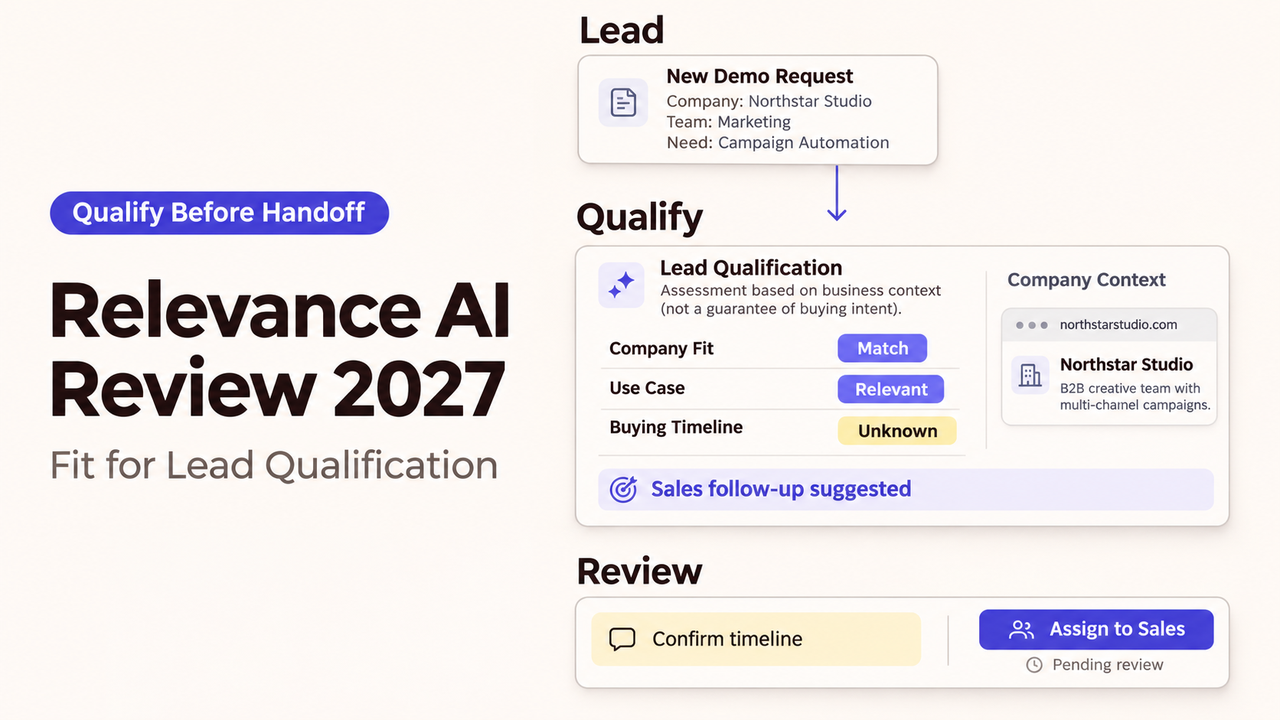
Should every demo request reach sales immediately, or should someone research the company first? Relevance AI is worth considering when that answer depends on information scattered across forms, company pages, and CRM records. Its value would come from helping a rep decide whom to contact and what still needs asking.
This Relevance AI review examines that qualification task through official documentation checked November 3, 2026, for 2027 planning. The examples are proposed designs; no live CRM deployment was tested. Plans, permissions, and data-handling terms need another check before a 2027 purchase.
Is Relevance AI a Fit for Lead Qualification?
Yes, when qualification involves interpreting several sources and explaining a recommendation to sales. It is harder to justify when a few reliable form fields already determine the next step.
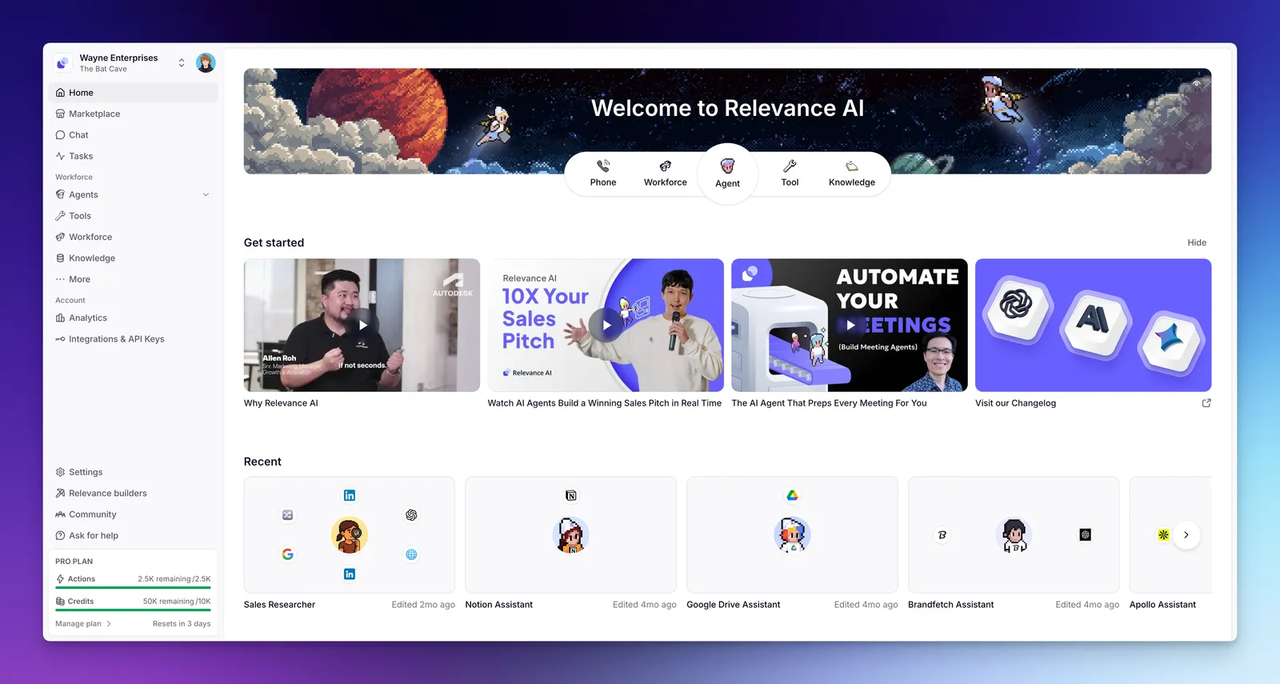
Relevance AI combines agents, business knowledge, and tools for retrieving information or taking action. Its lead-scoring guide describes using CRM or form data alongside an ideal customer profile and additional research. That supports a plausible qualification workflow, but says nothing about how accurately your agent will classify your leads.
The buying question is whether reps could use its recommendations without repeating all the research. A polished summary offers little value if the rep still has to establish which company submitted the form.
What Should the Qualification Task and Evaluation Criteria Cover?
One incoming inquiry should produce a suggested next step and enough explanation for a named colleague to accept or change it. Sending outreach automatically would be a separate decision.
For an illustrative task, imagine a software company targeting US manufacturers with 50–500 employees. Those are invented criteria for this review, not a Relevance AI scoring standard. The task combines a submitted form with company information and the existing CRM record.
Lead Signals, Decision Output, and Owner Handoff
Each example uses the same fields: company identity, industry, headcount, location, request, and existing account owner. Missing values remain visible.
| Illustrative inquiry | Company facts available | Request and CRM owner | Intended handling |
|---|---|---|---|
A | US manufacturer; 120 employees | Demo requested; budget blank; no owner | Sales review; ask about budget during follow-up |
B | US manufacturer; headcount unknown | Integration question; no owner | Research company size; preserve the question for sales |
C | US retailer; 200 employees | Expansion inquiry; existing owner | Outside the example industry target; ask the current owner before closing it |
These are expected outcomes for evaluating a design, not observed agent results. Inquiry A tests whether an empty budget field becomes an invented rejection. B tests whether missing information gets confused with poor fit. C tests whether a rigid industry rule overrides an existing relationship.
The rep should receive the recommendation, its supporting facts and source links, any unresolved question, and the proposed recipient. A short explanation such as “Headcount is unknown; verify size before applying the company-fit rule” is more useful than an unexplained score.
How Would an Agent Use Business Context?
It could compare the inquiry with your qualification rules, retrieve missing facts, and propose the next step. The team still has to decide which sources and actions belong in that process.
Relevance AI knowledge can hold documents and structured data. An agent can receive a small knowledge set in its prompt or search a larger collection. For this task, useful context includes the current customer profile, exclusions, territory rules, and instructions for existing accounts.
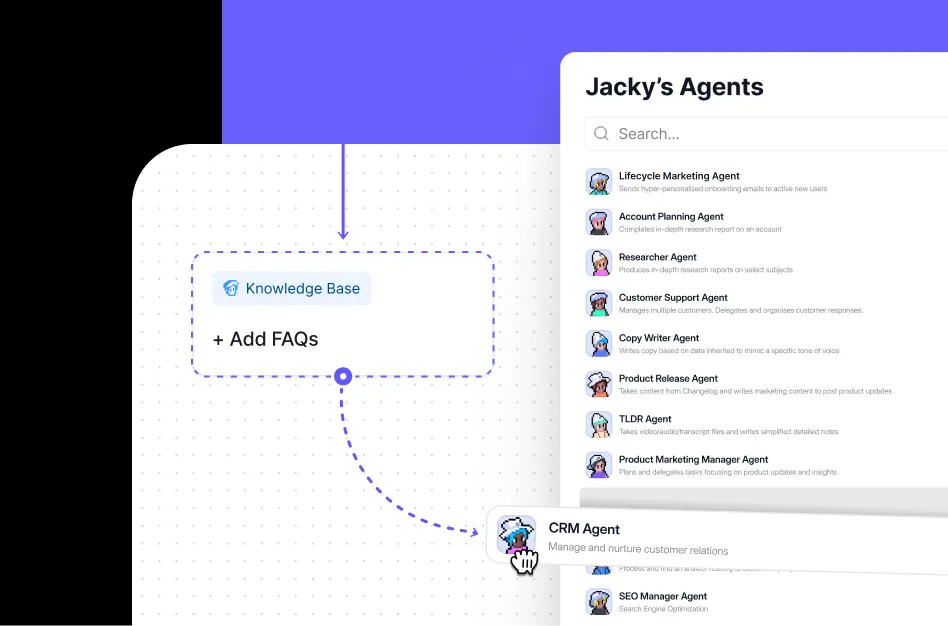
In a Relevance AI CRM workflow, tools could look up an account, retrieve company information, or prepare an update. When building Relevance AI agents, someone must explain how those tool results affect the recommendation and which actions require approval.
Source Quality and Missing Evidence
A company website can establish what the business sells. It rarely establishes the prospect's budget or purchasing authority. Those should remain unanswered unless the lead or an approved internal record supplies them.
Company identity deserves particular attention. A parent company's headcount may be irrelevant to the subsidiary submitting the form. The company domain and CRM account should agree before the agent combines their facts. Dates matter too: an old employee estimate should not silently overrule a recent, verified record.
Our lead enrichment API guide covers choosing and checking the data used to fill those gaps. Enrichment supplies facts; qualification applies your sales rules to them. Buying better data does not settle what counts as a sales-ready inquiry.
Decision Rules and Escalation Points
Company fit and buying intent need separate treatment. A target-sized manufacturer asking a general support question does not automatically become a new sales opportunity.
For the sample task, contradictory company information would send the inquiry to a reviewer. An existing owner would receive expansion questions. Missing headcount would prompt research rather than rejection. Retrieved web text would be treated as source material, never as instructions to change those rules.
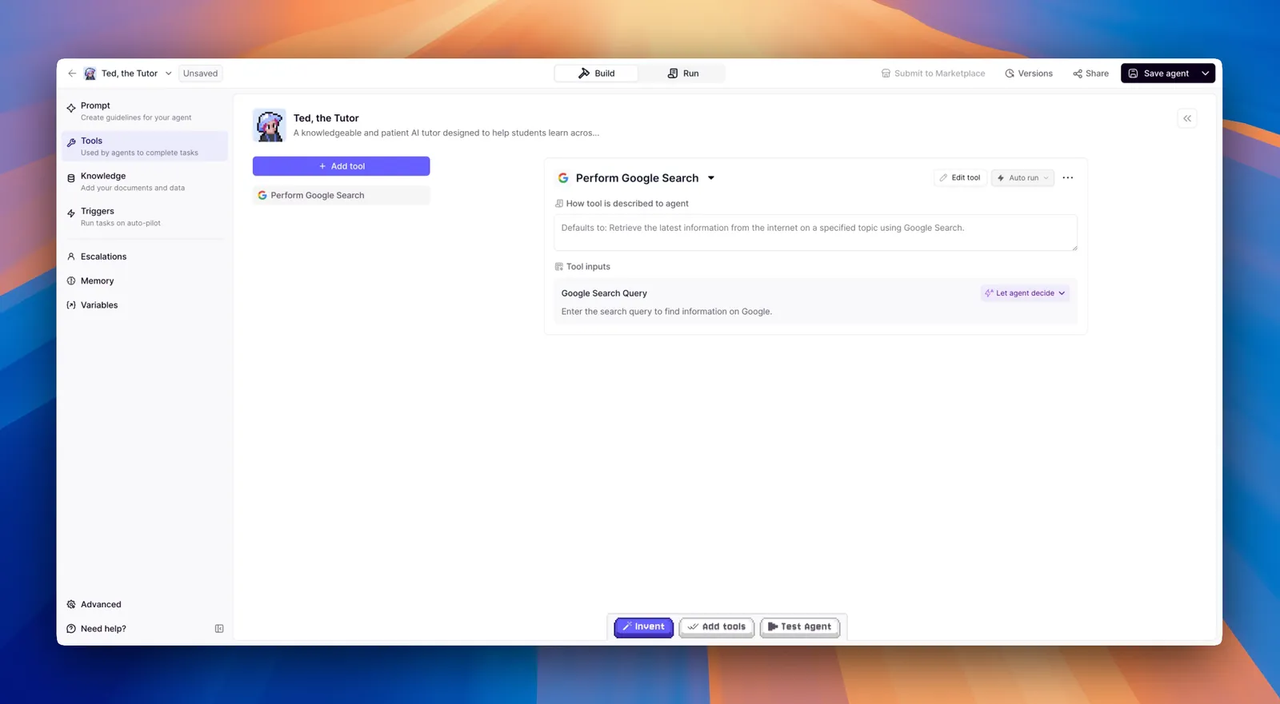
Relevance AI offers approval requirements for individual tools. A team could allow research automatically while requiring approval for a CRM update. That approval still requires a connected account with appropriate access; it does not narrow an overly broad CRM credential by itself.
What Must a Team Review Before Rollout?
The team needs to establish whether sales agrees with the recommendations and whether corrections take less effort than the original research. Feature availability alone cannot answer either question.
A useful comparison includes inquiries sales accepted, rejected, and could not classify. Rejected leads deserve close attention: a quiet false rejection could hide a worthwhile demo request. A wrong-company match is also revealing, because even a well-written explanation becomes harmful when it describes the wrong account. A duplicate inquiry should reach the existing owner rather than create competing follow-up.
Review Work, Failure Cases, and Cost Drivers
Relevance AI lets builders set retry limits and escalation after tool failures. If an enrichment service becomes unavailable, the proposed workflow should preserve the inquiry for review. It should not interpret an empty response as evidence that the lead is unsuitable. That behavior needs checking in the team's configuration.
Operating cost includes the subscription, tool runs, model usage, external data services, and the time people spend correcting decisions. Under the Actions and Vendor Credits model, each tool run consumes an Action, including failed runs. Model and tool costs also use Vendor Credits; bringing your own keys moves relevant provider charges outside that balance.
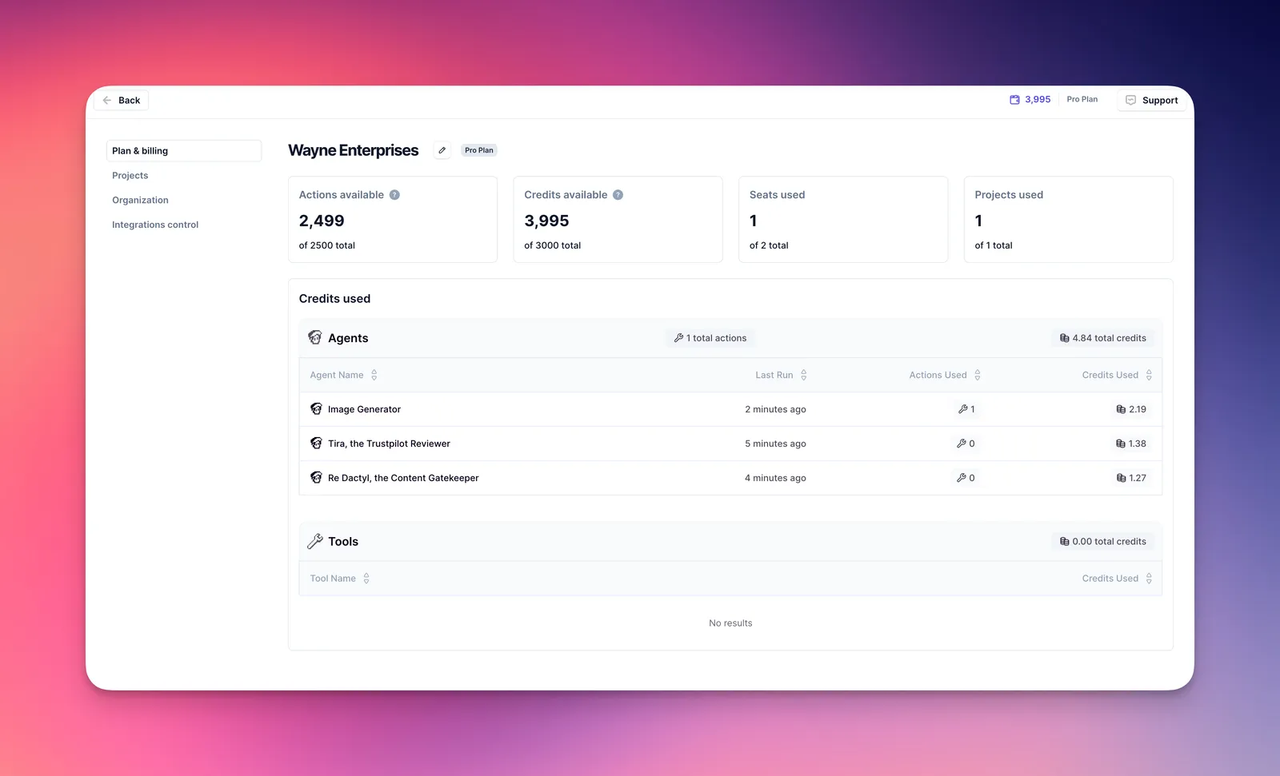
There is a purchasing ambiguity to resolve. The public pricing page currently presents custom Enterprise pricing, while the pricing documentation still lists Pro and Team. Confirm the purchasable plan and required CRM triggers before budgeting. Enterprise permissions and audit features should not be assumed on another tier.
Maintenance is also sales work. When the target market changes, someone must update the rules and revisit examples like C. Connection failures need attention even when the agent's instructions remain unchanged. Only approved lead fields should enter this process; private notes and personal details need a clear reason and authorization to be included.
When Is a Simpler Workflow Enough?
A CRM rule is enough when verified fields consistently determine qualification and assignment. An agent adds little to “route US manufacturers with 50–500 employees to this queue.”
Relevance AI becomes more interesting when free-text inquiries or conflicting records require interpretation. It becomes less attractive if sales has no agreed qualification policy: the agent would merely automate disagreements.
If you're considering SpringBrand for this task, explore its lead-qualification approach with the same sample inquiries.
FAQ
Does Relevance AI provide separate test and production environments?
Its organization guidance recommends separate development, staging, and production projects for Enterprise teams. That is project-based separation, not evidence that every plan includes a ready-made sandbox. Confirm project allowances and keep test CRM credentials separate from production access.
Can a team remove imported lead data and related agent outputs?
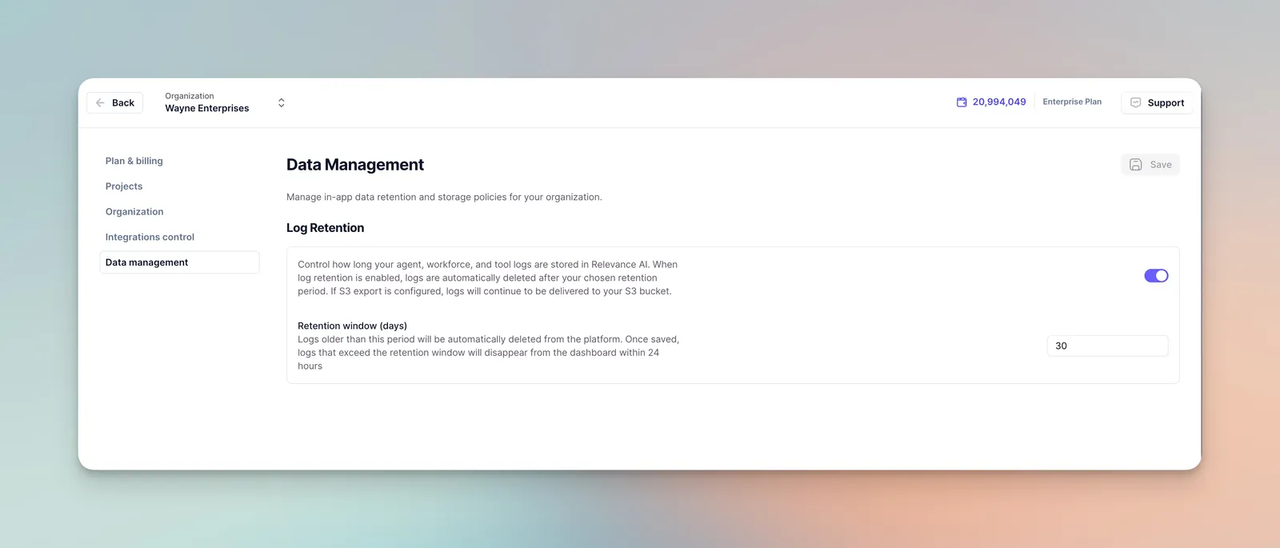
Yes, but deleting imported knowledge is separate from removing conversations and run records. Once enabled, Enterprise retention policies can cover agent conversations and tool runs; knowledge bases require explicit deletion. A deletion procedure needs to cover both, plus copies sent to the CRM or other services.
Which data residency options does Relevance AI offer?
The security page lists Northern Virginia, London, and Sydney. It labels London “EU,” although London is in the UK. The organization region is chosen at signup and cannot be changed in place. A London storage choice does not tell you where a separate enrichment provider handles a request; check that provider separately.
Can a lead-qualification agent run on a schedule without a new lead event?
Yes. Scheduled triggers support recurring runs. That could suit revisiting inquiries awaiting more information. The workflow still needs a rule excluding leads already handled, so a scheduled review does not repeatedly assign the same inquiry.
Can teams export an agent's configuration if they later switch platforms?
The documented copying and cloning options move configurations within Relevance AI. They do not establish a portable package for another platform. Before committing, ask what can be retrieved and retain your qualification rules, tool definitions, and expected outputs independently. Those remain useful even if connections require rebuilding.
Conclusion
Relevance AI is worth shortlisting when research and interpretation consume meaningful sales time and someone can maintain the qualification rules. For a straightforward routing job, the extra platform may be unnecessary. The decisive result is a recommendation a rep can use, including a clear account of what remains unknown.
Explore SpringBrand
Turn ideas into working workflows
Connect agents, APIs and tools in one workspace. Start with a task you want to get done.
Get started free
One account. 10,000+ APIs & capabilities
Give your agent APIs and plugins without separate keys or integrations for every provider.
Explore APIs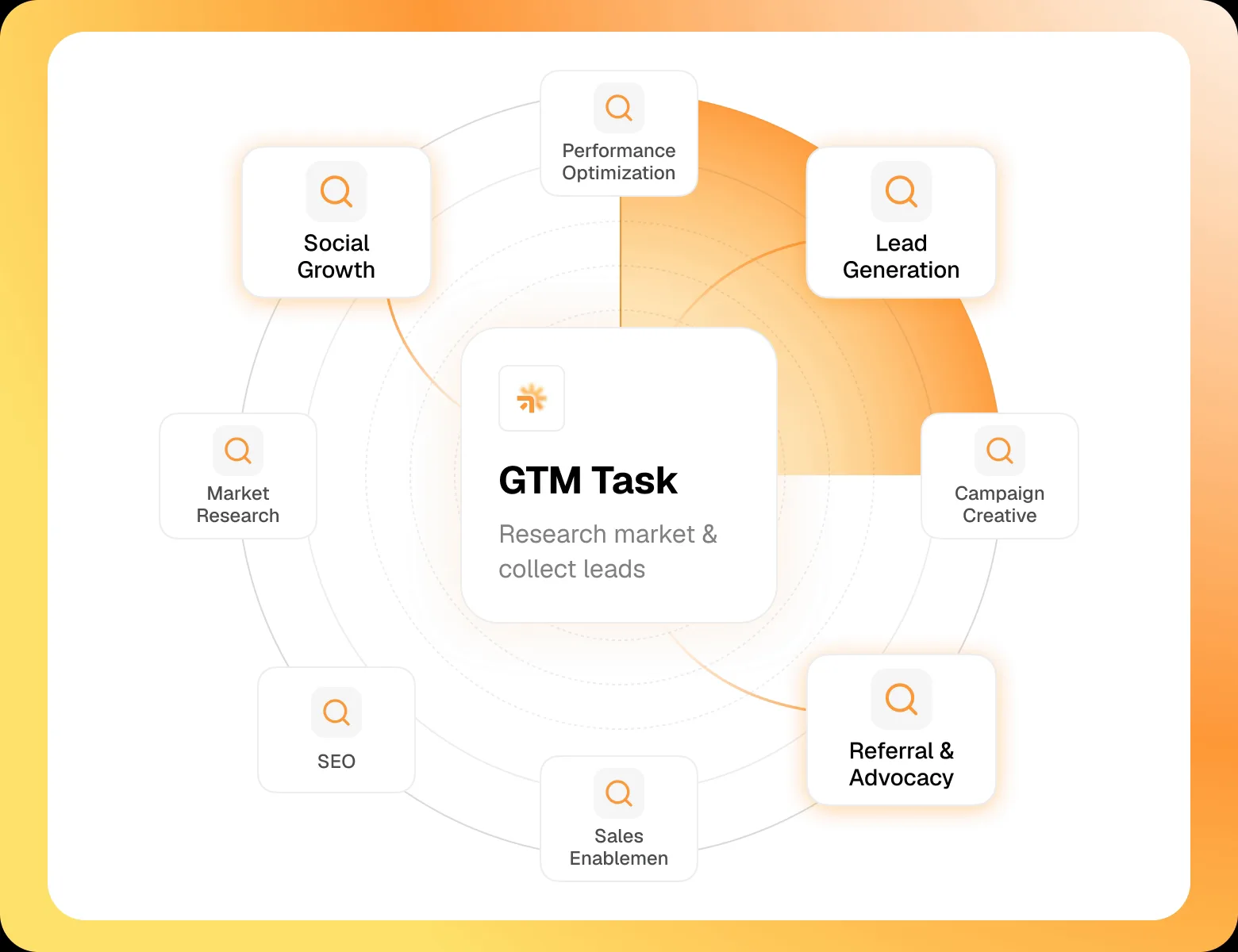
No tool expertise needed
Describe your GTM task. SpringBrand chooses the right APIs and plugins for your agent automatically.
Find tools for your task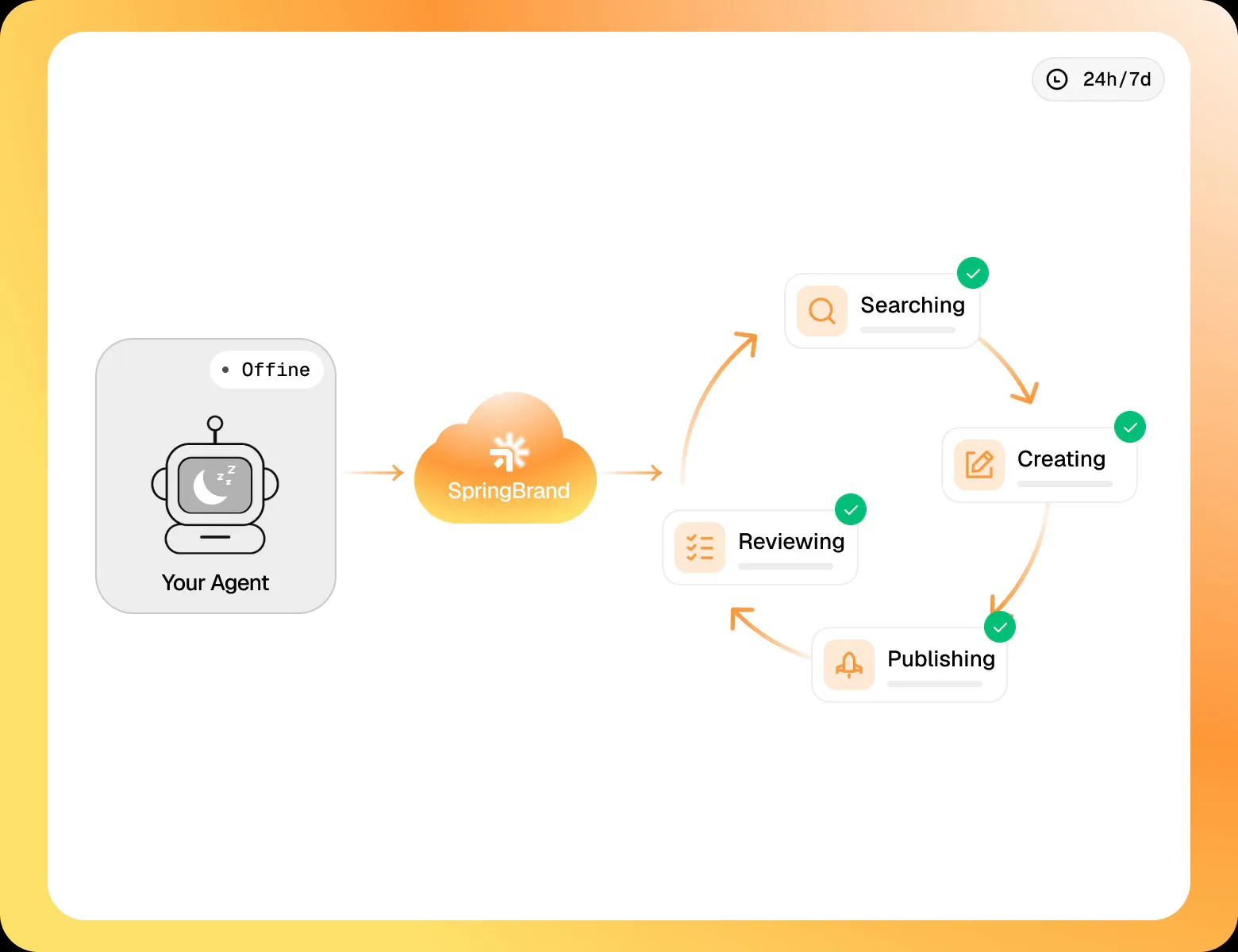
Run tasks 24/7
Connect your agent to SpringBrand to keep tasks running automatically, day and night.
Connect your agent