Reach vs Brand Awareness: Which Metric Matters?
Reach vs brand awareness measures different campaign outcomes. Learn how small teams can select useful metrics without confusing exposure with impact.

An owner opens a campaign report showing broad reach, repeat impressions, and little movement in branded searches or qualified visits. The media buyer calls that awareness; the owner sees distribution without evidence that anyone remembers the business. This reach vs brand awareness guide separates those claims, connects each metric to a campaign objective, and builds a measurement plan a small team can maintain. I’m Alex; in this comparison, reach proves that distribution occurred, while awareness remains a separate question about what the audience noticed and retained.
Quick Comparison: Reach vs Brand Awareness
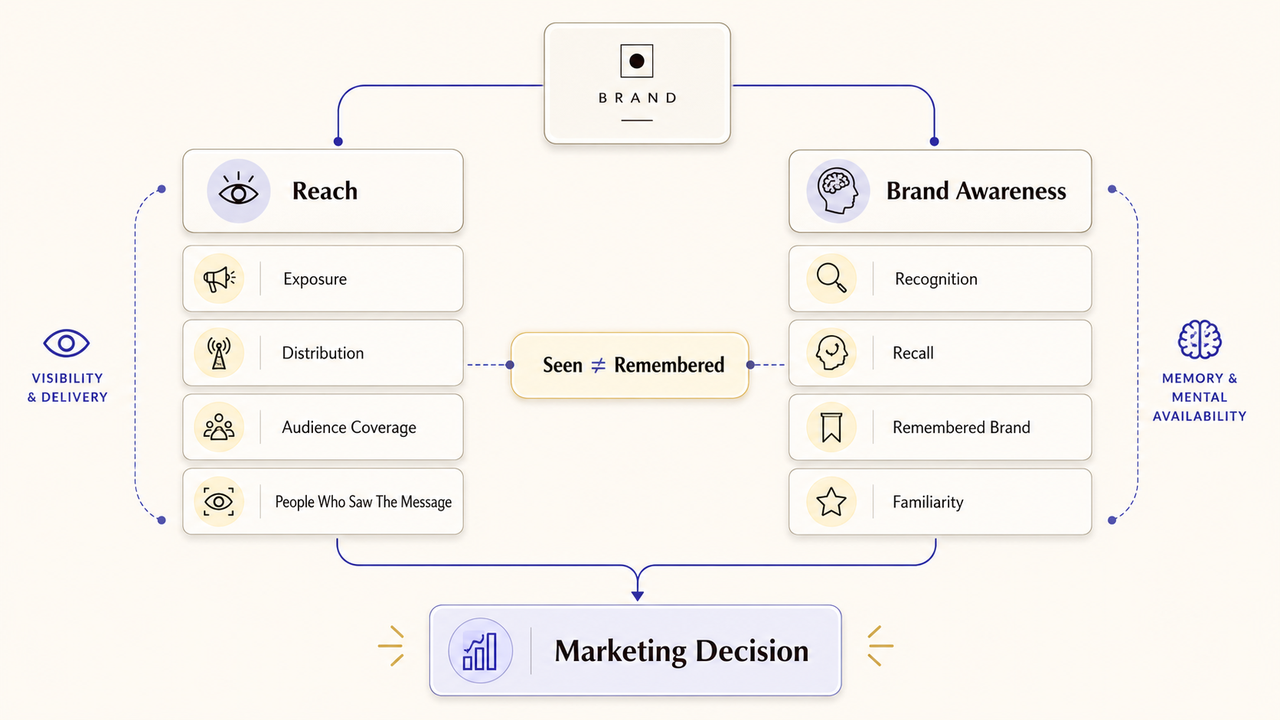
The practical reach vs brand awareness distinction is simple: reach counts estimated exposure within a system and period, while awareness describes whether people recognize or recall the brand.
| Question | Reach | Brand awareness |
|---|---|---|
What does it describe? | How many distinct people or accounts were exposed | Whether the audience recognizes, recalls, or associates something with the brand |
Typical evidence | Reported reach, unique users, impressions, and frequency | Surveys, lift studies, aided recognition, unaided recall, and supporting signals |
Best use | Checking distribution and audience coverage | Checking whether exposure changed memory or perception |
Main limitation | Does not prove attention, recall, preference, or action | Requires a baseline, consistent questions, enough responses, and careful interpretation |
Useful owner | Media or channel owner | Marketing lead or research owner |
If the objective is to put a new name before a defined audience, reach is useful. If people should remember it later, the plan also needs an awareness measure.
What Reach Can and Cannot Tell You
Reach usually represents the number of distinct people or accounts that encountered content during a reporting period. The exact definition depends on the platform. Meta, for example, defines Page reach as the number of people who saw content from or about the Page and states that reach is an estimated metric.
That estimate can answer practical questions:
- Did the campaign move beyond existing followers?
- How much of the intended audience did it cover?
- Did reach expand after the team changed budget, targeting, placement, or creative?
- Did impressions rise through wider reach or repeated exposure?
Keep the platform, audience, geography, settings, and date window attached to the number. Without them, later comparisons become unreliable.
One person may generate several impressions, so frequency describes average repeat exposure. Google Ads defines Unique Reach as a cross-device estimate of people shown an ad and reports it with average impression frequency.

Reach does not establish that someone paid attention, remembered the brand, viewed it favorably, or became more likely to buy. Cross-platform totals may also count the same person more than once.
Use campaign reach to evaluate distribution. Do not rename it “awareness” unless the measurement plan contains evidence about memory or perception.
How Brand Awareness Is Measured
Useful brand awareness metrics usually come from recognition or recall questions, supported by behavioral signals that may indicate familiarity.
Two common survey approaches are:
- Unaided recall: Ask people which brands come to mind in a category without showing a list.
- Aided recognition: Show a list or brand cue and ask which names people recognize.
Keep the wording, audience, sample source, timing, and response options consistent. A survey of local homeowners cannot be compared cleanly with a later survey of a broader regional audience.
A controlled lift study offers stronger evidence when the platform and budget support it. Google’s Brand Lift methodology compares survey responses from people who saw eligible ads with people who were eligible but did not. Measures can include ad recall, awareness, and consideration.

Brand Lift is not available to every account or campaign, so check eligibility before promising it. Smaller advertisers may use consistent pre- and post-campaign surveys, interviews, or a recurring feedback question. Treat those results as directional rather than causal.
Match the Metric to the Campaign Objective
Different campaign objectives need different evidence. “Increase awareness” does not identify the audience, desired memory, or next decision.
Use this objective-to-metric map:
| Campaign objective | Primary measure | Diagnostic measures | Decision supported |
|---|---|---|---|
Introduce the brand to a defined audience | On-target or campaign reach | Impressions, frequency, geography | Whether distribution covered the intended group |
Increase recognition or recall | Consistent survey or eligible lift study | Reach, frequency, creative exposure | Whether memory changed |
Encourage branded searches | Branded search trend | Reach, survey response, site visits | Whether active interest moved |
Support a launch or local event | Reach in the relevant area and dates | Recall, calls, registrations | Whether exposure connected with response |
Generate qualified demand | Qualified inquiries or another verified action | Reach, visits, follow-up status | Whether the campaign supported a commercial outcome |
A brand awareness vs reach campaign should not be chosen for reporting convenience. If the team can only measure exposure, write an exposure objective. A recall objective needs a baseline and post-campaign evidence.
Combine Exposure, Recall, and Business Signals
One number rarely explains a campaign. A practical marketing measurement view follows three stages:
- Exposure: Did the intended audience have a reasonable opportunity to encounter the message?
- Recall or recognition: Did measured awareness change?
- Business response: Did people search, visit, inquire, return, or buy in ways the business can verify?
These stages are related, but movement in one does not prove causation. Seasonality, press, events, competitors, and search demand can move the same signals.
Branded search can support the review. Google Search Console provides branded and non-branded query analysis, although its classification has availability and interpretation limits. Use consistent spellings and date comparisons, and record other activity affecting demand.
Google Trends adds context for regional or seasonal brands. Its data is normalized and scaled from 0 to 100. Google states that Trends reflects relative search interest rather than scientific polling, so it is not an awareness percentage.
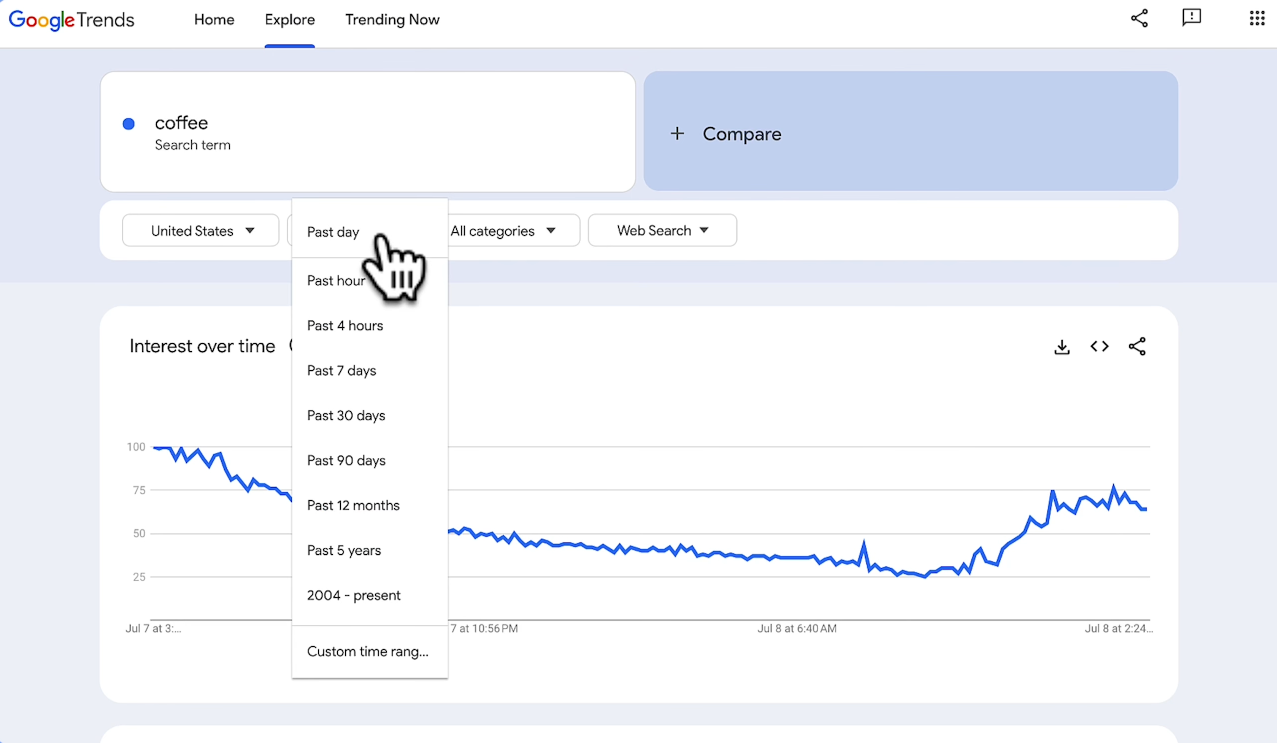
Review the signals together. High reach with flat recall may point to weak creative, targeting, or frequency. Improved recall with few visits may fit a long buying cycle. Direct traffic without a baseline is not enough to declare awareness.
Build a Practical Measurement Plan for a Small Budget
A small team needs a short record that prevents success from being redefined after the campaign.
Before launch, document:
- the campaign objective in one sentence;
- the audience, geography, and reporting window;
- the primary metric and why it matches the objective;
- up to three diagnostic metrics;
- the baseline period or pre-campaign survey;
- the platform definitions and settings being used;
- the person responsible for collecting and reviewing each result;
- the decision the team will make after the review.
A local business could track service-area reach, repeat one recognition question before and after the campaign, and watch branded searches and qualified calls. Keep the audience and question stable, and acknowledge when responses are too few for a firm conclusion.
Review distribution first, awareness second, and business response third. Low reach calls for a delivery check. Adequate reach with flat recall points toward creative, audience fit, or frequency. Improved awareness without response may reflect the buying cycle, offer, or conversion path.
This sequence gives each metric a job and each failure state an owner.
FAQ
How should a new brand measure progress without a baseline?
Create the baseline before the next campaign if possible. If activity has already started, record the earliest consistent period available and label it clearly. Use the same audience, survey wording, geography, and data sources in later comparisons. Treat the first result as a starting point, not proof of campaign lift.
Can offline referrals affect brand awareness results?
Yes. Recommendations, events, storefront exposure, sales conversations, and local press can influence recall and branded search. Add a simple “How did you hear about us?” field to the intake process, but allow multiple influences when appropriate. Record major offline activity beside the campaign timeline rather than assigning every change to digital media.
What changes when a campaign targets one local area?
Define the geographic boundary before launch and report delivery inside that boundary. Compare local reach, recognition, branded searches, calls, or visits rather than using company-wide totals. Remember that residents, commuters, and visitors may appear differently across platform estimates, so document the location setting used by each source.
How should seasonal businesses compare separate campaign periods?
Compare equivalent seasonal windows when possible, not simply the previous month. Keep offer timing, geography, audience, and measurement definitions visible. Weather, holidays, events, inventory, and opening dates may also affect response. A year-over-year comparison can help, but it still needs notes about material changes between periods.
Can high reach be useful when website visits remain low?
Yes, when the campaign objective is distribution and the audience, placement, and frequency are appropriate. Low visits may be expected for an offline purchase or early awareness campaign. However, high reach alone cannot show that the brand was remembered. Add a recall measure or another relevant response signal before claiming impact.
Conclusion

In the reach vs brand awareness decision, reach matters when the team needs to verify distribution. Awareness matters when the intended result is recognition or recall. Business signals show what happened next, but they do not automatically prove which exposure caused it.
If the objective is clear but the measurement brief is not, compare relevant SpringBrand service options before assigning the work.
Approve the campaign objective only when every metric has a defined audience, time window, source, and decision owner.