SEO for Car Dealerships: Local, Inventory, and Reviews
SEO for car dealerships connects local visibility, inventory discovery, service demand, and trust. Learn how to structure a practical search plan.

A dealership website still shows an SUV as available two hours after the sales team marks it sold. A shopper finds the vehicle through search, calls the store, and hears that the page is wrong. The ranking produced a lead, but the inventory handoff damaged trust before a salesperson could begin. I’m Alex; here, an inventory status is a customer-facing commitment, not a decorative field. Effective SEO for car dealerships must keep search pages, inventory systems, departments, and lead records in the same operating state.
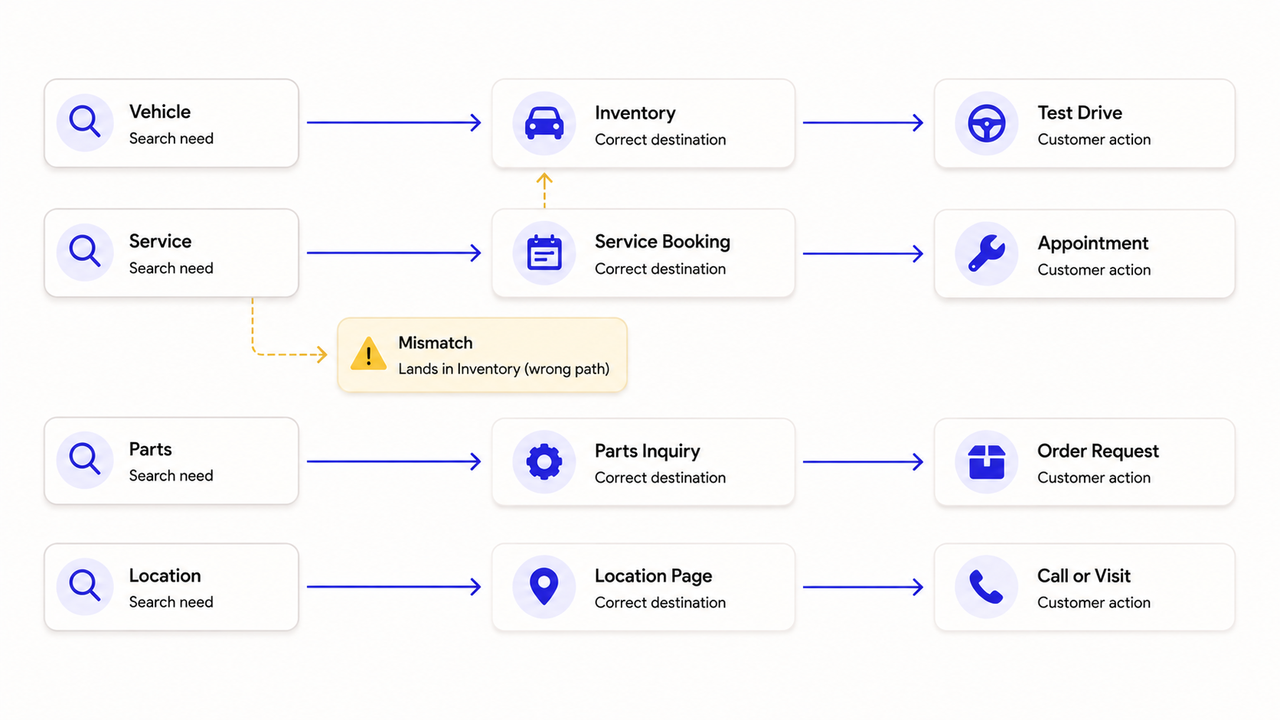
How Dealership Search Demand Splits by Customer Need
Dealership search demand is not one audience moving through one funnel. Sales, service, inventory, and location queries represent different jobs.
| Search type | Example intent | Best destination | Primary owner |
|---|---|---|---|
Specific inventory | Used 2024 hybrid SUV near me | Current vehicle detail page | Inventory or sales team |
Make and model | New compact trucks in [city] | Model or inventory category page | Sales manager |
Dealership location | Brand dealer near me | Location page and Business Profile | Store manager |
Service need | Brake service for [brand] | Service page or booking route | Service department |
Parts need | OEM parts near me | Parts page and inquiry path | Parts department |
Trust research | Dealership reviews or warranty support | Location, review, and policy information | Customer-experience owner |
A person searching a vehicle identification number or exact trim may be close to contacting a seller. Someone comparing two models needs specifications, availability context, and useful internal links. A customer looking for an oil change should not have to navigate through the new-vehicle catalog.
Separate these paths in the site structure and reporting. Do not treat every form submission as a sales lead or every organic session as inventory demand.
The distinction also changes the keyword plan. Car dealer local SEO helps customers find the correct physical location or department. Dealership inventory SEO helps search engines and buyers reach accurate vehicle and category pages. Service content captures work that may continue long after a particular vehicle has left the lot.
Structure Location, Department, and Service Visibility
Each dealership location needs one clear identity across its website, Business Profile, directories, and customer communications. The location page should contain the correct address, main phone route, hours, departments, brands represented, and links to inventory and service actions.
Departments require more care. Google allows publicly accessible departments that operate as distinct entities to have separate Business Profiles when they meet the applicable conditions. Its guidelines use an auto dealership and its service-and-parts operation as an example of distinct profiles with different categories. The broader Business Profile guidelines for departments also note that such departments typically have distinct names, customer access, categories, and sometimes different hours.
Do not create separate profiles for every salesperson, sales team, or internal desk. A profile should represent an eligible public-facing business or department, not a collection of keywords.
On the website, give each real department a useful destination:
- Sales: searchable inventory, contact options, trade-in path, and appointment request.
- Service: covered work, hours, booking process, recall or warranty routing, and transportation options where applicable.
- Parts: available inquiry methods, ordering boundaries, hours, and pickup information.
- Collision or body shop: services, estimate process, insurer communication boundaries, and location details.
Use department-specific phone numbers or tracked routes only when the dealership can maintain them and preserve a stable customer experience. Record which team owns each number, form, and inbox. A separate page without a separate handoff simply creates another place to lose an inquiry.
Improve Inventory Discovery and Page Quality
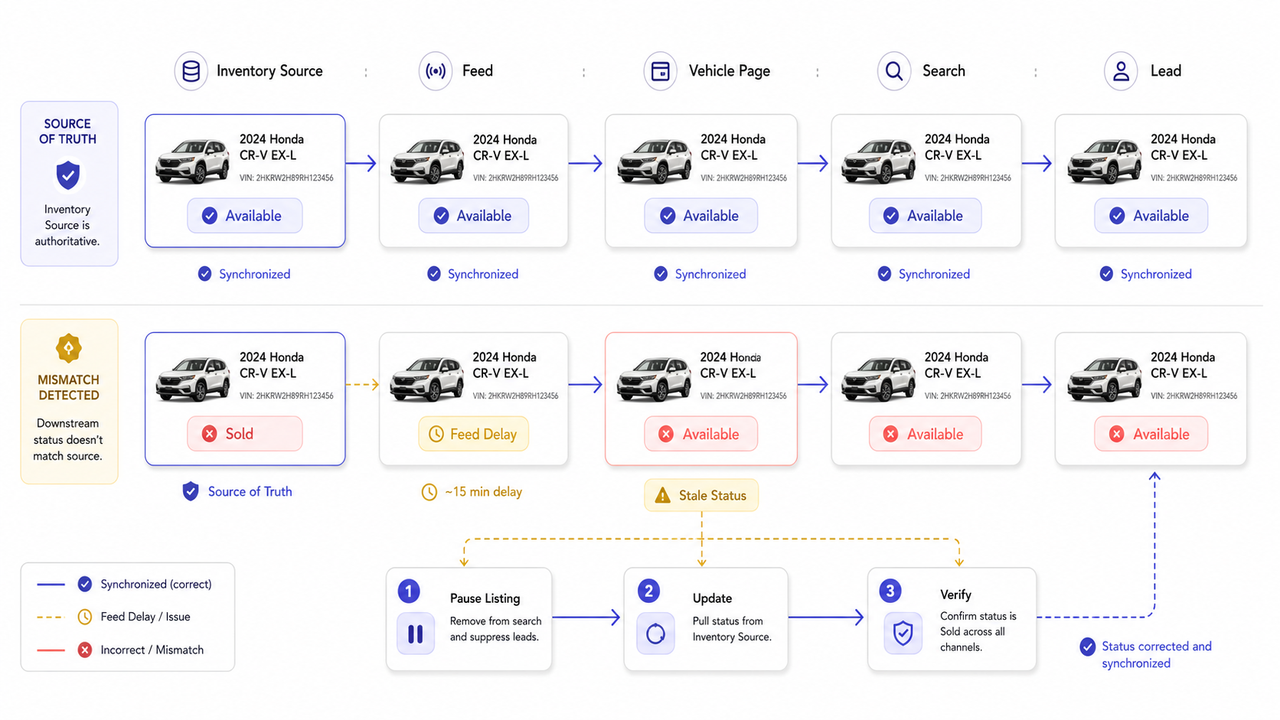
A vehicle detail page should answer the questions that make a shopper decide whether to contact the store.
Useful fields may include:
- year, make, model, and trim;
- new, used, certified, or other accurately defined condition;
- current availability;
- mileage where applicable;
- drivetrain, body style, color, and major equipment;
- price and clearly stated qualifications;
- original photographs of the vehicle;
- dealership location;
- VIN or another reliable inventory identifier;
- next step for confirming availability or arranging a visit.
The page title and main heading should identify the vehicle naturally. Avoid stuffing the dealership name, city, body style, and every possible feature into one title.
Inventory photographs deserve the same discipline as text. Repeated stock images make several vehicles appear interchangeable and may not show the condition of the unit being offered. When original photographs are unavailable, label representations accurately rather than allowing them to imply that the pictured vehicle is the one in stock.
Keep important inventory reachable through category and model pages. A shopper should be able to move from “used SUVs” to a model group and then to a current vehicle without relying on the site’s internal search box.
Google currently describes vehicle inventory display within Business Profiles as a feature with limited category and regional availability, and notes that its appearance and functionality may change. Treat any such feature as an additional distribution surface, not the source of truth for the dealership’s inventory. Review the current Business Profile inventory availability notice before including it in a technical scope.
Decide what happens when a vehicle sells:
- Update the inventory status at the authoritative source.
- Stop presenting the vehicle as currently available.
- Preserve or redirect the URL according to its value and replacement options.
- Offer genuinely relevant alternatives.
- Remove obsolete URLs from active inventory navigation and future sitemap updates.
There is no universal reason to delete every sold vehicle page immediately. A page may still receive visits or links. The right treatment depends on whether it retains useful content, has a close replacement, or has become an empty record.

Manage Feeds, Duplicates, and Technical Dependencies
Inventory may pass through a dealership management system, feed provider, website platform, advertising partner, and third-party marketplace before it reaches a customer. Each transfer can introduce a delay or field mismatch.
Create an inventory data map:
| Field | Authoritative source | Update frequency | Failure owner |
|---|---|---|---|
Availability | Inventory system | Defined operational interval | Inventory manager |
Price | Approved pricing source | After approved change | Sales or pricing owner |
Mileage | Vehicle record | After material update | Inventory team |
Photos | Media library or website platform | After upload approval | Merchandising owner |
Location | Store inventory record | After transfer | Operations |
Vehicle URL | Website platform | On creation or status change | Web provider |
Record what happens when a required field is blank, a feed stops, or two systems disagree. A stale feed should create an alert or review task, not continue publishing the last known state indefinitely.
Faceted navigation can also produce many URLs for the same inventory set. Sort order, price range, color, body style, and campaign parameters may create duplicate or near-duplicate pages. Decide which combinations deserve indexable destinations and which exist only to help visitors filter.
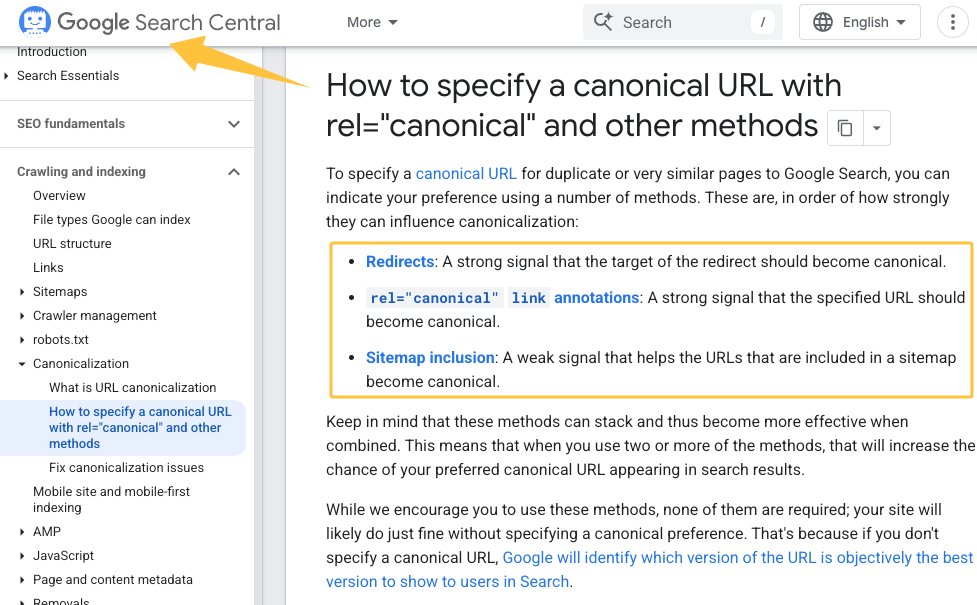
Google describes redirects and rel="canonical" annotations as strong signals for consolidating duplicate or highly similar URLs, while sitemap inclusion is a weaker canonical signal. Its canonical URL guidance also recommends keeping internal linking consistent with the preferred version.
An inventory sitemap can help discovery on a large or frequently changing site, but it does not guarantee crawling or indexing. Include the canonical URLs the dealership currently wants in search, remove obsolete inventory through the normal feed process, and monitor submitted URLs. Google’s sitemap overview explains why larger or complex sites may benefit while still requiring sound internal links.
Technical checks should cover:
- crawl access;
- response codes;
- canonical destinations;
- mobile rendering;
- internal links;
- sitemap membership;
- page titles and headings;
- status changes after a vehicle sells;
- feed-to-page update delay;
- analytics and form events.
A green audit score is not enough. Test a known vehicle from the source system through the published page, search feed, form, and CRM record.
Build Reviews, Local Content, and Trust Signals
Vehicle sales and service visits create different customer experiences. Review monitoring should preserve that distinction even when the reviews appear on the same dealership profile.
After a genuine completed interaction, the dealership may ask the customer for an honest review. Do not condition the request on customer satisfaction or offer compensation for a positive rating. Google’s review guidance prohibits incentives for posting, changing, or removing reviews.
Assign responses by issue type:
- sales experience;
- vehicle availability;
- finance process;
- service appointment;
- parts order;
- warranty concern;
- facility or staff conduct.
The responder should acknowledge the experience without publishing private customer, vehicle, financial, or service-record information. Move detailed disputes into an appropriate private process.
A warranty complaint needs a named internal owner, but that person should not decide legal responsibility in a public review reply. Confirm which dealership, manufacturer, service contract, or third party controls the relevant decision. When rights or liability are disputed, use the applicable agreement and qualified professional advice.
Local content should answer real dealership questions. Useful topics may cover service scheduling, model comparisons, trade-in preparation, seasonal maintenance, local pickup procedures, or how the store handles a specific appointment type. Avoid thin city pages that repeat the same inventory and directions under different headings.
Trust also depends on consistency. Hours, brands, departments, contact details, and current offers should agree across the website and profiles. If an offer has conditions, place them where the customer can understand them before submitting an inquiry.
Measure Leads Across Sales and Service Departments

A single “organic leads” total hides whether search is producing vehicle inquiries, service bookings, parts questions, or unrelated calls.
Capture fields that support a departmental handoff:
- source and landing page;
- dealership location;
- department;
- vehicle or service requested;
- stock number or VIN when relevant;
- new or returning customer;
- inquiry date and response time;
- assigned owner;
- appointment status;
- final disposition.
Use the fewest fields required for a useful first response. A long form can discourage an urgent service customer, while an incomplete inventory form may leave sales unable to identify the vehicle.
Agree on definitions before reviewing performance:
- Inventory inquiry: a person contacts the dealership about an identifiable vehicle or model.
- Qualified sales lead: the request is reachable, relevant, and assigned for follow-up.
- Service request: the customer requests work the department can evaluate.
- Booked appointment: a date or next step is accepted and recorded.
- Completed outcome: the dealership records the appropriate sales or service result.
Search reporting may show sessions, queries, rankings, calls, and form events. The CRM or appointment system should show whether the customer received a response. Connect the records where practical, but do not claim revenue attribution when the evidence does not support it.
Audit several individual leads each month. Start at the search landing page and follow the record through assignment and outcome. This often reveals broken routing that an aggregate dashboard cannot show.
Decide When Specialist SEO Support Is Needed
A dealership may manage basic pages, profiles, and review workflows internally. Specialist automotive dealership SEO support becomes more useful when the site has:
- thousands of changing vehicle URLs;
- several inventory or advertising feeds;
- faceted navigation creating duplicate pages;
- repeated indexing problems;
- multiple locations or departments;
- a website-provider migration;
- inconsistent analytics and CRM handoffs;
- limited control over templates or technical settings.
Scope the engagement around an observable problem. “Increase dealership rankings” does not define the work or its acceptance conditions.
Ask a provider to specify:
- systems and feeds to be reviewed;
- sales and service sections included;
- access required;
- technical evidence supplied;
- priority method;
- implementation responsibility;
- reporting definitions;
- validation process;
- change log;
- ownership of accounts and deliverables.
Keep the dealership as the owner of its domain, Business Profiles, analytics, inventory data, feed accounts, and search tools. A specialist can recommend or implement changes through approved access without becoming the only party capable of retrieving the records.
No provider can guarantee rankings, vehicle sales, or service bookings. A useful engagement should leave the dealership with reproducible findings, approved changes, and a clearer connection between search activity and departmental follow-up.
FAQ
What changes after a dealership ownership transfer is completed?
Transfer control of the domain, website platform, Business Profiles, analytics, inventory feeds, vendor accounts, call routes, and customer systems through a documented handoff. Google advises transferring primary ownership of an existing Business Profile so that business information, including reviews, can be maintained. Its ownership-transfer instructions distinguish primary owners from managers.
A change in legal ownership does not automatically answer whether the public business identity remains the same. Review name, branding, agreements, and profile eligibility before closing or replacing an established profile. Contract, trademark, customer-data, and liability questions should be handled by qualified professionals.
How should temporary showroom closures be communicated online?
Update the website, profile, appointment messages, and advertising destinations together. For a brief scheduled closure, use accurate special hours. For a longer interruption, Google provides a temporary-closure status for Business Profiles. Its closure guidance distinguishes temporary closure from permanent closure.
If service or parts remains open while the showroom closes, publish the status by department rather than implying that the entire dealership is unavailable.
Can dealerships market vehicles they can source but not stock?
Yes, if the distinction is explicit. Describe the vehicle as available to order, locate, or source rather than currently in inventory. Explain what the customer is requesting, which details remain unconfirmed, and who will confirm price, timing, specification, and availability.
Do not assign an in-stock label or create a specific vehicle page that implies the unit is physically available when it is not.
Who handles reviews involving manufacturer warranty disputes on local profiles?
Assign an experienced service or customer-relations owner to acknowledge the review and collect the necessary information privately. That person should separate the customer’s experience from any decision about warranty coverage or responsibility.
Do not disclose service records or declare fault publicly. Escalate the underlying question according to the manufacturer’s current warranty process, the applicable agreements, and qualified advice where necessary.
How should bilingual communities affect dealership page planning?
Start with the customer journey rather than translating only keywords. If a meaningful audience searches and communicates in another language, provide complete pages with understandable navigation, service details, forms, and follow-up in that language.
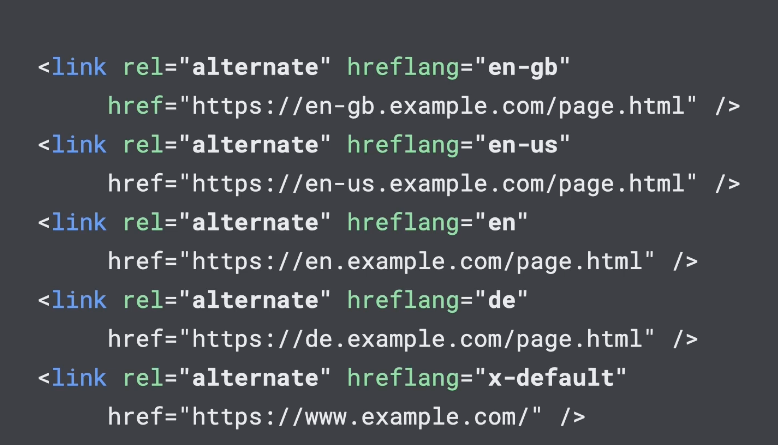
Google recommends separate URLs for language versions and supports hreflang annotations to connect localized alternatives. Its multilingual site guidance also warns that translating only boilerplate while leaving the main content unchanged can create a poor experience.
Publish a language-specific contact path only when the dealership can support the response it promises.
Conclusion
Effective SEO for car dealerships depends on more than placing model names and city terms on pages. The dealership must keep locations, departments, inventory status, reviews, and lead routing consistent enough for a shopper to act on what search displays.
The search plan is ready when every visible vehicle and department can be traced to a current status, a named owner, and a lead record the dealership can inspect.