Construction Marketing Plan for Consistent Leads
A construction marketing plan aligns ideal projects, proof, local visibility, outreach, and follow-up. Build a focused system for consistent leads.

An estimator opens Friday’s inquiry log and finds three “new leads.” One is too small for the crew, one sits well outside the service area, and one needs a start date the schedule cannot support. The form worked; the marketing did not. A practical construction marketing plan should improve project fit before it increases lead volume. I’m Alex; I’ll build this plan around the information, proof, and follow-up a contractor needs before an inquiry deserves estimating time.
Define the Projects, Buyers, and Service Territory
Begin with work the company would be willing to quote again. Look at completed projects that suited the crew, margin expectations, equipment, schedule, and preferred contract structure. Then review recent declines. A pattern of unsuitable inquiries often says more about the marketing problem than a traffic report does.
Turn that review into a one-paragraph project brief:
We want more [project type] work for [buyer] within [territory]. A suitable project usually includes [scope and timing], requires [relevant capability], and can be supported by [specific proof]. We normally decline [clear exclusions].
The buyer matters because project selection is rarely based on the same evidence. A homeowner may focus on communication, disruption, and similar residential work. A facilities manager is more likely to ask about scheduling, documentation, safety procedures, and whether the site can remain operational. General contractors may look first for trade capability, availability, insurance, and experience working within a larger project team.
Territory needs an operational definition too. Travel time, licensing boundaries, material delivery, supervision, and crew availability can make an otherwise attractive project impractical. Listing a city in an ad does not make the company ready to work there.

Build a Clear Website and Project Proof Library
The website should help the right visitor recognize a fit without reading every page. State what the company builds, whom it serves, where it works, and what happens after someone makes contact.
Service pages need genuine differences. A commercial renovation page should reflect occupied-site planning, documentation, and coordination. A residential addition page may need to address access, household disruption, and the homeowner’s decision process. Changing only the city or service name produces pages that are easy to publish but not especially useful.
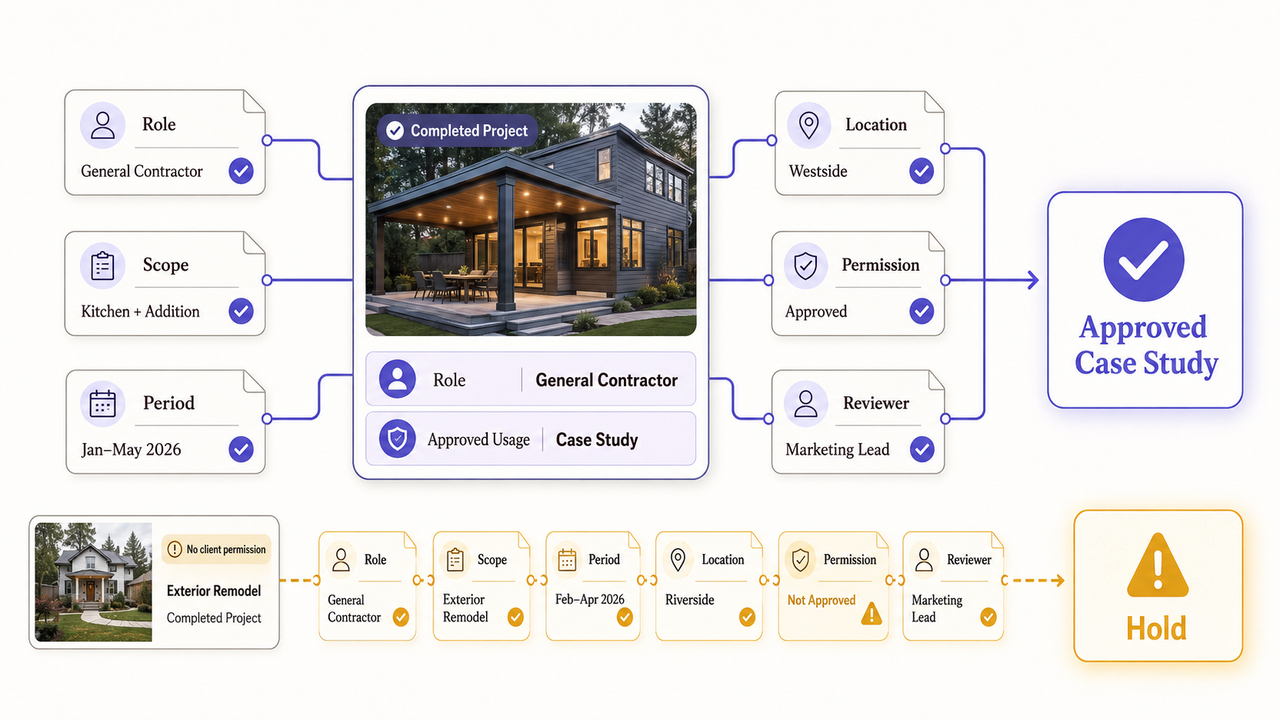
Project evidence is often scattered across phones, proposal folders, and shared drives. Bring it into one record before turning it into website copy. For each project, note the company’s actual role, the work performed, the completion period, the general location, approved images, permitted client references, and the person who checked the description.
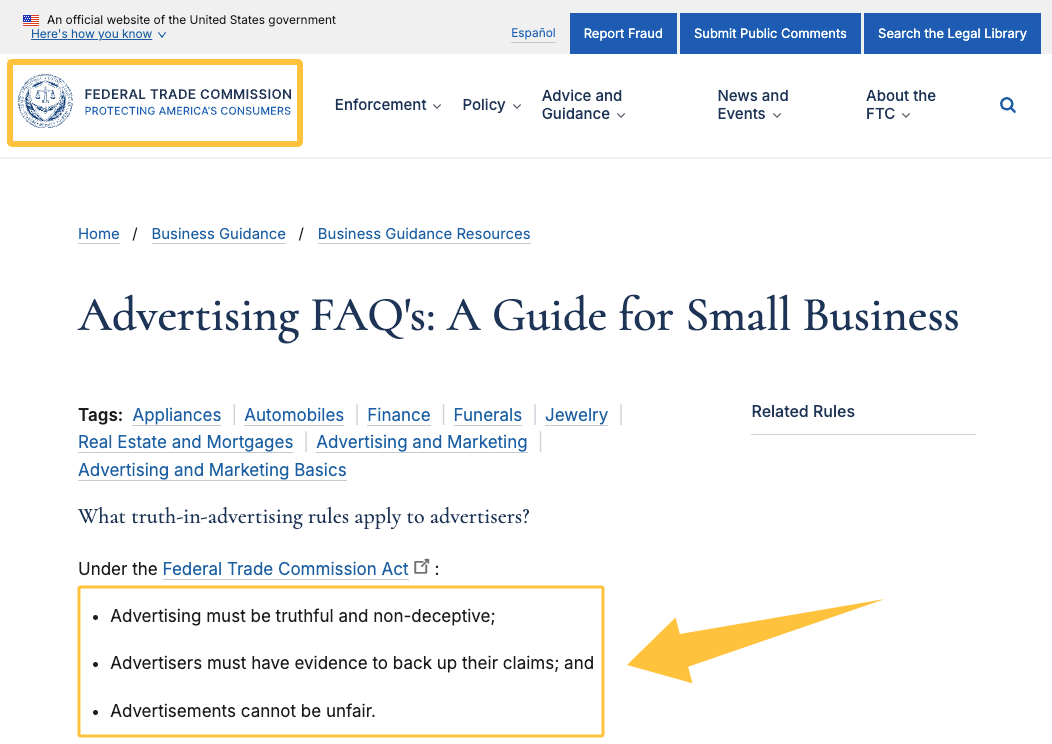
Be careful with performance statements. The FTC’s truth-in-advertising guidance says advertisers need evidence for express and implied claims before an ad runs. An estimator’s informal comment about savings, structural performance, safety, or project results should not become a public claim without suitable support and review.
Finishing a project also does not automatically settle publicity rights. Check the contract and any terms covering photographs, plans, confidentiality, client names, or testimonials. Obtain the necessary permission, and ask qualified counsel to review unresolved ownership or usage questions.
Strengthen Local Visibility and Referral Sources
Start by checking what a nearby buyer actually sees. Search the company name, open its Business Profile, follow the website link, and call the listed number. Confirm that the category, hours, address or service area, and contact route still describe the business accurately.
Google identifies relevance, distance, and prominence as the main local-ranking factors. Complete information can help Google understand the business, but neither a profile update nor an outside provider can promise a particular map position.

Contractors that travel to customers need to represent that model correctly. Under Google’s current guidance for service-area and hybrid businesses, a business that does not serve customers at its address should remove the address from the public profile and define its service areas. Avoid implying that the company has staffed offices simply because it wants to reach additional cities.
Ask customers for reviews after a meaningful stage, such as completion or an agreed handoff. Keep the request neutral and make responding easy. Google allows businesses to request genuine feedback, but its review guidance prohibits incentives for posting, changing, or removing reviews.

Referral activity needs more than an occasional check-in. Decide which architects, property managers, suppliers, complementary trades, general contractors, past clients, or local organizations are connected to the work the company wants. Give someone responsibility for each important relationship and something relevant to share: current availability, a capabilities sheet, or an approved project example.
Choose Paid, Organic, and Relationship Channels
Choose channels by the job they need to perform.
Organic search can help buyers find service information, project evidence, and answers to planning questions. Paid search can capture existing demand when the company has a focused landing page and someone ready to answer. Email can maintain contact with previous clients and referral partners. Social posts can make current capabilities visible, provided the images and project details are approved. Direct outreach may work when the desired buyers are identifiable by company, role, or property type.
A small contractor rarely needs all of these running at full speed. One maintained search channel and a steady referral routine may be more useful than six neglected accounts.
Capacity should affect that choice. If estimates are late or the crew cannot take another start for several months, collecting additional urgent inquiries may damage trust. Narrow the campaign, advertise a later project window, or pause spending until the promise matches the schedule.
Create a Lead Capture and Follow-Up Process
A name and email address are not enough to judge a construction opportunity. Ask for the project type, general location, intended timing, a short scope description, and the preferred contact method. Add other fields only when someone will use them.
The form should make qualification easier, not force a prospect to prepare an unpaid bid package. When a project requires drawings, confidential documents, or detailed site information, explain when and how those materials will be requested.
Test the handoff yourself. Submit the form from a phone. Read the confirmation message. Find the resulting email or CRM record, then check who owns the response when the usual estimator is unavailable.
Keep the stages understandable: new inquiry, fit review, call or site visit, estimate or bid, and decision. Declined, deferred, and referred work needs a recorded outcome too. Otherwise, the same poor-fit inquiries can continue arriving while the dashboard reports that lead generation is improving.
Set a response expectation the team can keep. The fastest possible promise is not necessarily the best one; a clear and consistently staffed process matters more.
Build a 90-Day Marketing Calendar
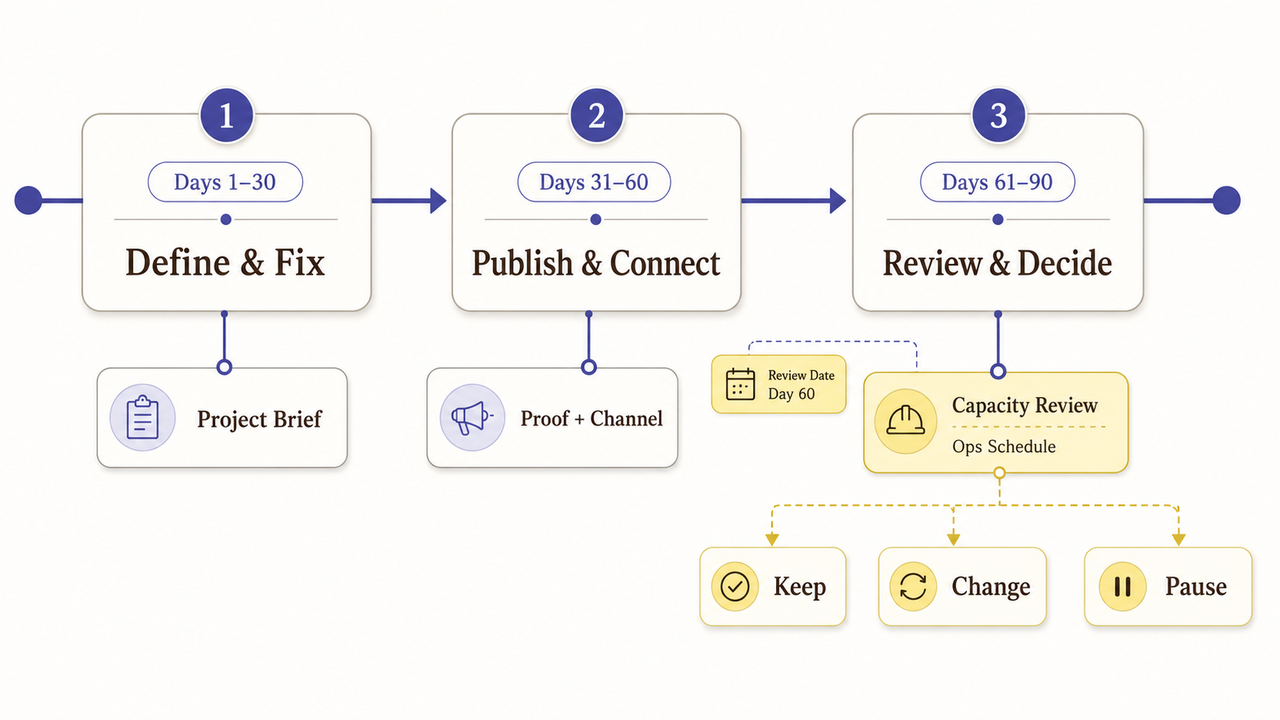
Use the first 30 days to repair the foundation. Define the desired projects, buyers, territory, exclusions, and current capacity. Test every contact route and identify which project materials have permission for public use.
During days 31–60, improve the pages that support the preferred work. Correct local listings, publish a small number of well-documented project examples, and reconnect with referral sources that already understand the company. Start one demand channel rather than launching several at once.
Days 61–90 are for comparison. Review which inquiries reached an estimator, which were qualified, how long responses took, and why work was declined or lost. Keep a channel when the team can operate it and the inquiries broadly match the project brief. Change or pause it when the evidence points elsewhere.
Weather, delayed projects, and staffing changes can make a calendar obsolete quickly. Put a short marketing-capacity review beside the operations meeting rather than waiting until the quarter ends.
If that review has no internal owner, use the project brief and 90-day record to scope the exact marketing support the company is missing.
With the gap documented, review relevant SpringBrand services for local businesses while keeping project-fit and capacity decisions in-house.
Track Lead Quality, Pipeline, and Capacity
Define a qualified lead before reporting the number. For this business, it might mean that the project matches the service, territory, timing, and minimum scope, and that the buyer has agreed to a next conversation. Another contractor may need different criteria.
Track the source, qualification decision, response time, consultation or site visit, estimate, outcome, and reason for loss. Pipeline value is useful only when opportunity stages and amounts are kept current.
Attribution will remain imperfect. A buyer may notice a project sign, hear the company’s name from an architect, read a case study, and later search for the brand. Preserve the touchpoints you can verify without assigning the entire decision to the last click.
Place capacity beside demand. Rising inquiries are not a win if estimates are backing up or suitable projects cannot be scheduled. That is the point to improve qualification, add estimating support, narrow promotion, or temporarily reduce activity.
FAQ
How should joint ventures appear in marketing materials?
Describe the participating companies and their roles accurately. Do not present jointly delivered work as the independent record of one contractor. Confirm permission before using a partner’s name, logo, photographs, or performance statements. Responsibility, licensing, ownership, and representation questions may require review by qualified legal or industry professionals.
Can completed projects be shown without client permission?
Completion alone does not establish permission to use the client’s name, site images, drawings, testimonial, or identifying details. Review the relevant agreement and obtain written approval where required. If permission is unavailable, consider an anonymized description that removes the client, precise location, sensitive images, and recognizable project information.
What changes when work spans several service territories?
Review the economics and operating limits of each territory separately. Licensing, travel, supervision, crew coverage, material delivery, and referral networks may differ. Pages and campaigns should reflect areas the company can genuinely serve rather than implying nonexistent offices or immediate availability everywhere.
How should weather delays affect active campaign timing?
Compare the campaign promise with the revised construction schedule. Update availability, expected start windows, call scripts, and time-sensitive ads when conditions change. If the team cannot provide a credible date or timely response, narrowing or pausing promotion may be more responsible than allowing old messaging to continue.
Can one plan support both public and private bids?
The same capability statements and project evidence may support both, but the opportunity workflows should remain distinct. Private work may begin through referrals, outreach, or negotiated discussions. Public work follows formal notices, eligibility rules, deadlines, and submission instructions. U.S. contractors can search federal procurement notices through SAM.gov Contract Opportunities; state and local systems may differ.
Conclusion
A construction marketing plan is ready when someone owns the qualification decision, the follow-up record, and the capacity check. Give that person authority to narrow or pause a channel when its inquiries no longer match the projects the company can responsibly pursue.