Manufacturing Marketing Strategy: Build a Sales Pipeline
A manufacturing marketing strategy turns technical expertise into discoverable content, qualified demand, and sales follow-up. Build a practical plan.

Picture the morning after an industrial trade show. Marketing imports dozens of badge scans, sales recognizes a handful of companies, and the application notes remain in a separate spreadsheet. Everyone agrees that the event was busy, but nobody has decided which contacts warrant an engineer’s time. A useful manufacturing marketing strategy resolves that handoff before adding another campaign. I’m Alex; this guide follows technical expertise from the first buyer question to a qualified opportunity that sales can accept, advance, or reject with a recorded reason.
Map Buyers, Influencers, Applications, and Sales Cycles
A manufacturing purchase rarely begins and ends with one person. An engineer may define the performance requirement, an operator may care about ease of use, and a quality team may request documentation. Procurement enters with commercial terms. Finance or an executive sponsor may approve the investment later.
Not every sale includes all of these roles, but marketing needs to know who influences the decision and when. Otherwise, one general brochure has to answer incompatible questions.
Start with an application rather than a demographic label. “Automotive manufacturers” is broad. “Tier-two suppliers evaluating a more repeatable finishing process for low-volume components” gives the team something it can discuss with sales, engineering, and production.
Create an application-to-pipeline record for each priority segment:
Application: What is the buyer producing or trying to change?
Trigger: Why is the issue being investigated now?
Buyer roles: Who specifies, evaluates, approves, purchases, and uses the solution?
Technical questions: What must be confirmed before evaluation can continue?
Required proof: Which drawings, tests, certifications, samples, or project records are relevant?
Next step: Consultation, sample request, drawing review, quote, trial, or another defined action?
Owner: Who receives the inquiry and decides whether it advances?
Add the usual sales cycle and likely delay points. A buyer may find the company months before an approved project exists. That contact still has value, but it belongs in nurture rather than an urgent sales queue.

Clarify Positioning Around Business and Technical Outcomes
Manufacturers often describe themselves through equipment, materials, processes, and years in operation. Those details establish capability, but they do not automatically explain why a buyer should continue the conversation.
Connect each technical capability to an application and a business consequence. A process may matter because it reduces a secondary operation, supports a particular tolerance, fits a constrained installation, or simplifies sourcing. The connection must be accurate; a plausible marketing interpretation is not enough.
Separate three kinds of statement while drafting:
- What the product or process is designed to do
- What internal evidence or approved documentation supports
- What remains dependent on the buyer’s material, operating conditions, integration, or testing
This distinction becomes especially important when copy touches performance, safety, durability, compliance, or engineering results. The FTC’s guidance on substantiating advertising claims explains that advertisers need evidence for both express and implied claims before publication. The marketing writer can identify where proof is missing, but the appropriate internal expert must decide whether the statement is technically sound.
Positioning also needs exclusions. If a product is suitable only within stated operating conditions, publish those conditions where the buyer can understand them. A narrower accurate claim is more useful than a broad promise that sales or engineering later has to retract.
Turn Expertise Into Useful Website and Content Assets
Technical knowledge often sits in application engineers’ inboxes, sales call notes, test reports, training slides, and recurring support conversations. The first content task is not producing more articles. It is finding the questions the company already answers repeatedly.
A strong application page might explain the operating problem, relevant process, selection factors, required inputs, limitations, and next technical step. A capability page can show equipment and materials, but it should also tell the reader which jobs fit that capability and what information is needed for review.
Other useful assets may emerge from the same source material: a selection guide, drawing checklist, technical FAQ, specification comparison, setup video, case summary, or troubleshooting note. One expert interview can support several assets, provided each is edited for its own buyer and purpose rather than copied across channels.
Google recommends creating helpful, reliable content for an existing or intended audience, with clear authorship and demonstrable expertise. For a manufacturer, that means letting subject-matter knowledge shape the page instead of publishing generic summaries written only around a keyword.

Set an approval route before production increases. Marketing owns clarity and structure. The subject-matter expert checks technical meaning. Product, quality, regulatory, or legal reviewers join when the claim falls within their responsibility. Record the approved version and the source behind any material statement so an older page can be reviewed later.
Choose Search, Email, Events, and Partner Channels
Search works well when buyers can describe the application, problem, material, process, or part they need. It becomes less useful when the market has no shared language for the solution. In that case, events, distributors, associations, supplier networks, or direct account outreach may introduce the category before buyers search for it.
Email serves a different role. It can return a technical contact to an application guide, announce an approved product change, or keep a long-cycle opportunity informed between sales conversations. It should not become a stream of unrelated product announcements sent to every address in the database.
Events deserve a pre-event and post-event plan. Decide which accounts or roles the team wants to meet, what evidence will be available, and how notes will be captured. Afterward, route contacts by application and next step rather than sending the same follow-up to every badge scan.
Partner channels can extend access to buyers already looking for qualified manufacturing capacity. In the United States, the NIST Manufacturing Extension Partnership supplier-scouting program connects specific supply-chain needs with manufacturers that have relevant technical capabilities. Whether the route is a public program, distributor, representative, or industry partner, assign someone to maintain the relationship and respond to opportunities.
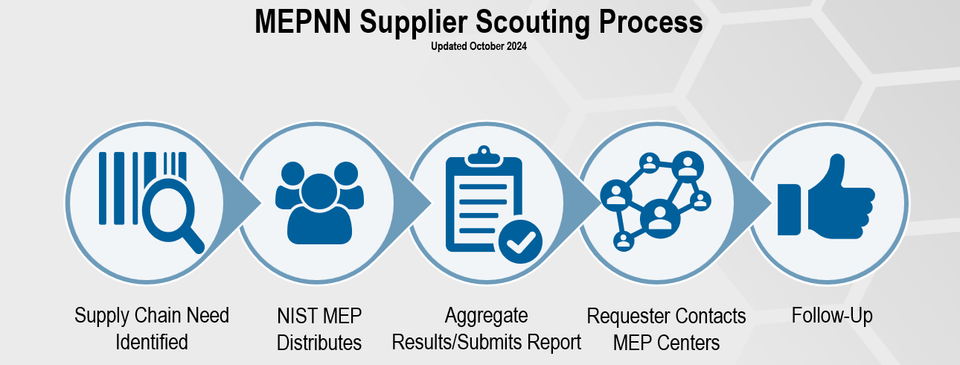
Channel selection should reflect sales capacity. If the company cannot review drawings promptly or schedule technical calls, increasing demand may expose the handoff problem rather than build the pipeline.
Connect Lead Capture, Nurture, and Sales Follow-Up
A generic contact form forces sales to rediscover the basic application. Ask only for information that changes the next action: company, application, part or product type, approximate timing, location, relevant requirements, and preferred response route. Sensitive drawings or controlled information may need a separate approved submission process.
Decide who reads each inquiry. Marketing may check completeness, but a technical or sales owner should determine fit. When an inquiry is rejected, record whether the cause was application, timing, geography, volume, capability, missing information, or another reason.
Nurture should follow the buyer’s unresolved question. A contact comparing processes may need a selection guide. Someone preparing internal approval may need a technical summary or documented business case. A buyer already discussing specifications needs coordinated sales follow-up, not another introductory newsletter.
Commercial email also carries policy obligations. The FTC’s CAN-SPAM compliance guide for businesses notes that the law applies to commercial messages, including business-to-business email, and sets requirements for sender information, subject lines, postal addresses, and opt-out handling. Companies operating across jurisdictions should confirm the rules that apply to their recipients and obtain qualified advice where needed.
Marketing and sales should agree on the handoff state. “Sent to sales” only proves that a record moved. It does not show that someone reviewed it, accepted it, or scheduled the next action.

Measure Pipeline Contribution and Content Gaps
Begin with states the team can verify: inquiry received, fit reviewed, sales accepted, technical conversation held, quote submitted, opportunity won, lost, deferred, or disqualified. Give each state an owner and a date.
Traffic and form submissions still matter, but they need context. Ten requests outside the production range may be less useful than two well-matched drawing reviews. A piece of technical content may also influence an existing opportunity without creating the original lead.
Review losses with the same discipline. If prospects repeatedly ask for documentation the website does not provide, that is a content gap. If leads disappear after engineering review, the public positioning may be too broad. If distributors generate interest but sales cannot identify the end application, the partner handoff needs another field.
Avoid claiming pipeline influence when the evidence is only a page view. A stronger record connects the content or campaign to a known account, a relevant buyer action, and a subsequent sales state.
Decide What Capabilities to Build or Outsource
Keep ownership of product truth, technical approval, customer knowledge, and sales decisions inside the company. An outside specialist cannot safely invent those inputs.
Execution is easier to outsource when the boundary is clear. Research, editing, search planning, design, campaign operations, analytics setup, or content production may fit external support. The brief should name the audience, application, source materials, reviewers, deliverables, access, exclusions, and approval process.
Look at the bottleneck before selecting a provider. If engineers cannot make time for interviews, hiring more writers will not fix the missing expertise. If approved content sits unpublished, the gap may be web operations. If campaigns generate inquiries that nobody qualifies, the first need is process ownership.
If content repeatedly stalls between sales and engineering, turn the application-to-pipeline record into the scope for outside support.
When that execution gap is clear, turn it into a scoped SpringBrand service request before choosing outside support.
FAQ
Can distributors and direct sales use the same messaging?
They can share approved product facts, positioning, and technical evidence. The route to action may differ. A distributor may need territory guidance, account rules, stock information, and sales-enablement assets, while a direct buyer may need application review or engineering contact. Keep the central claim consistent, then adapt the handoff.
How should technical claims be reviewed before publication?
Assign the claim to the internal role qualified to evaluate it. Engineering may review performance language, quality may verify documented standards, and product teams may confirm configuration or availability. Keep the source and approval with the final copy. Escalate regulatory, contractual, or legal questions to appropriately qualified professionals.
What if the company sells standard and custom products?
Give buyers separate paths. Standard-product content can explain specifications, compatibility, availability, and ordering steps. Custom work needs application inputs, feasibility review, engineering involvement, and a defined quoting process. Do not let a simple purchase CTA imply that a custom configuration has already been approved.
How should legacy product lines be treated during rebranding?
First determine whether each product is active, supported, superseded, or retired. Preserve useful technical documents and the terminology existing customers still search for. Update names carefully, map old pages to relevant replacements, and give sales and support a record of what changed. Do not erase information customers need to identify installed equipment.
Can export markets share one manufacturing content calendar?
They can share product launches and core technical sources, but local execution needs separate review. Buyer terminology, channel partners, regulations, claims, units, language, and availability may vary. The U.S. International Trade Administration recommends researching each target country when developing an export plan. Assign a reviewer for every market rather than assuming translation alone is sufficient.

Conclusion
A manufacturing marketing strategy has entered the sales pipeline only when the company can connect a buyer’s application to approved technical evidence, an accepted opportunity, and a dated next action. Keep those three records together; without them, marketing activity has not yet become accountable demand.