Best Competitor Analysis Tools: Limits, Prices and Fit
Written by
SpringBrand
Editorial team

Reviewed by
Springbrand Audit Team
Editorial review team
Springbrand Audit Team supports editorial quality through source checking, clarity, and consistency across the blog.
Updated
Published
Compare competitor analysis tools by no-cost limits, starting price and data depth, then pick the one that fits how often you run the analysis.
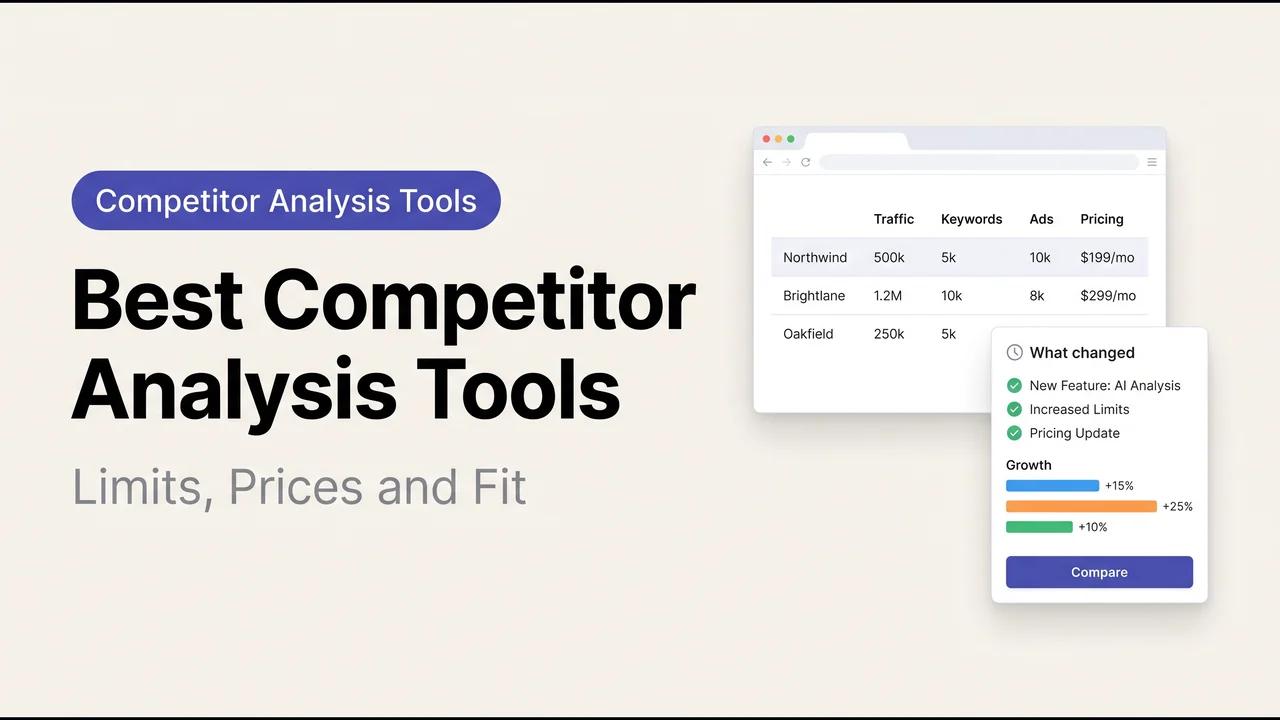
Most competitor analysis tools answer one of four questions: how much traffic a rival gets, which keywords it ranks for, which ads it runs, and what it charges. Pick the tool that answers your question at the depth you need, and check how many lookups you get before paying. This guide is written by SpringBrand, and our own product appears in it with a disclosure.
If the research from competitor analysis tools feeds a pipeline rather than a one-off report, our AI lead generator covers the prospect side of the same job.
Quick Picks: Which Tool for Which Question
- Semrush — best for keyword and backlink gaps against up to four rivals.
- Ahrefs — best for content and link gaps if you already live in Ahrefs.
- Similarweb — best for sizing a rival's traffic and channel mix.
- SpyFu — best for a competitor's paid search history.
- Google Ads Transparency Center — best for seeing live ads at no cost.
- Klue — best for sales teams that need battlecards, not keyword data.
- SpringBrand — best for occasional, sourced reads of pricing pages, positioning and reviews, paid per run.
| Tool | Best for | Access without a paid plan | Starting price (checked Nov 18, 2026) |
|---|---|---|---|
Semrush | Keyword and backlink gaps | $0 plan: 1 demo project, 10 reports per day | SEO plan $139/mo ($117.33/mo billed annually) |
Ahrefs | Content and link gaps | No-cost tier covers your own site only | Starter $29/mo; Lite $129/mo |
Similarweb | Traffic size and channels | Website checker: 3 searches per day | Not listed; contact sales for Business |
SpyFu | Paid search history | Homepage search | Not verified (pricing page blocked our check) |
Google Ads Transparency Center | Live ads by advertiser | Open to anyone | No cost |
Klue | Sales battlecards | Demo only | Not published |
SpringBrand | Sourced one-off reads | 300 credits at signup, then 100 a month | Plus $29/mo (3,000 credits) |
How We Picked and Checked These Tools
We did not run paid accounts for this guide, so none of these products were hands-on tested over weeks. On November 18, 2026 we read each vendor's pricing page and product pages, used the no-login checkers where they exist, and recorded what each one shows. Prices of competitor analysis tools change often; treat every number here as dated and open the linked page before buying.
We ranked by how directly each tool answers a common question from people who search for competitor analysis tools, not by brand size. SpringBrand is listed last on purpose, because it is our product.
Five criteria shaped the list:
- The question it answers. Traffic, keywords, ads, pricing or customer voice.
- Access before paying. Daily lookups, demo projects, or nothing.
- Starting price. Published price on the vendor's own page, with the date.
- Data honesty. Whether the vendor explains that numbers are estimates.
- Fit for occasional use. Whether a team that runs one analysis a quarter still gets value.
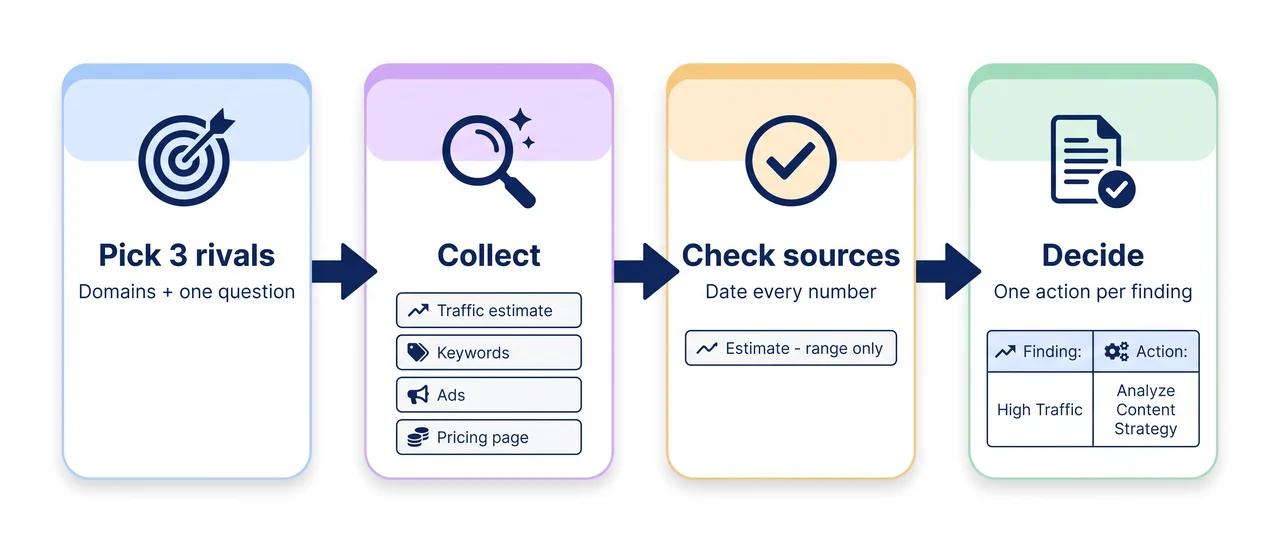
The last criterion matters more than most rankings of competitor analysis tools admit. One founder on Reddit put it this way:
"If you run an agency with 50 clients, paying for Ahrefs or Semrush makes sense. But if you're a founder, developer, or indie hacker who just needs to pull search volumes, extract a few 100-keyword semantic clusters, or inspect competitor backlinks a few times a week, you're stuck paying for a massive enterprise retainer where 80% of your paid quota expires unused at the end of every month."
That quote is from r/SaaS. Keep it in mind as you compare the competitor analysis tools below.
1. Semrush — Keyword and Backlink Gaps
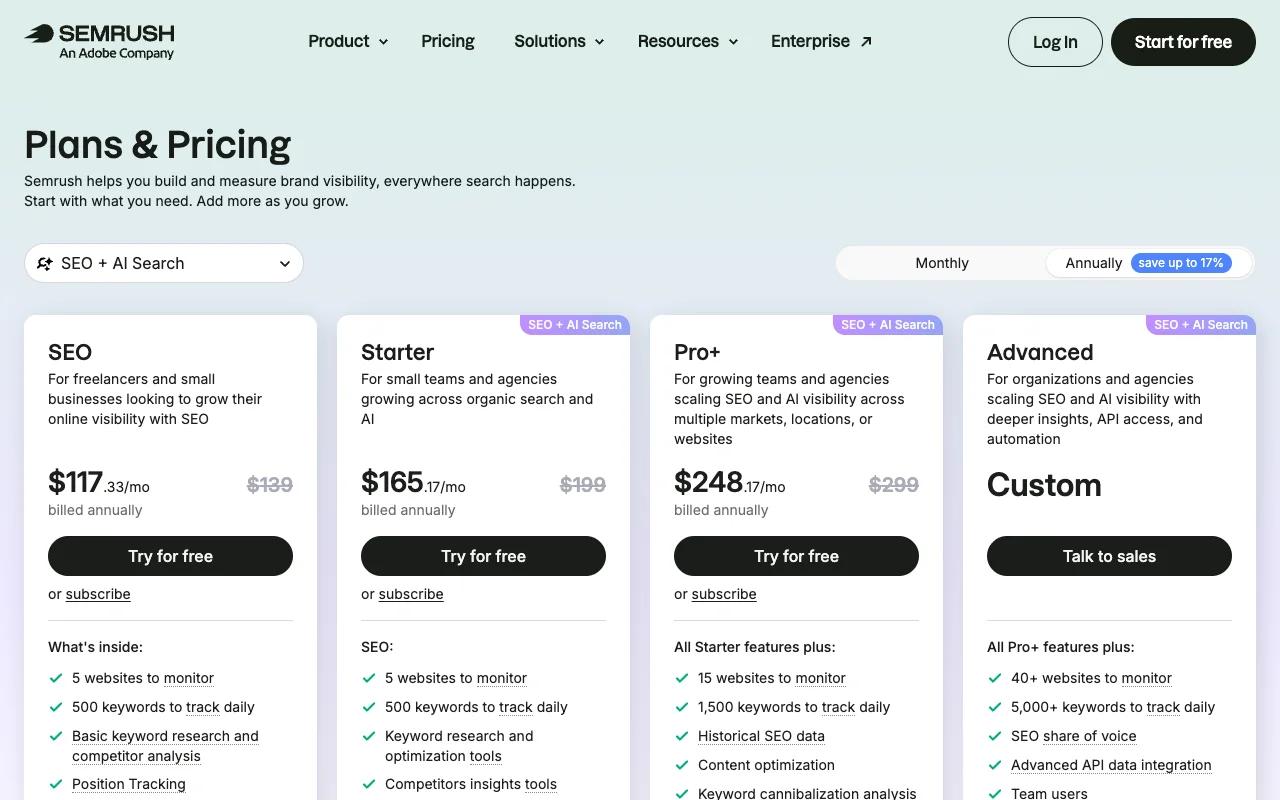
What it does: Semrush starts from a domain and returns organic keywords, backlinks, and a gap view against named rivals. Its SEO plan lists "Basic keyword research and competitor analysis," according to the Semrush pricing page.
Best for: In-house marketers and agencies that run keyword and backlink comparisons every week and want competitor analysis tools with a large index.
Pros: Deep keyword and backlink data in one account, with the gap reports most SEO teams already know.
Cons: The useful competitor reports sit behind a monthly plan, and occasional users pay for quota they never touch.
Pricing (checked Nov 18, 2026): SEO $139/mo or $117.33/mo billed annually; Starter $199/mo; Pro+ $299/mo; Advanced is custom. The $0 plan includes "1 demo project" and "10 reports per day across all vital tools." Source: semrush.com/prices.
2. Ahrefs — Content and Link Gaps
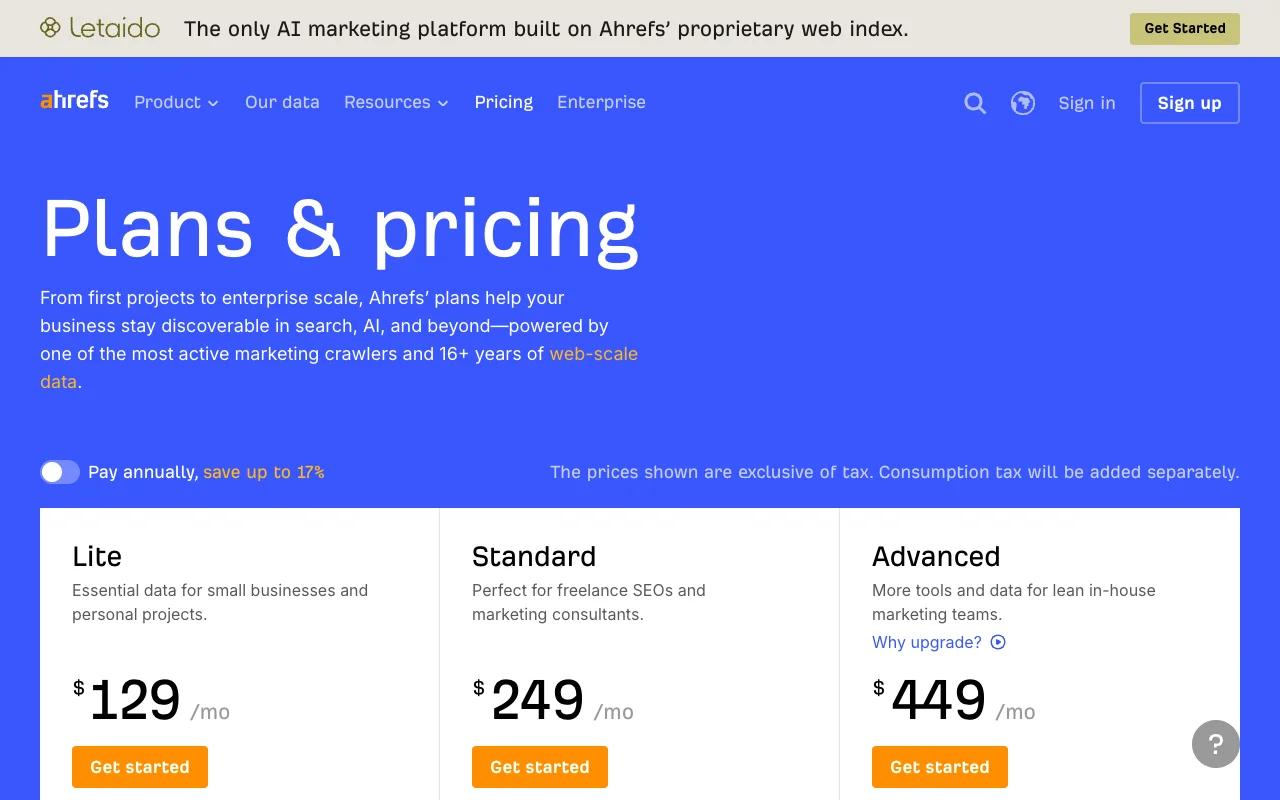
What it does: Ahrefs analyzes a domain or URL and compares content and backlinks against competitors. Competitive analysis is listed from the Lite plan on the Ahrefs pricing page.
Best for: SEO teams that care most about which pages and links a rival has that they do not.
Pros: Among competitor analysis tools, one of the strongest link indexes and content gap views; the pricing page states up to 17% off for annual billing.
Cons: The no-cost Ahrefs tier shows data for your own site, not your rivals, so competitor work needs a paid plan.
Pricing (checked Nov 18, 2026): Starter $29/mo, Lite $129/mo, Standard $249/mo, Advanced $449/mo, Enterprise on request. Source: ahrefs.com/pricing.
3. Similarweb — Traffic Size and Channel Mix
What it does: Enter a domain and Similarweb's website checker returns "traffic stats, global rankings, SEO keywords, referring domains, top search ads, website technologies, and more," per the Similarweb website checker.
Best for: Founders and analysts who need competitor analysis tools for sizing a market or checking whether a rival is ten times larger or about the same.
Pros: The quickest way to compare traffic and channels across several sites. Similarweb's own page cites a SparkToro study saying "Similarweb's strength lies with sites that receive between 5K-100K GA users/month."
Cons: Estimates are least reliable outside that range. The checker page showed "You have 3 of 3 daily searches remaining" when we checked.
Pricing (checked Nov 18, 2026): The Similarweb pricing page lists a self-service plan for entrepreneurs and a Business plan through sales, without published prices.
4. SpyFu — Paid Search History
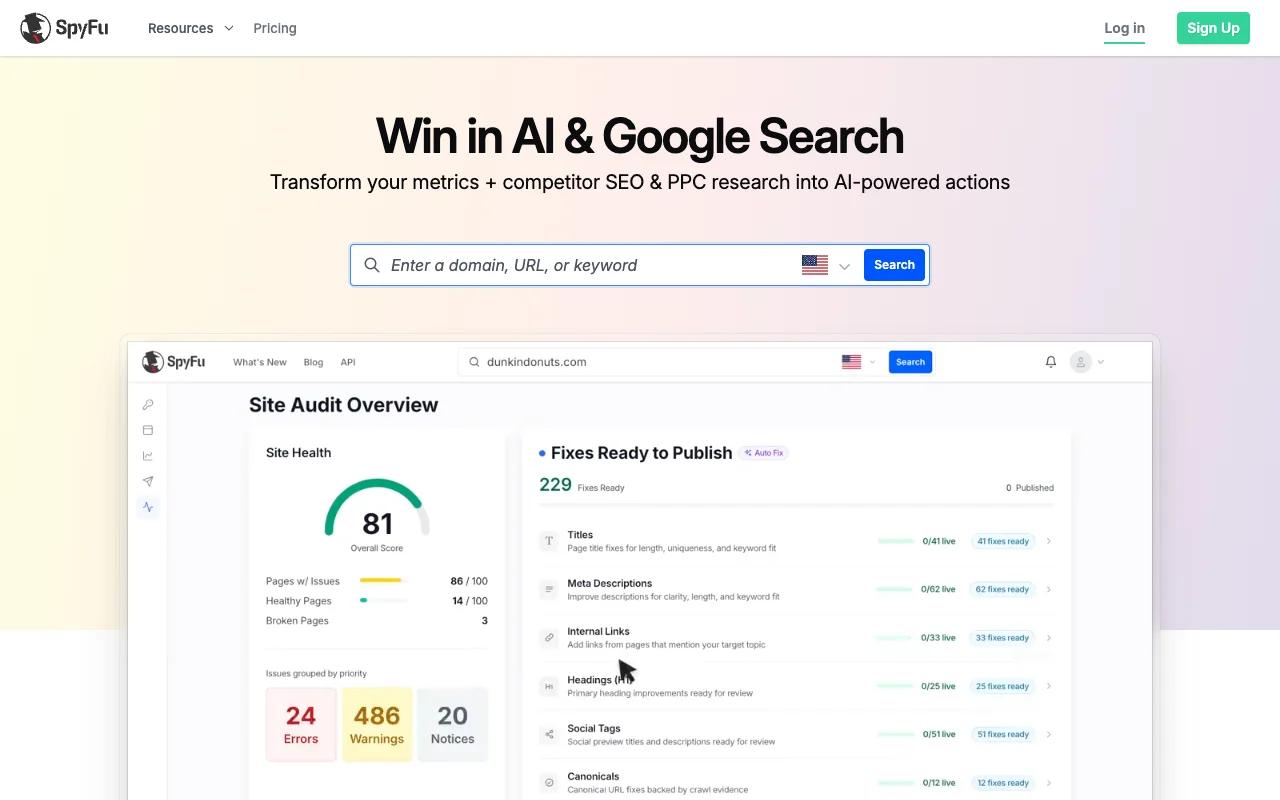
What it does: SpyFu focuses on search ads. Its homepage says you can "See every keyword they've ever bought on Google and every ad test they've run" (spyfu.com).
Best for: PPC managers planning a Google Ads account against an established rival.
Pros: Long paid keyword history and ad copy tests in one place.
Cons: Like all third-party competitor analysis tools, SpyFu models its keyword and click numbers. One agency owner on r/PPC wrote that "accuracy is very low."
Pricing: Not verified. SpyFu's pricing page blocked our automated check on November 18, 2026; open spyfu.com/pricing before you plan a budget.
Competitor Analysis Websites You Can Use Without a Subscription
Not every question needs paid competitor analysis software. A low-cost stack of competitor analysis tools covers a surprising share of the job.
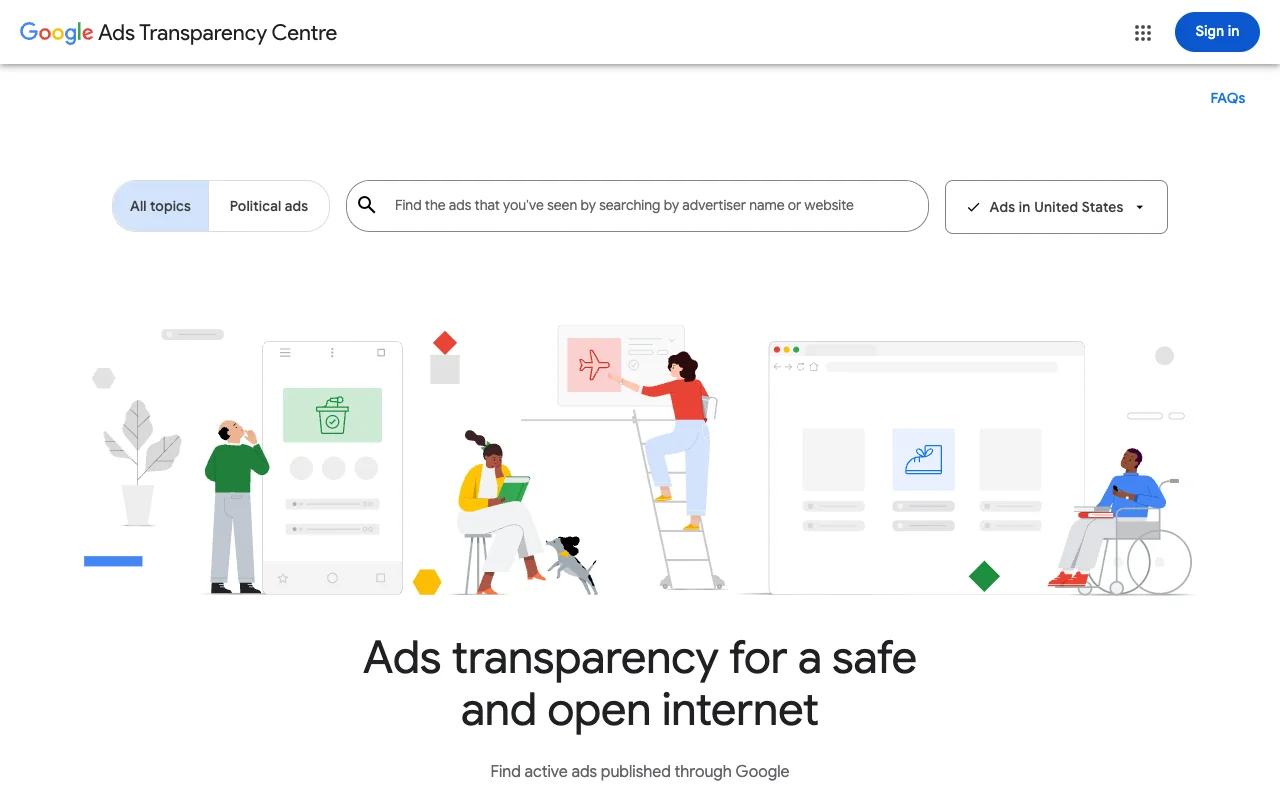
Google Ads Transparency Center. Google describes it as "a searchable hub of all ads served from verified advertisers," where you can see the ads an advertiser has run, where they were shown, and when an ad last ran (Google, March 29, 2023). Unlike most competitor analysis tools, it shows real ads rather than estimates, but no spend or clicks.
Similarweb's website checker for traffic size, within the daily limit above, and Semrush's $0 plan for a handful of keyword reports a day.
Your rivals' own pages. Pricing pages, changelogs and job posts are primary sources. They change without notice, so save the date you read them.
This mirrors what people recommend in a r/marketing thread that opens with: "Problem is I have no budget. Any tools you can recommend?"
5. Klue — Competitive Intelligence for Sales Teams
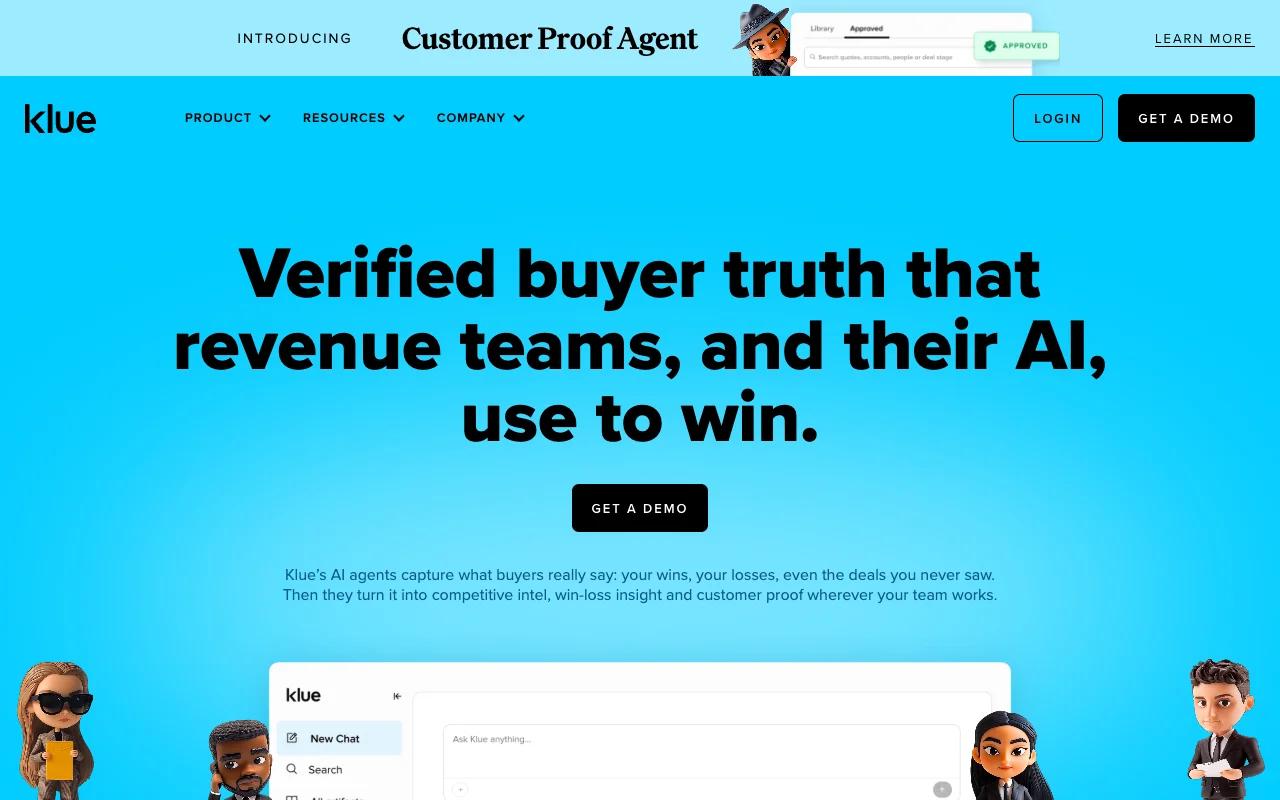
What it does: Klue collects competitive intel and win-loss feedback and shares it with revenue teams. Its Compete Agent is described as a way to "collect, curate, and share competitive intel throughout your organization" (klue.com).
Best for: Product marketing teams that maintain battlecards for a sales team.
Pros: Built for ongoing programs, with win-loss interviews alongside competitor tracking.
Cons: It is an enterprise program, not one of the quick-lookup competitor analysis tools. It answers "how do we win deals against them," not "what keywords do they rank for."
Pricing (checked Nov 18, 2026): Not published; the Klue pricing page offers a demo.
6. SpringBrand — Sourced, Pay-Per-Run Analysis
Disclosure: SpringBrand publishes this guide. Our AI competitor analysis agent reads competitor sites, search results and public conversation, then lines them up side by side with sources attached.
What it does: You describe the job in a sentence, such as "What do their pricing pages say today?" The agent reads the pages with Firecrawl and Apify, searches Google and Reddit, and returns a table with the link and read date for each finding.
Best for: Founders and small marketing teams that run competitor analysis a few times a year and want pricing, positioning and customer complaints rather than keyword volumes.
Pros: You can start on the $0 plan and spend credits only when you run a task. Every claim links to its page.
Cons: It does not replace the keyword and backlink databases that larger competitor analysis tools such as Semrush or Ahrefs hold, and it does not run on a schedule. Each run starts when you ask.
Pricing: New accounts get 300 credits at signup, then 100 credits a month on the $0 plan. An agent task uses about 15–40 credits, depending on its steps, tools and run time. Plus is $29 a month ($23 a month billed annually) with 3,000 credits. Included credits reset each month; purchased credits ($5 per 1,000) roll over. Source: SpringBrand pricing, checked Nov 18, 2026. For keyword and backlink comparisons, start with our SEO competitor analysis tool.
Best Tools for Competitor Analysis by Team Type
| If you are… | Start with | Why |
|---|---|---|
A marketer with no budget | Google Ads Transparency Center + Similarweb checker | Real ads plus a traffic estimate, within daily limits |
An SEO running weekly reports | Semrush or Ahrefs | Keyword and backlink gaps need a large index |
A PPC manager | SpyFu + Google Ads Transparency Center | Paid keyword history plus the live ads |
A founder checking a market twice a year | SpringBrand + Similarweb checker | Pay per run for pricing and positioning, estimate for size |
A product marketer supporting sales | Klue | Battlecards and win-loss, not traffic data |
Whichever competitor analysis tools you choose, write down where each number came from and when. As one marketer said on r/digital_marketing: "To me the biggest issue is that some tools have outdated or incomplete data, so I have to recheck."
FAQ
What are the best competitor analysis tools for a small team?
The best competitor analysis tools for a small team are the ones that answer your one question without a yearly contract: Google Ads Transparency Center for ads, Similarweb's checker for traffic size, and Semrush or Ahrefs only if you need keyword gaps every week.
Are traffic estimates from these tools accurate?
Traffic numbers in competitor analysis tools are models, not analytics. Similarweb's own page cites a study saying its strength lies with sites between 5K and 100K Google Analytics users per month. Use estimates to compare scale, not to quote exact visits.
Semrush or Ahrefs for competitor analysis?
Both cover keyword and backlink gaps. Semrush's SEO plan is $139 per month; Ahrefs' Lite plan, where competitive analysis is listed, is $129 per month (both checked November 18, 2026). Pick the index your team already trusts.
What can I do without paying?
Search live ads in Google Ads Transparency Center, run three Similarweb website checks a day, and use Semrush's $0 plan for 10 reports a day. Ahrefs' no-cost tier covers only your own site.
What is the difference between competitor analysis and competitor monitoring?
Analysis is a one-time read to support a decision, such as pricing or positioning. Monitoring watches for changes over time and alerts you. Search results for competitor analysis tools and monitoring tools differ, and so do the products.
Do I need a subscription if I analyze competitors twice a year?
Usually not. Occasional work fits daily-limited competitor analysis tools and pay-per-run tools better than monthly plans. Subscriptions pay off when you run the same reports every week.
Conclusion
When you compare competitor analysis tools, start from the question, not the brand. For keyword and link gaps, Semrush and Ahrefs are the deepest options; for traffic size, Similarweb; for paid search, SpyFu and Google's ad library. If you only need a sourced read of rivals' pricing and positioning a few times a year, run it in SpringBrand and pay for the runs you use.
Explore SpringBrand
Turn ideas into working workflows
Connect agents, APIs and tools in one workspace. Start with a task you want to get done.
Get started free
One account. 10,000+ APIs & capabilities
Give your agent APIs and plugins without separate keys or integrations for every provider.
Explore APIs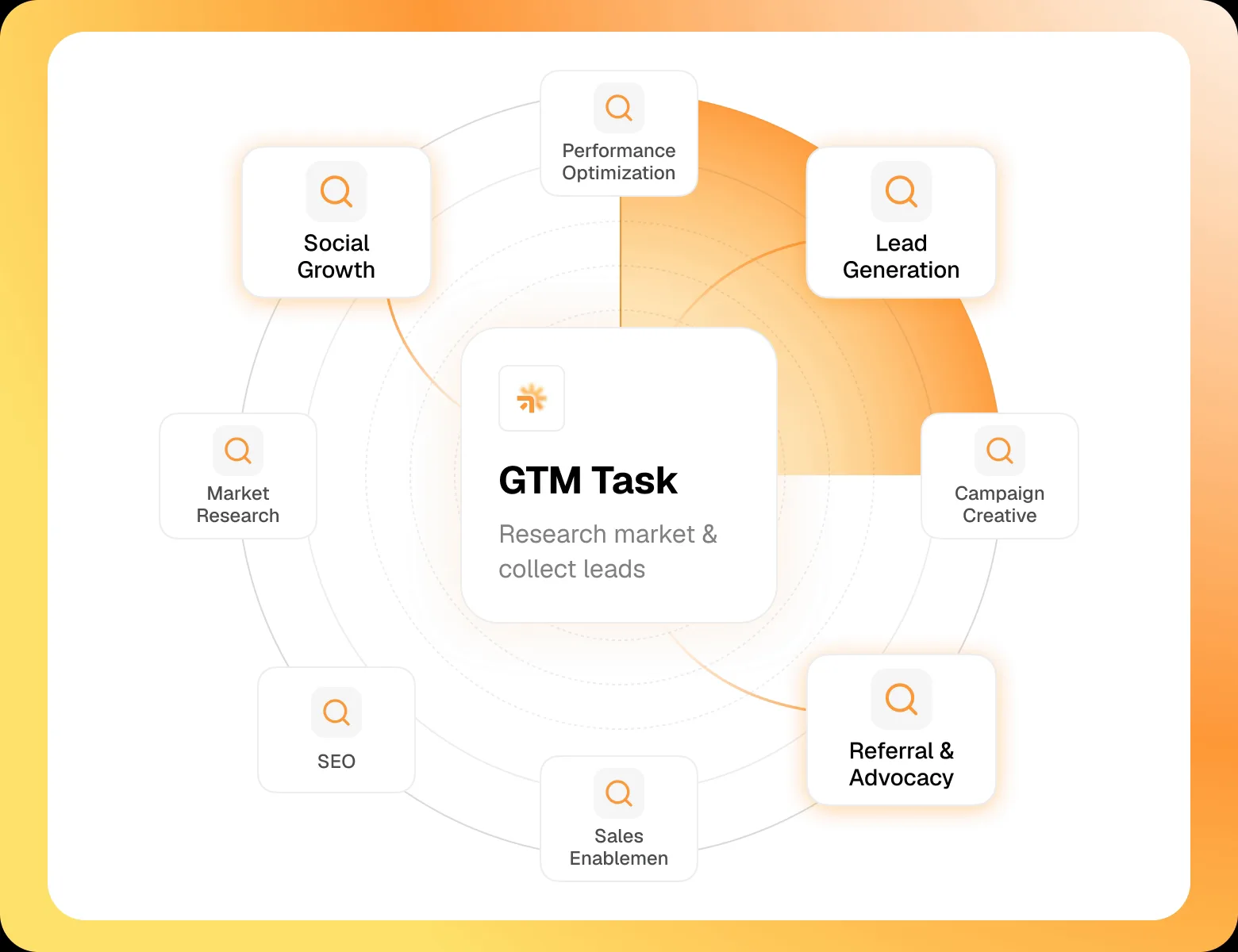
No tool expertise needed
Describe your GTM task. SpringBrand chooses the right APIs and plugins for your agent automatically.
Find tools for your task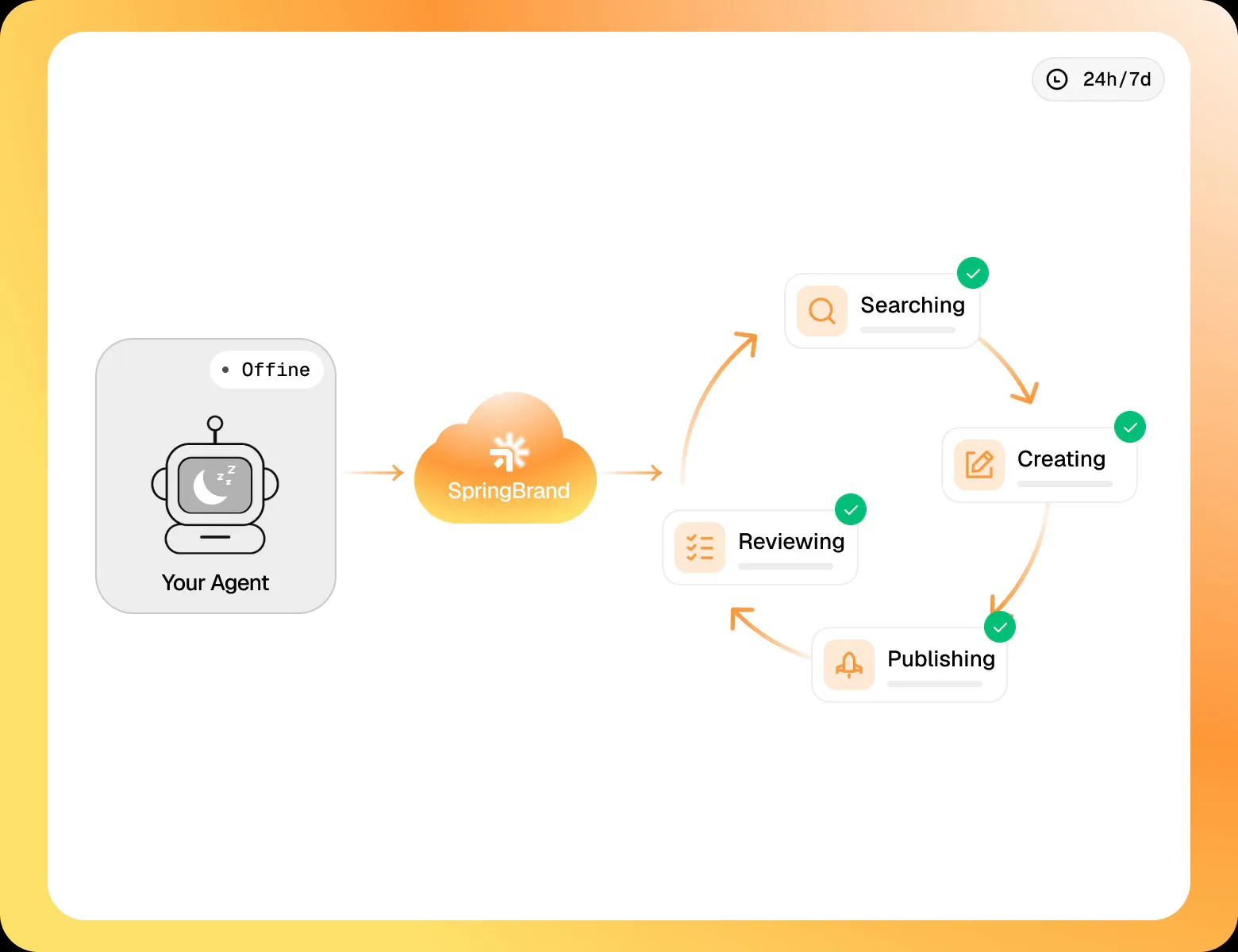
Run tasks 24/7
Connect your agent to SpringBrand to keep tasks running automatically, day and night.
Connect your agent