Best Market Research Tools by Data Source and Price
Written by
SpringBrand
Editorial team

Reviewed by
Springbrand Audit Team
Editorial review team
Springbrand Audit Team supports editorial quality through source checking, clarity, and consistency across the blog.
Updated
Published
Compare market research tools by data source, starting price and limits, then pick the one that answers your research question.
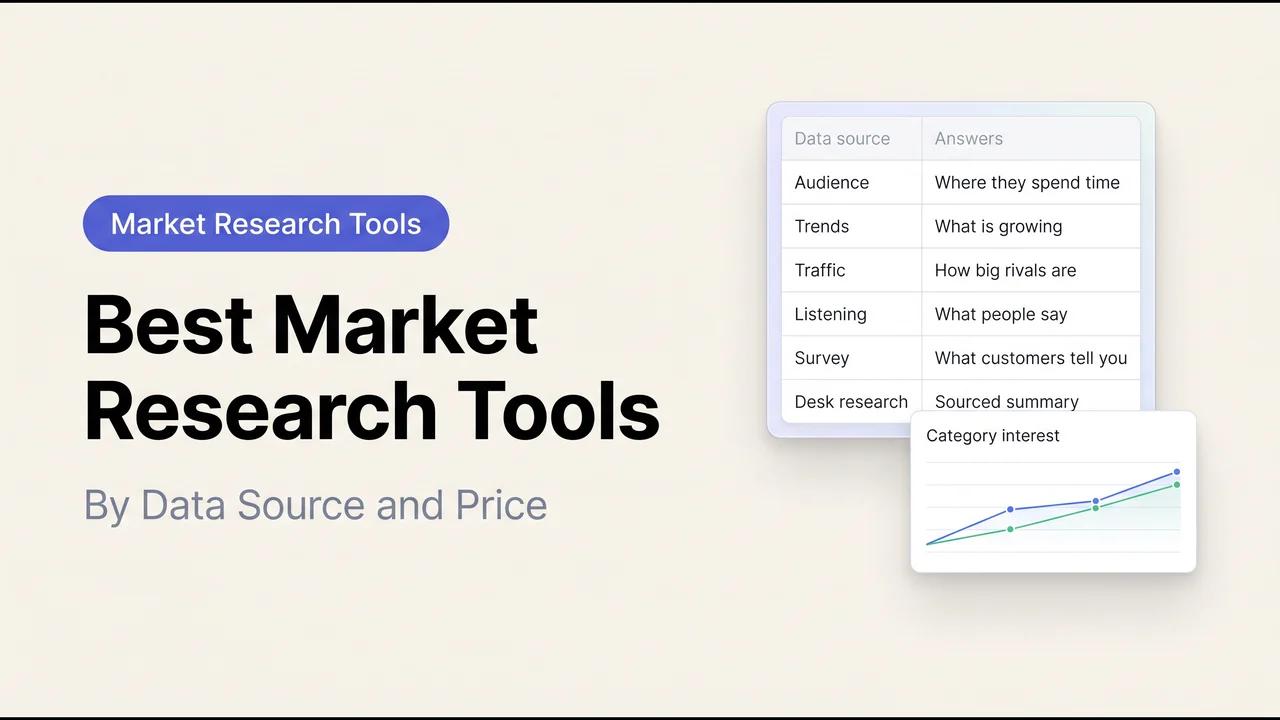
The best market research tools differ mainly in where their data comes from: audience panels, search trends, website traffic estimates, social conversation, your own survey, or desk research across public pages. Decide which source answers your question first, then compare price and limits. This guide is written by SpringBrand, and our product appears in it with a disclosure.
If your research feeds campaigns, ads and content, our AI marketing agent runs the desk-research part next to the rest of that work.
Quick Picks: Which Tool for Which Question
- SparkToro — best for learning where an audience spends time online.
- Exploding Topics — best for spotting categories that are starting to grow.
- Google Trends — best for checking relative interest over time at no cost.
- Semrush — best for search demand and competitor traffic in one account.
- Similarweb — best for sizing digital markets and rival websites.
- Brand24 — best for tracking what people say about a brand or category.
- SurveyMonkey — best for asking your own customers directly.
- GWI — best for consumer profiles across many countries.
- SpringBrand — best for a sourced desk-research report you pay for per run.
| Tool | Data source | Best for | Starting price (checked Nov 18, 2026) |
|---|---|---|---|
SparkToro | Websites, podcasts, social accounts, searches | Audience research | Business $150/mo; Personal billed annually (price not shown) |
Exploding Topics | Search and social growth signals | Emerging trends | Entrepreneur $39/mo |
Google Trends | Google search interest, scaled 0–100 | Demand over time | No cost |
Semrush | Own keyword and traffic index (estimates) | Search demand, competitors | SEO plan $139/mo |
Similarweb | Traffic, search and app estimates | Market and site sizing | Not published; sales-led |
Brand24 | Social and web mentions | Listening and sentiment | Individual $249/mo, or $199/mo billed annually |
SurveyMonkey | Your own respondents | Primary research | Not verified in USD |
GWI | Syndicated consumer survey panel | Cross-market profiles | Not published |
SpringBrand | Public web, search and social sources | Sourced desk research | 300 credits at signup, then 100 a month; Plus $29/mo |
How We Picked and Checked These Tools
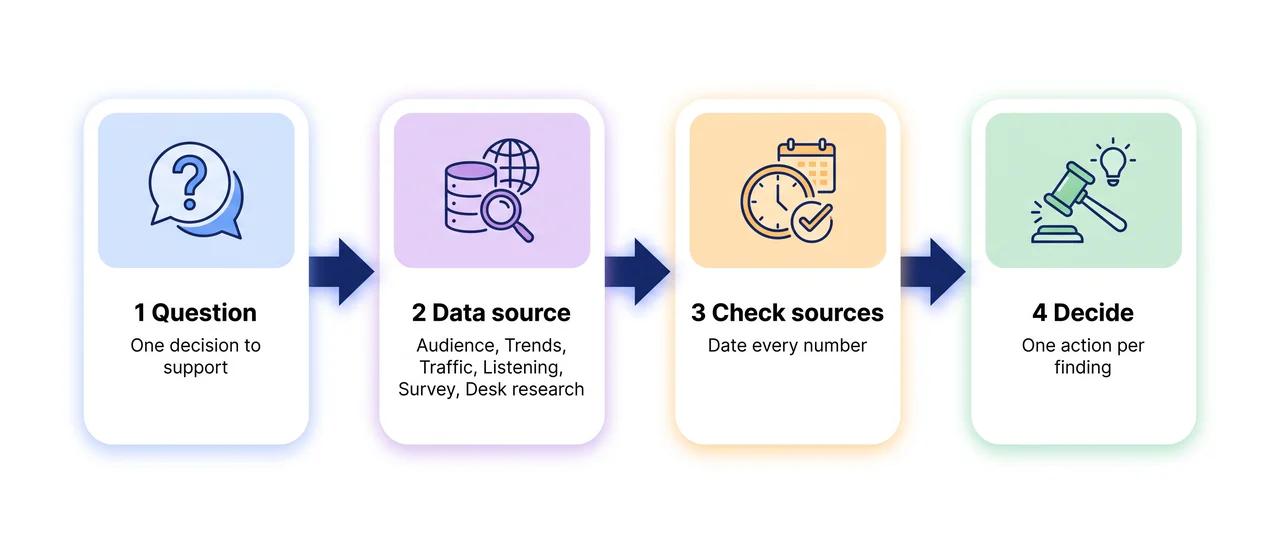
We did not run paid accounts for this guide, so these products were not hands-on tested. On November 18, 2026 we read each vendor's pricing and product pages and recorded what each plan includes. Where a pricing page blocked our check or showed a local currency, we say so instead of guessing. Prices for market research tools change often, so open the linked page before you buy.
We grouped the market research tools by data source rather than by brand size, because the source decides what a tool can and cannot tell you. SpringBrand is listed last on purpose, because it is our product.
Four criteria shaped the list:
- Data source. Panel, search, traffic model, social mentions, your survey, or public pages.
- What it cannot tell you. Every source has a blind spot; we name it.
- Starting price. Published on the vendor's own page, with the date.
- Effort to a usable answer. A dashboard to learn, or a report to read.
The last point matters. A founder on Reddit described the alternative many small teams fall back on:
"His "market research" was googling the industry and asking 3 friends if it sounds cool."
That line is from r/smallbusiness. Each tool below replaces one part of that guesswork.
1. SparkToro — Audience Research
What it does: SparkToro shows the websites, podcasts, social accounts and searches an audience is associated with, so you can see where people who care about a topic pay attention.
Best for: Marketers choosing channels, sponsorships or creators for a defined audience.
Pros: Among market research tools, one of the few built around where an audience spends time rather than how many people search.
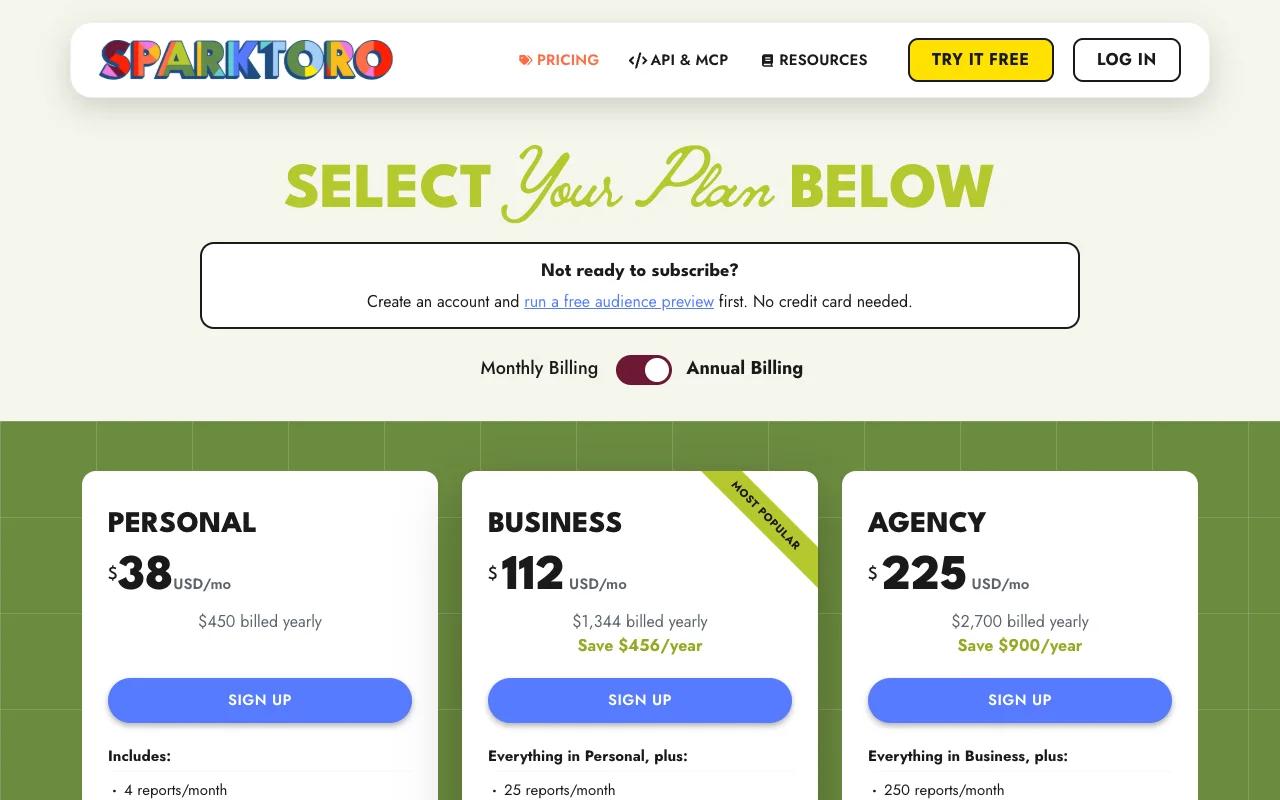
Cons: It does not estimate market size or revenue. Reports are capped per plan: 25 a month on Business, according to the SparkToro pricing page.
Pricing (checked Nov 18, 2026): Business $150/mo, Agency $300/mo; the Personal plan is billed annually and its price was not shown. An audience preview is available after creating an account. Source: sparktoro.com/pricing.
2. Exploding Topics — Emerging Trends
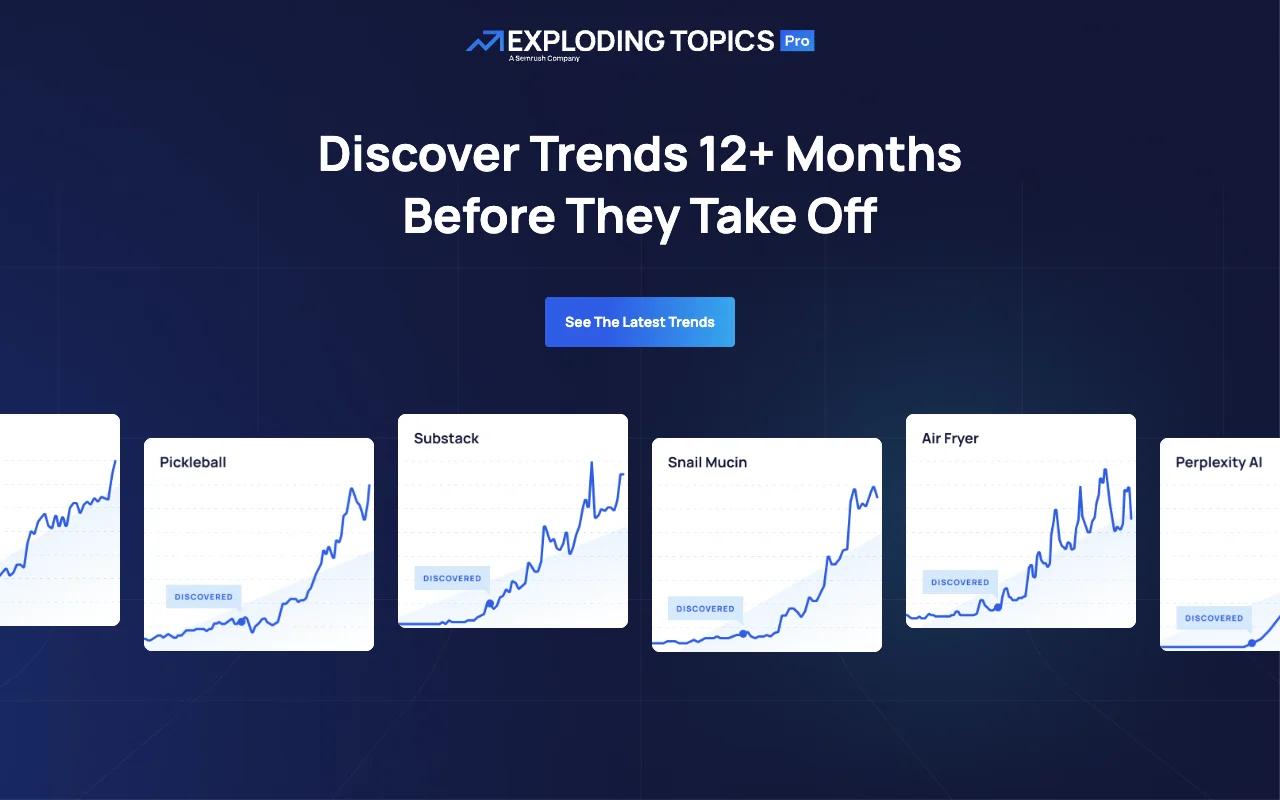
What it does: Exploding Topics surfaces topics and product categories whose search and social interest is rising, before they peak.
Best for: Founders and product teams looking for categories to enter or content to plan.
Pros: Unlike most market research tools, it gives a fast shortlist of growing topics without building your own trend tracking.
Cons: Trend growth is not demand at scale; a topic can grow fast from a tiny base.
Pricing (checked Nov 18, 2026): Entrepreneur $39/mo (100 tracked trends), Investor $99/mo, Business $249/mo, each with a 7-day trial. Source: explodingtopics.com/pricing.
3. Google Trends — Demand Over Time
What it does: Google Trends shows relative search interest for a term by place and time. Google explains that "each data point is divided by the total searches of the geography and time range it represents" and then "scaled on a range of 0 to 100" (Google Trends Help).
Best for: Anyone checking whether interest in a product or category is rising, flat or seasonal.
Pros: No account or cost, and it compares several terms side by side, which makes it one of the most practical market research tools for a first check.
Cons: It shows relative interest, not search volume or market size. Pair it with a keyword tool for absolute numbers.
Pricing: No cost.
4. Semrush — Search Demand and Competitor Traffic
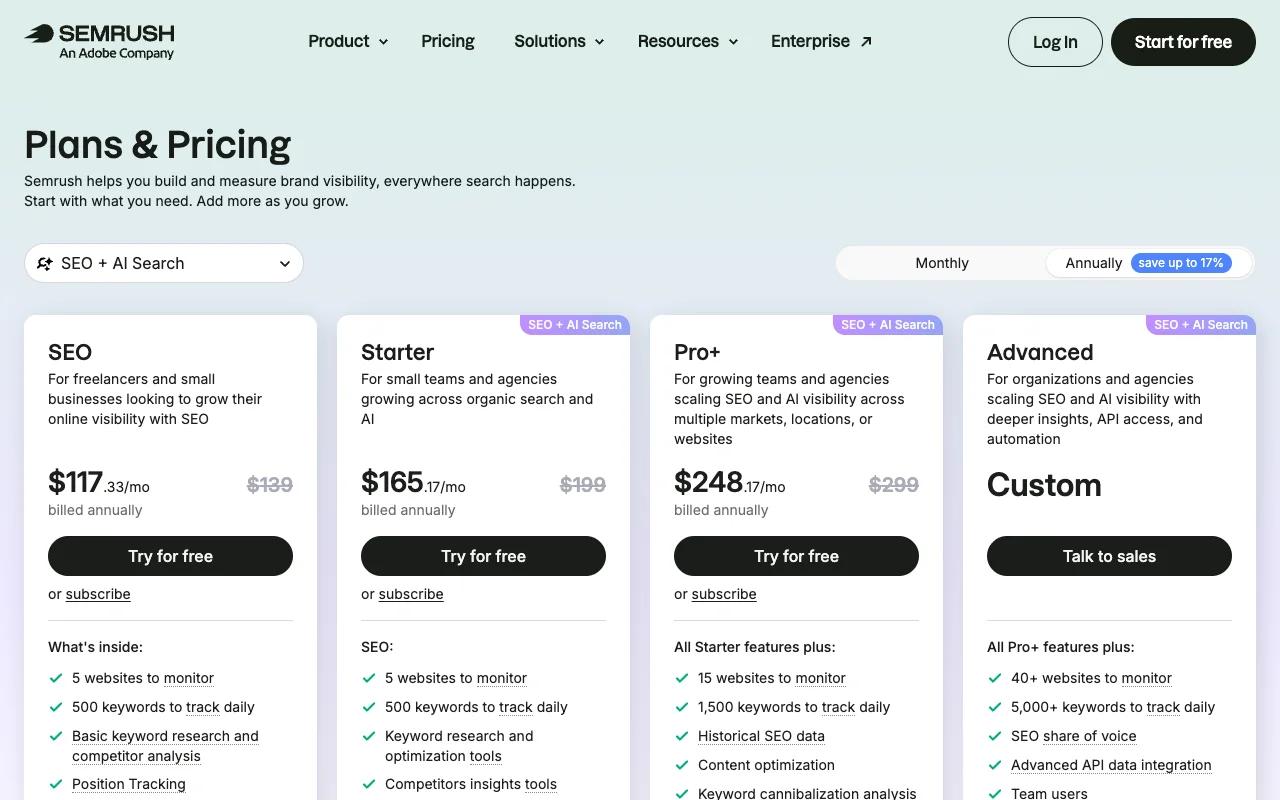
What it does: Semrush estimates keyword volumes and competitor traffic from its own index, and its SEO plan lists "Basic keyword research and competitor analysis" (Semrush pricing).
Best for: Marketers who want search demand and competitor visibility in the same account.
Pros: Deep keyword data; for teams that already use it for SEO, it doubles as one of their market research tools.
Cons: Traffic and volume figures are modeled estimates, and the plans are priced for weekly use.
Pricing (checked Nov 18, 2026): SEO $139/mo ($117.33/mo billed annually); Starter $199/mo; Pro+ $299/mo. A $0 plan includes 1 demo project and 10 reports per day. Source: semrush.com/prices.
5. Similarweb — Digital Market Sizing
What it does: Similarweb estimates website traffic, search and app usage so you can compare players in a digital market. Its website checker allows three searches a day without a subscription.
Best for: Analysts and founders who need market research tools for sizing a category online or comparing rival sites.
Pros: Quick relative sizing across many sites at once.
Cons: Estimates are least reliable for very small or very large sites; Similarweb's own page cites a study placing its strength at "sites that receive between 5K-100K GA users/month."
Pricing (checked Nov 18, 2026): The Similarweb pricing page lists a self-service plan and a sales-led Business plan, without published prices.
6. Brand24 — Social Listening
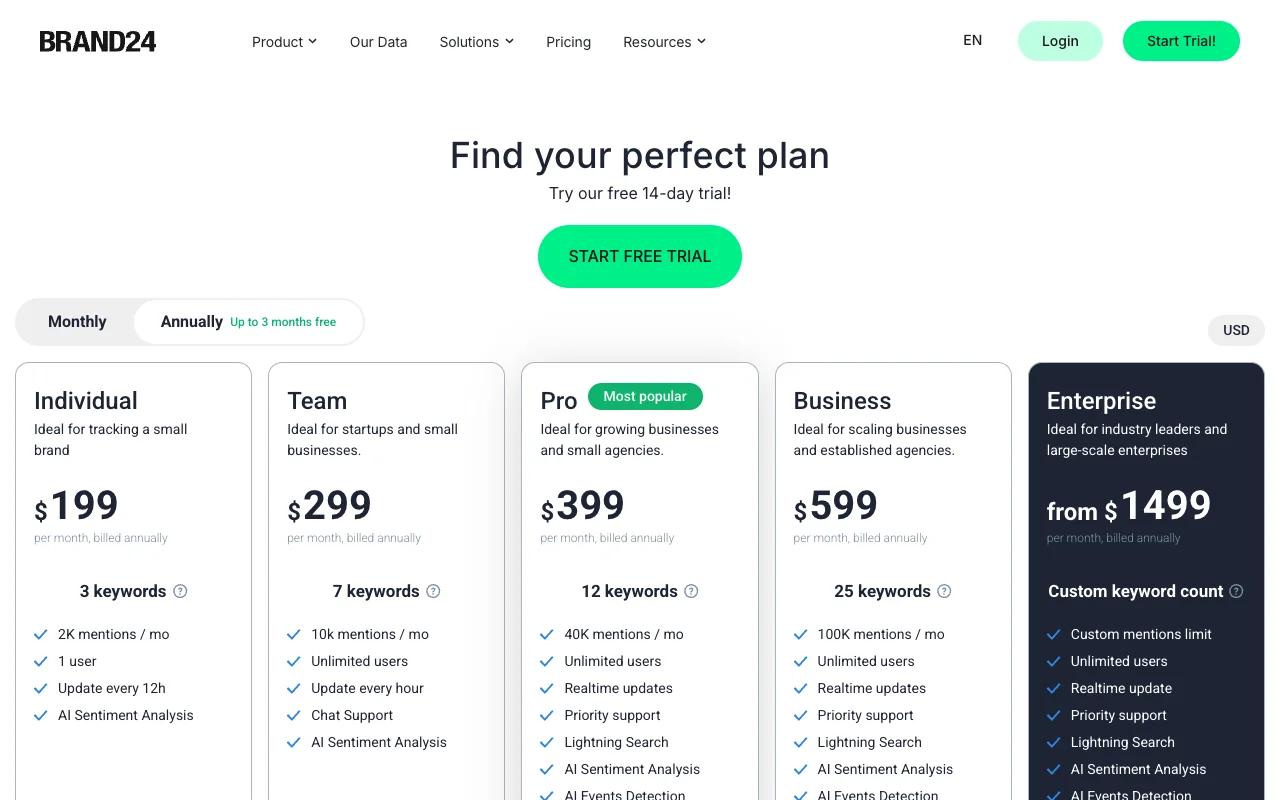
What it does: Brand24 tracks mentions of brands, products and keywords across social media and the web, with sentiment.
Best for: Teams that want to know what customers say about a category or competitor.
Pros: Ongoing coverage of public conversation; useful voice-of-customer input for market research tools that lack it.
Cons: Plans are limited by keywords and mentions, and listening shows what people say, not how many would buy.
Pricing (checked Nov 18, 2026): Individual $249/mo or $199/mo billed annually (3 keywords, 2K mentions a month); Team $349/mo; Pro $499/mo; Business $699/mo. Source: brand24.com/prices.
Market Research Platforms for Primary Research
Survey-based market research tools and panels collect new data from real people. They are slower and costlier than desk research, but they answer questions no public source can.
7. SurveyMonkey — Your Own Surveys
What it does: SurveyMonkey lets you build and run your own questionnaires, with your customers or a purchased audience.
Best for: Validating a hypothesis with people you can reach, such as customers or a mailing list.
Pros: Direct answers from real respondents, which no desk-research tool can replace.
Cons: As with all survey-based market research tools, results depend on who you survey and how you ask; writing a sound questionnaire takes skill.
Pricing: Not verified in USD. The SurveyMonkey pricing page showed team plans in a local currency during our check, starting at 3 users billed annually.
8. GWI — Consumer Profiles Across Markets
What it does: GWI provides syndicated consumer survey data so you can profile audiences by country, age and interest without fielding your own survey.
Best for: Brand and insights teams comparing consumer behavior across countries.
Pros: Survey-based data from real people, already collected and comparable across markets.
Cons: It is a platform with seats and onboarding, not one of the quick-lookup market research tools.
Pricing (checked Nov 18, 2026): Not published. The GWI pricing page says platform pricing is "based on the seats you need."
AI Tools for Market Research
General AI assistants such as ChatGPT deep research and Perplexity can draft desk research from web pages with citations. We could not verify their current plan prices on November 18, 2026, so we leave them out of the table. They are fast, but people who rely on them for market research report the same limits. One researcher on r/Marketresearch put it this way:
"To me its clear that the AI simulation is based on a probabilistic model, and we cannot really generate real user answers or predict what will people really say."
Use AI market research tools for secondary research, and keep surveys for questions only customers can answer.
9. SpringBrand — Sourced Desk Research, Pay Per Run
Disclosure: SpringBrand publishes this guide. SpringBrand is an AI marketing agent that reads search, ads and social data, then drafts for your review.
What it does: You describe the research question in a sentence. The agent searches with Google and Exa, reads pages with Firecrawl, checks public conversation on Reddit and X, and returns a draft with source links you can check.
Best for: Founders and small agencies who need a sourced market overview from market research tools and would rather read a report than learn another dashboard.
Pros: Credits from one balance instead of a separate subscription per data source; purchased credits roll over.
Cons: It does not run surveys or panels, and it does not replace the keyword index of Semrush or the audience data of SparkToro. Each run starts when you ask.
Pricing: New accounts get 300 credits at signup, then 100 credits a month on the $0 plan. An agent task uses about 15–40 credits, depending on its steps, tools and run time. Plus is $29 a month ($23 a month billed annually) with 3,000 credits. Included credits reset each month; purchased credits ($5 per 1,000) roll over. Source: SpringBrand pricing, checked Nov 18, 2026. For a narrower rival comparison, see our guide to competitor analysis software.
Market Research Software by Team Type
| If you are… | Start with | Why |
|---|---|---|
A founder with little budget | Google Trends + Exploding Topics | Demand direction and growing categories for under $40 a month |
A marketer choosing channels | SparkToro | Shows where your audience pays attention |
An agency preparing a client overview | SpringBrand + Similarweb checker | Sourced desk research plus a traffic estimate |
A brand team planning a launch abroad | GWI | Survey-based profiles across countries |
Anyone validating a hypothesis | SurveyMonkey | Ask real customers before you build |
Whichever market research tools you choose, combine sources. A consultant on r/MarketingResearch described the job as "market sizing, trends, competitor analysis, personas, SWOT", and no single tool covers all of it.
FAQ
What are the best market research tools for a small team?
The best market research tools for a small team are the ones that match the question: Google Trends and Exploding Topics for demand, SparkToro for audiences, and a pay-per-run desk-research tool when you need a sourced overview without another subscription.
What is the difference between a tool and a platform?
Platforms such as GWI or survey suites usually include a panel, seats and several modules, with sales-led pricing. Single-purpose market research tools do one job, such as trend spotting or listening, and often publish their prices.
Can I do market research with Google Trends alone?
You can see whether interest is rising or seasonal. You cannot see absolute volume, market size or competitors, because Google scales the data from 0 to 100.
Can AI replace surveys?
No. AI desk research summarizes what is already public, while survey market research tools collect new answers. Use it to form a hypothesis, then test that hypothesis with real respondents.
How much should a small team budget?
Among the market research tools in this list, the lowest published plans start at $39 a month (Exploding Topics) and $150 a month (SparkToro Business), as of November 18, 2026. Google Trends has no cost.
Why does SpringBrand not run surveys?
SpringBrand works with public web, search and social data and returns sourced drafts. Primary research with real respondents belongs in a survey tool or panel.
Conclusion
When you compare market research tools, pick the source before the brand. For audiences, SparkToro; for trends, Exploding Topics and Google Trends; for search and traffic, Semrush and Similarweb; for conversation, Brand24; for primary data, SurveyMonkey or GWI. If you need a sourced desk-research report a few times a year, run it in SpringBrand and pay for the runs you use.
Explore SpringBrand
Turn ideas into working workflows
Connect agents, APIs and tools in one workspace. Start with a task you want to get done.
Get started free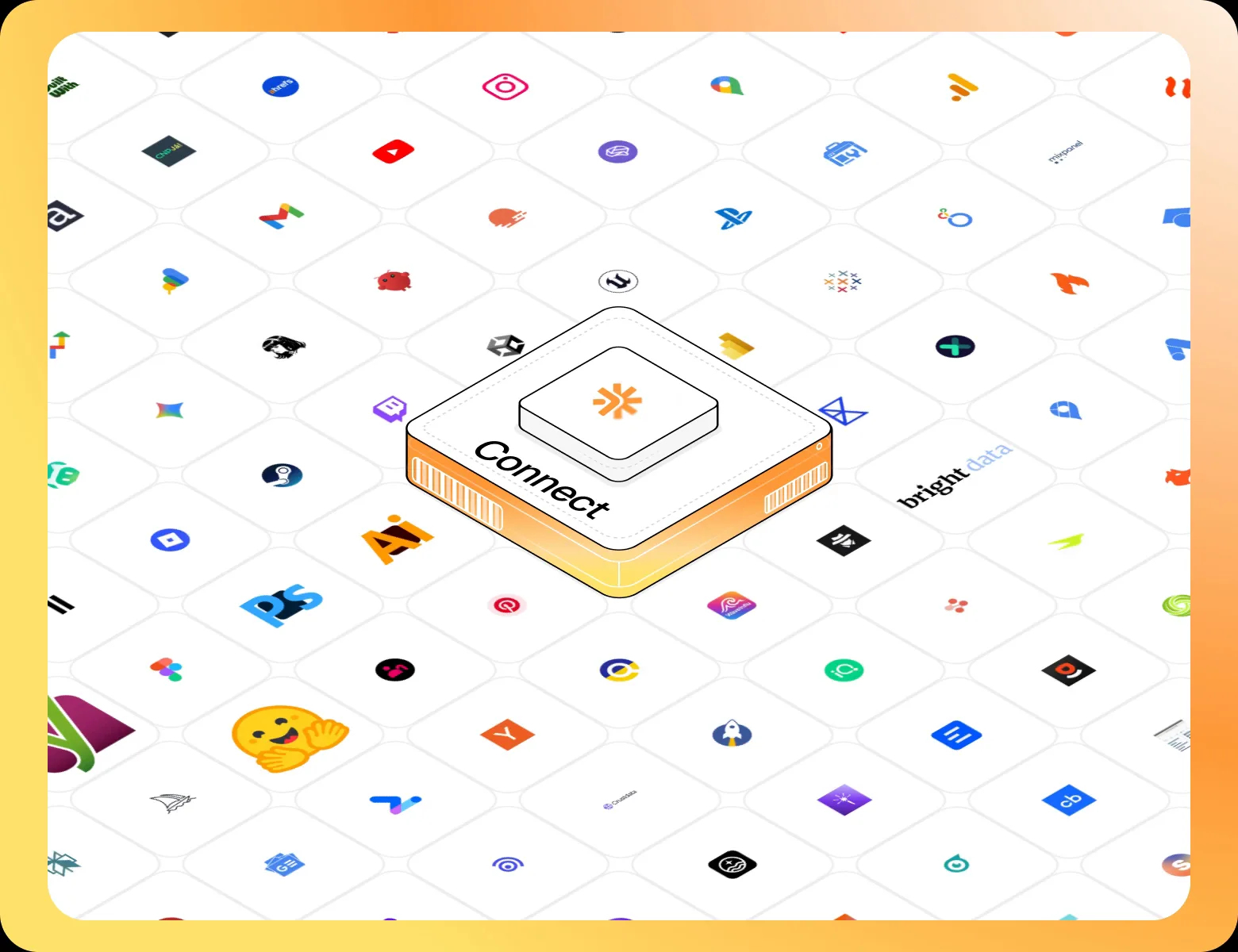
One account. 10,000+ APIs & capabilities
Give your agent APIs and plugins without separate keys or integrations for every provider.
Explore APIs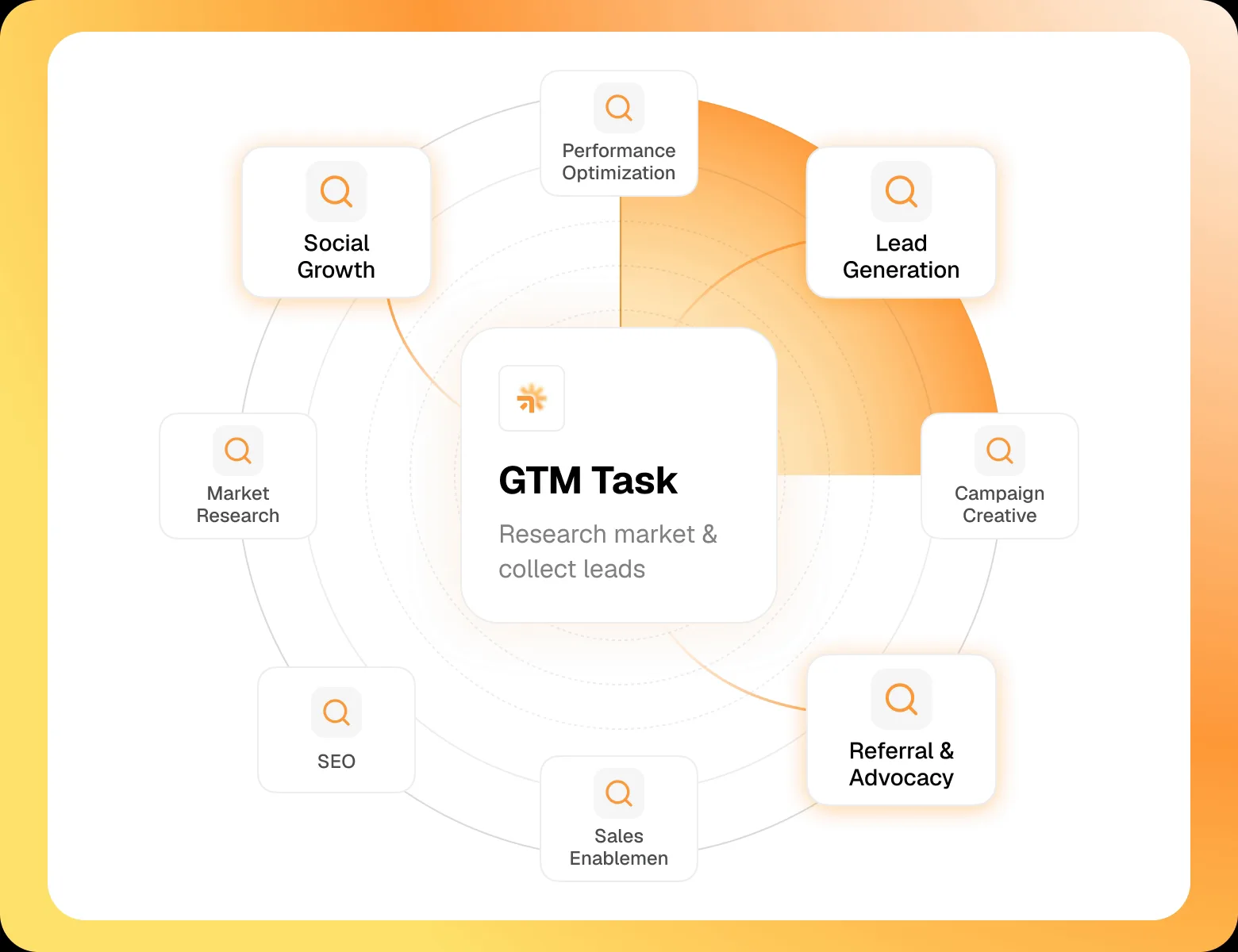
No tool expertise needed
Describe your GTM task. SpringBrand chooses the right APIs and plugins for your agent automatically.
Find tools for your task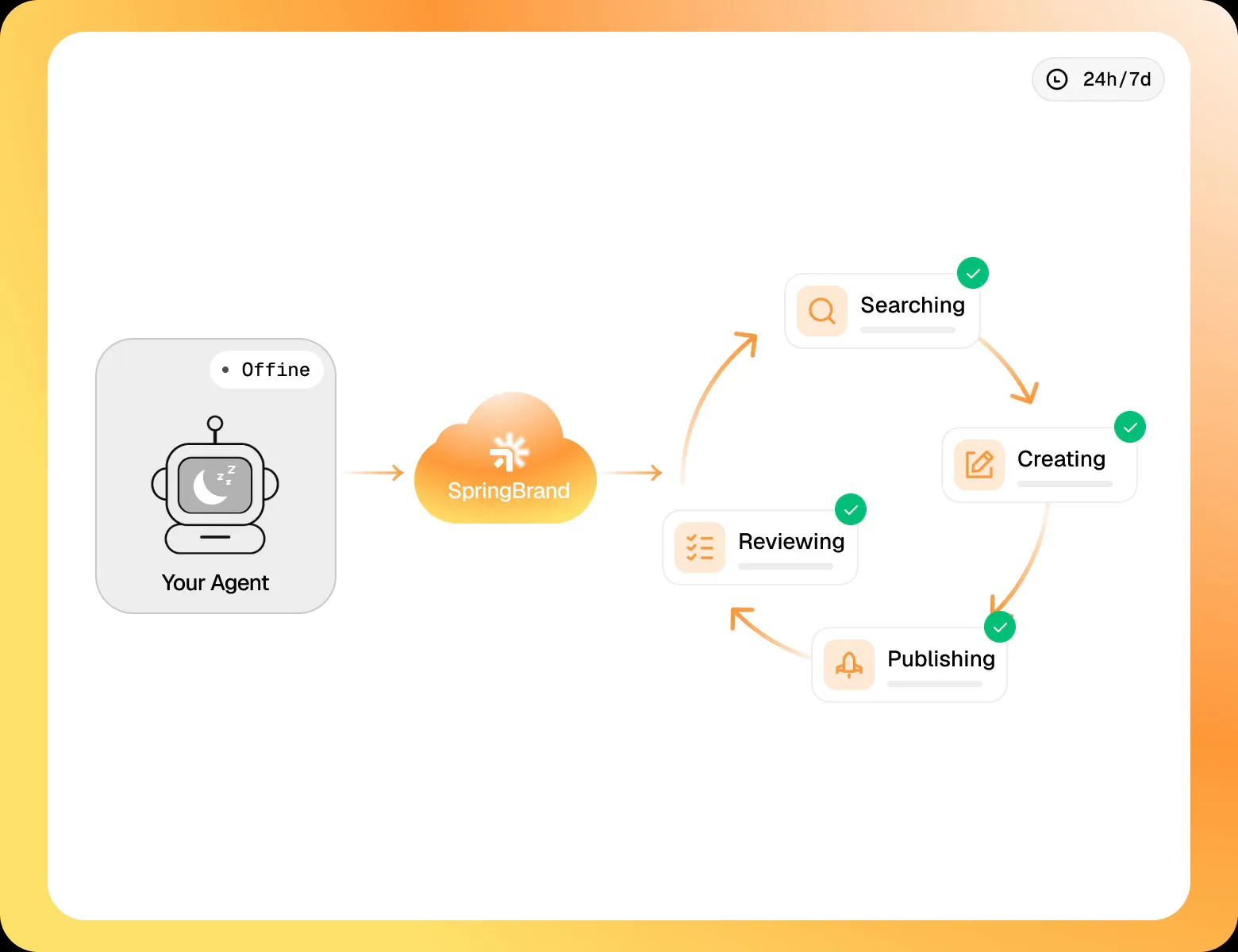
Run tasks 24/7
Connect your agent to SpringBrand to keep tasks running automatically, day and night.
Connect your agent